
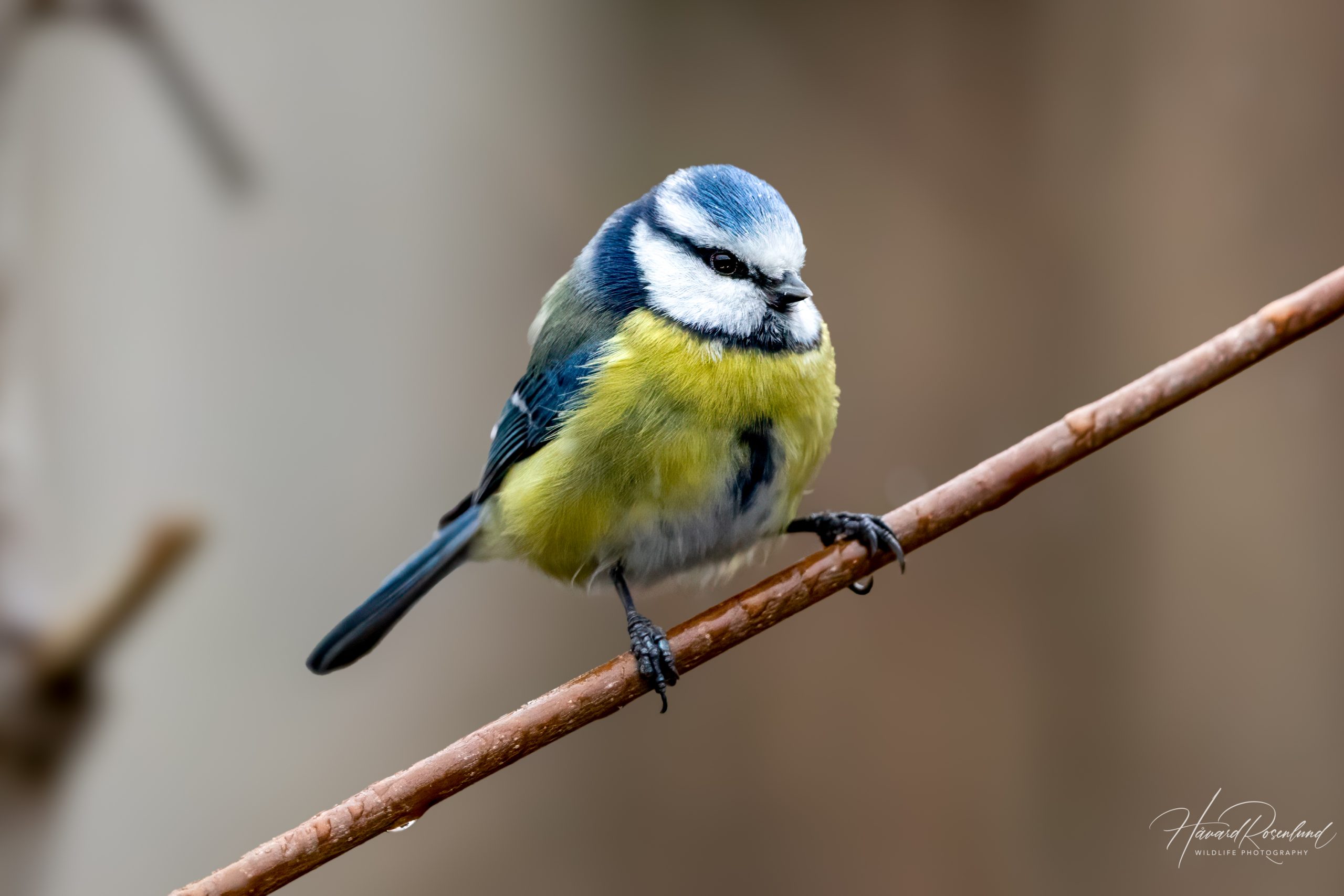
Eurasian Blue Tit
Cyanistes caeruleus
At a glance
Habitat
- Deciduous and mixed woodland, hedgerows, orchards, parks and gardens
Diet
- Caterpillars, spiders and other invertebrates; more seeds, nuts and fruit in autumn and winter
Activity
- Diurnal
Size
- Length: 12 cm Weight: 10.9 g
Range
- Europe, western Asia and North Africa
Description
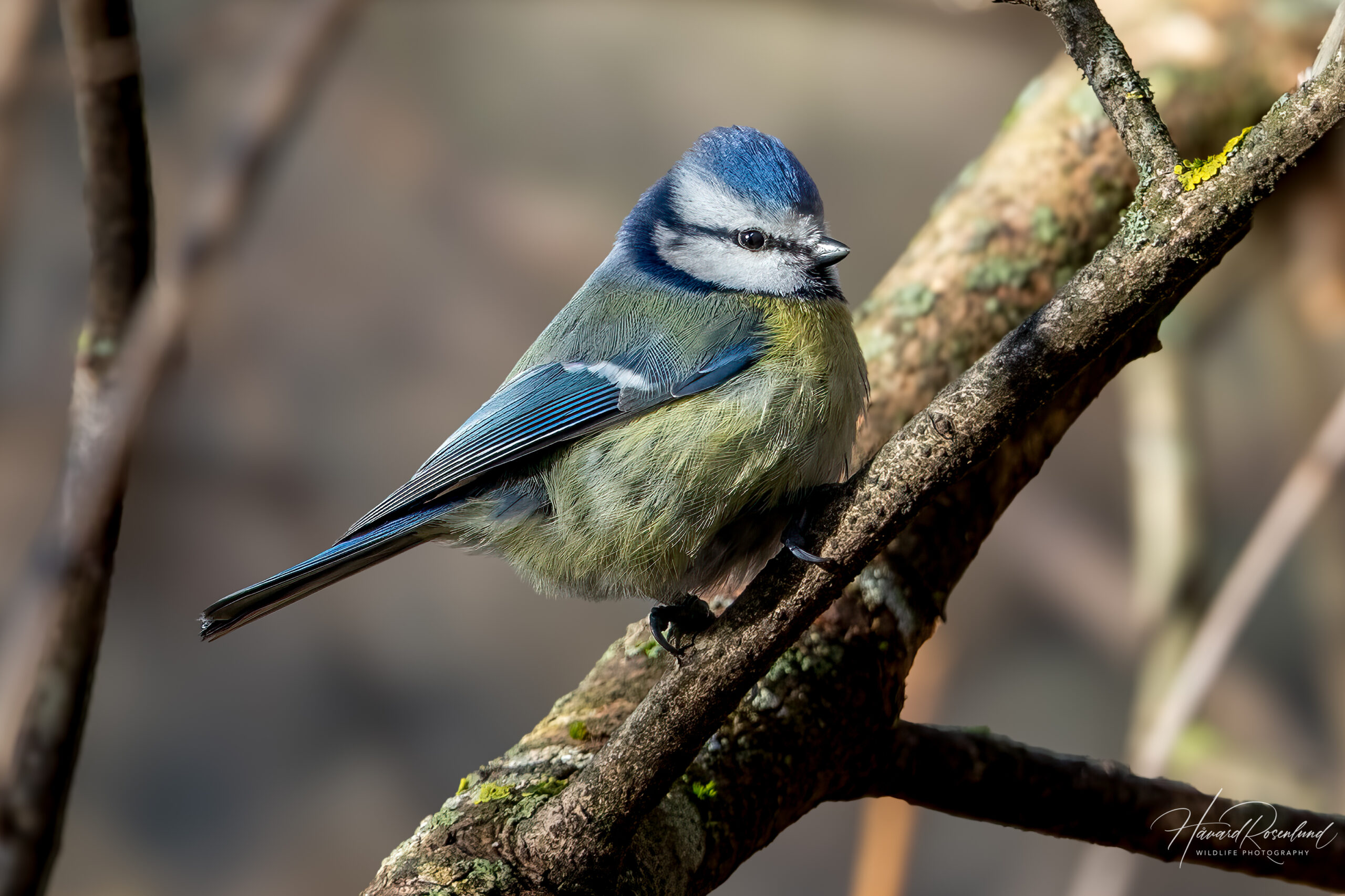
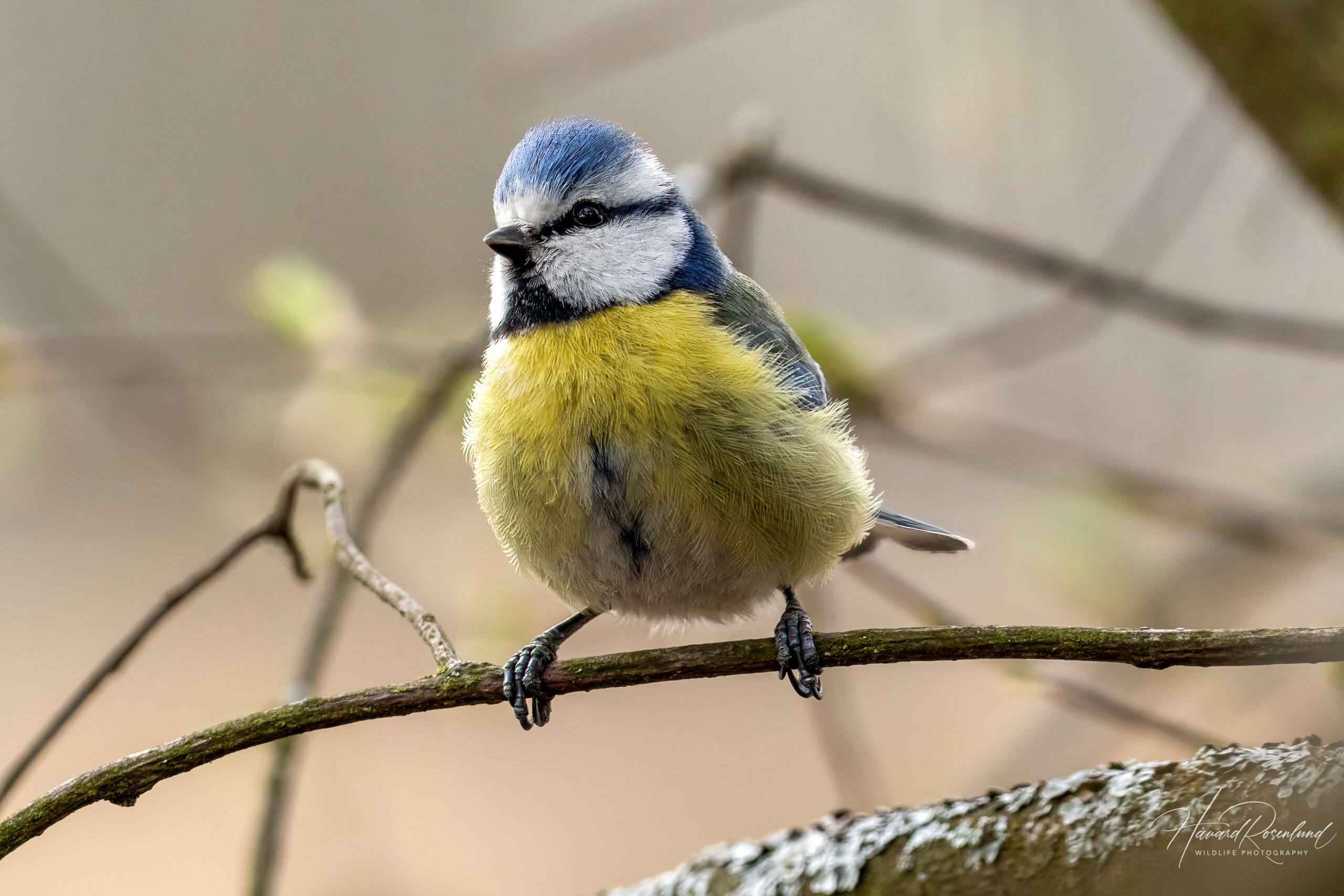
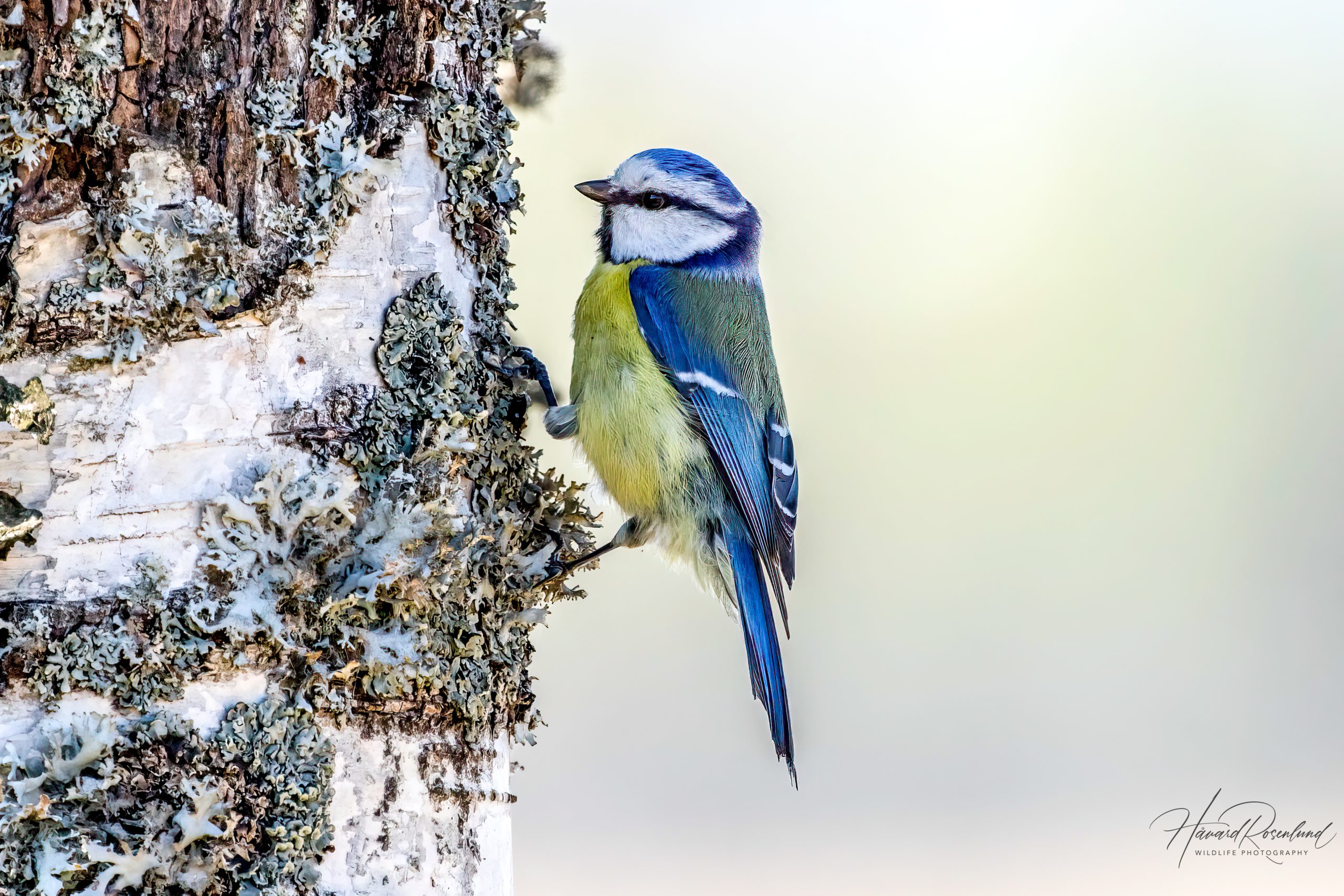
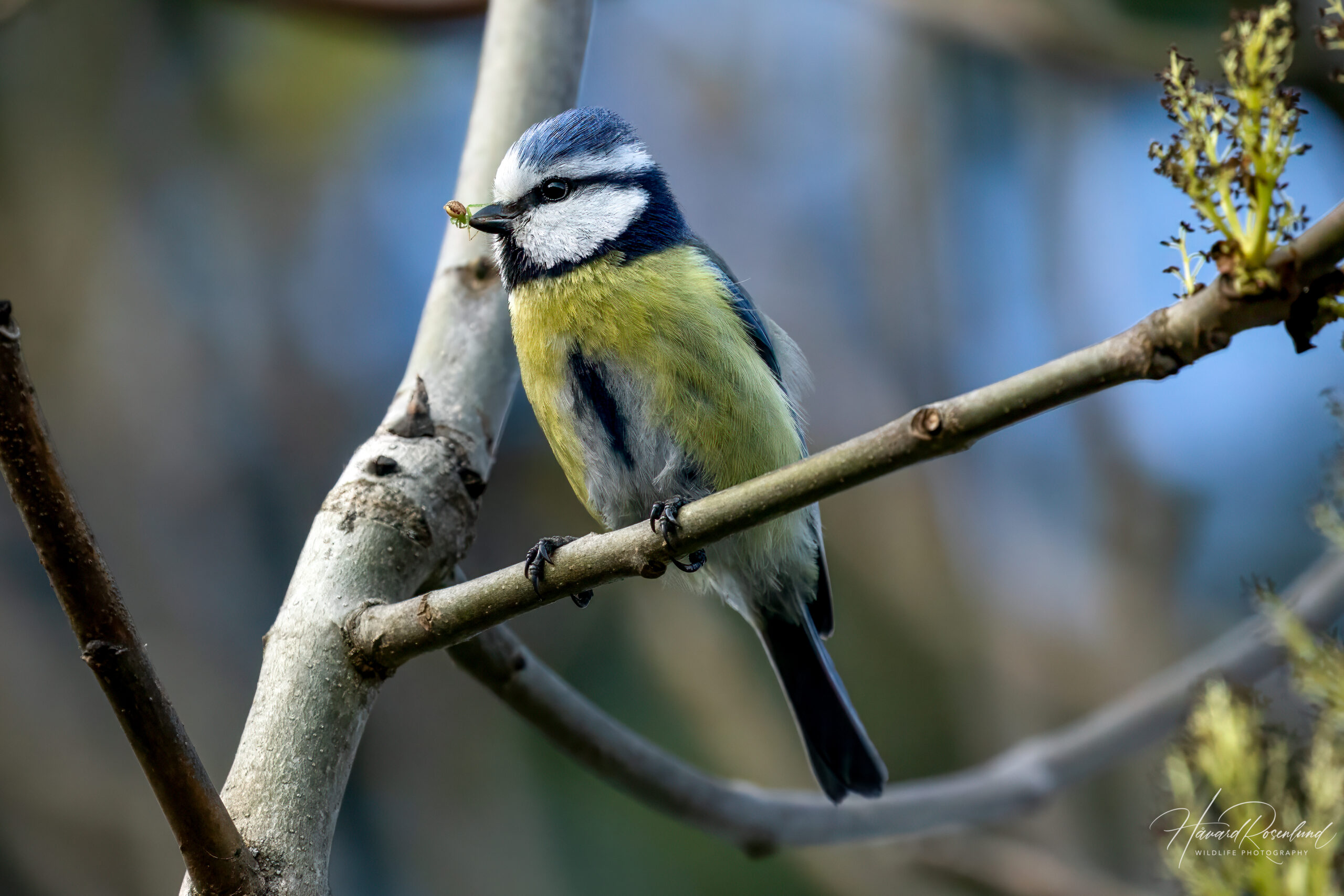
The Eurasian blue tit (Cyanistes caeruleus) is a small, colourful member of the tit family, widespread across Europe and extending into western Asia and North Africa. Adults are about 12 cm long and weigh on average around 11 g. The combination of blue crown, wings and tail, white face crossed by a dark eye-stripe, greenish back and yellow underparts makes the species distinctive. Males and females are similar, although males tend to show stronger blue coloration.
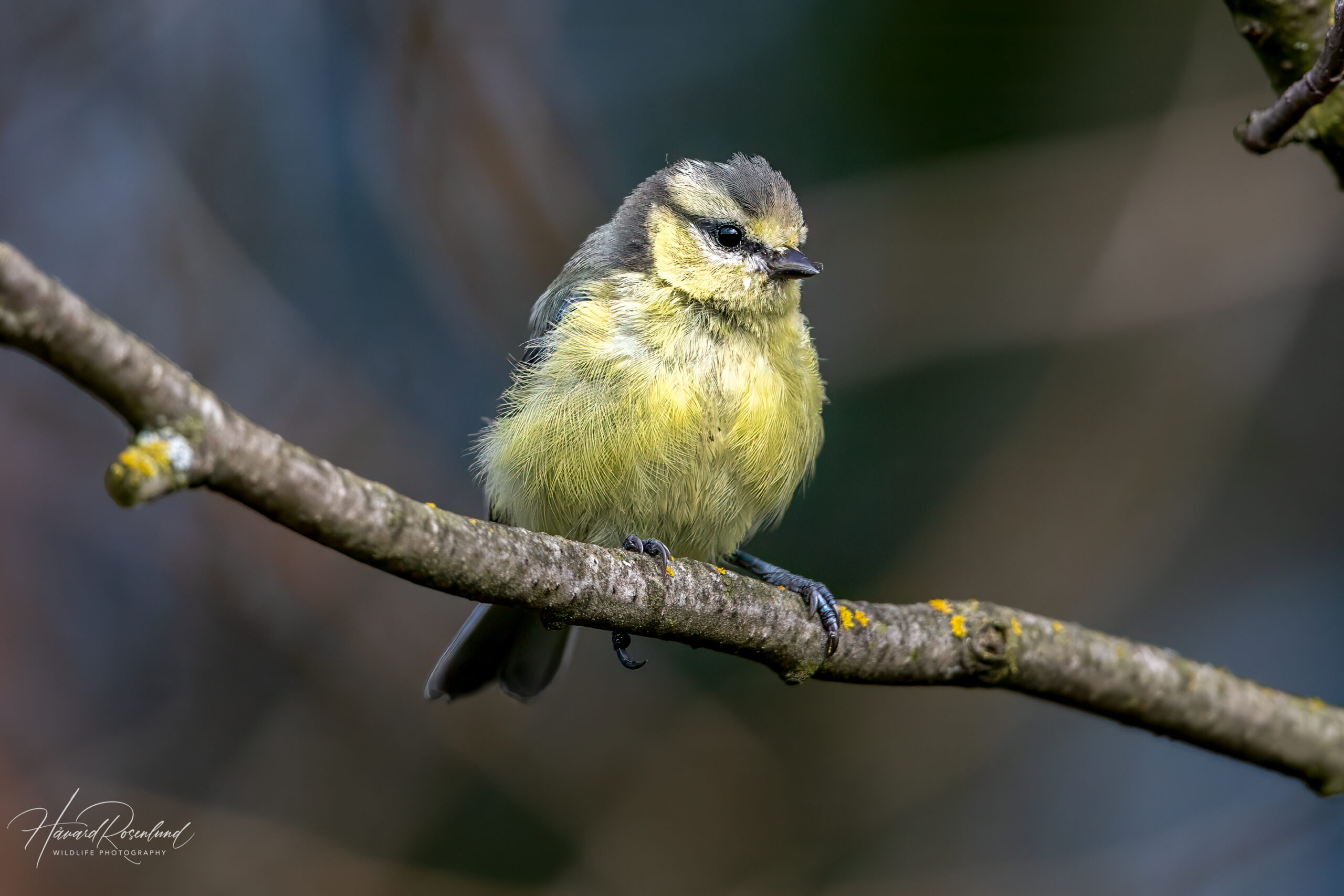
The much larger great tit (Parus major) has a black head, white cheeks and a bold black stripe down the yellow belly. Juvenile blue tits are duller and yellower around the face than adults but already show the compact shape and blue-toned wings characteristic of the species.
Habitat
Blue tits favour deciduous and mixed woodland, especially areas rich in oak, but also thrive in hedgerows, orchards, parks and gardens wherever trees provide food and nesting cavities. Their small size and agility allow them to exploit the fine outer branches and foliage that larger tits use less efficiently.
The species adapts particularly well to wooded urban and suburban environments. Nest boxes can replace natural cavities where old trees are scarce, while gardens provide a mixture of shrubs, mature trees and supplementary food that can support birds throughout the year.
Diet
During spring and summer, blue tits feed heavily on caterpillars, spiders and other small invertebrates. Caterpillars become especially important when adults are feeding nestlings. In autumn and winter the diet broadens toward seeds, nuts and fruit, and birds readily use garden feeders.
Blue tits are exceptionally agile foragers and often hang upside down from fine twigs while searching leaves and buds.
Behaviour
Outside the breeding season, blue tits frequently join mixed-species flocks with other tits and small woodland birds. This can help them find scattered food while several birds remain alert to predators.
Blue tits are also inventive foragers. The famous British habit of piercing foil milk-bottle tops to reach cream spread through local populations during the twentieth century and became a classic example of socially transmitted behaviour. A 2013 experiment with wild-caught blue tits found strong evidence that they could learn a new foraging technique from other birds; juvenile females were twice as likely to acquire the new skill as the other birds in the experiment.
A field study published in 2024 revealed another side of this flexibility. Wild, free-living blue tits, which do not normally cache food, remembered which food had been available at a feeder, where it was and how long ago they had visited. Remembering this combination of what, where and when is described as episodic-like memory.
Migration
Most blue tits are resident or move only short distances, but the species is partially migratory. The tendency to move varies geographically and between years, with some birds from northern and eastern populations travelling farther in autumn and winter while others remain close to their breeding areas.
Young birds generally disperse more than established adults. Seasonal movements can therefore alter local winter numbers without the species showing the regular long-distance migration typical of many other small passerines.
Breeding
Blue tits nest in tree cavities and readily use nest boxes. The female builds the nest from moss and other plant material and lines it with hair, feathers and softer fibres. A typical clutch contains 8–10 eggs, though substantially larger and smaller clutches occur. The female incubates for about 13–14 days while the male supplies food, and both parents then feed the chicks. Young normally leave the nest after 18–21 days and remain with their parents, which continue to feed them for a few weeks. One brood is usual, with a second brood occurring only occasionally.
A three-year study in primeval woodland in Poland found that caterpillars made up about 74% of the nestlings’ diet, yet only 17–65% of broods matched the seasonal caterpillar peak from year to year. Broods that matched the peak less closely did not have lower nesting success in that study. Caterpillars are therefore extremely important without every brood having to coincide precisely with one short peak.
Status
The Eurasian blue tit is classified as least concern on the IUCN Red List. It is widespread and abundant across much of its range and adapts well to both natural woodland and human-modified environments.
The 2025 update from the Pan-European Common Bird Monitoring Scheme, based on data through 2024, shows a 35% increase in the European breeding index from 1980 to 2024. Over the most recent ten-year period, 2015–2024, the change was only 1%, indicating broad stability in the past decade after the longer-term increase.
Local numbers can fluctuate after severe winters or poor breeding seasons, but the species remains common across most of its range.
Image gallery
Loading map and observations…
Have you seen this species?
Independent species archive
Did you find this species page useful?
Wildlife Vagabond is independently built and maintained. Voluntary support helps cover hosting, maps, data storage and continued improvements to the species archive.
Support Wildlife VagabondSpecies content will remain freely available.
References
Information about the species’ global distribution and status is based primarily on global Red List data. See the references below for details.
- Aplin, L. M., Sheldon, B. C., & Morand-Ferron, J. (2013). Milk bottles revisited: social learning and individual variation in the blue tit, Cyanistes caeruleus. Animal Behaviour, 85(6), 1225-1232. https://doi.org/10.1016/j.anbehav.2013.03.009
- BirdLife International. (2024). Eurasian Blue Tit species factsheet and Red List assessment. https://datazone.birdlife.org/species/factsheet/eurasian-blue-tit-cyanistes-caeruleus
- British Trust for Ornithology. (n.d.). A Blue Tit Diary. https://www.bto.org/learn/about-birds/articles/blue-tit-diary
- British Trust for Ornithology. (n.d.). Blue Tit. https://www.bto.org/learn/about-birds/birdfacts/blue-tit
- Davies, J. R., Keuneke, L. S., Clayton, N. S., & Davidson, G. L. (2024). Episodic-like memory in wild free-living blue tits and great tits. Current Biology, 34(16), 3593-3602.e5. https://doi.org/10.1016/j.cub.2024.06.029
- International Union for Conservation of Nature. (n.d.). Eurasian Blue Tit. The IUCN Red List of Threatened Species. https://www.iucnredlist.org/species/103761667/118689415
- Pan-European Common Bird Monitoring Scheme. (n.d.). Species trends, 2025 update. https://pecbms.info/trends-and-indicators/species-trends/
- Wesołowski, T., & Rowiński, P. (2014). Do Blue Tits Cyanistes caeruleus synchronize reproduction with caterpillar peaks in a primeval forest? Bird Study, 61(2), 231-245. https://doi.org/10.1080/00063657.2014.899307