
Yellow-throated Longclaw
Macronyx croceus
At a glance
Habitat
- Moist savanna, grassland and open wetlands, usually with tall or rank grass
Diet
- Mainly insects and other invertebrates
Activity
- Diurnal
Size
- Length: 20–22 cm Weight: About 48 g
Range
- Patchily across sub-Saharan Africa, from West Africa to eastern and southern Africa
Description
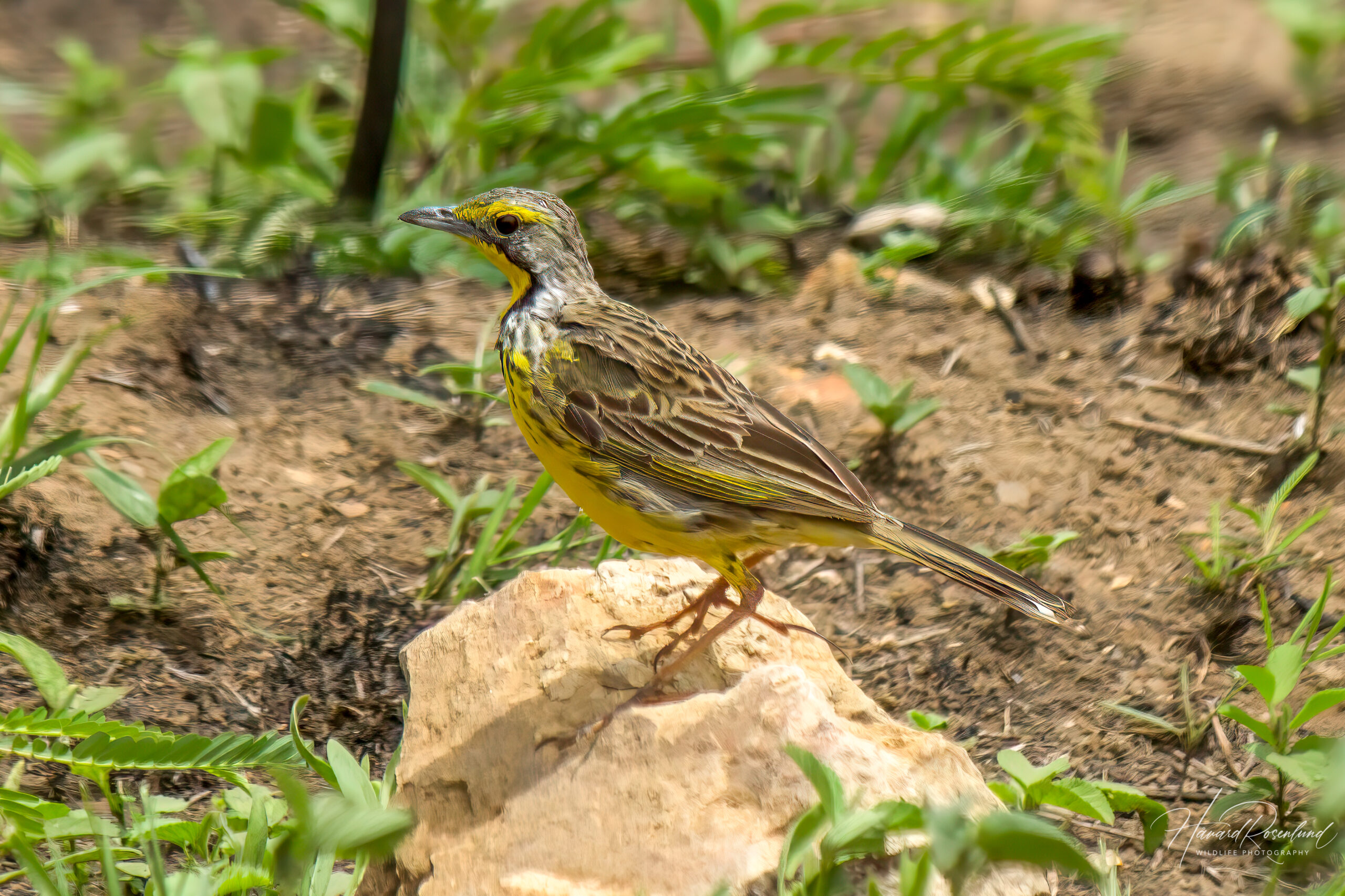
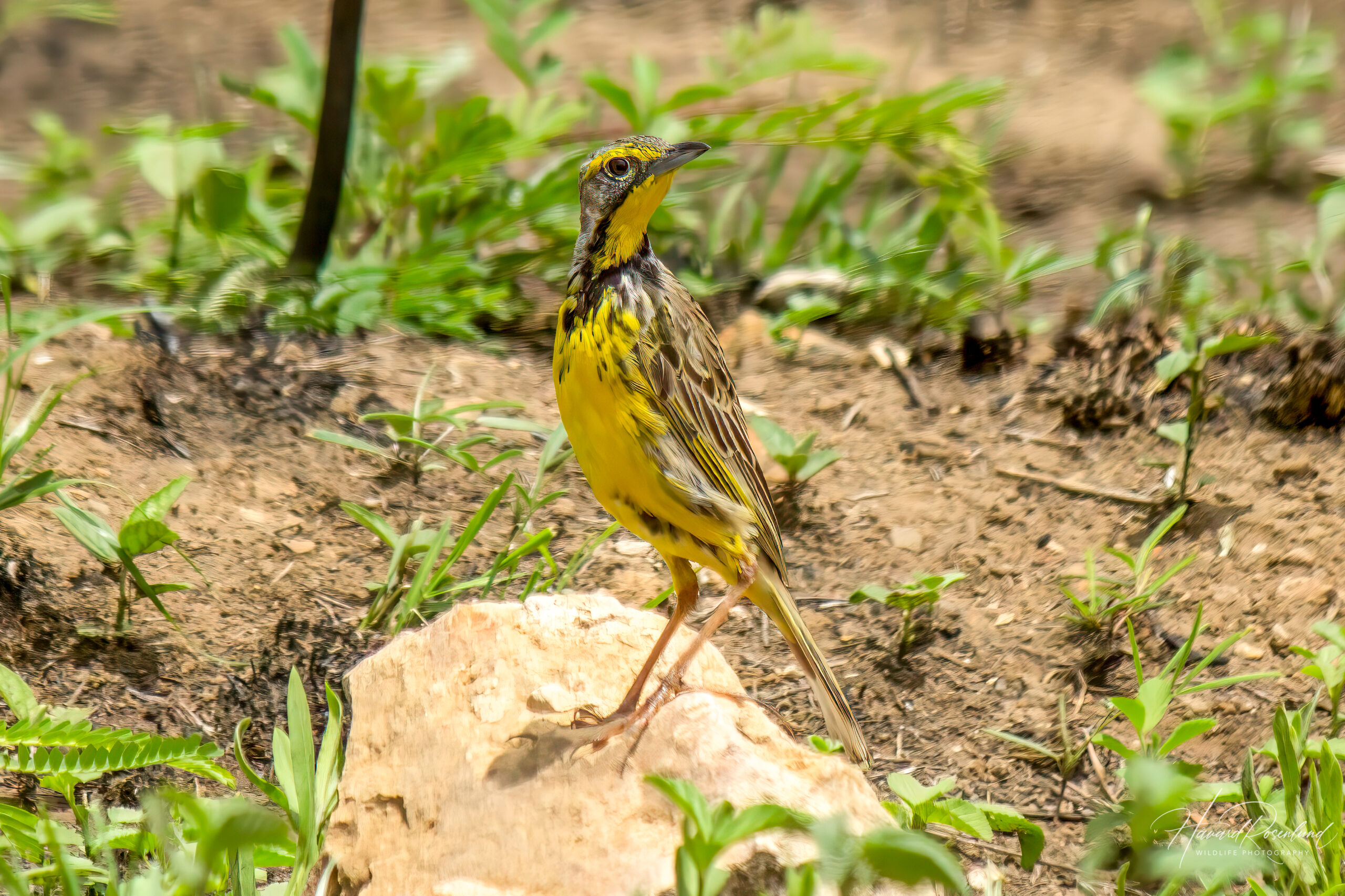
The yellow-throated longclaw (Macronyx croceus) is the most widespread of Africa's longclaws, a robust grassland bird about 20–22 cm long and weighing around 48 g. Adults have a brilliant yellow throat and breast bordered by bold black markings, streaked brown upperparts and exceptionally long hind claws. Females are generally duller and more heavily streaked than males.
The long hind claws suit a bird that spends much of its life walking through grass rather than gripping branches. When perched upright on a grass stem, low bush or termite mound, the bright yellow breast can make the species surprisingly conspicuous above otherwise cryptic brown upperparts. Cape Longclaw (Macronyx capensis) and Rosy-throated Longclaw (Macronyx ameliae) have a similar build but differ most obviously in the colour and pattern of the throat and breast.
Habitat
Yellow-throated longclaws favour relatively moist savanna, open grassland and grassy wetlands, especially where tall or rank grass provides both feeding cover and concealed nesting sites. They also occur in seasonally wet floodplains and other open landscapes with scattered shrubs or termite mounds.
The species is broadly but discontinuously distributed across sub-Saharan Africa. In southern Africa it is concentrated mainly in the wetter eastern grasslands and savannas rather than the dry interior.
Diet
Insects and other invertebrates dominate the diet. Recorded prey includes grasshoppers, beetles, moths and their larvae, mantises, ants, millipedes and small molluscs.
The diet changes with local and seasonal abundance of invertebrates. Most food is taken on or close to the ground as the yellow-throated longclaw walks through vegetation and picks prey from grass, soil and low plants.
Behaviour
Yellow-throated longclaws are mainly terrestrial, moving steadily through grass with an upright gait and relying on the cryptic upperparts for concealment. They regularly climb onto exposed low perches to watch the surrounding territory and deliver their calls and song.
Pairs are territorial during breeding and remain conspicuous around favoured perches. Outside the main breeding period birds may remain as pairs or occur in small family parties after young have fledged, but the species does not normally form the large flocks typical of many grassland seed-eaters.
Breeding
Yellow-throated longclaws are monogamous and territorial during breeding. The male performs a distinctive aerial display, rising above the territory and flying slowly in a circle with the tail spread before descending again. The flight display and elevated calling posts mark the breeding territory while the nest itself remains well concealed.
The female builds a thick-walled cup nest at ground level, usually hidden within dense or rank grass. In southern Africa egg-laying is concentrated from spring into summer, with a peak around November to January. Clutches contain one to four eggs.
Incubation lasts about 13–14 days and is performed mainly or entirely by the female, while both parents feed the chicks. The young leave the nest after roughly 16–17 days and can run rapidly through the grass before their flight is fully developed.
Status
The yellow-throated longclaw is classified as least concern on the IUCN Red List. It remains widespread across suitable grassland and savanna in sub-Saharan Africa.
Local populations can decline where moist grassland and wetland edges are heavily transformed, drained, overgrazed or converted to intensive agriculture, but the species is not currently threatened across its range.
Image gallery
Loading map and observations…
Have you seen this species?
Independent species archive
Did you find this species page useful?
Wildlife Vagabond is independently built and maintained. Voluntary support helps cover hosting, maps, data storage and continued improvements to the species archive.
Support Wildlife VagabondSpecies content will remain freely available.
References
Information about the species’ global distribution and status is based primarily on global Red List data. See the references below for details.
- Avibase. (n.d.). AviList 2025 / Avibase – Yellow-throated Longclaw (Macronyx croceus). https://avibase.bsc-eoc.org/species.jsp?avibaseid=0D9BFED179B45DB3&lang=EN
- Biodiversity Explorer. (n.d.). Yellow-throated Longclaw. Iziko Museums of South Africa. https://www.biodiversityexplorer.info/birds/motacillidae/macronyx_croceus.htm
- BirdLife International. (n.d.). Yellow-throated Longclaw species factsheet. https://datazone.birdlife.org/species/factsheet/yellow-throated-longclaw-macronyx-croceus
- International Union for Conservation of Nature. (n.d.). Yellow-throated Longclaw. The IUCN Red List of Threatened Species. https://www.iucnredlist.org/species/22718405/94578884