
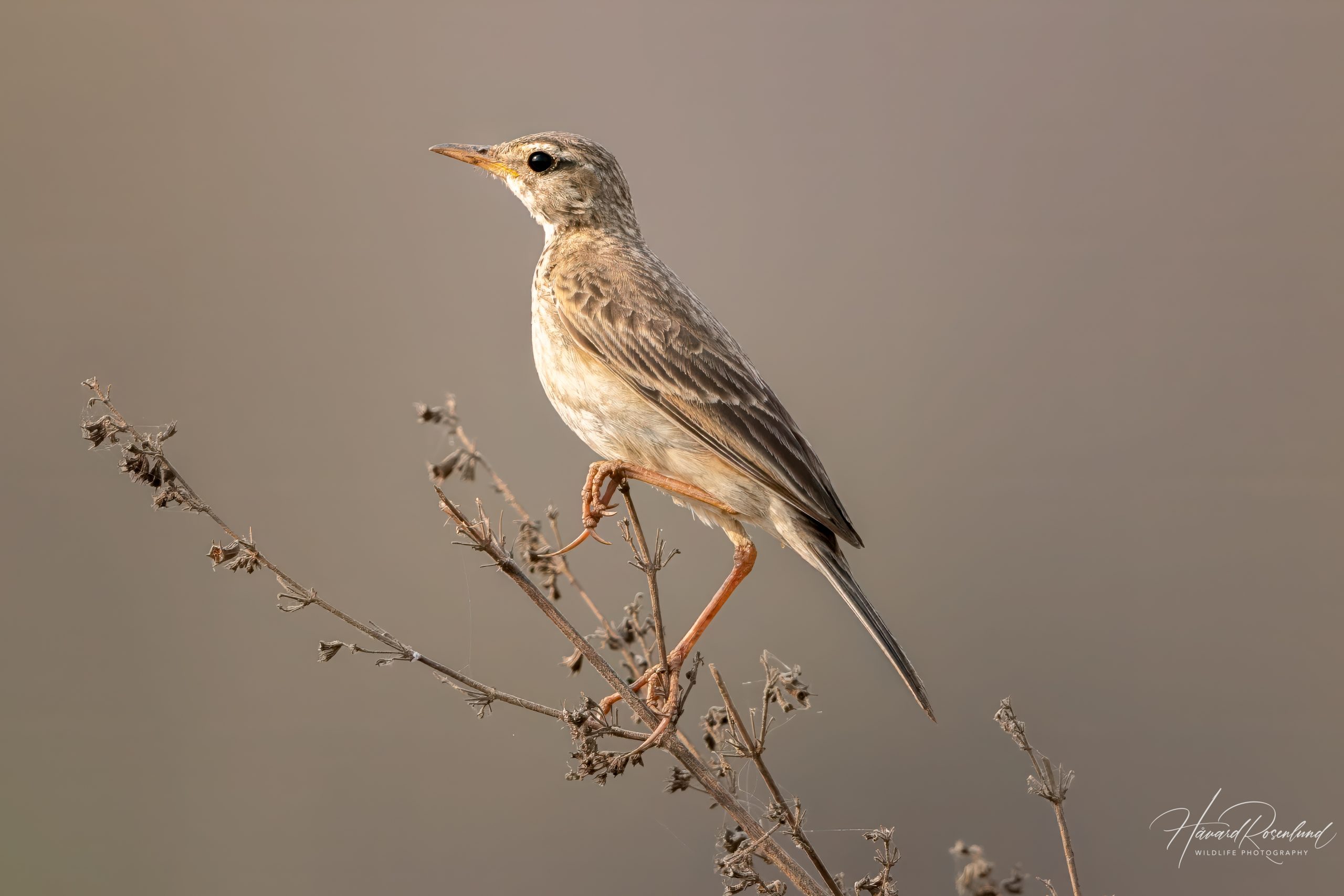
Paddyfield Pipit
Anthus rufulus
At a glance
Habitat
- Short grassland, farmland, fallow fields, open scrub, airfields and other sparsely vegetated ground
Diet
- Mainly insects and other small invertebrates; seeds and occasional small vertebrate prey also taken
Activity
- Diurnal
Size
- Length: about 15–16 cm Weight: about 18–30 g
Range
- Resident across much of South and Southeast Asia
Description
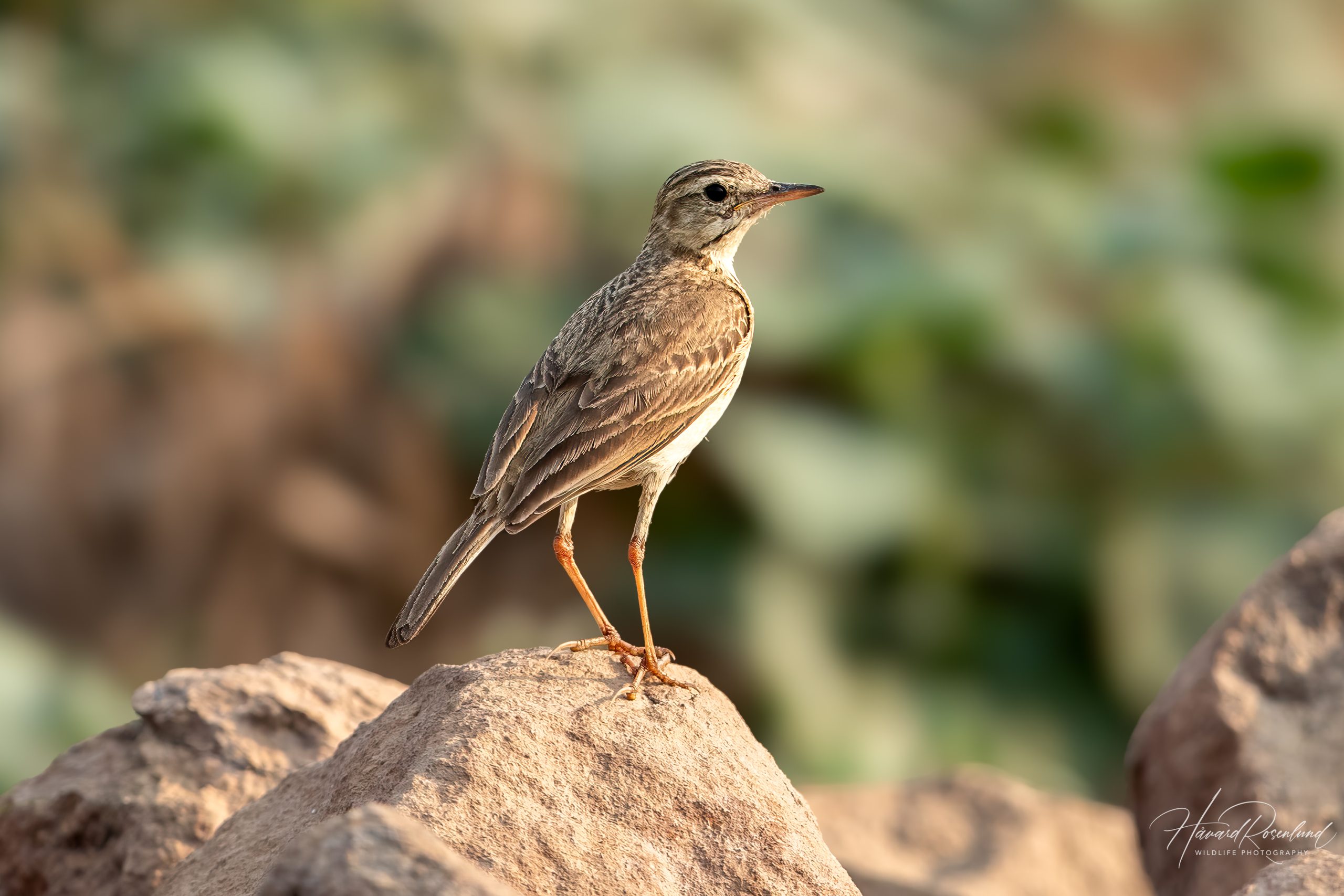
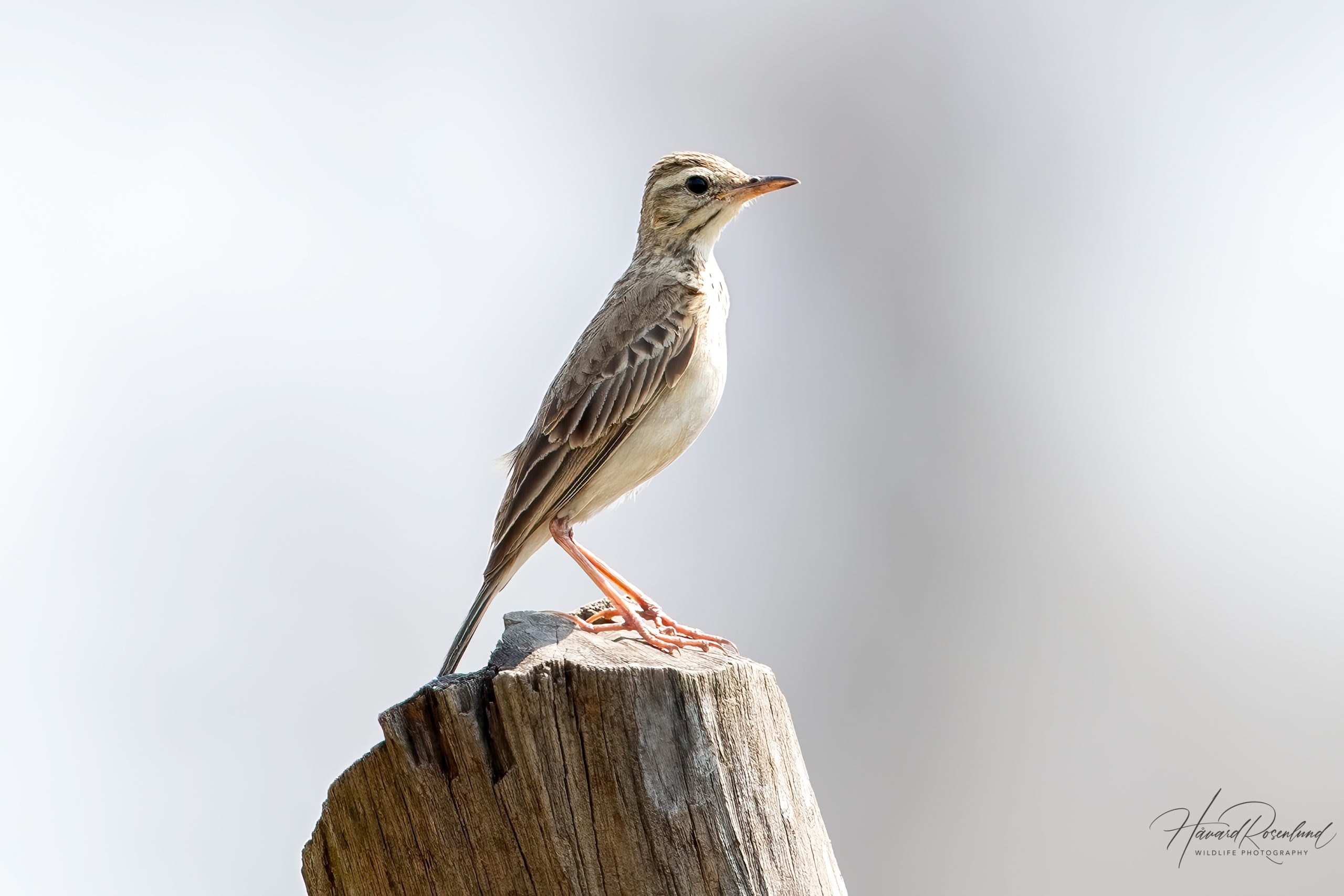
The paddyfield pipit (Anthus rufulus) is a medium-sized pipit widespread across South and Southeast Asia. Adults are about 15–16 cm long and generally weigh roughly 18–30 g. The plumage is cryptic brown to grey-brown above with darker streaking and pale buff to whitish below, with streaking concentrated mainly on the breast. Long legs and a slender bill suit a bird that spends most of its time walking on open ground, often with repeated tail pumping.
Several migratory pipits can look very similar when they winter in the same region. Richard’s pipit (Anthus richardi) is larger, longer-legged and longer-tailed, while Blyth’s pipit (Anthus godlewskii) can be especially difficult. Structure, call and a combination of plumage details are often more reliable than colour alone.
Habitat
Paddyfield pipits are birds of open ground. Short grassland, grazed areas, fallow fields, rice stubble, dry agricultural land, airfields, roadsides and open scrub are all used. The species generally avoids tall dense vegetation because it needs clear ground for walking and detecting prey.
In India it is resident and strongly associated with open habitats. Agricultural landscapes can provide extensive habitat, but their value depends on vegetation height, field structure and how intensively the ground is managed.
Diet
The diet consists mainly of insects and other small invertebrates, including beetles, ants, grasshoppers, caterpillars, spiders and similar ground-dwelling prey. Seeds and other plant material are also taken, especially when animal food is less abundant.
Birds forage by walking or running across open ground and stopping to pick prey from soil or vegetation. The diet can be surprisingly opportunistic. An observation published in 2022 documented paddyfield pipits in India catching live tilapia fry about 25–35 mm long, the first published record of this behaviour in India.
Behaviour
Paddyfield pipits spend most of their time on the ground, walking or running through short vegetation and open soil and frequently pumping the tail. Their cryptic plumage makes stationary birds difficult to see, and when disturbed they often fly low for a short distance before settling again on open ground nearby.
Males mark and defend territories with conspicuous song flights, rising above open grassland on fluttering wings, singing while hovering or descending and then returning to the ground. The aerial display is especially striking in a species that otherwise spends so much of its time on the ground.
Breeding
Breeding timing varies regionally and often follows the onset of local rains; in northern India it is mainly reported from March to August. A study published in 2022 followed 33 paddyfield pipit nests in agricultural fields in southern West Bengal, India, and found nesting mainly from March to June, with an average clutch of about three eggs. The nests were shallow cups on the ground, built from grass and other plant material and concealed beside stubble, grass or other low cover.
Among nests followed through complete breeding stages, incubation lasted about 12 days and the nestlings remained in the nest for about 10 days. Overall nest success was only 21.2%. Nests at the bases of standing rice stubble had about 11% higher survival than nests in open microhabitats, showing how even small differences in field structure can matter to a ground-nesting bird in working agricultural landscapes.
Status
The paddyfield pipit is classified as least concern on the IUCN Red List and remains widespread across South and Southeast Asia.
State of India’s Birds 2025 estimates a long-term national increase of about 13.95%, while the recent trend is a decline of about 1.46% per year. Its distribution in India remains very large. Because the species breeds directly on the ground in agricultural landscapes, intensification, removal of vegetation along field edges and changes in how crops or grasslands are managed can affect nesting habitat even where open land remains abundant.
Image gallery
Loading map and observations…
Have you seen this species?
Independent species archive
Did you find this species page useful?
Wildlife Vagabond is independently built and maintained. Voluntary support helps cover hosting, maps, data storage and continued improvements to the species archive.
Support Wildlife VagabondSpecies content will remain freely available.
References
Information about the species’ global distribution and status is based primarily on global Red List data. See the references below for details.
- Bharos, A., Naidu, R., Jadhav, A., & Mandavia, A. (2022). Paddyfield Pipit <i>Anthus rufulus</i> (Family Motacillidae) Catching and Feeding on Fish. Journal of the Bombay Natural History Society (JBNHS), 119. https://doi.org/10.17087/jbnhs/2022/v119/167985
- Bird Count India. (n.d.). Identifying Paddyfield Pipits. https://birdcount.in/identifying-paddyfield-pipits/
- BirdLife International. (n.d.). Paddyfield Pipit species factsheet. https://datazone.birdlife.org/species/factsheet/paddyfield-pipit-anthus-rufulus
- International Union for Conservation of Nature. (n.d.). Paddyfield Pipit. The IUCN Red List of Threatened Species. https://www.iucnredlist.org/species/22718477/94582538
- Nath, Chakrabarti & Mukherjee. (2022). Breeding biology of the Oriental Skylark, Bengal Bush Lark and Paddyfield Pipit in agricultural fields of West Bengal. https://www.orientalbirdclub.org/jao-38
- State of India's Birds. (2025). State of India’s Birds 2025 – Paddyfield Pipit. https://stateofindiasbirds.in/species/oripip1/