
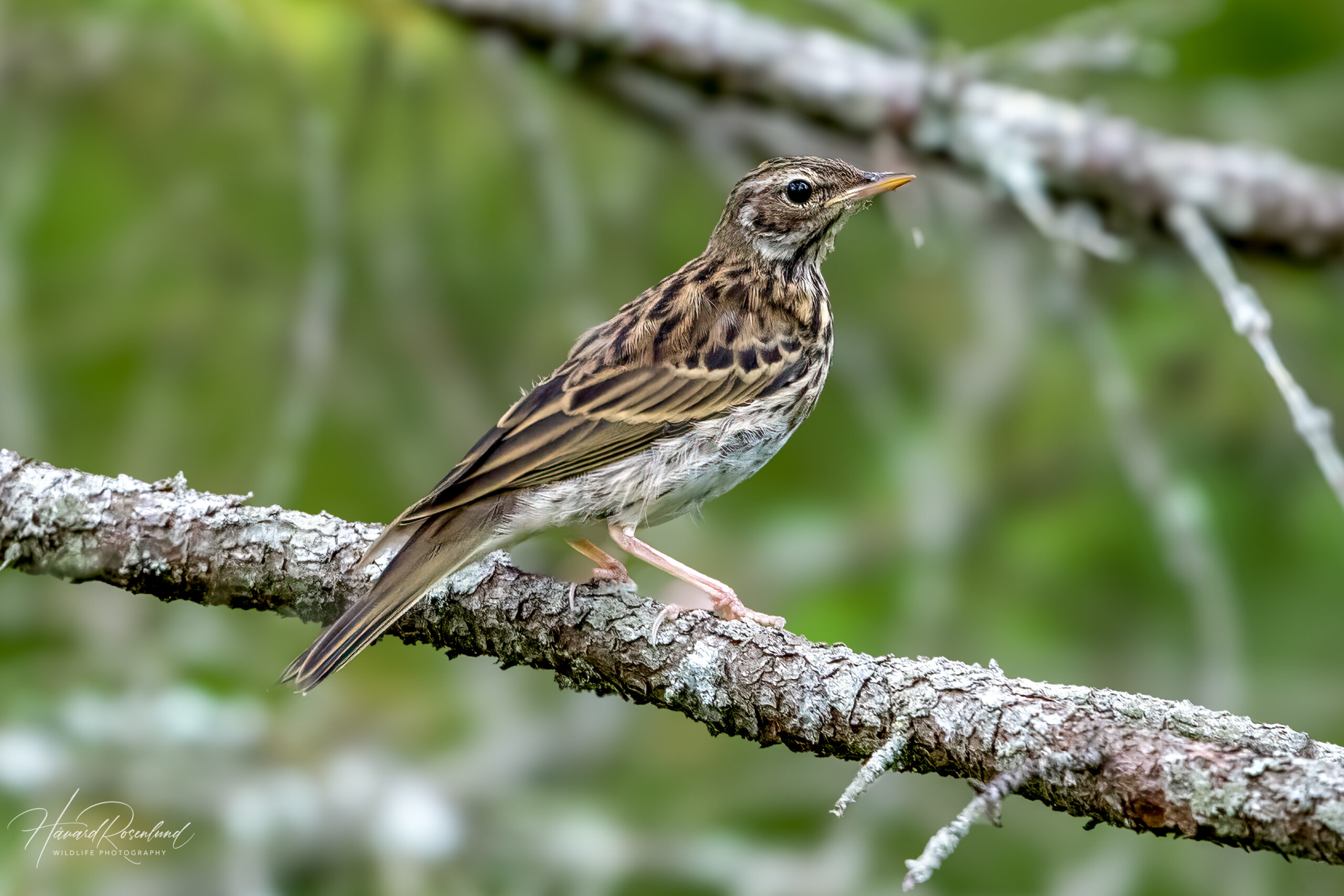
Tree Pipit
Anthus trivialis
At a glance
Habitat
- Open woodland, forest edges and clearings with scattered trees
Diet
- Mostly insects, spiders and other small invertebrates
Activity
- Diurnal
Size
- Length: 14–15 cm Weight: 22 g
Range
- Breeds across Europe and northern Asia; winters mainly in sub-Saharan Africa and southern Asia
Description
The tree pipit (Anthus trivialis) is a slim pipit breeding across much of Europe and northern Asia and spending the non-breeding season mainly in sub-Saharan Africa and southern Asia. Adults are about 14–15 cm long and weigh around 22 g. Like most pipits it is brown and streaked, with a pale eyebrow and heavily marked breast.
It can be difficult to separate from the meadow pipit (Anthus pratensis), but tree pipits tend to have a slightly stronger bill, paler legs, less heavily streaked flanks and a shorter, more curved hind claw. Habitat, calls and especially the display flight are often more useful than any single plumage feature.
Habitat
Tree pipits favour open woodland, forest edges, clearings and other semi-open habitats where scattered trees or tall shrubs stand above a relatively open ground layer. They generally avoid both dense closed forest and completely treeless landscapes.
The combination of open feeding ground and elevated song posts is especially important during the breeding season. In parts of western Europe the species has declined where woodland has become taller and denser, reducing the patchy structure it prefers.
Diet
Small invertebrates dominate the diet, especially insects and spiders taken from the ground and low vegetation. During the breeding season these animal foods are particularly important for growing chicks.
Adults may also catch insects in short flights, and some seeds and other plant material are eaten outside the breeding season. Most feeding nevertheless takes place on or close to the ground beneath the scattered trees and shrubs that characterise breeding habitat.
Behaviour
Tree pipits spend much of their active time on the ground, walking through open patches while feeding, but they repeatedly move up into trees and tall shrubs to watch their surroundings and use prominent branches as song posts. This alternation between ground activity and elevated perches is characteristic of the semi-open woodland habitat they prefer.
During the breeding season males are territorial and advertise especially conspicuously with song flights. A male commonly launches from the top of a tree or another prominent perch, climbs into the air and then descends with partly spread wings in a slow, parachuting glide while singing. The display serves both territorial advertisement and mate attraction and is often one of the easiest ways to distinguish a tree pipit from the similar meadow pipit. One of the repeated phrases in the song can sound a little like a laser-pistol effect.
Migration
Tree pipits are long-distance migrants. European breeding birds leave mainly from August into September and travel to wintering areas in sub-Saharan Africa, returning north in spring, usually from April into May. Populations breeding farther east in Asia also winter in southern Asia.
Migration links open woodland breeding habitats across Eurasia with savanna, woodland and scrub habitats thousands of kilometres farther south. Conditions at stopover and wintering sites therefore form an important part of the species’ annual cycle, not just the habitat used during breeding.
Breeding
The nest is built on the ground, usually well concealed by grass or low vegetation. The female builds the cup from grasses and other plant material and typically lays 4–5 eggs.
The female incubates for about 13 days. The chicks are altricial, hatching poorly developed and dependent on their parents, and normally leave the nest after roughly another two weeks. Both parents feed them, bringing mainly small invertebrates. The ground nest is well concealed, helping to reduce the risk that eggs and chicks are discovered.
Status
The tree pipit is classified as least concern on the IUCN Red List. It has a very large breeding and wintering range.
Populations have nevertheless declined substantially in parts of Europe over the longer term. Changes in woodland structure, particularly the loss of open and patchy breeding habitat, are important locally, and the species also depends on suitable conditions along its migration routes and in African wintering areas.
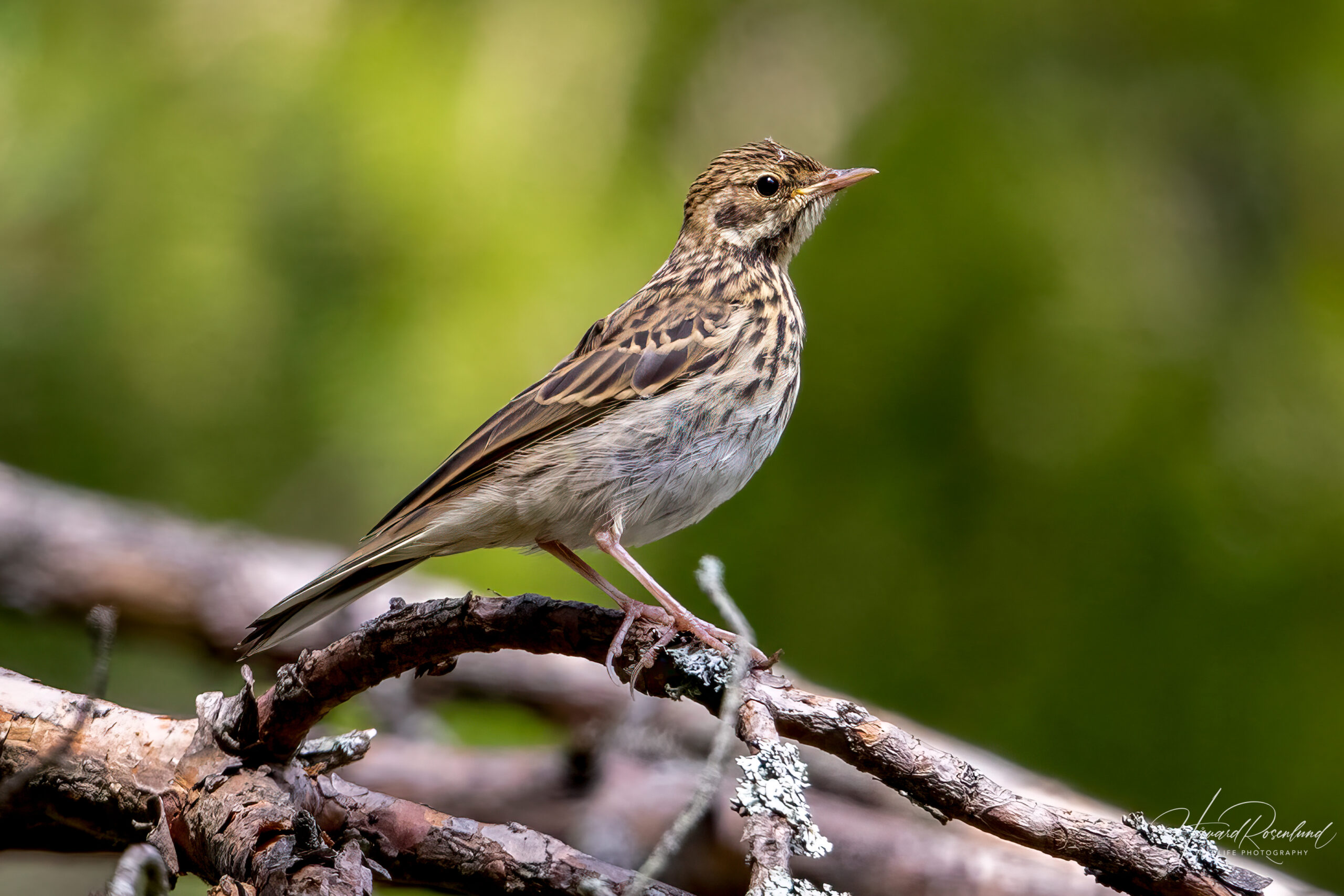
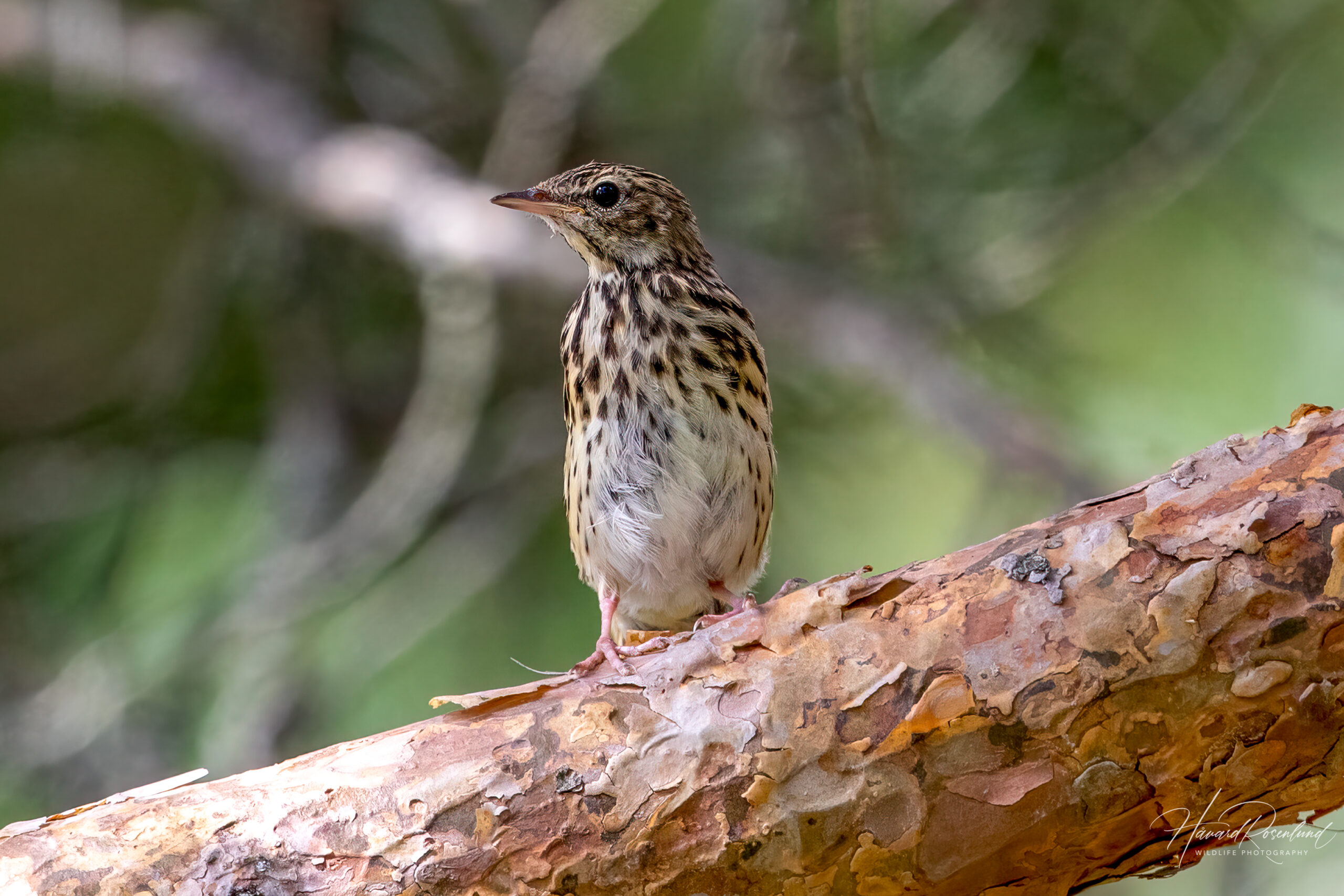
Image gallery
Loading map and observations…
Have you seen this species?
Independent species archive
Did you find this species page useful?
Wildlife Vagabond is independently built and maintained. Voluntary support helps cover hosting, maps, data storage and continued improvements to the species archive.
Support Wildlife VagabondSpecies content will remain freely available.
References
Information about the species’ global distribution and status is based primarily on global Red List data. See the references below for details.
- BirdLife International. (n.d.). Tree Pipit species factsheet. https://datazone.birdlife.org/species/factsheet/tree-pipit-anthus-trivialis
- British Trust for Ornithology. (n.d.). Tree Pipit. https://www.bto.org/learn/about-birds/birdfacts/tree-pipit
- International Union for Conservation of Nature. (n.d.). Tree Pipit. The IUCN Red List of Threatened Species. https://www.iucnredlist.org/species/22718546/131985523