
African Woolly-necked Stork
Ciconia microscelis
At a glance
Habitat
- Freshwater wetlands, river margins, grassland, farmland and increasingly suburban landscapes
Diet
- Frogs and other amphibians, reptiles, fish, crabs, insects and small mammals
Activity
- Diurnal; forages mainly on the ground and in shallow water
Size
- Length: About 86–95 cm Weight: About 2.1 kg
Range
- Widespread across sub-Saharan Africa
Description
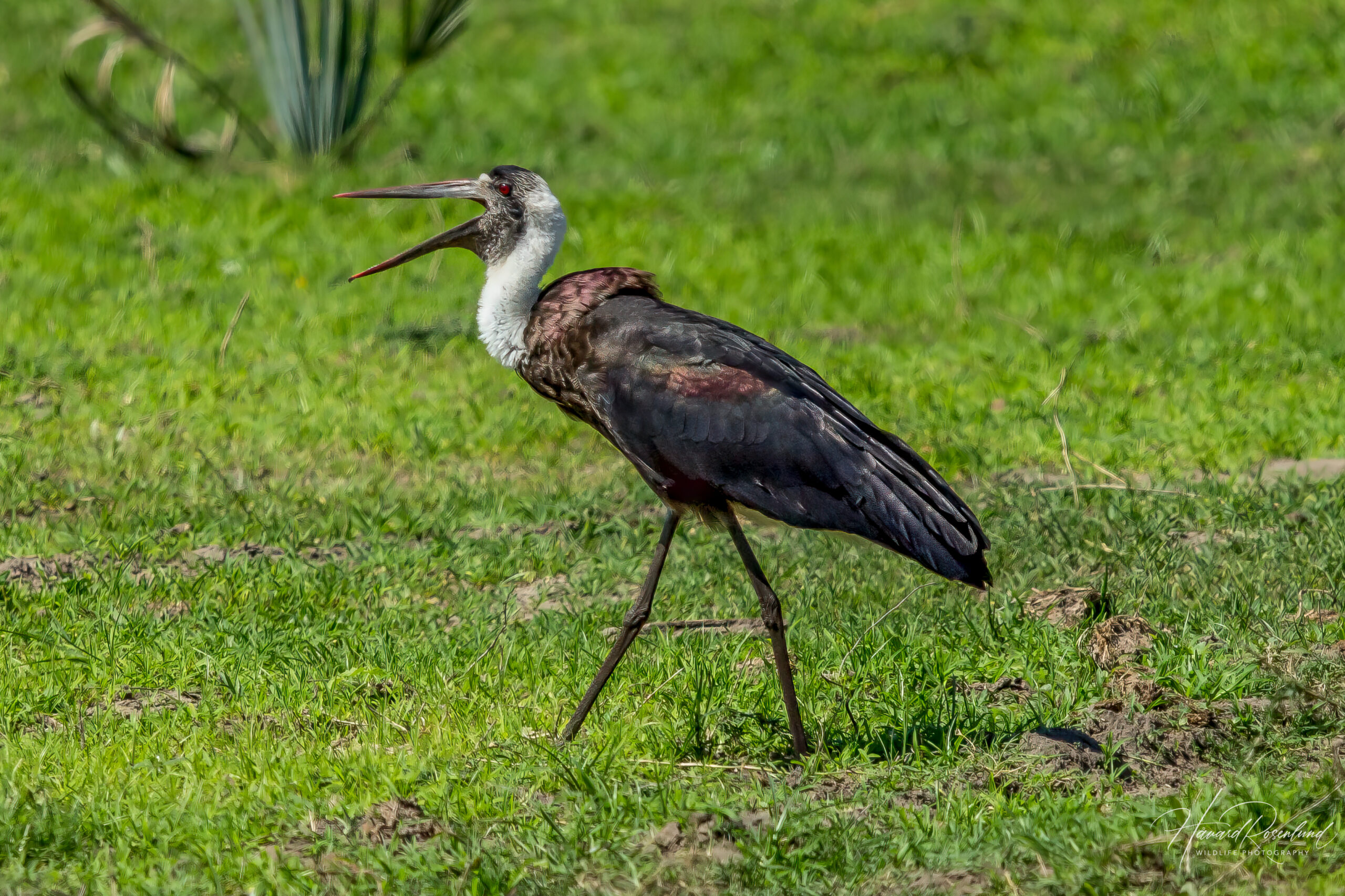
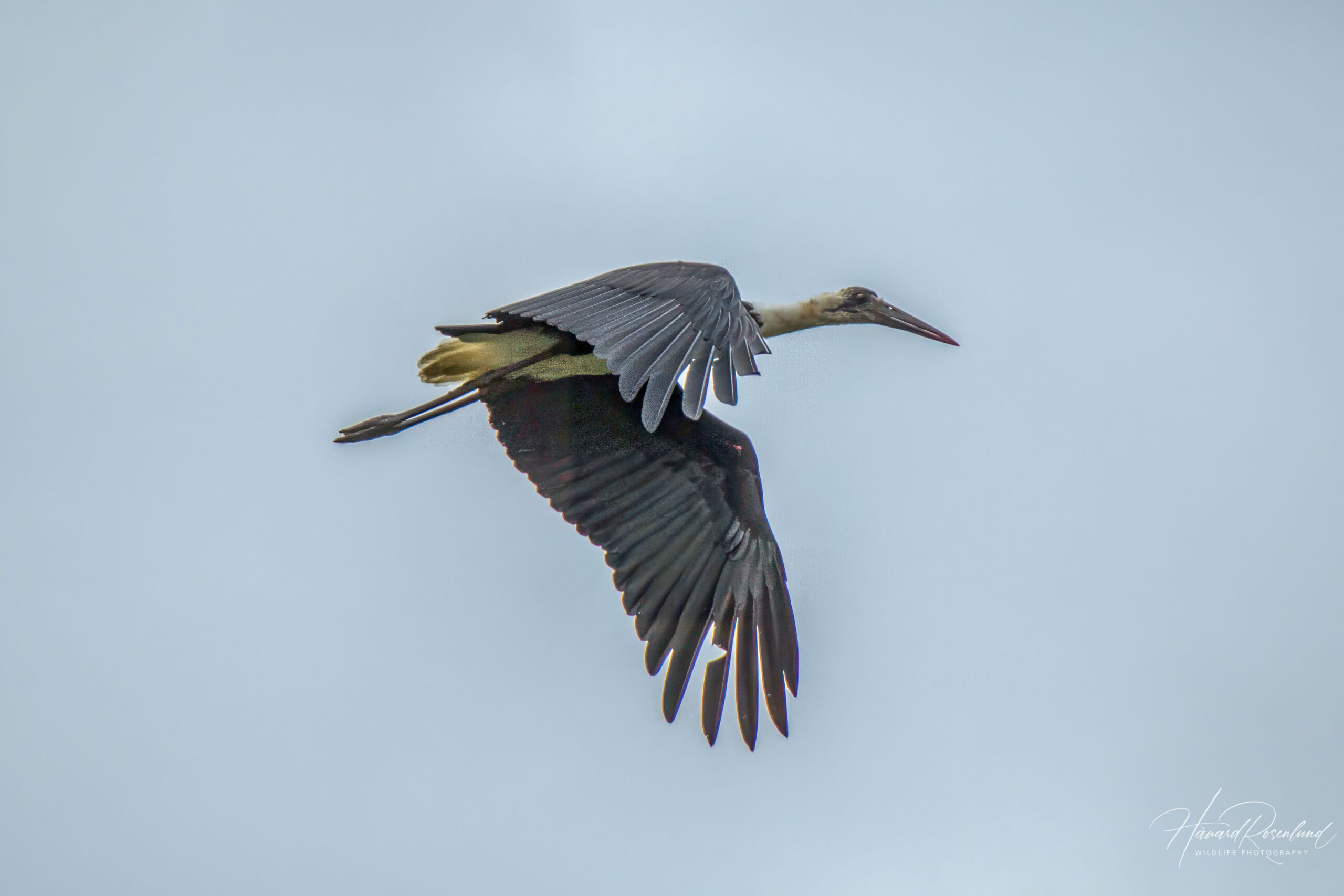
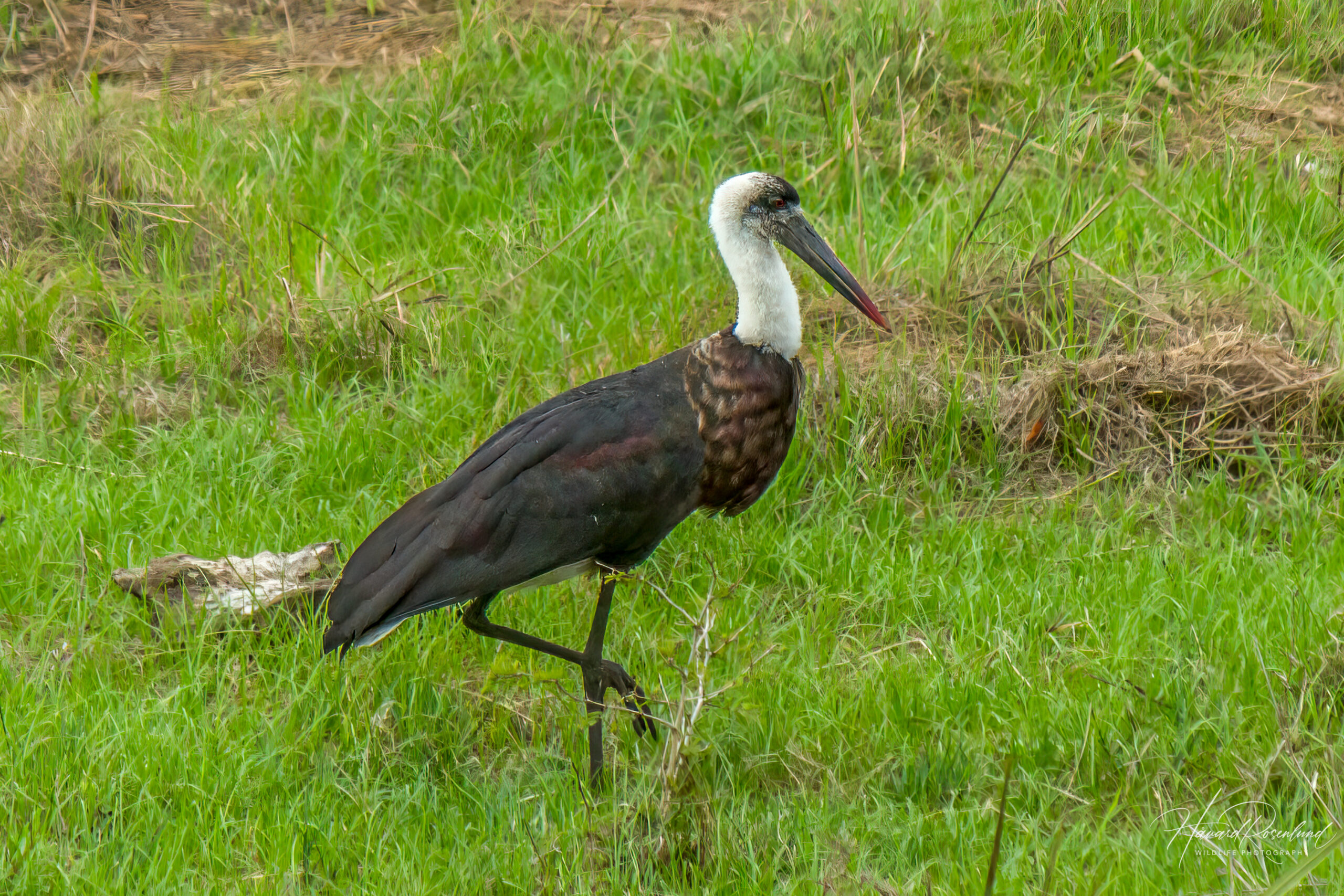
The African woolly-necked stork (Ciconia microscelis) is a medium-sized stork found across much of sub-Saharan Africa. It stands about 86–95 cm tall and weighs around 2.1 kg. Adults have a glossy dark body with green, blue or purple iridescence and a contrasting woolly white neck; the lower belly and undertail are also white. The dark cap has a rather diffuse lower edge, and the heavy bill is dark grey to reddish. Juveniles are duller and browner.
The white, downy-looking neck gives the species its familiar name and contrasts sharply with the otherwise dark plumage, especially in good light.
Taxonomy
African and Asian woolly-necked storks were long treated as a single species, usually under Ciconia episcopus. They are now recognised as separate species: African woolly-necked stork (Ciconia microscelis) and Asian woolly-necked stork (C. episcopus).
The split was initially supported by consistent differences in plumage and morphology, together with their widely separated distributions. Museum-genomic analyses have since shown that the African and Asian birds form genetically distinct sister lineages, further supporting their treatment as separate species.
Habitat
African woolly-necked storks use a broad range of open habitats where prey can be taken from the ground or shallow water. These include marshes, river margins, seasonal wetlands, reservoirs, grassland, farmland, irrigation channels and coastal mudflats.
The species is less dependent on extensive natural wetlands than its appearance might suggest. A combination of shallow water, open ground, grassland and scattered large trees can provide both feeding and breeding habitat, even in heavily modified landscapes.
Diet
Frogs and other amphibians are important prey, together with reptiles, fish, crabs, insects and small mammals. The exact mixture changes with habitat and local availability.
A study published in 2021 of adults provisioning chicks in suburban KwaZulu-Natal recorded prey ranging from frogs and fish to snakes, crabs and moles, showing how broadly the species can exploit both aquatic and terrestrial food.
Hunting
African woolly-necked storks usually hunt alone or in pairs, walking deliberately across grassland, muddy margins and shallow water while searching for prey. This broad ground- and shallow-water hunting style allows them to exploit both aquatic and terrestrial prey within the same landscape.
Behaviour
The species is mainly diurnal and uses elevated trees and other structures for resting and overnight roosting.
GPS tracking in KwaZulu-Natal published in 2026 showed a striking age difference in space use. The areas used by adults averaged about 16.5 km², compared with about 198 km² for immature birds. Adults also repeatedly returned to familiar roosts, while younger birds ranged much more widely.
Breeding
African woolly-necked storks usually breed as isolated pairs rather than in dense colonies. They build substantial stick nests in tall trees, and both parents incubate and care for the young. A study published in 2026 in KwaZulu-Natal found a mean clutch of 3.5 eggs, most often four, with clutches ranging from two to six. Incubation lasts about 30 days. New nesting attempts were recorded from July to January, with a strong peak in September.
The same study also revealed an unusual form of nest helping. Non-parental storks were recorded at just over a third of nesting attempts and sometimes fed the chicks. Their presence did not improve breeding success; nests with helpers produced fewer fledged young overall in the study. More chicks fledged where more woodland or forest remained around the nest, showing that nearby natural feeding habitat can remain important even where the birds breed in densely settled landscapes.
Relationship with humans
One of the most striking recent developments in the species is its expansion through suburban parts of KwaZulu-Natal. Birds once described mainly as shy inhabitants of natural wetlands and swamp forest have increasingly used gardens, lawns, swimming pools, large ornamental trees and other resources in densely settled landscapes since the late twentieth century.
Supplementary feeding by people is widespread in some suburbs, and individual storks can become remarkably tolerant, occasionally approaching closely or accepting food by hand. These suburban areas provide useful food and nesting opportunities, but natural woodland near nest sites still improves breeding conditions. The species' suburban success therefore appears to depend on both human-provided resources and remaining natural habitat.
Status
The African woolly-necked stork is classified as least concern on the IUCN Red List and remains widespread across sub-Saharan Africa.
The species has benefited from some forms of landscape change in parts of southern Africa, but it still depends on good feeding areas, large nesting trees and landscapes containing wetland, grassland and woodland. Local populations can be affected by habitat loss, disturbance and wetland degradation.
Image gallery
Loading map and observations…
Have you seen this species?
Independent species archive
Did you find this species page useful?
Wildlife Vagabond is independently built and maintained. Voluntary support helps cover hosting, maps, data storage and continued improvements to the species archive.
Support Wildlife VagabondSpecies content will remain freely available.
References
Information about the species’ global distribution and status is based primarily on global Red List data. See the references below for details.
- AviList. (n.d.). African Woolly-necked Stork (Ciconia microscelis). https://www.avilist.org/checklist/v2025/
- BirdLife International. (2026). IUCN Red List for birds. BirdLife DataZone. https://datazone.birdlife.org
- Cornell Lab of Ornithology. (n.d.). Clements Checklist 2025 – African Woolly-necked Stork. https://www.birds.cornell.edu/clementschecklist/
- eBird. (n.d.). African Woolly-necked Stork. Cornell Lab of Ornithology. https://ebird.org/species/wonsto2
- Ghimire, P., Palacios, C., Trimble, J., & Lamichhaney, S. (2024). Museum genomics approach to study the taxonomy and evolution of Woolly-necked storks using historic specimens. G3: Genes|Genomes|Genetics, 14(7), jkae081. https://doi.org/10.1093/g3journal/jkae081
- Gula, J., & Downs, C. T. (2026). Breeding ecology of African Woolly-necked Storks (Ciconia microscelis) in a human-modified, mosaic landscape in South Africa. Journal of Ornithology. https://doi.org/10.1007/s10336-026-02396-3
- Gula, J., & Downs, C. T. (2026). Spatial use of African Woolly-necked Storks (Ciconia microscelis) in a South African mosaic landscape. Urban Ecosystems, 29(2), 65. https://doi.org/10.1007/s11252-026-01923-7
- International Union for Conservation of Nature. (n.d.). Woolly-necked Stork. The IUCN Red List of Threatened Species. https://www.iucnredlist.org/species/22727265/94945236
- Thabethe, V., & Downs, C. T. (2018). Citizen science reveals widespread supplementary feeding of African woolly-necked storks in suburban areas of KwaZulu-Natal, South Africa. Urban Ecosystems, 21(5), 965-973. https://doi.org/10.1007/s11252-018-0774-6
- Thabethe, V., McPherson, S., & Downs, C. T. (2021). Diet of nestling African woolly‐necked storks in suburban areas of KwaZulu‐Natal, South Africa. African Journal of Ecology, 59(3), 769-772. https://doi.org/10.1111/aje.12859