
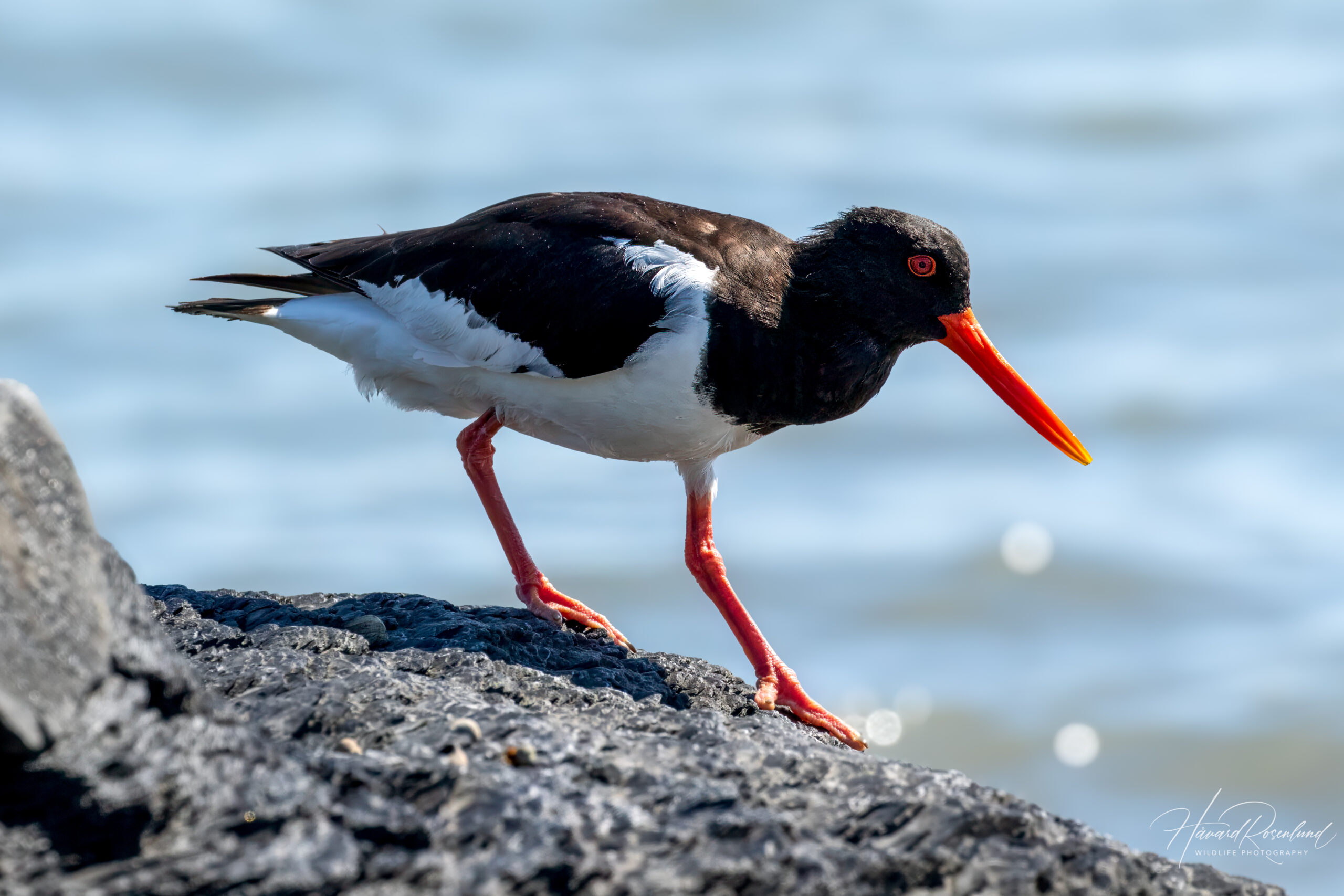
Eurasian Oystercatcher
Haematopus ostralegus
At a glance
Habitat
- Rocky and sandy coasts, tidal flats and estuaries; also inland farmland, river valleys and lakes in parts of the range
Diet
- Bivalves, marine worms and other invertebrates; inland birds also take earthworms and insect larvae
Activity
- Diurnal and tidal; coastal feeding often follows exposure of intertidal flats
Size
- Length: 40–45 cm Weight: ~550 g
Range
- Europe and western to central Asia, with wintering areas around western Europe, the Mediterranean, Africa and southern Asia
Description
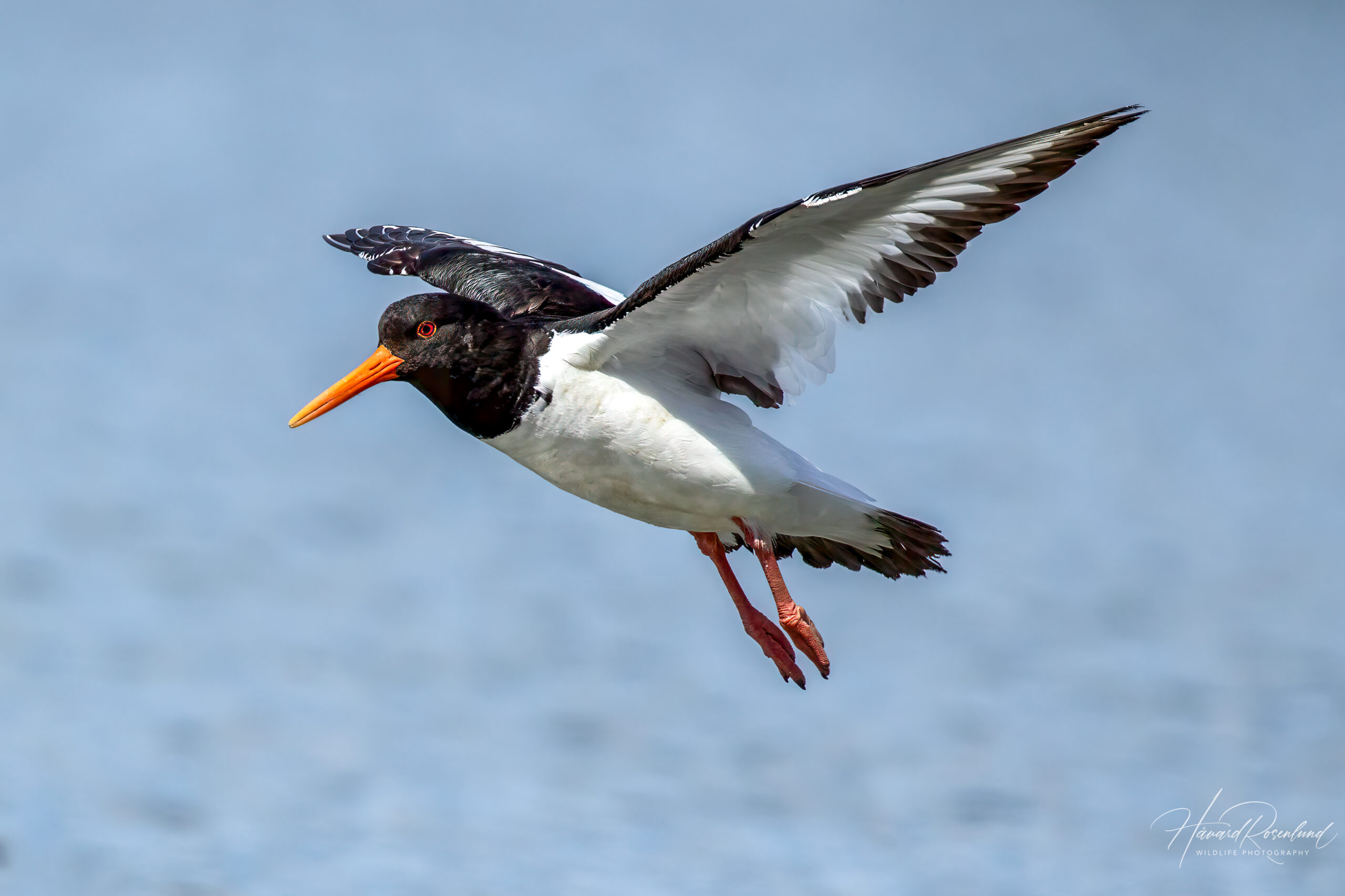
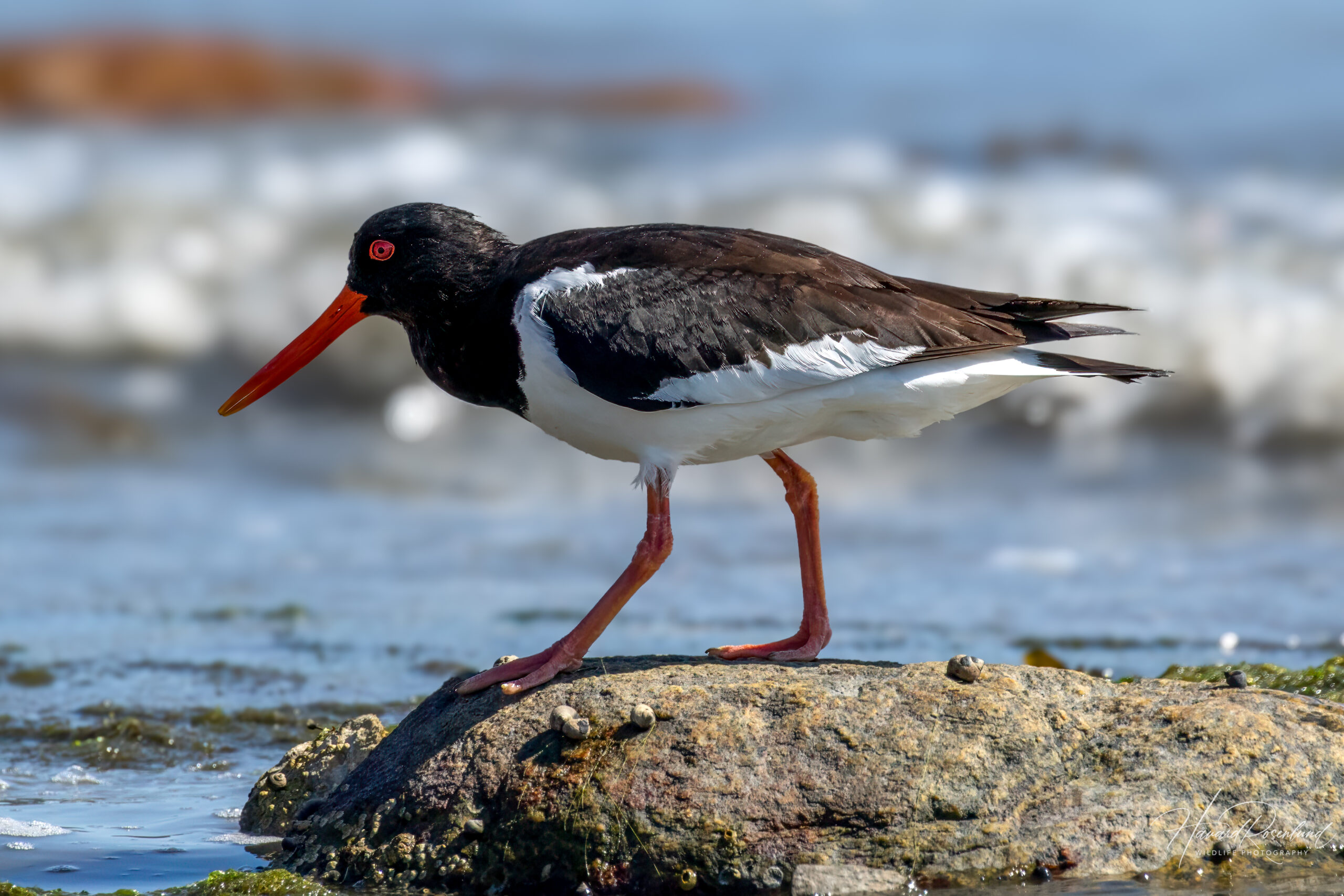
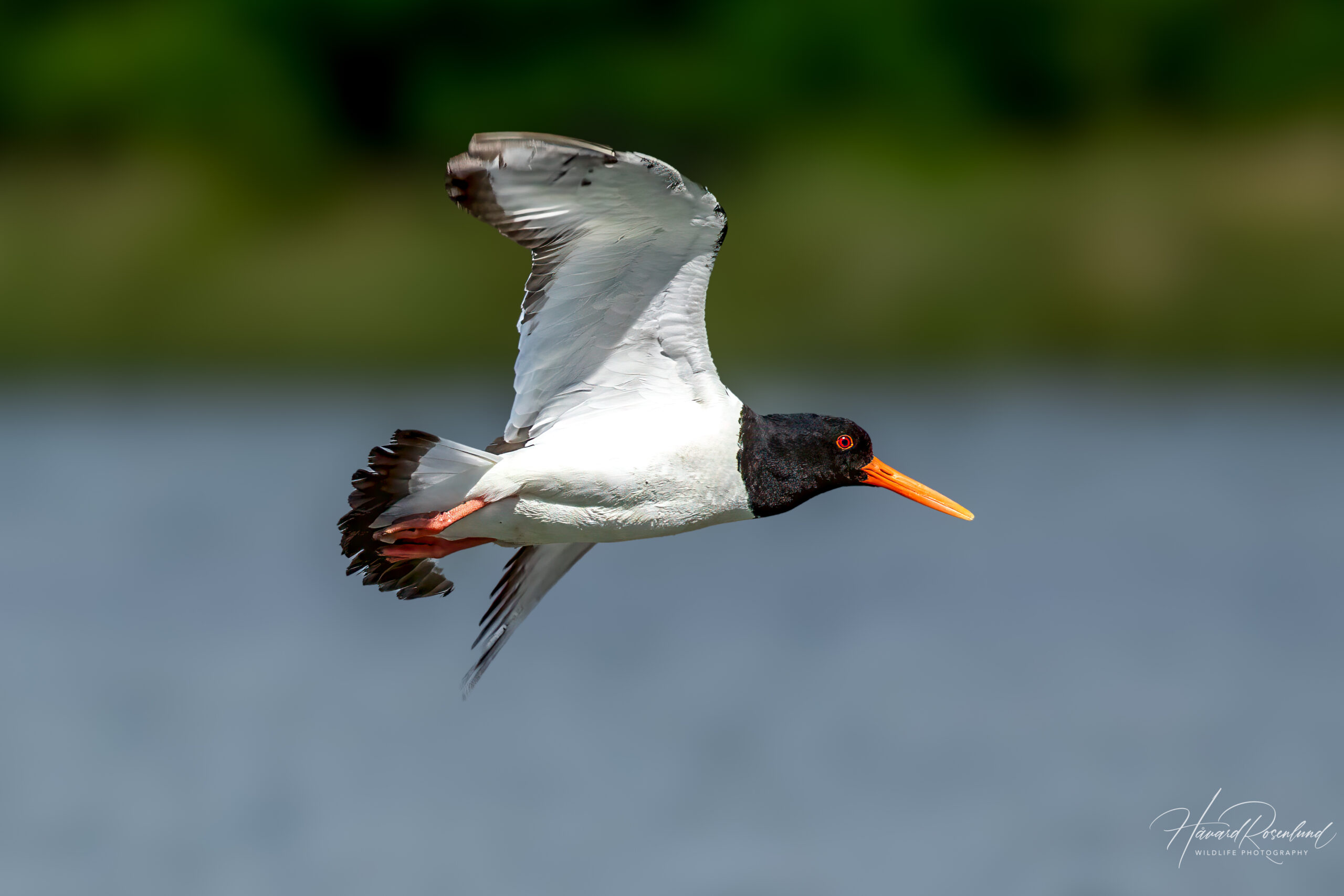
The Eurasian oystercatcher (Haematopus ostralegus) is a robust, long-billed wader breeding across much of Europe and western and central Asia. Adults are about 40–45 cm long and average roughly 550 g. The sharply contrasting black-and-white plumage, pinkish legs, red eye and long orange-red bill make the species easy to recognise. Juveniles are browner above, with a darker-tipped bill and duller legs.
Despite its English name, the bird is not restricted to oysters and many individuals never eat them at all. It uses an unusually broad range of coastal and inland prey, and in parts of northern Europe substantial numbers breed far from the immediate shoreline.
Habitat
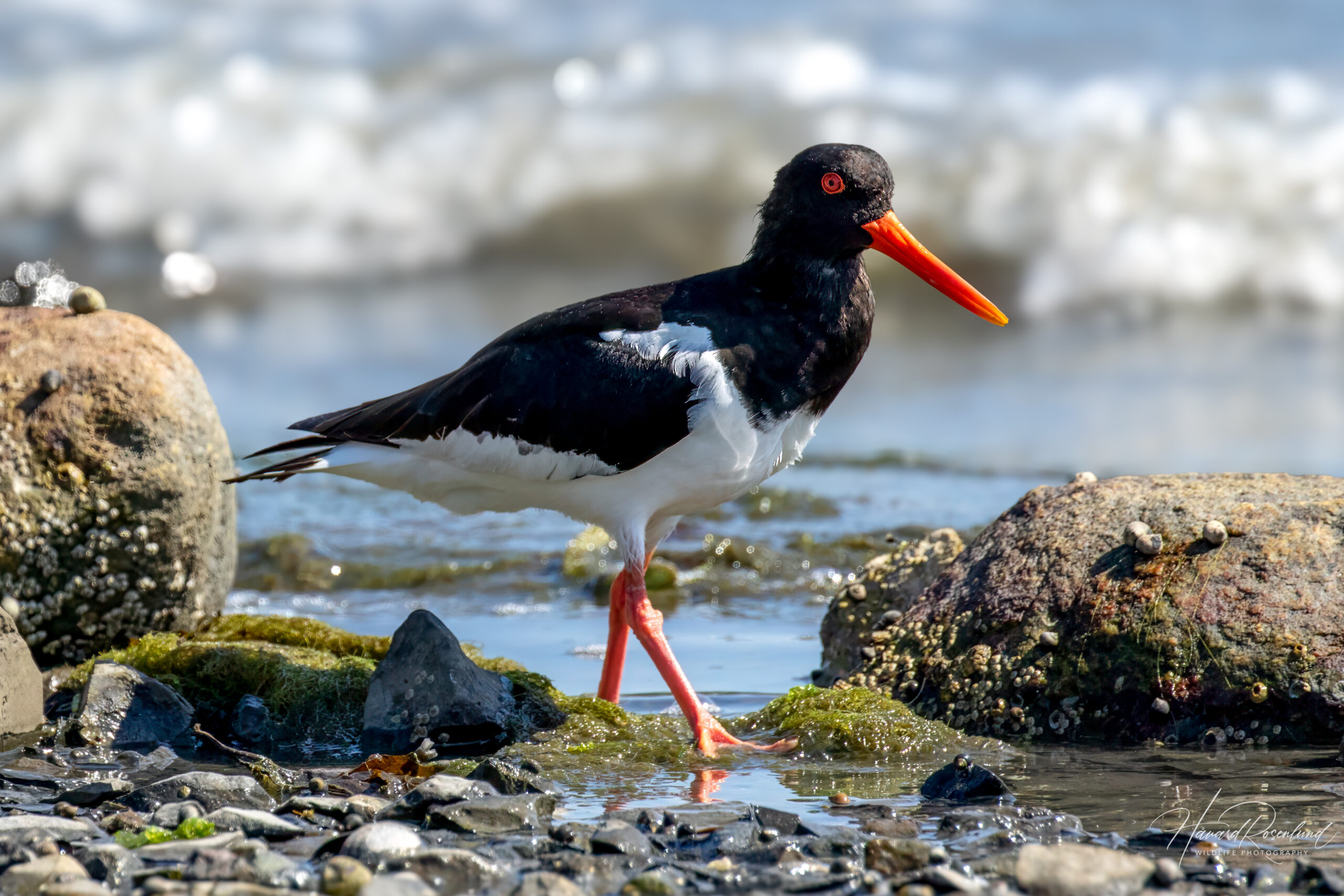
Coastal oystercatchers are strongly associated with estuaries, tidal flats, rocky shores, sandy beaches and saltmarsh, where the falling tide exposes rich feeding areas. Productive intertidal flats can support very large winter concentrations.
Breeding habitat is broader. Oystercatchers also use river valleys, lakeshores, wet grassland and farmland, and some populations have adapted successfully to nesting inland. The species therefore depends on a network of breeding, stopover and wintering habitats rather than on one single coastal habitat type.
Diet
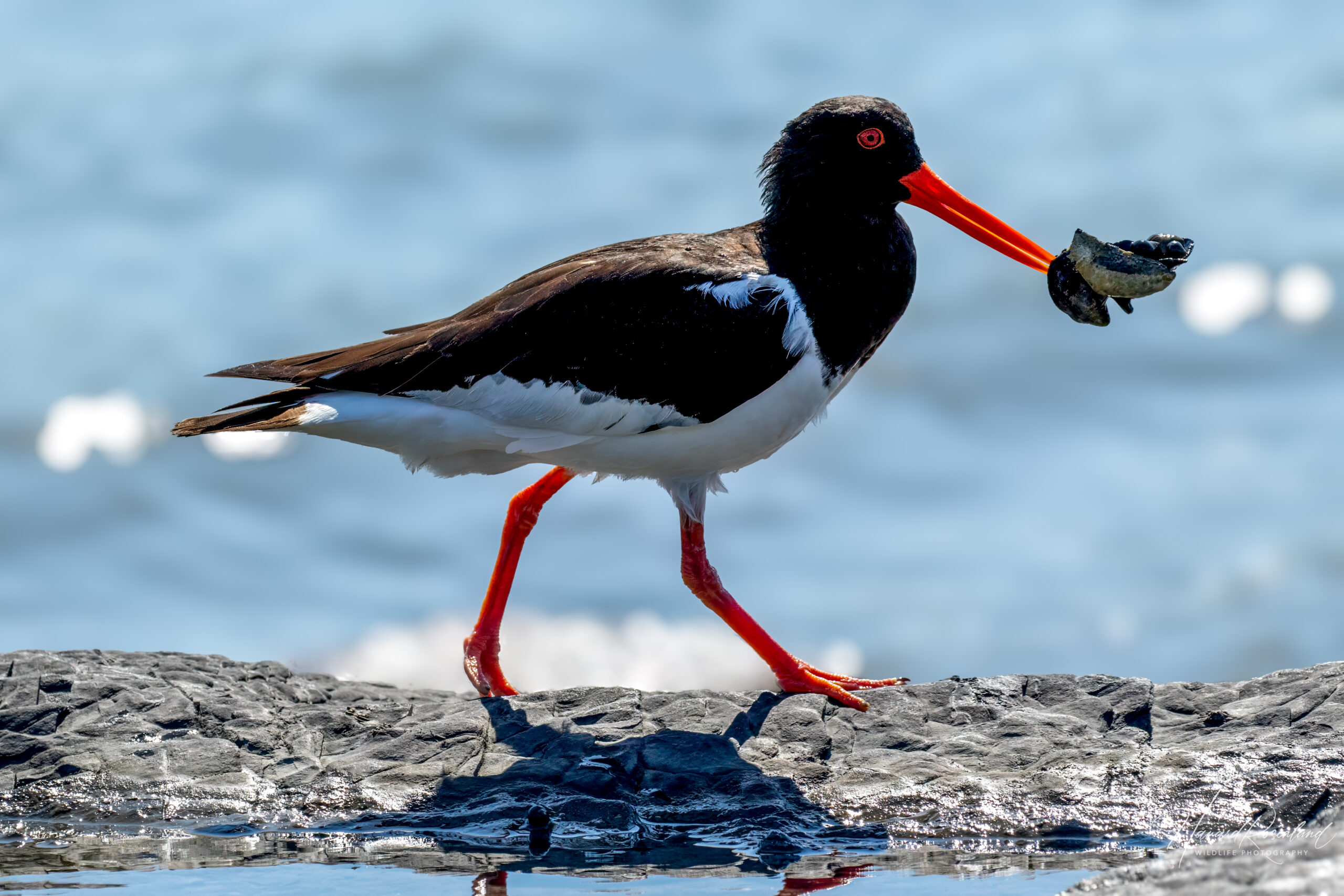
Bivalves such as mussels and cockles can dominate the diet locally, alongside marine worms, gastropods and other intertidal invertebrates. Inland birds rely more heavily on earthworms, insect larvae and other terrestrial invertebrates.
Diet varies greatly among sites and individuals. Even within the same estuary, one bird may specialise on mussels while another concentrates on worms, making the species a classic example of individual dietary specialisation.
Foraging
Eurasian oystercatchers use several highly individual feeding techniques. Some birds probe soft sediment for worms, while shellfish specialists may prise or stab between the valves of bivalves or hammer directly through the shell. Individuals can remain strongly committed to particular prey and handling methods rather than simply switching freely among every available technique.
The bill itself records part of this behavioural history. Different prey and techniques create different patterns of abrasion, producing measurable variation in bill dimensions and tip shape. Bill morphology can therefore be used as an indicator of diet specialisation, although the variation is continuous rather than a small set of fixed bill types. This feedback between learned technique, wear and bill form is one of the most distinctive aspects of the species.
Migration
Movement patterns differ among populations. Some Atlantic breeders are relatively short-distance migrants or residents, whereas birds from Scandinavia and other northern and eastern populations generally move south and west after breeding. Major winter concentrations form on estuaries and tidal coasts around the North Sea, the Wadden Sea, Britain, western Europe and the Mediterranean, while Asian populations winter farther south.
These movements connect breeding populations with a comparatively limited set of rich coastal wintering areas, so conditions at a major estuary can affect birds originating from breeding areas hundreds or thousands of kilometres away.
Breeding
Oystercatchers form strong pair bonds and nest on the ground in open sites, including beaches, shingle, rocky islands, saltmarsh, farmland and occasionally flat roofs. The nest is little more than a shallow scrape, sometimes lined with shells or small stones. A typical clutch contains two to three eggs. Both adults incubate for about 24–27 days, and the downy chicks are precocial, meaning they can walk soon after hatching. Fledging normally takes around 34–37 days.
Parental care continues beyond fledging and is unusually important for a shorebird. Young birds may depend on their parents for food while they acquire efficient handling techniques, particularly where hard-shelled prey require experience to open. Adults can also use distraction displays when a threat approaches chicks, drawing attention away from the young and sometimes feigning injury. Pairs defend breeding territories strongly, and experienced adults often return to the same sites in successive years.
Status
The Eurasian oystercatcher is classified as near threatened on the IUCN Red List. The 2021 European Red List assessed the species as Vulnerable in Europe, reflecting substantial declines in important breeding and wintering populations.
The large nominate population centred on the North Sea increased strongly during the twentieth century before subsequently losing roughly 200,000 birds, with particularly severe decreases in the Dutch-German-Danish Wadden Sea. Trends differ among regions, and some sites still hold large numbers despite the broader European decline.
Threats
Food loss on wintering grounds is one of the best documented pressures. Mechanical and intensive shellfish harvesting has reduced mussel and cockle stocks in parts of the Wadden Sea and Britain, lowering food availability and, at some sites, adult survival. A 2024 study based on 45 years of data from the Exe Estuary linked its unusually steep local decline to increased theft of mussels by carrion crows (Corvus corone) and European herring gulls (Larus argentatus); modelling suggested that this could reduce adult winter survival and make immature birds less likely to settle on the estuary.
Other pressures vary geographically and include loss or development of intertidal habitat, disturbance at feeding and breeding sites, agricultural intensification, drainage and early mowing of inland breeding habitat, nest predation, pollution and climate-related changes. Because different populations use very different habitats, no single threat explains the decline everywhere.
Conservation
Protecting productive estuaries and maintaining adequate shellfish stocks are central conservation measures. In The Wash in eastern England, long-term oystercatcher data are used in models that set sustainable limits for commercial mussel and cockle harvesting. After stricter controls were introduced under the 1992 Wash Fishery Order, adult survival remained high and relatively stable, providing a concrete example of how shellfish fisheries and bird conservation can be managed together when the birds' food requirements are explicitly considered.
Breeding habitat also needs attention. Maintaining and restoring saltmarsh and other wetlands, reducing drainage and grassland intensity, and delaying mowing in fields with breeding waders can all benefit the species. Protection from repeated disturbance at key coastal feeding, roosting and nesting sites is equally important because the species relies on the same network of sites throughout the annual cycle.
Image gallery
Loading map and observations…
Have you seen this species?
Independent species archive
Did you find this species page useful?
Wildlife Vagabond is independently built and maintained. Voluntary support helps cover hosting, maps, data storage and continued improvements to the species archive.
Support Wildlife VagabondSpecies content will remain freely available.
References
Information about the species’ global distribution and status is based primarily on global Red List data. See the references below for details.
- BirdLife International. (n.d.). Eurasian Oystercatcher species factsheet. https://datazone.birdlife.org/species/factsheet/eurasian-oystercatcher-haematopus-ostralegus
- British Trust for Ornithology. (2024). How effective has management of Cockle and Mussel fisheries on The Wash been?. https://www.bto.org/our-work/science/publications/reports/bto-research-reports/00770-how-effective-has-management-cockle-and-mussel-fisheries
- British Trust for Ornithology. (n.d.). BirdFacts – Oystercatcher. https://www.bto.org/learn/about-birds/birdfacts/oystercatcher
- British Trust for Ornithology. (n.d.). Decline in Eurasian Oystercatchers on the Exe estuary SPA. https://www.bto.org/our-work/science/publications/papers/decline-numbers-eurasian-oystercatchers-haematopus
- British Trust for Ornithology. (n.d.). Fisheries management. https://www.bto.org/our-work/science/impact/fisheries-management
- British Trust for Ornithology. (n.d.). Oystercatchers. https://www.bto.org/learn/about-birds/bird-families/haematopodidae-oystercatchers
- International Union for Conservation of Nature. (n.d.). Eurasian Oystercatcher. The IUCN Red List of Threatened Species. https://www.iucnredlist.org/species/22693613/154998347
- Pol, M. V. D., Ens, B. J., Oosterbeek, K., Brouwer, L., Verhulst, S., Tinbergen, J. M., Rutten, A. L., & Jong, M. D. (2009). Oystercatchers' Bill Shapes as a Proxy for Diet Specialization: More Differentiation than Meets the Eye. Ardea, 97(3), 335-347. https://doi.org/10.5253/078.097.0309