
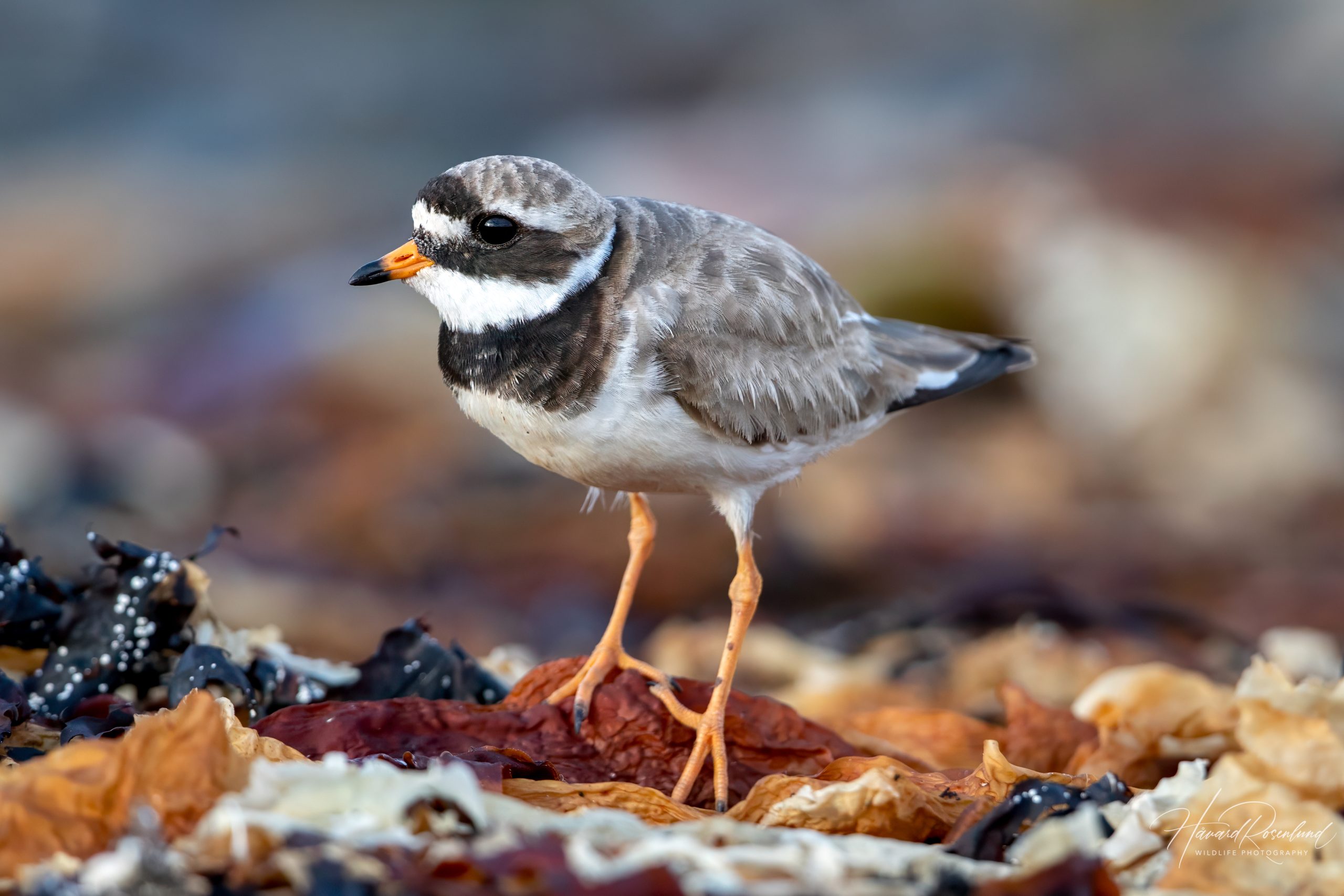
Common Ringed Plover
Charadrius hiaticula
At a glance
Habitat
- Beaches, shingle, tidal flats, riverbanks, gravel pits and Arctic or alpine tundra
Diet
- Insects, marine worms, small crustaceans and molluscs
Activity
- Mostly diurnal; coastal feeding also follows the tide
Size
- Length: 18–20 cm Weight: 55–75 g
Range
- Breeds across northern and temperate Eurasia; winters from western Europe to Africa and South Asia
Description
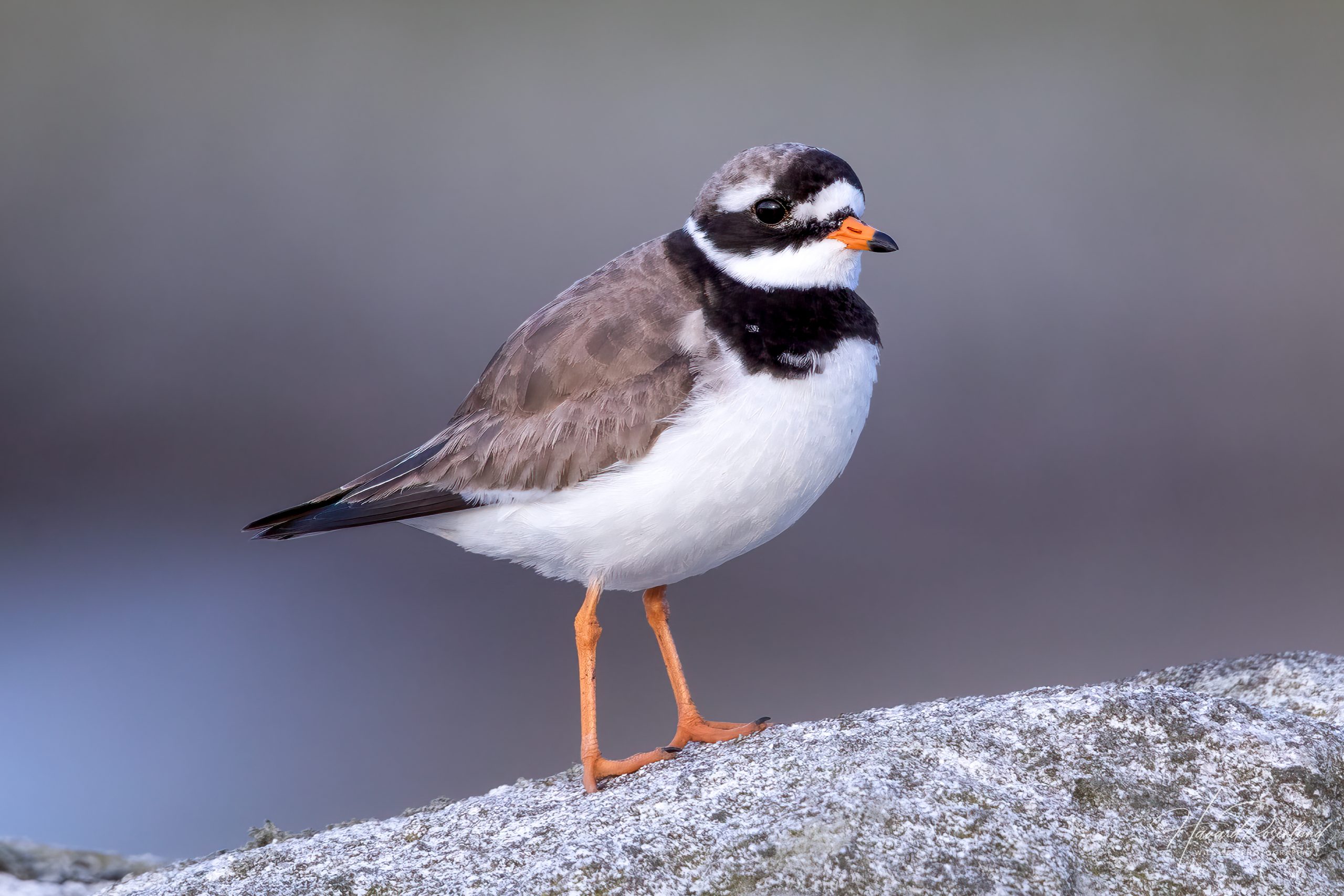
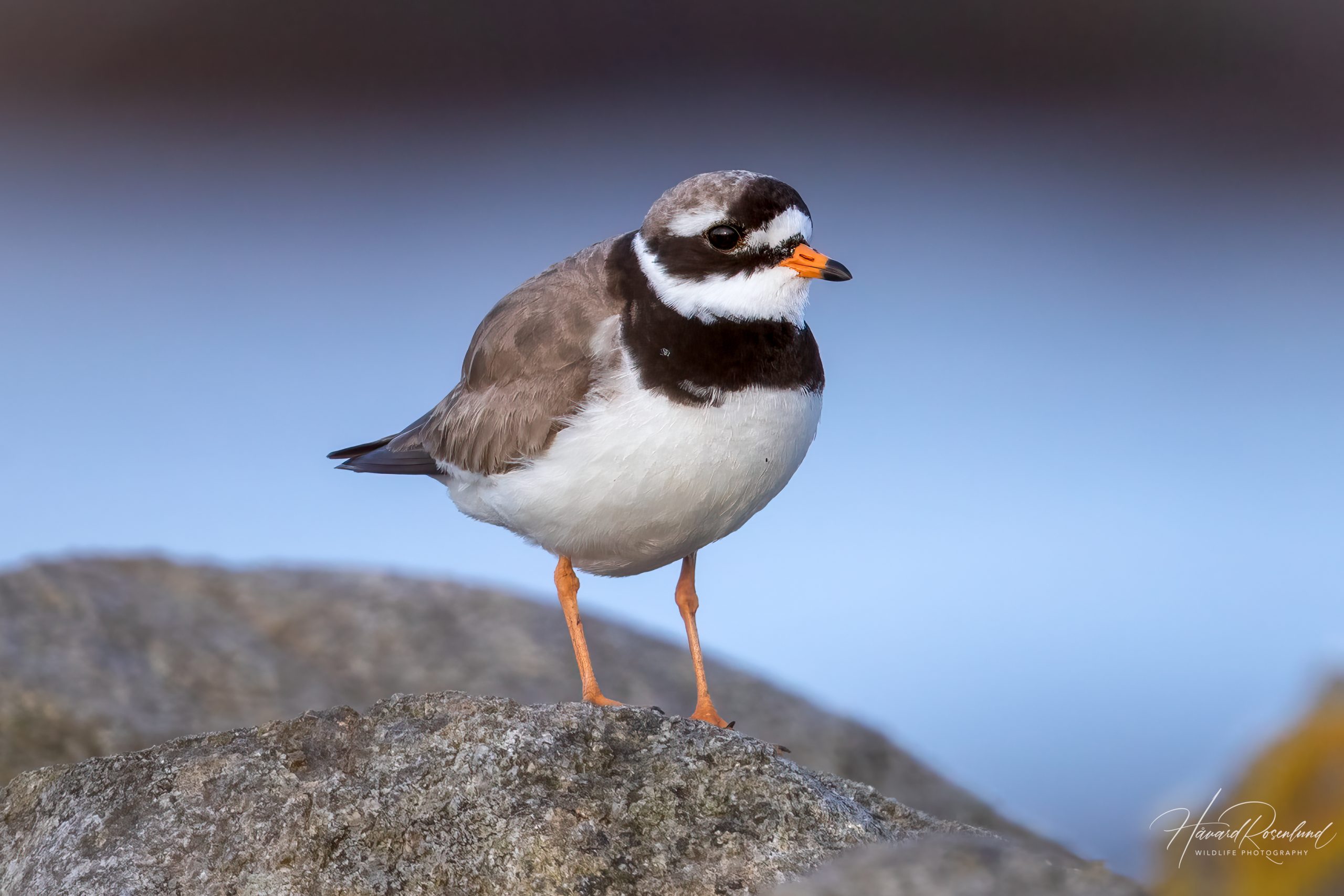
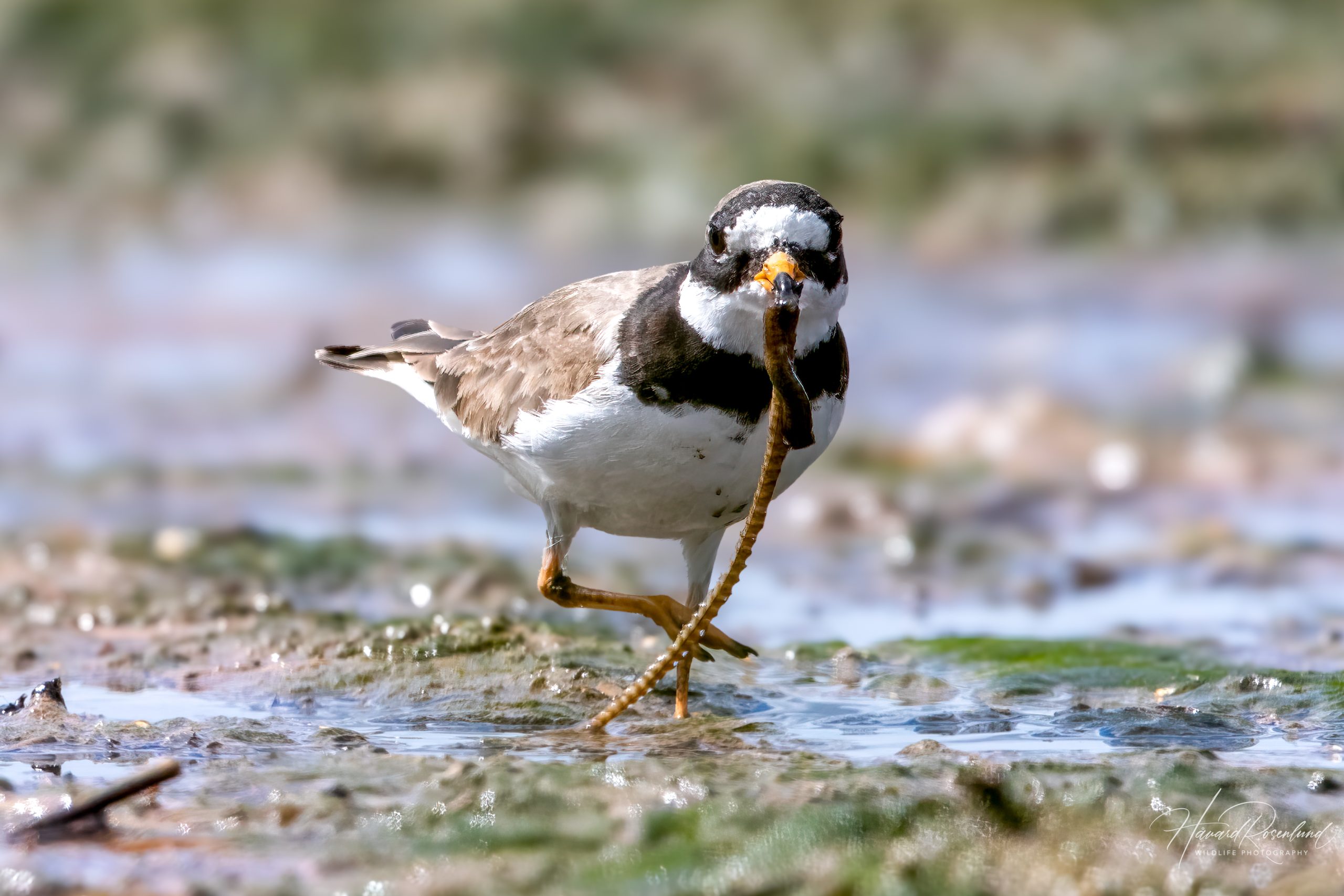
The common ringed plover (Charadrius hiaticula) is a small, sturdy shorebird about 18–20 cm long, with a wingspan of roughly 35–41 cm, and usually weighs around 55–75 g. Breeding adults have a broad black breast band, a black-and-white head pattern, orange legs and an orange bill with a black tip. The upperparts are grey-brown and the underparts white. Juveniles and non-breeding adults are duller, with brown replacing much of the black pattern.
The very similar semipalmated plover (Charadrius semipalmatus) breeds in North America and is a rare vagrant to Europe. In Eurasia, little ringed plover (Thinornis dubius) is another common confusion species; it is smaller, has a completely dark bill and shows a conspicuous yellow orbital ring in breeding plumage.
Habitat
Ringed plovers breed in open landscapes with sparse vegetation and plenty of bare substrate. Coastal beaches, sand and shingle spits, tidal flats, riverbanks and lake shores are typical, but the species also nests inland on gravel pits, quarries, reservoirs and stony tundra. Far north, breeding birds can occur well away from the sea on barren Arctic and alpine ground.
Outside the breeding season the species becomes more strongly coastal, concentrating on estuaries, mudflats, sandy shores and saltmarsh where exposed sediment provides abundant feeding opportunities.
Diet
Small invertebrates dominate the diet, including insects, marine worms, small crustaceans and molluscs. Ringed plovers hunt mainly by sight: a bird runs rapidly for a short distance, pauses, locates prey and pecks before moving again.
On tidal coasts, feeding activity follows the availability of exposed mud and sand as well as daylight. Chicks feed independently soon after hatching and use the same visual hunting strategy while the adults remain nearby to guard them.
Migration
Migration varies considerably across the range. Some western European birds move only moderate distances, whereas northern and Arctic breeders travel to wintering grounds along western Europe, the Mediterranean and the African coast. Populations from farther east also winter through the Middle East and South Asia.
A tracking study published in 2016 followed common ringed plovers from the Varanger Peninsula in northern Norway and showed that the birds wintered along the West African coast from southern Mauritania to Sierra Leone, while one bird wintered in the Gulf of Guinea. Four of five individuals moved a further 392–560 km south during mid-winter, showing that a single bird can use several non-breeding areas rather than remain at one fixed winter site. The recorded flight bouts between stopovers ranged from 49 km to about 5,300 km, so migration can combine short hops with very long flights.
Breeding
The nest is a shallow scrape on open sand, gravel, shingle or sparsely vegetated ground, often decorated with small stones, shell fragments or plant material. Four well-camouflaged eggs are typical. Both parents incubate and defend the territory.
Incubation lasts about 23–25 days. The chicks are precocial, meaning they leave the nest soon after hatching and feed for themselves while the adults brood, warn and defend them. When threatened, adults may also feign injury and draw a potential predator away from eggs or chicks. The young normally become capable of flight after about 24–26 days.
A field experiment on the Varanger Peninsula, published in 2026, examined why four eggs are so typical in this species. When clutches were experimentally enlarged to five eggs, hatching success changed little, but the chicks were smaller and had higher mortality during their first two weeks. The disadvantage of an extra egg therefore continued beyond hatching and may help explain why females rarely lay more than four eggs.
Status
The common ringed plover is classified as least concern on the IUCN Red List, but trends differ between regions. In the UK, the wintering population declined by 41% between 1998 and 2023, although numbers have been broadly stable since around 2010/11. The most recent national breeding survey also found about 37% fewer breeding pairs in 2007 than in 1984.
Because the species nests directly on open ground, local breeding success can be strongly affected by disturbance from recreation, dogs and vehicles on beaches and other heavily used shorelines. Development or alteration of open sand, shingle and gravel habitat can also remove suitable nesting areas even where the species remains common overall.
Image gallery

Loading map and observations…
Have you seen this species?
Independent species archive
Did you find this species page useful?
Wildlife Vagabond is independently built and maintained. Voluntary support helps cover hosting, maps, data storage and continued improvements to the species archive.
Support Wildlife VagabondSpecies content will remain freely available.
References
Information about the species’ global distribution and status is based primarily on global Red List data. See the references below for details.
- BirdLife International. (n.d.). Common Ringed Plover species factsheet. https://datazone.birdlife.org/species/factsheet/common-ringed-plover-charadrius-hiaticula
- British Trust for Ornithology. (n.d.). Ringed Plover BirdFacts. https://www.bto.org/learn/about-birds/birdfacts/ringed-plover
- Heggøy, O., Wanders, K., & Lislevand, T. (2026). Reduced chick performance makes supernormal clutches maladaptive in a shorebird. Scientific Reports, 16(1), 7305. https://doi.org/10.1038/s41598-026-37872-6
- International Union for Conservation of Nature. (n.d.). Common Ringed Plover. The IUCN Red List of Threatened Species. https://www.iucnredlist.org/species/22693759/155487854
- Lislevand, T., Briedis, M., Heggøy, O., & Hahn, S. (2017). Seasonal migration strategies of Common Ringed Plovers Charadrius hiaticula. Ibis, 159(1), 225-229. https://doi.org/10.1111/ibi.12424
- Wanders, K., Almalki, M., Heggøy, O., Lislevand, T., McGuigan, C., Eichhorn, G., Gabrielsen, G. W., Azarov, V., Khasyanova, L., & Székely, T. (2023). Incubation behaviour of the Common Ringed Plover Charadrius hiaticula at different latitudes. Journal of Ornithology, 164(4), 825-833. https://doi.org/10.1007/s10336-023-02077-5