
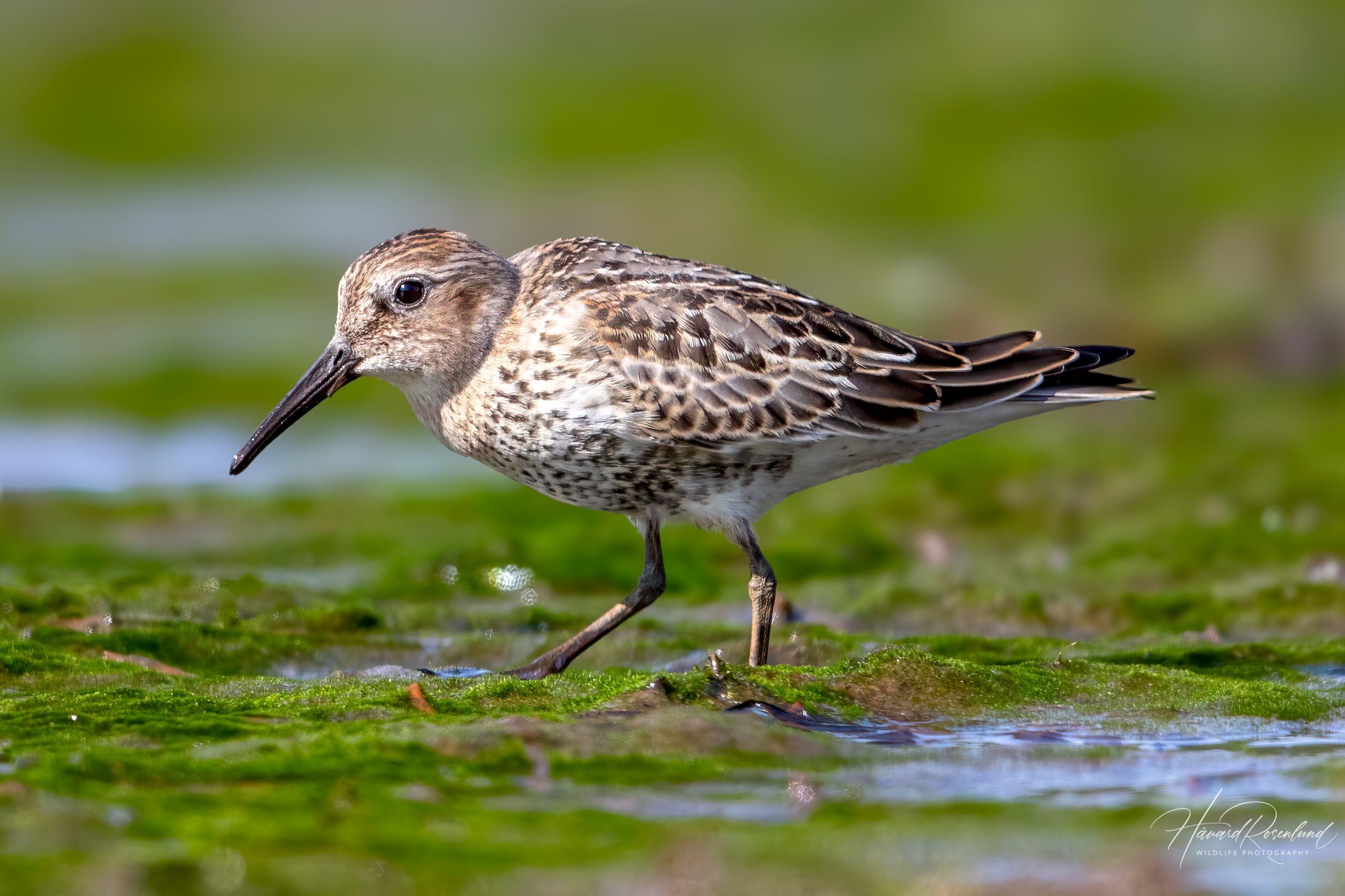
Dunlin
Calidris alpina
At a glance
Habitat
- Tundra, wet moorland and sedge marshes when breeding; estuaries, mudflats, saltmarsh and shallow coastal wetlands outside the breeding season
Diet
- Mainly small invertebrates such as worms, molluscs, crustaceans and insects; also biofilm and some plant material
Activity
- Mostly active by day, but also feeds at night when tides and prey conditions are favourable
Size
- Length: 17–21 cm Weight: 42–58 g
Range
- Circumpolar breeder across Arctic and subarctic regions; winters along temperate to tropical coasts
Description
The dunlin (Calidris alpina) is a small, compact sandpiper with a vast circumpolar breeding range. Adults are about 17–21 cm long and typically weigh around 42–58 g. In breeding plumage they are distinctive, with a black belly patch, rich rufous-brown upperparts and a slightly downcurved bill. Outside the breeding season the plumage becomes much plainer grey-brown above and white below.
Curlew sandpiper (Calidris ferruginea) can look similar outside the breeding season but is usually larger and longer-legged, with a longer and more strongly curved bill and a white rump that is conspicuous in flight. Dunlins vary noticeably in size and bill length across their broad range, reflecting geographic differences among the populations traditionally recognised as subspecies.
Habitat
Breeding habitat is very different from the coastal mudflats where dunlins are most often seen during migration and winter. Across the Arctic and subarctic they nest on tundra, wet heath, sedge marshes, moorland and other open landscapes with short vegetation and nearby shallow water or damp ground.
Outside the breeding season the species becomes strongly associated with wetlands, especially estuaries, tidal mudflats, saltmarshes, lagoons, sandy shores and shallow freshwater areas. Good feeding habitat depends not only on water depth but also on sediment type, tidal exposure and the abundance of accessible prey.
Diet
Dunlins feed mainly on small invertebrates, including polychaete worms, molluscs, crustaceans, insects and larvae. They pick prey from the surface and probe rapidly into soft mud with the bill, using touch as well as sight to locate food. Diet changes between seasons and sites as different prey become available.
At some migration stopovers dunlins also graze on biofilm, the thin layer of microscopic organisms and organic material that develops on intertidal mud. This means that their diet can include an important food source that is almost invisible to a human observer. Seeds and other plant material are taken in smaller amounts.
Behaviour
Dunlins adjust their activity to local conditions. On tidal coasts they follow newly exposed feeding areas as the water recedes and may continue feeding after dark when tides or prey availability make this worthwhile.
Breeding males establish territories and patrol their boundaries, driving rival males away with chases and territorial flights. Song is also used in territorial signalling, while the more elaborate aerial displays performed after territories are established have an important courtship function.
Social behaviour
Outside breeding, dunlins become highly social and may gather in flocks numbering thousands or even tens of thousands of birds. Dense flocks often wheel and turn together when disturbed, and communal high-tide roosts allow large numbers to rest close to feeding areas while the mudflats are submerged.
Flocking can directly change how individual birds divide their time. Field observations found that dunlins in the centre of larger feeding flocks spent less time scanning for danger and probed for food more rapidly than birds near the edge. At roosts used before migration in Alaska, flock size and the time birds spent resting varied with tide, time of day, season and predator activity. The main daytime roosts combined open views of approaching predators with nearby feeding areas and shallow water for bathing.
Migration
Dunlins are migratory across most of their range, but there is no single migration route for the species. Different breeding populations follow separate flyways from Arctic and subarctic nesting areas to wintering coasts in Europe, Africa, Asia and North America. Some populations travel several thousand kilometres and depend on a chain of productive wetlands where they can rebuild energy reserves.
Because breeding populations tend to follow particular flyways and use particular stopover sites, the condition of a relatively small number of staging and wintering wetlands can influence birds from very large breeding areas. Loss or degradation of intertidal habitat at one point along a flyway can therefore affect populations far away.
Breeding
After a male has established a territory, courtship includes conspicuous aerial displays and vocalisations. A field study found that these display flights increased when females began laying and were performed over strongly overlapping areas, suggesting that their main function is to advertise to potential mates rather than simply to defend a boundary.
The nest is a shallow scrape on the ground, usually concealed among short tundra or wetland vegetation and lined with leaves and grasses. Four eggs are typical. Both adults incubate, usually for about 21–22 days.
The chicks are precocial: they leave the nest within hours of hatching and begin finding their own food, while the adults lead, warm and protect them. Young normally become capable of flight after about 19–21 days. The short Arctic summer places strong time pressure on breeding, and failed pairs have only a limited opportunity to replace a lost clutch.
Status
The dunlin is classified as near threatened on the IUCN Red List. It was uplisted from Least Concern in 2024 after BirdLife International concluded that the global population had declined by at least 20% over three generations, with particularly strong declines along flyways in the Americas.
Trends vary substantially among populations, with some remaining stable or increasing while others have declined sharply. The global category therefore combines very different trends among subspecies and breeding populations that use different migration routes.
Threats
Loss and degradation of intertidal wetlands are among the most important pressures because large numbers of dunlins depend on a limited network of mudflats and estuaries during migration and winter. Coastal development, altered hydrology, invasive vegetation and sea-level rise can reduce both feeding area and the high-tide roosts needed when mudflats are submerged.
Disturbance, changes in prey availability, hunting in parts of the range and climate-driven changes on breeding and non-breeding grounds add further pressure. Because populations follow particular flyways and repeatedly use important staging sites, severe habitat change at a single major wetland can affect birds that breed thousands of kilometres away.
Conservation
Conserving dunlins requires protecting and restoring networks of intertidal feeding flats, saltmarshes and secure high-tide roosts, not just breeding grounds. Limiting disturbance at major staging sites and retaining suitable freshwater or managed wetlands can provide alternative feeding and roosting habitat where natural coastlines have been reduced.
Dunlin is one of the migratory waterbirds covered by the African-Eurasian Waterbird Agreement (AEWA), which coordinates conservation across countries along African-Eurasian flyways. The Convention on Wetlands likewise supports protection of intertidal habitats used by the species. Along the East Asian–Australasian Flyway, conservation work has identified important staging and wintering sites for the arcticola population. Coordinated monitoring across flyways is especially important because different populations can show very different trends.
Image gallery
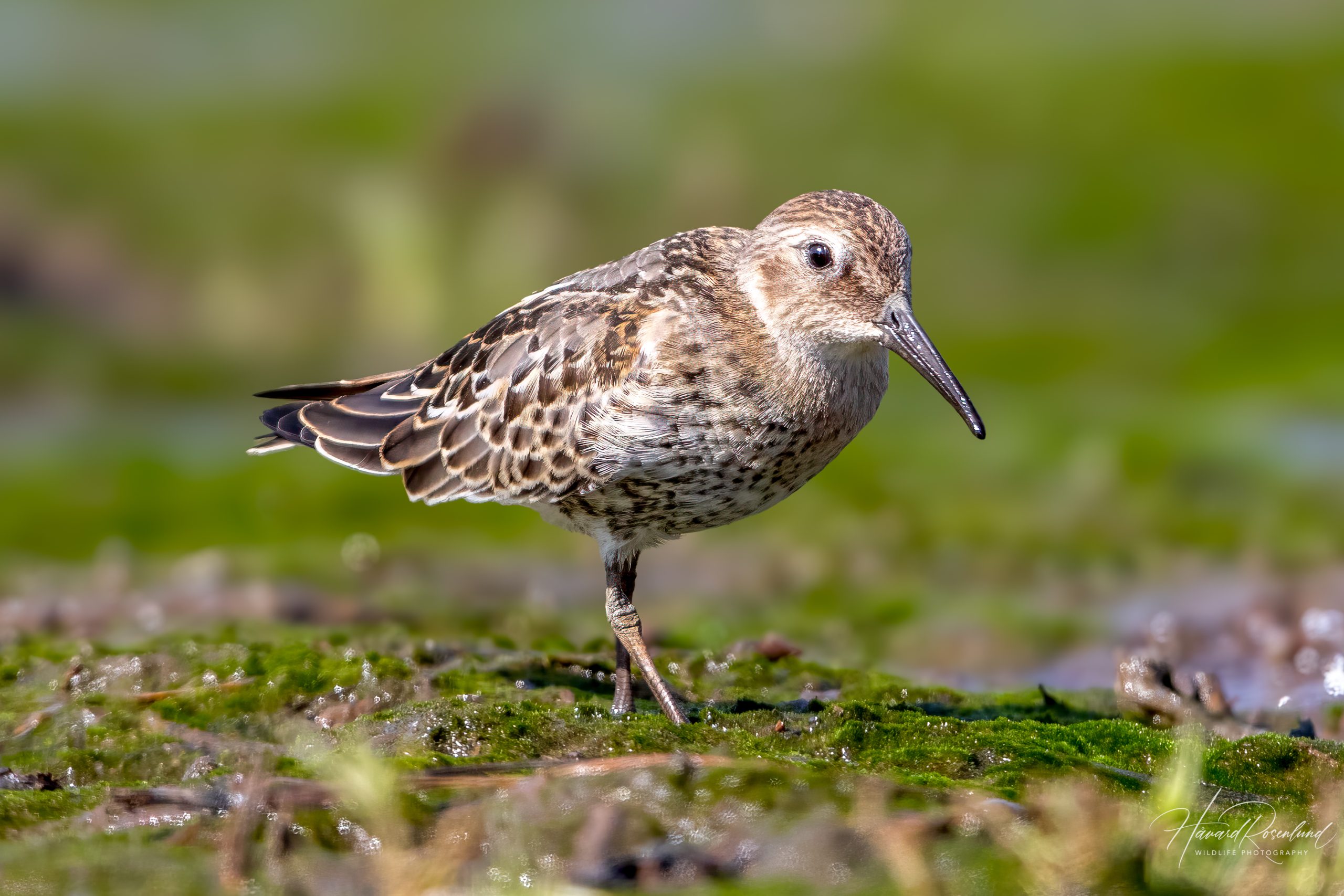
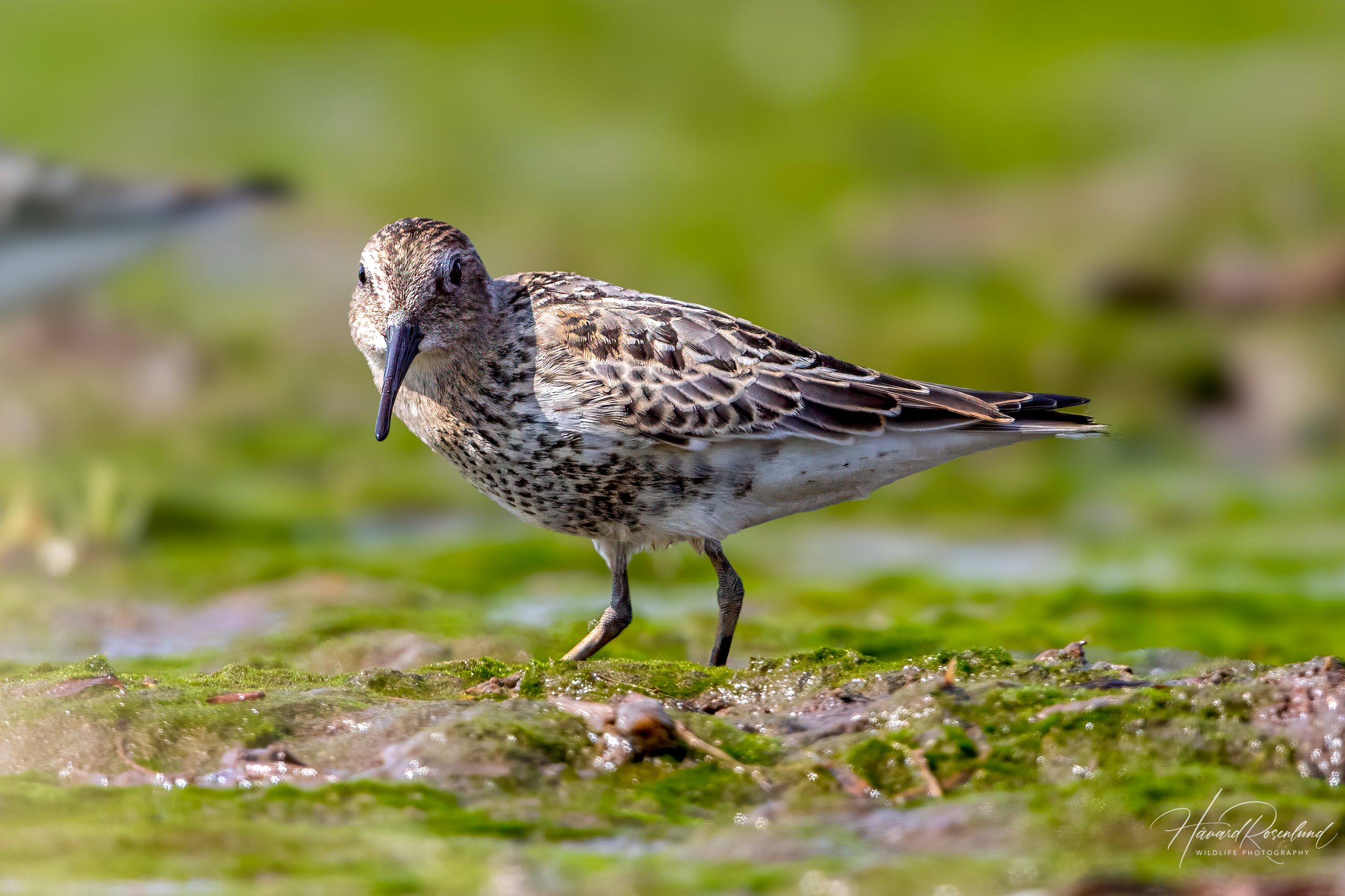
Loading map and observations…
Have you seen this species?
Independent species archive
Did you find this species page useful?
Wildlife Vagabond is independently built and maintained. Voluntary support helps cover hosting, maps, data storage and continued improvements to the species archive.
Support Wildlife VagabondSpecies content will remain freely available.
References
Information about the species’ global distribution and status is based primarily on global Red List data. See the references below for details.
- Agreement on the Conservation of African-Eurasian Migratory Waterbirds. (n.d.). Dunlin species coverage. https://www.unep-aewa.org/species
- BirdLife International. (2026). IUCN Red List for birds. BirdLife DataZone. https://datazone.birdlife.org
- Blomqvist, D., Johansson, O. C., Unger, U., Larsson, M., & Flodin, L.-Å. (1997). Male aerial display and reversed sexual size dimorphism in the dunlin. Animal Behaviour, 54(5), 1291-1299. https://doi.org/10.1006/anbe.1997.0532
- British Trust for Ornithology. (n.d.). BirdFacts – Dunlin (Calidris alpina). https://www.bto.org/learn/about-birds/birdfacts/dunlin
- Convention on Wetlands. (n.d.). Resolution XIII.20 on conservation and wise use of intertidal wetlands. https://www.ramsar.org/document/resolution-xiii20-promoting-conservation-wise-use-intertidal-wetlands-ecologically
- Desholm, M., Wegeberg, A.M. & Mouritsen, K.N. (1999). Vigilance and flocking behaviour of tactilely foraging Dunlins Calidris alpina. Avocetta, 23, 42–47. https://www.avocetta.org/articles/vol-23-2-vil-vigilance-and-flocking-behaviour-of-tactilely-foraging-dunlins-emcalidris-alpinaem/
- Gill,, R. E. (1992). Roosting Behavior of Premigratory Dunlins (Calidris alpina). The Auk, 109(1), 57-72. https://doi.org/10.2307/4088266
- International Union for Conservation of Nature. (2024). Dunlin uplisted to Near Threatened in the 2024. The IUCN Red List of Threatened Species. https://www.birdlife.org/news/2024/10/28/press-release-new-report-reveals-plummeting-migratory-shorebird-populations-globally/
- International Union for Conservation of Nature. (n.d.). Dunlin. The IUCN Red List of Threatened Species. https://www.iucnredlist.org/species/22693427/255846610
- Jiménez, A., Elner, R. W., Favaro, C., Rickards, K., & Ydenberg, R. C. (2015). Intertidal biofilm distribution underpins differential tide-following behavior of two sandpiper species (Calidris mauri and Calidris alpina) during northward migration. Estuarine, Coastal and Shelf Science, 155, 8-16. https://doi.org/10.1016/j.ecss.2014.12.038
- Marthinsen, G., Wennerberg, L., & Lifjeld, J. T. (2007). Phylogeography and subspecies taxonomy of dunlins (Calidris alpina) in western Palearctic analysed by DNA microsatellites and amplified fragment length polymorphism markers. Biological Journal of the Linnean Society, 92(4), 713-726. https://doi.org/10.1111/j.1095-8312.2007.00931.x
- Mouritsen, K., & Jensen, K. (1992). Choice of microhabitat in tactile foraging dunlins Calidris alpina: the importance of sediment penetrability. Marine Ecology Progress Series, 85, 1-8. https://doi.org/10.3354/meps085001
- Wilson, J., Soot, K. M., Torland, O. E., & Bangjord, G. (2024). The status, subspecies and migration routes of Dunlin Calidris alpina breeding on Svalbard. Wader Study, 131(1). https://doi.org/10.18194/ws.00328