
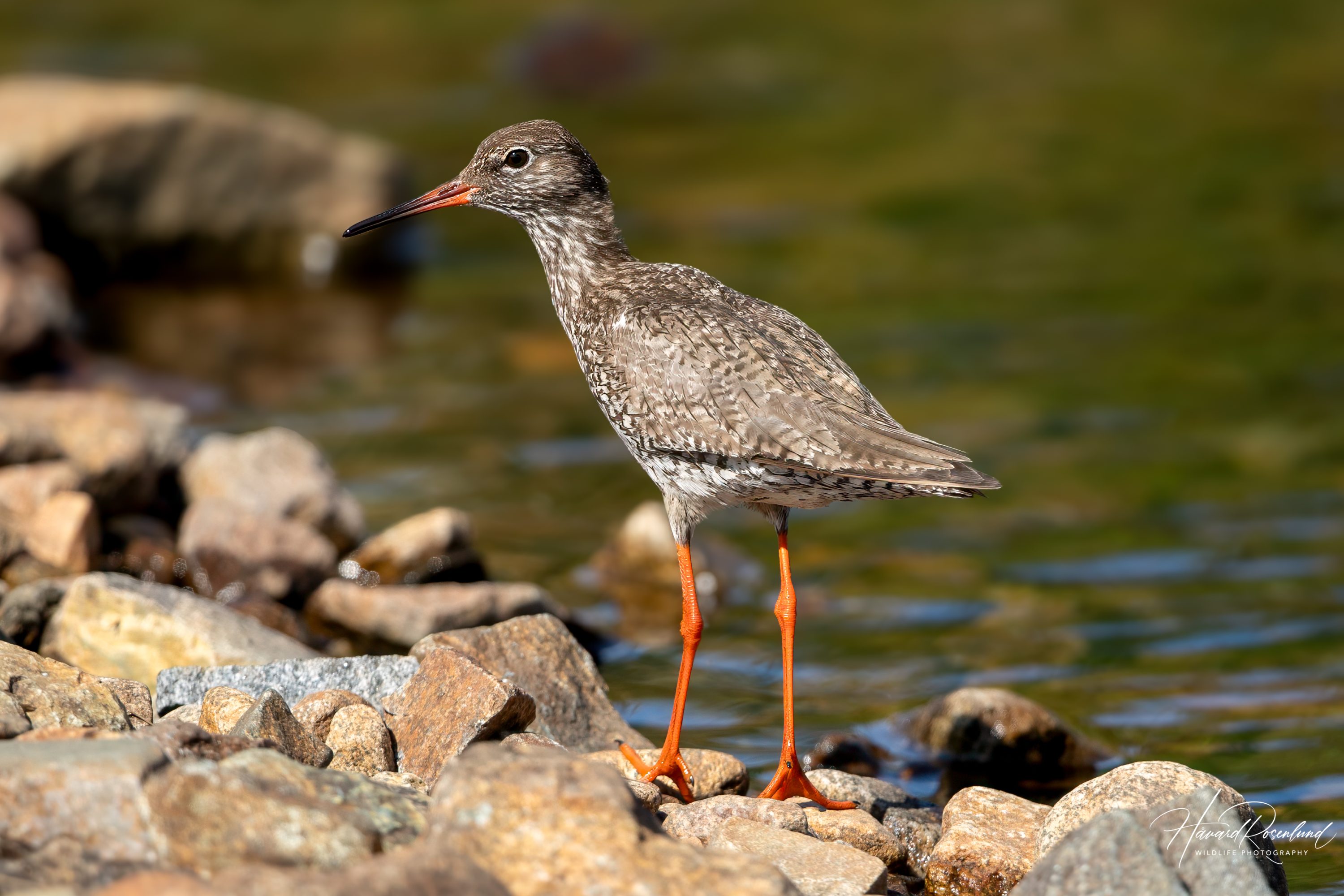
Common Redshank
Tringa totanus
At a glance
Habitat
- Wet grassland, marshes, bogs, moorland and saltmarsh for breeding; estuaries, mudflats and shallow coastal wetlands outside breeding
Diet
- Insects, spiders, worms, molluscs, crustaceans and other small invertebrates
Activity
- Diurnal; also feeds at night in some tidal and wintering habitats
Size
- Length: ~27–29 cm Weight: ~85–155 g
Range
- Breeds across much of Europe and temperate Asia; northern populations winter farther south from western Europe and Africa to southern Asia
Description
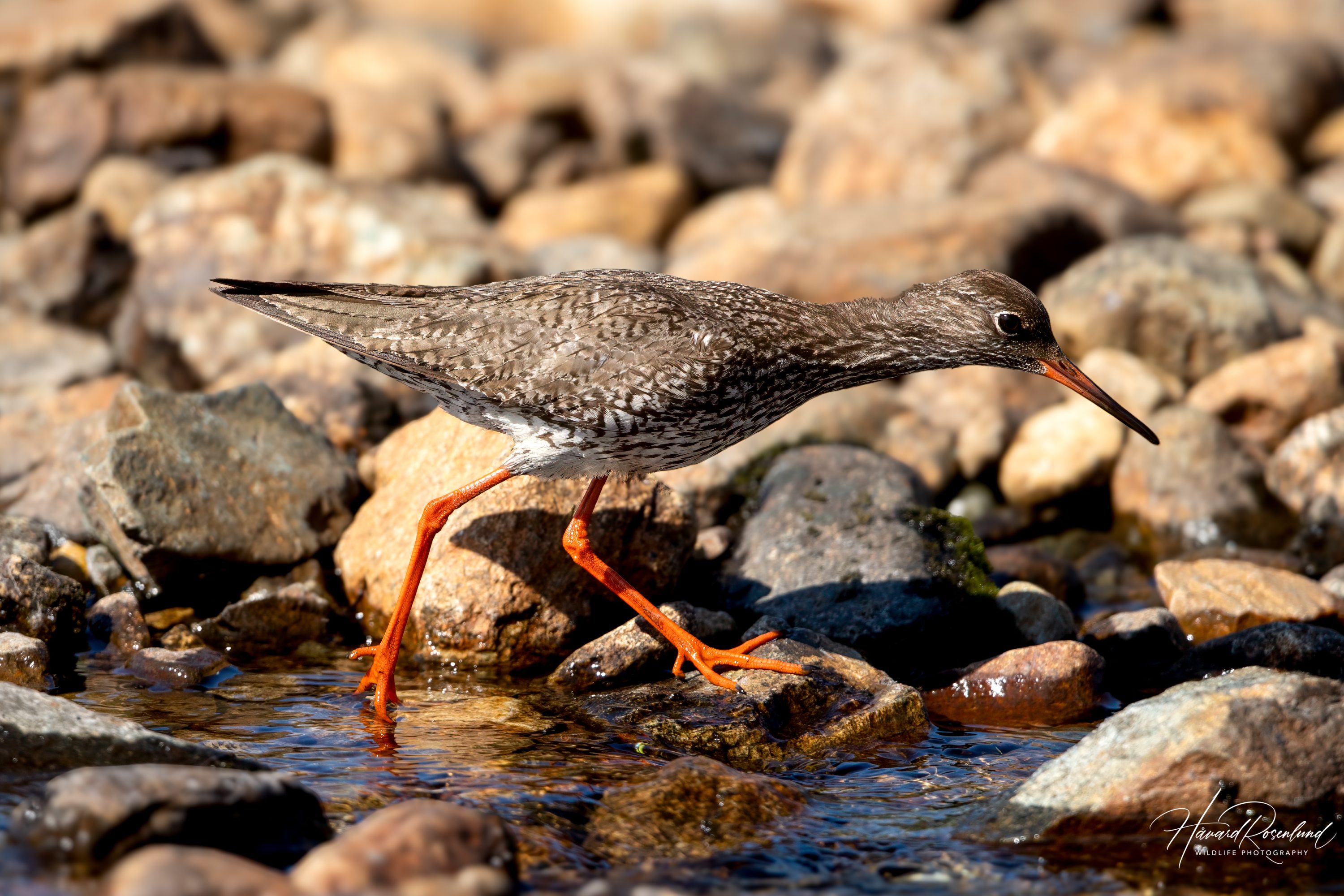
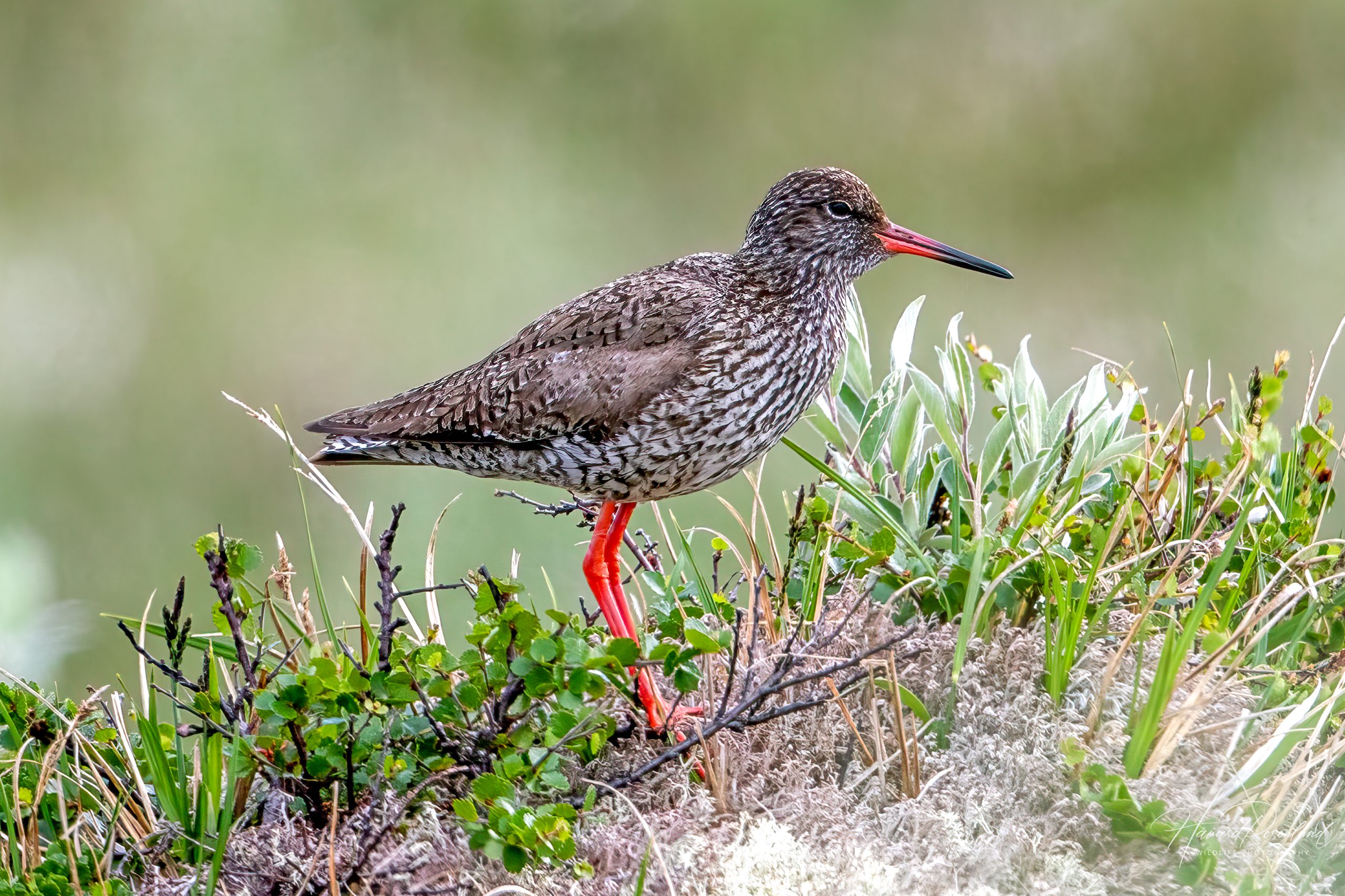
The common redshank (Tringa totanus) is a medium-sized wader found widely across Europe and Asia. Adults are roughly 27–29 cm long, have a wingspan of about 59–66 cm and weigh around 85–155 g. The bright orange-red legs and red-based bill are the most obvious features, while the brown-grey body is heavily marked with darker streaks and spots during breeding.
Flight reveals a bold white wedge up the back and a broad white trailing edge to the wings. The similar spotted redshank (Tringa erythropus) is longer-legged and more slender-billed and becomes almost entirely black in breeding plumage. Outside breeding the two can be more difficult to separate, but the common redshank retains its characteristic wing and rump pattern.
Habitat
Common redshanks breed in a wide range of open wet habitats, including damp meadows, marshes, bogs, moorland, wet heath and saltmarsh. Suitable breeding areas combine soft ground rich in invertebrates with patches of vegetation tall enough to conceal a ground nest.
Outside the breeding season the species becomes strongly associated with coasts. Estuaries, tidal mudflats, saltmarshes and shallow lagoons provide rich feeding areas, although inland wetlands and flooded fields are also used.
Diet
The diet is dominated by small invertebrates. During breeding, insects, spiders, worms and other animals from wet soil and freshwater margins are especially important, while wintering birds on coasts take marine worms, molluscs, crustaceans and other tidal prey.
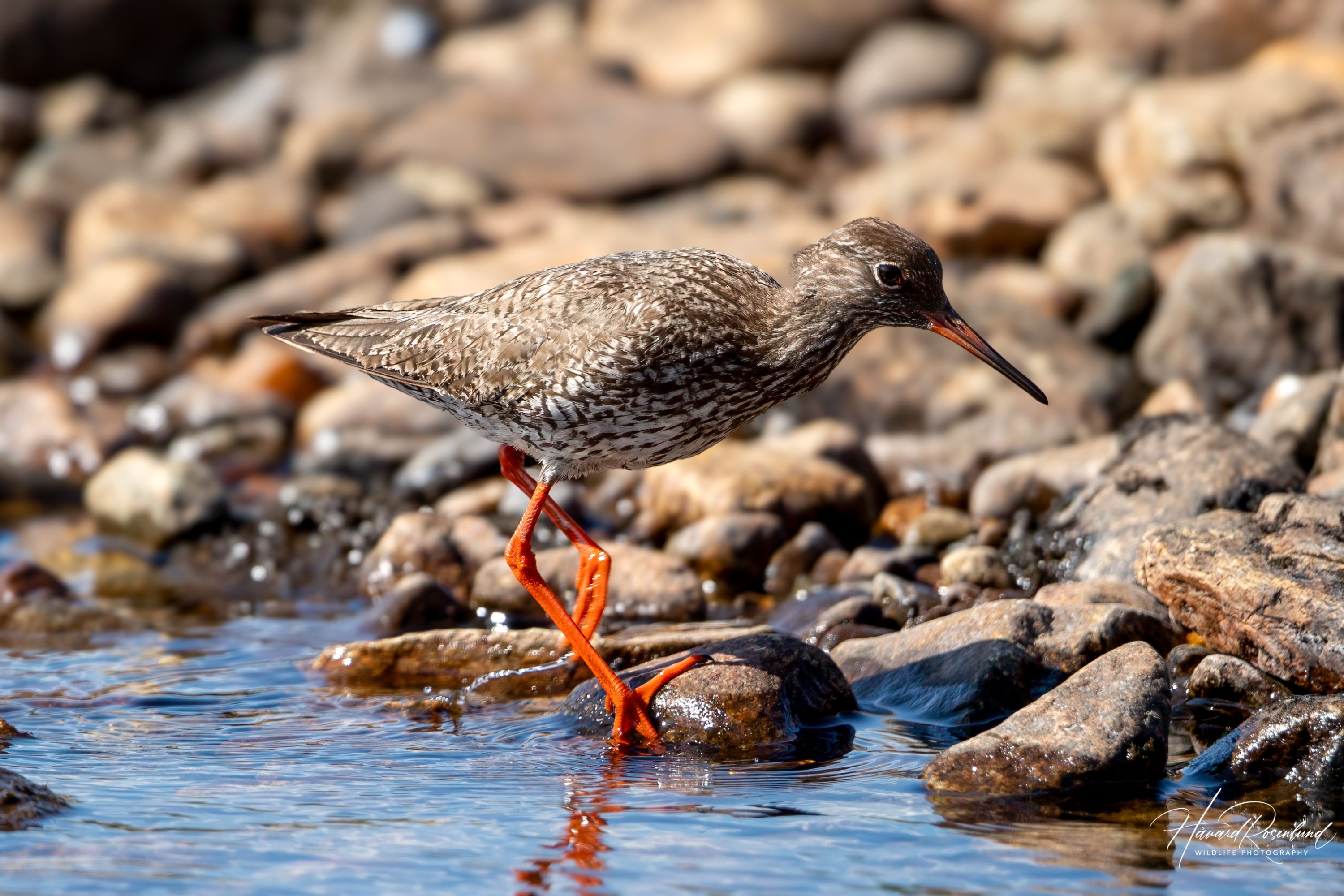
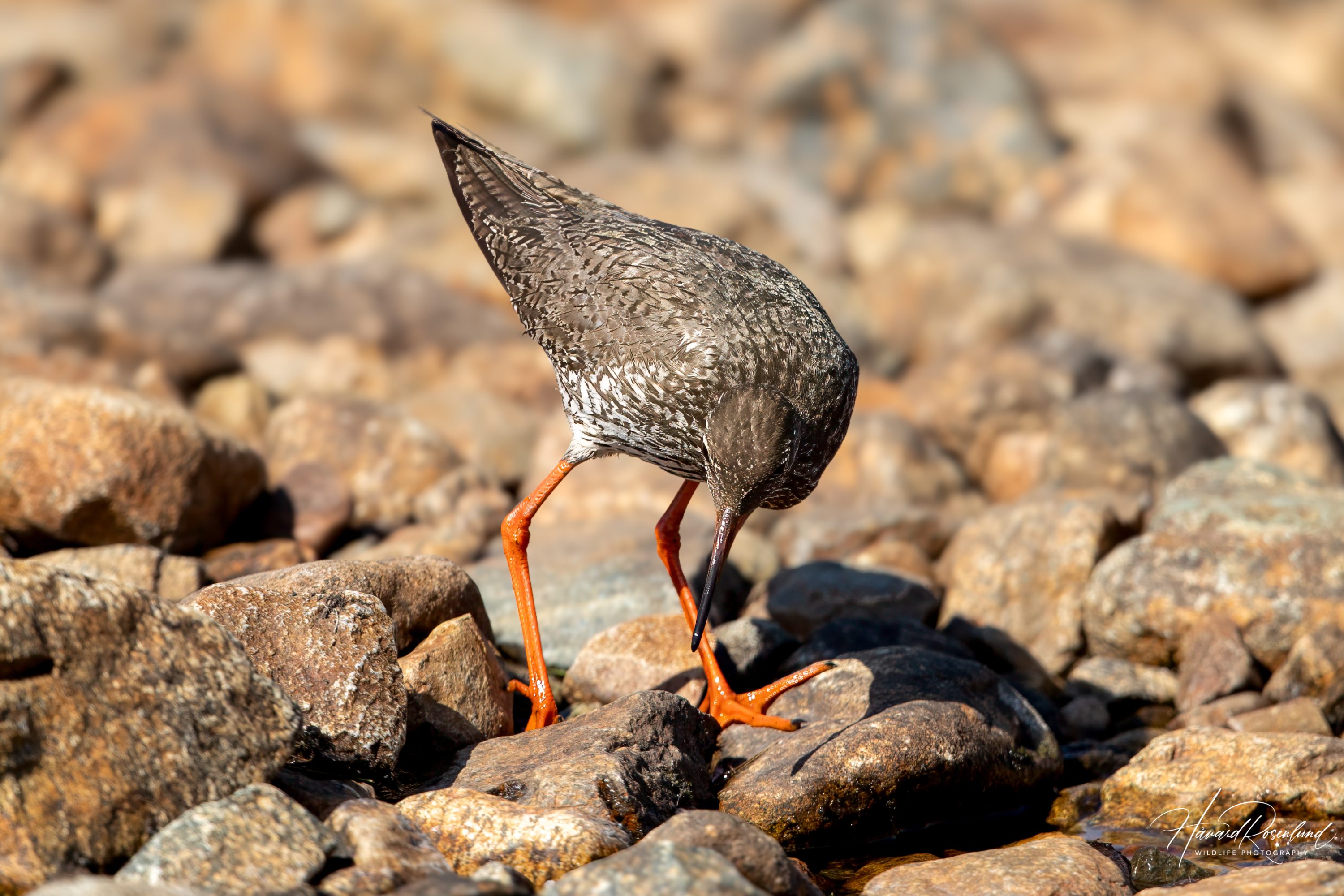
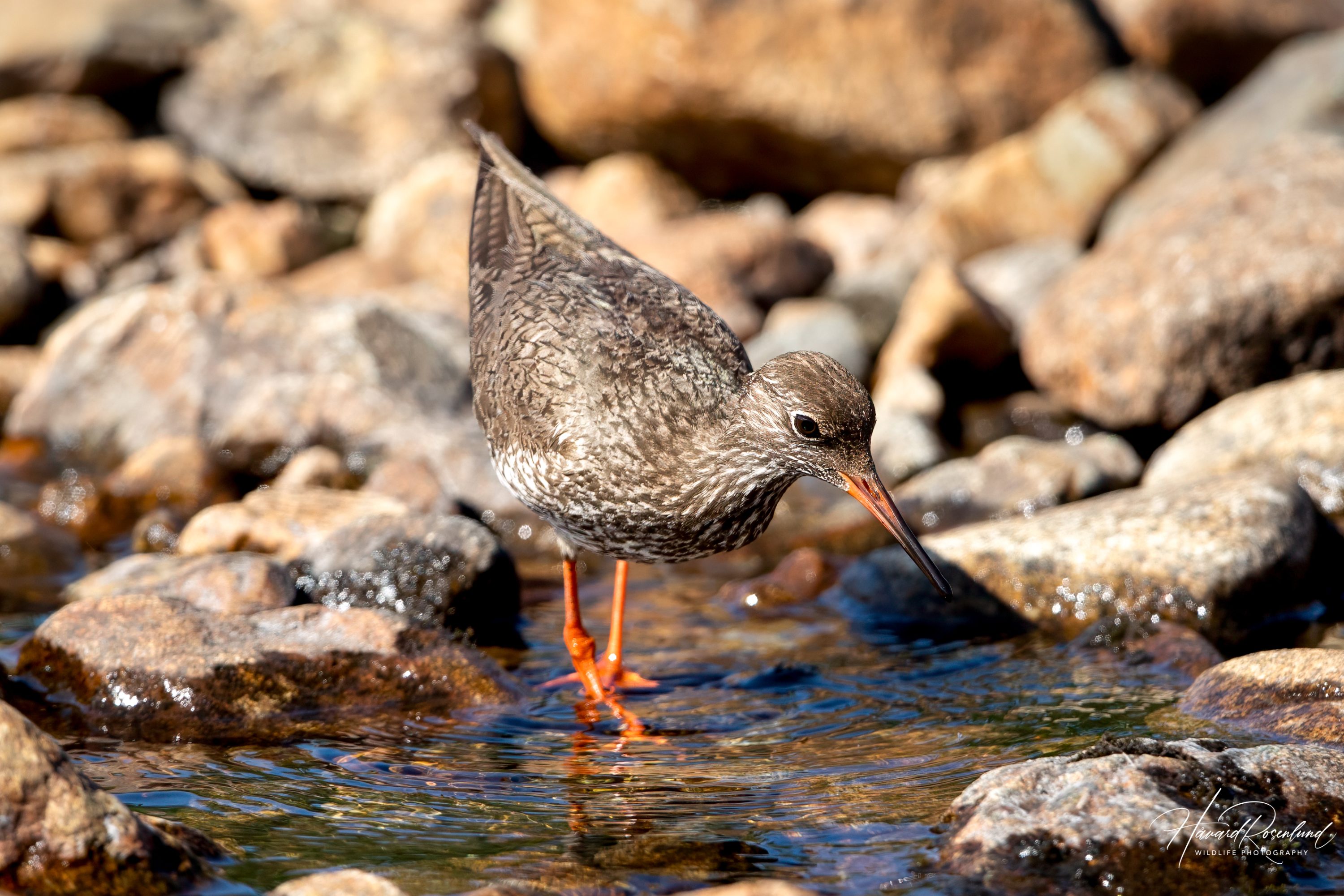
Redshanks feed actively by walking through shallow water or across mud, picking visible prey from the surface and probing soft sediment with the bill. Feeding follows the availability of prey, so birds on tidal coasts may continue foraging after dark when exposed mudflats and suitable tides allow it.
Behaviour
Outside the breeding season, redshanks often feed and rest in loose groups, especially where productive tidal flats are concentrated around shared roosting areas. Individual birds can also become strongly attached to familiar winter feeding and roosting sites and may return to the same area year after year.
Migration
Movement varies greatly across the range. Northern and eastern populations are migratory, while birds breeding in milder western regions may remain resident or move only short distances. Autumn migration begins from late summer, and many northern birds move to Atlantic coasts, the Mediterranean, Africa or southern Asia.
Breeding
The nest is a shallow scrape on the ground, usually hidden within a tuft of grass, rushes or other vegetation. Four eggs are typical, although two to five have been recorded. Both parents incubate, usually for about 24 days, and become conspicuously noisy when people, predators or other intruders approach the nesting area.
The chicks leave the nest soon after hatching and begin feeding for themselves while both parents guard them. They usually fledge after about 25–35 days and until then depend on suitable feeding ground and vegetation that provides cover.
Vegetation height around the nest can strongly affect breeding success. A British saltmarsh study published in 2015 found that even relatively light cattle grazing reduced nest survival: cattle sometimes trampled nests directly, while shorter vegetation also increased predation risk. A follow-up study published in 2016 found that redshanks selected the tallest nesting vegetation available around their nests. Both grazing intensity and timing can therefore affect breeding success.
Status
The common redshank is classified as least concern on the IUCN Red List and remains widespread and numerous. Substantial declines have nevertheless occurred in parts of Europe, especially where wet grassland and saltmarsh breeding habitats have been drained, intensified or altered in ways that reduce nesting success.
The species depends on different habitats at different stages of the year. Loss or degradation of estuaries, mudflats and other migration or wintering sites can therefore affect populations even where breeding habitat remains suitable.
Image gallery
Loading map and observations…
Have you seen this species?
Independent species archive
Did you find this species page useful?
Wildlife Vagabond is independently built and maintained. Voluntary support helps cover hosting, maps, data storage and continued improvements to the species archive.
Support Wildlife VagabondSpecies content will remain freely available.
References
Information about the species’ global distribution and status is based primarily on global Red List data. See the references below for details.
- BirdLife International. (n.d.). Common Redshank species factsheet. https://datazone.birdlife.org/species/factsheet/common-redshank-tringa-totanus
- British Trust for Ornithology. (n.d.). Redshank BirdFacts. https://www.bto.org/learn/about-birds/birdfacts/redshank
- International Union for Conservation of Nature. (n.d.). Common Redshank. The IUCN Red List of Threatened Species. https://www.iucnredlist.org/species/22693211/86687799
- Roodbergen, M., van der Werf, B., & Hötker, H. (2012). Revealing the contributions of reproduction and survival to the Europe-wide decline in meadow birds: review and meta-analysis. Journal of Ornithology, 153(1), 53-74. https://doi.org/10.1007/s10336-011-0733-y
- Sharps, E., Garbutt, A., Hiddink, J. G., Smart, J., & Skov, M. W. (2016). Light grazing of saltmarshes increases the availability of nest sites for Common Redshank Tringa totanus, but reduces their quality. Agriculture, Ecosystems & Environment, 221, 71-78. https://doi.org/10.1016/j.agee.2016.01.030
- Sharps, E., Smart, J., Skov, M. W., Garbutt, A., & Hiddink, J. G. (2015). Light grazing of saltmarshes is a direct and indirect cause of nest failure in Common Redshank T ringa totanus. Ibis, 157(2), 239-249. https://doi.org/10.1111/ibi.12249