
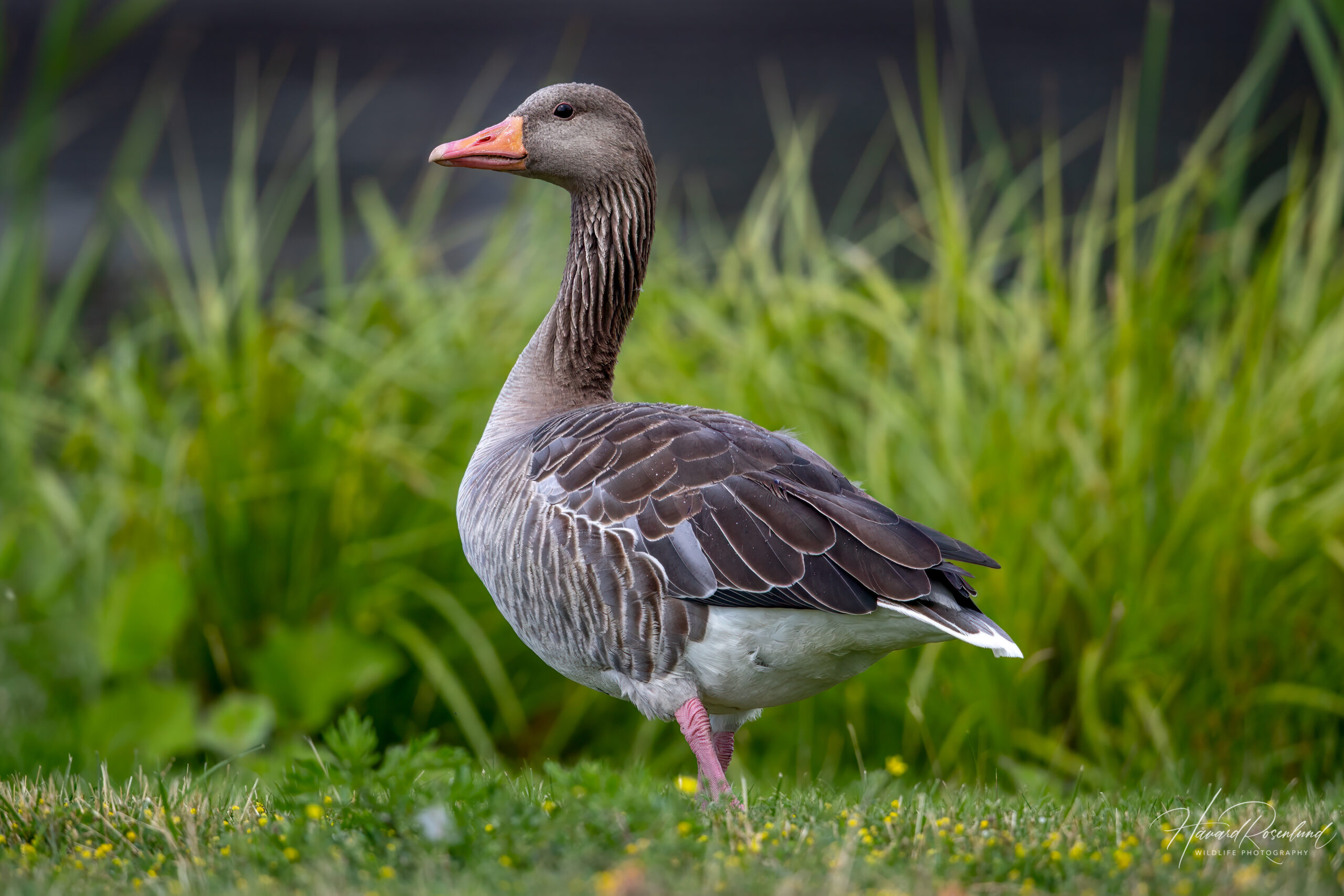
Greylag Goose
Anser anser
At a glance
Habitat
- Wetlands, lakes, rivers, coastal marshes and agricultural landscapes
Diet
- Mostly grasses, shoots, roots, seeds and grain
Activity
- Diurnal
Size
- Length: 74–84 cm Weight: 3.3 kg
Range
- Much of Eurasia; introduced and feral populations occur elsewhere
Description
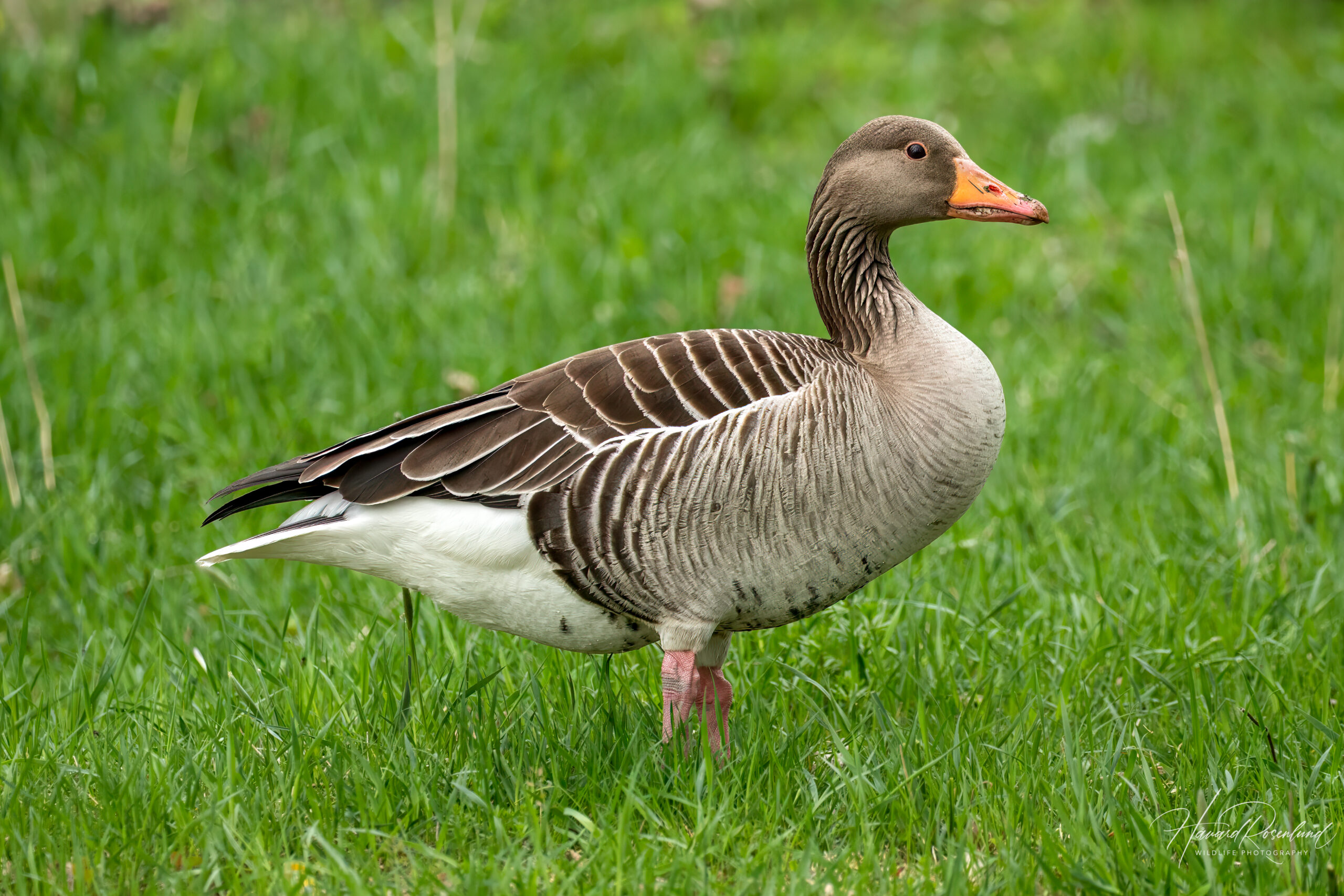
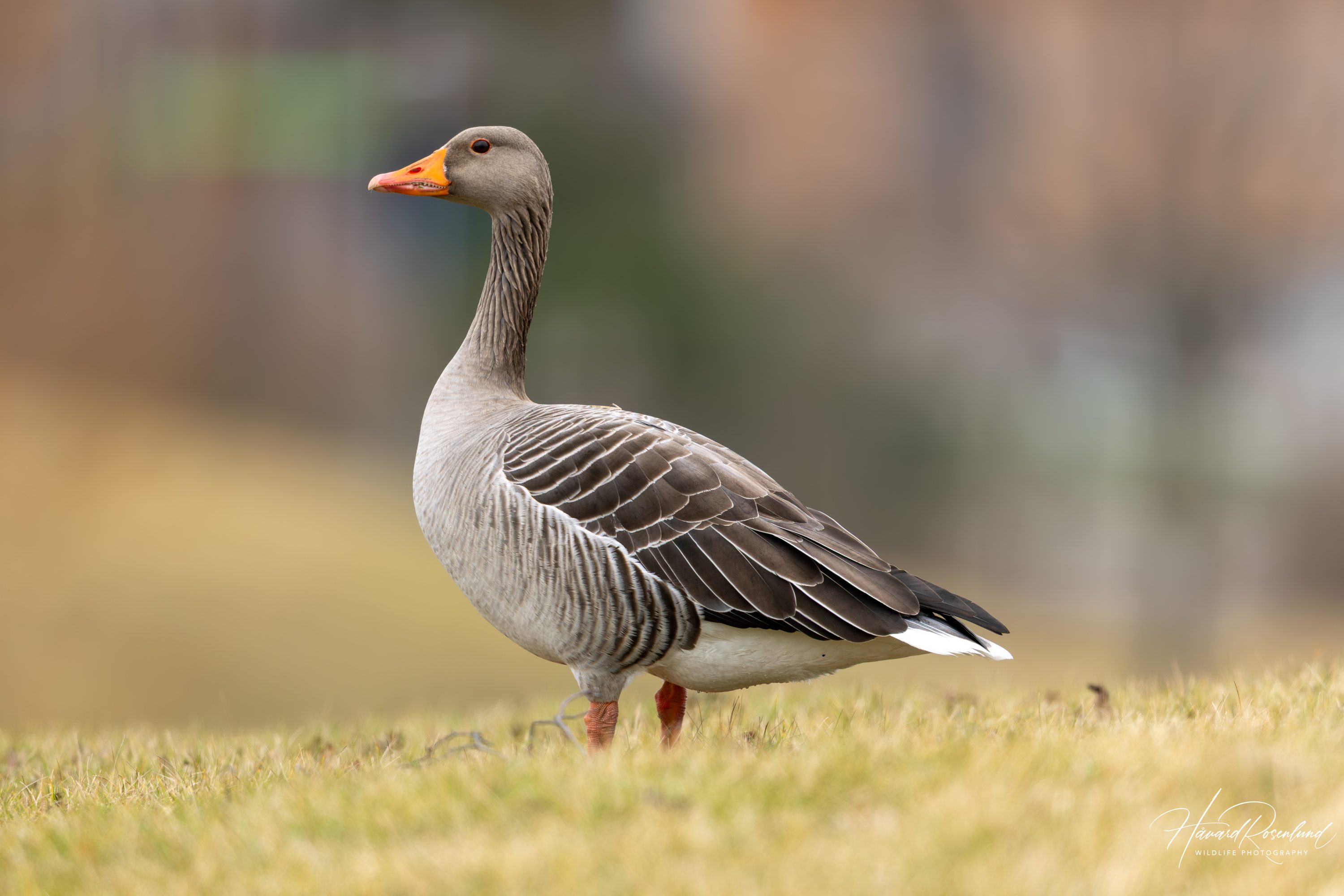
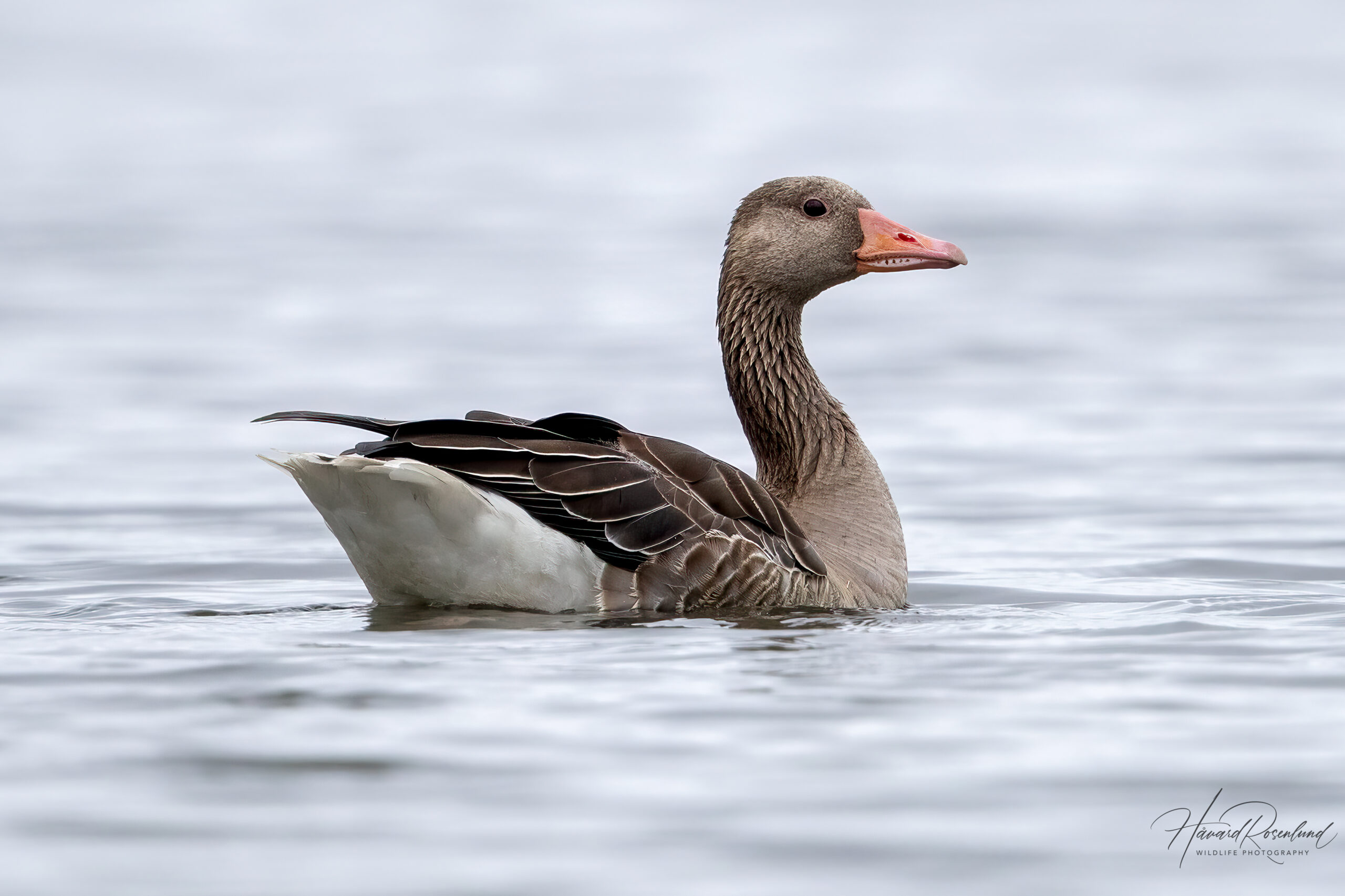
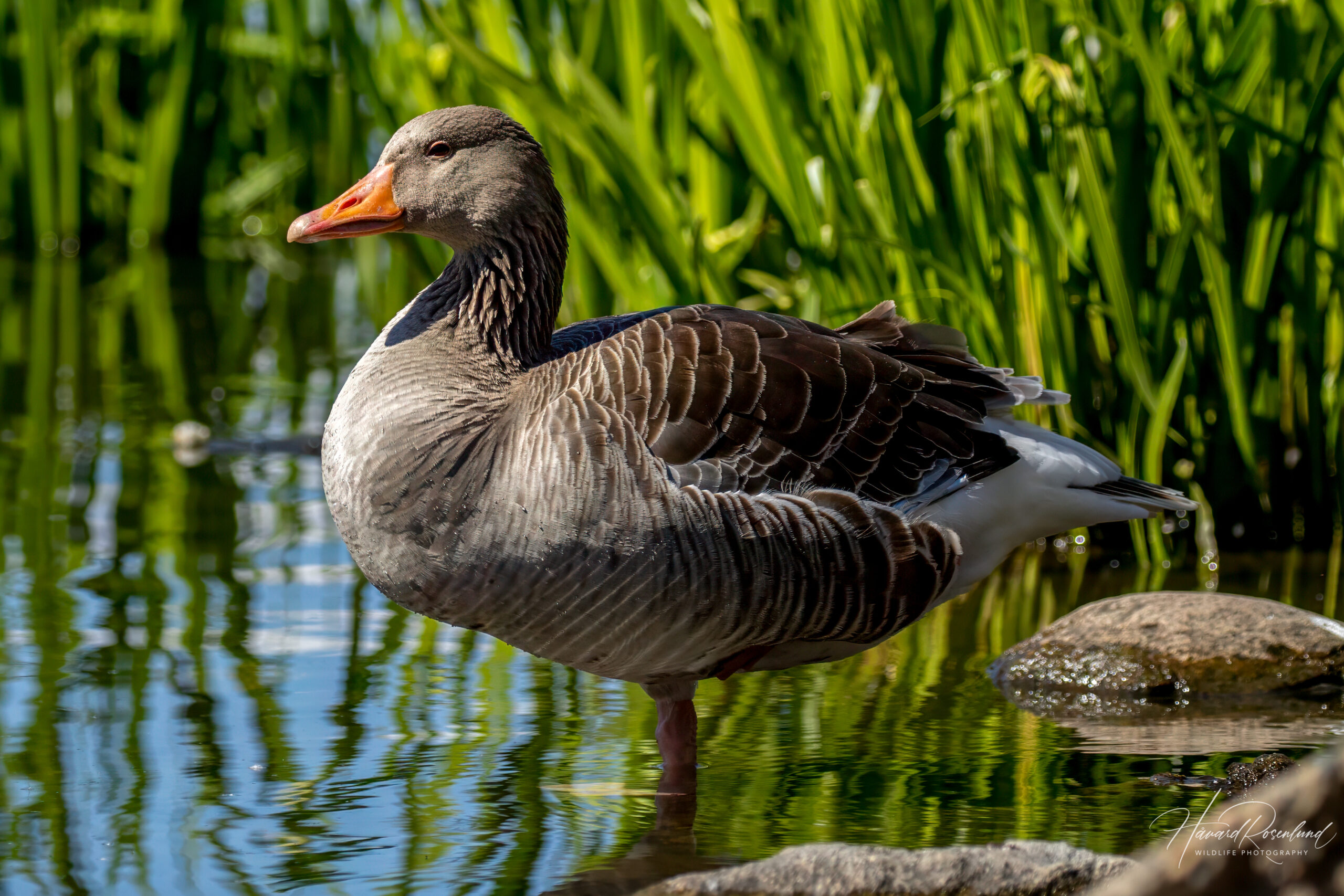
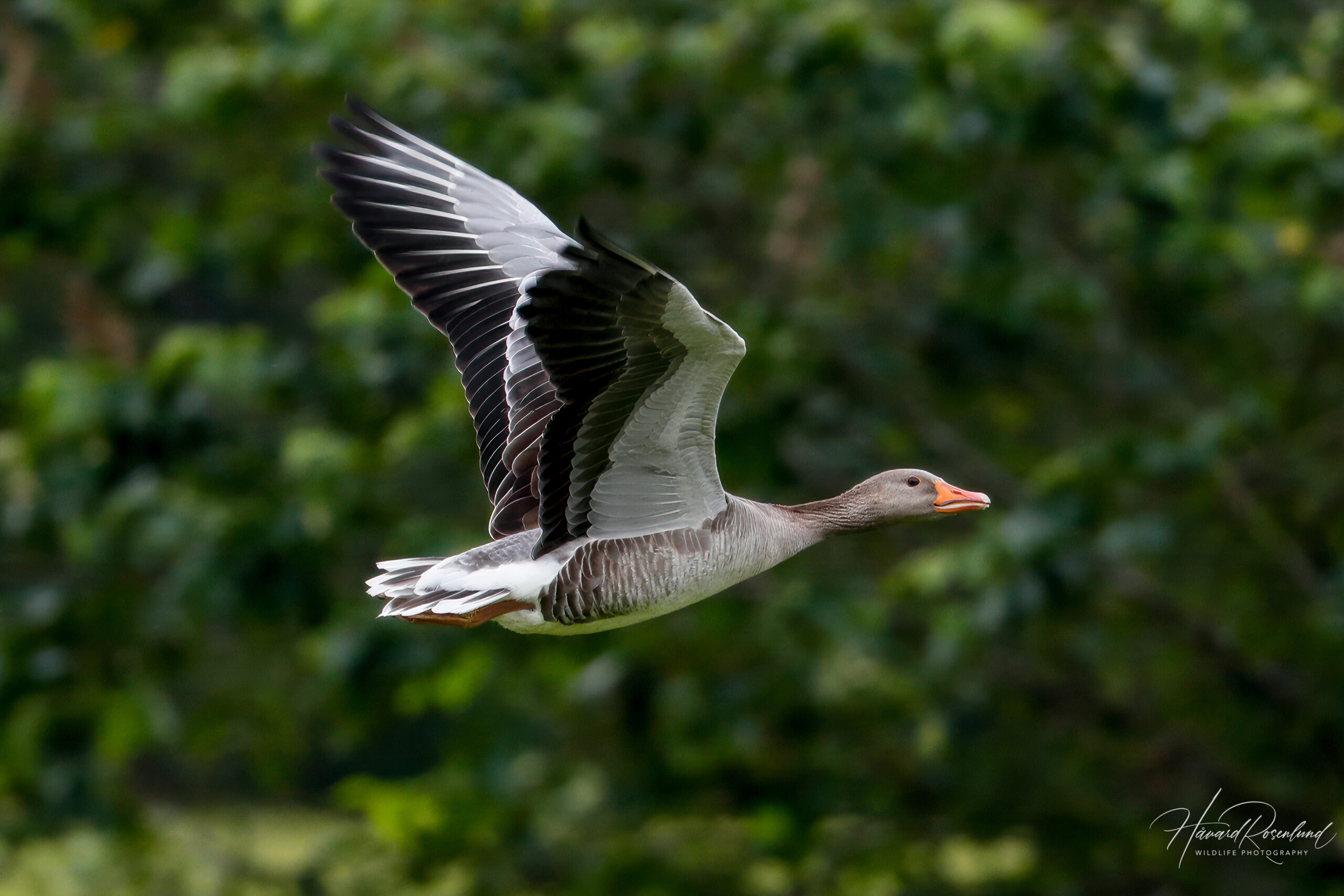
The greylag goose (Anser anser) is a large, heavy-bodied goose native across much of Eurasia. Adults are roughly 74–84 cm long and average around 3.3 kg, with males generally heavier than females. The plumage is mostly grey-brown with paler-edged feathers, a pale belly, pink legs and a large orange to pinkish bill. In flight the pale grey forewing is conspicuous.
Greylags are among the largest of the grey geese and can usually be separated from similar species by their bulky proportions, large plain-coloured bill and lack of strong facial markings. The loud, nasal calls are also characteristic and are heard frequently within pairs, families and larger flocks.
Habitat
Greylag geese use wetlands, lakes, rivers, coastal marshes and agricultural landscapes. Breeding birds usually remain close to water, nesting on islands, shorelines or in dense vegetation while travelling onto open grassland and fields to feed.
The species has adapted particularly well to productive human-modified landscapes. Reservoirs, parks, grazed grassland and farmland can provide a combination of safe resting water and abundant food, helping some populations increase and shorten their seasonal movements.
Diet
Greylag geese are overwhelmingly herbivorous. They graze on grasses and other leaves and also take roots, shoots, seeds, grain and other plant material. Agricultural crops and stubble can become important where they are abundant.
Feeding is mainly carried out on land, often in open flocks close to water. The birds crop vegetation with the bill and can spend long periods grazing. Their ability to use both natural grasslands and cultivated fields has contributed to population growth in many regions, but can also bring them into conflict with farmers.
Social behaviour
Greylag geese have a strongly family-based social system. Pairs form long-term bonds, and both adults guard and guide the goslings. Young commonly remain with their parents through autumn and winter and may stay with them until the following breeding season, so family groups persist far beyond the period when the young first become capable of flight.
Research on the long-studied free-ranging flock at Grünau in Austria found that family members lost aggressive encounters less often when a close ally intervened. Birds in larger families also showed lower levels of stress-related hormone metabolites when food was concentrated and competition intensified, indicating that close social partners can buffer the effects of social stress.
Social learning occurs within these groups as well. At the same Austrian research station, a novel behaviour involving chewing butterbur stems spread especially quickly between members of the same families. A follow-up experiment showed that watching an experienced bird made a new food-retrieval task much easier to learn. Outside the breeding season, family groups join much larger flocks at feeding and roosting sites, but the family unit can remain recognisable within them.
Migration
Migration varies greatly between populations. Northern breeders are generally more migratory, while increasing numbers in milder parts of western Europe are resident or make only shorter seasonal movements. Migratory populations travel between breeding wetlands and wintering areas with dependable open water and grazing.
Changes in climate, agriculture and food availability have altered migration distances in several European populations. Traditional long-distance routes can shorten over time when suitable winter feeding and roosting sites become available farther north.
Breeding
Greylag geese form long-term pairs and nest on the ground, usually in dense vegetation or on islands and islets offering good visibility and some protection from terrestrial predators. The nest is a large bowl of vegetation lined with down. A typical clutch contains about 5–7 eggs.
The female performs most of the incubation, which lasts about 27–28 days, while the male remains nearby and guards the nesting area. The goslings are precocial and hatch covered in down, with open eyes and the ability to walk and swim soon afterwards. They leave the nest shortly after hatching and follow both parents to feeding areas and water. The young normally become capable of flight after about 50–60 days.
The family remains closely associated for months after hatching. The adults defend the young and lead them between feeding and resting areas until the goslings become fully independent.
Relationship with humans
The greylag goose is the principal wild ancestor of European domestic geese. A whole-genome study published in 2023 found that European domestic breeds and the Chinese Yili goose derive predominantly from Anser anser, whereas most other Chinese domestic goose breeds trace mainly to the swan goose (Anser cygnoides).
Thousands of years of domestication have produced breeds that differ enormously from their wild ancestor in body size, plumage and behaviour. Escaped domestic geese and their descendants also occur in feral populations and can interbreed with wild greylags, creating a continuing connection between the domestic and wild forms.
Increasing greylag goose populations have become closely linked to agriculture in many parts of Europe. Large flocks can feed heavily on grassland, cereals and other crops, causing local economic losses and leading to hunting, scaring and other measures intended to reduce crop damage.
The same birds may also be valued as familiar wetland wildlife and as a quarry species. Many local conflicts therefore involve balancing large goose flocks against crop damage and other pressures rather than trying to increase the population. Because flocks are highly mobile, driving birds away from one site can simply move the problem to neighbouring farmland.
Status
The greylag goose is classified as least concern on the IUCN Red List. It has a very large Eurasian range, and many European populations have increased strongly in recent decades.
In some regions the main challenge is now high local abundance rather than scarcity. Large flocks can cause substantial crop damage and other conflicts, but the species remains globally secure even though regional population trends and densities vary.
Image gallery
Loading map and observations…
Have you seen this species?
Independent species archive
Did you find this species page useful?
Wildlife Vagabond is independently built and maintained. Voluntary support helps cover hosting, maps, data storage and continued improvements to the species archive.
Support Wildlife VagabondSpecies content will remain freely available.
References
Information about the species’ global distribution and status is based primarily on global Red List data. See the references below for details.
- BirdLife International. (n.d.). Greylag Goose species factsheet. https://datazone.birdlife.org/species/factsheet/greylag-goose-anser-anser
- British Trust for Ornithology. (n.d.). Greylag Goose. https://www.bto.org/learn/about-birds/birdfacts/greylag-goose
- Frigerio, D., Weiß, B. M., Scheiber, I. B., & Kotrschal, K. (2005). Active and passive social support in families of greylag geese (Anser anser). Behaviour, 142(11-12), 1535-1557. https://doi.org/10.1163/156853905774831873
- Fritz, J., Bisenberger, A., & Kotrschal, K. (2000). Stimulus enhancement in greylag geese: socially mediated learning of an operant task. Animal Behaviour, 59(6), 1119-1125. https://doi.org/10.1006/anbe.2000.1424
- International Union for Conservation of Nature. (n.d.). Greylag Goose. The IUCN Red List of Threatened Species. https://www.iucnredlist.org/species/22679889/131907747
- Wen, J., Li, H., Wang, H., Yu, J., Zhu, T., Zhang, J., Li, X., Jiang, Z., Ning, Z., & Qu, L. (2023). Origins, timing and introgression of domestic geese revealed by whole genome data. Journal of Animal Science and Biotechnology, 14(1), 26. https://doi.org/10.1186/s40104-022-00826-9