
Red-breasted Merganser
Mergus serrator
At a glance
Habitat
- Northern coasts, estuaries, lakes and rivers; especially marine and brackish waters outside breeding
Diet
- Mainly small fish, supplemented by crustaceans and aquatic invertebrates
Activity
- Diurnal
Size
- Length: 51–64 cm Weight: 0.8–1.35 kg
Range
- Holarctic: northern North America, Europe and Asia, wintering mainly on temperate coasts farther south
Description
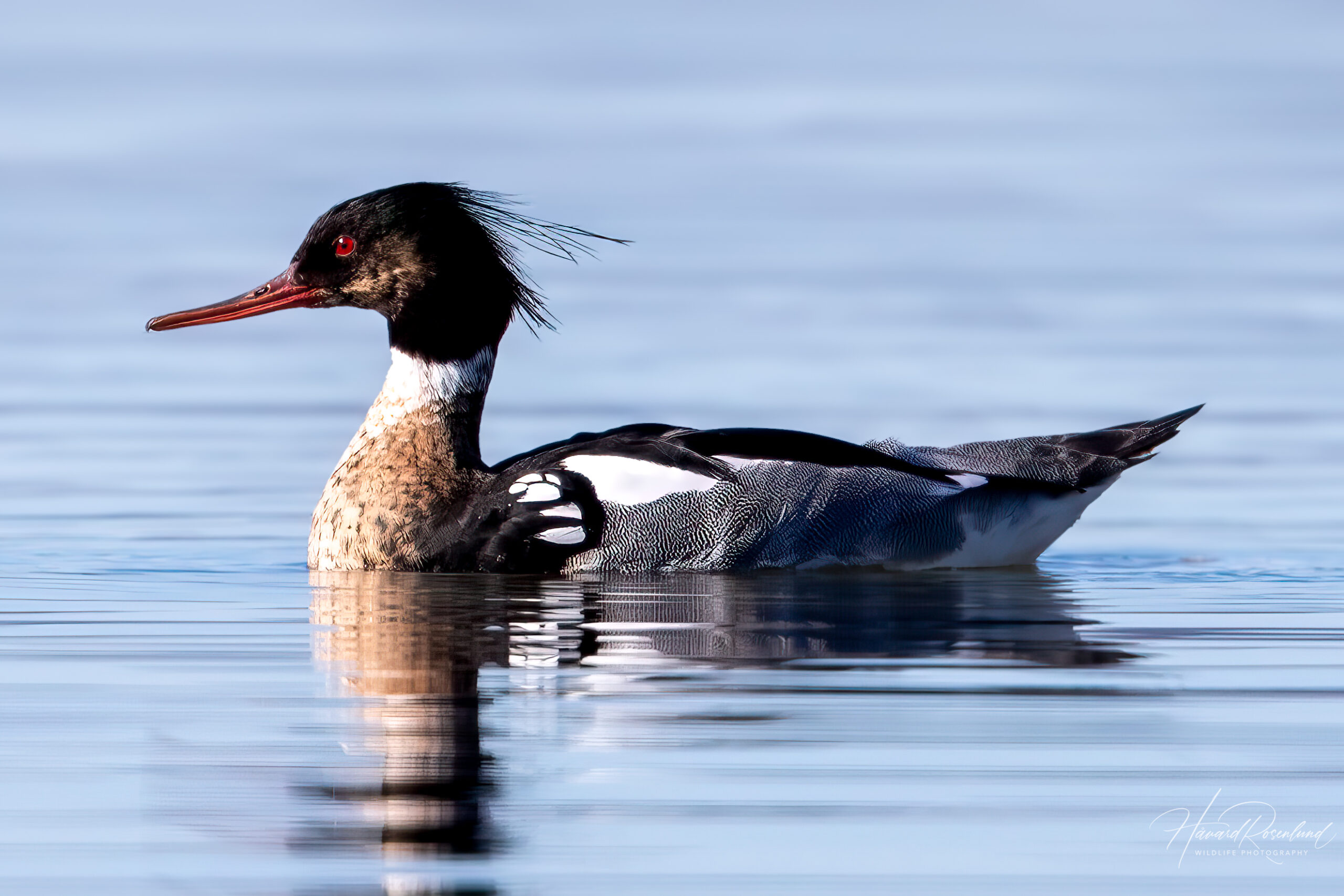
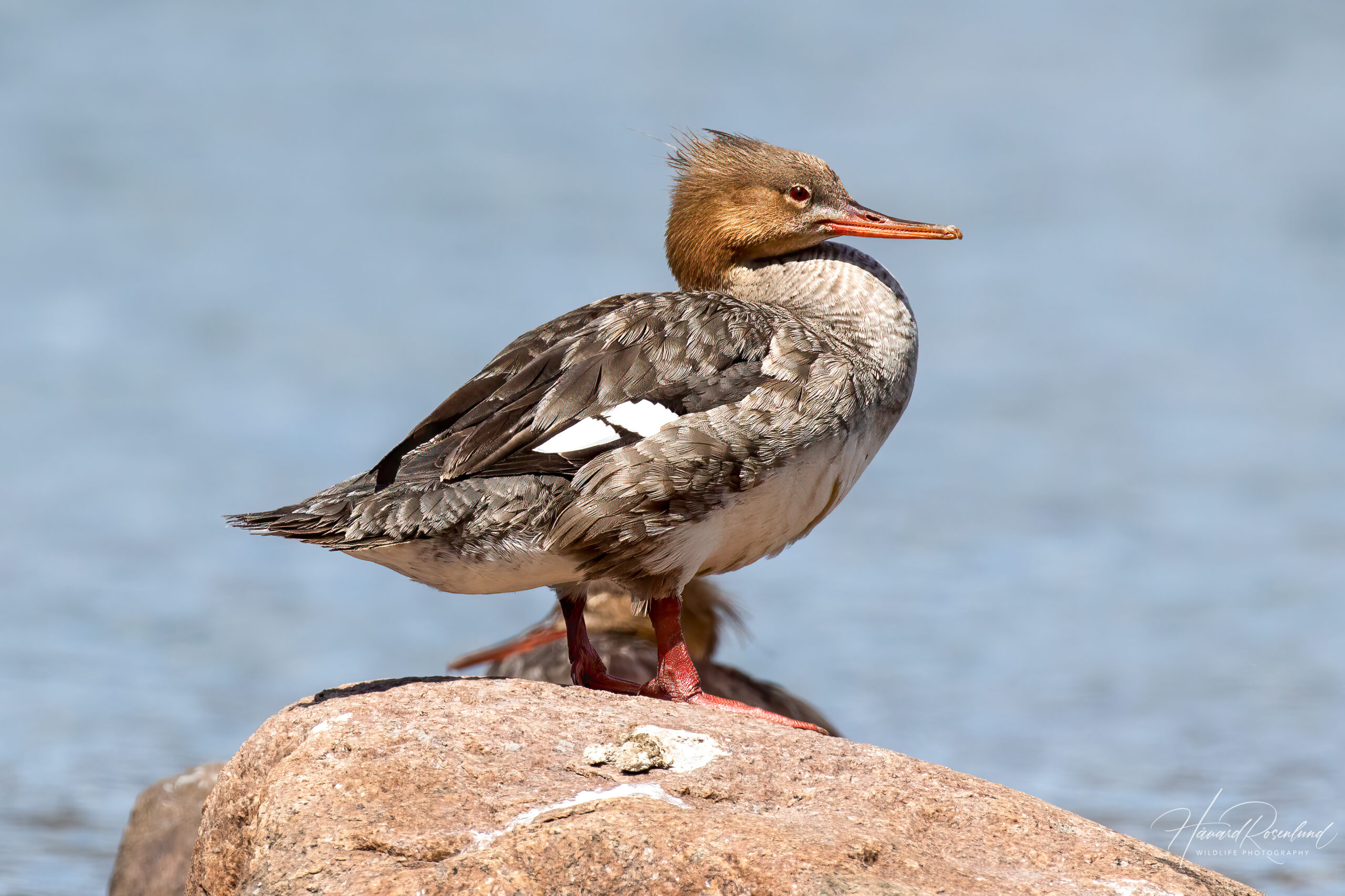
The red-breasted merganser (Mergus serrator) is a slim, long-bodied diving duck found across northern North America, Europe and Asia. Adults are roughly 51–64 cm long and weigh about 0.8–1.35 kg. Both sexes have a long, narrow red bill lined with fine tooth-like serrations and a shaggy crest. Breeding males have a dark green head, white neck collar, mottled reddish-brown breast and strongly patterned black, white and grey body. Females and immature birds are greyer, with a warm rusty-brown head that merges gradually into the pale neck. The similar common merganser (Mergus merganser) is bulkier, has a deeper-based bill and shows a much cleaner contrast between the female's reddish head and pale neck.
Habitat
Red-breasted mergansers breed beside lakes, rivers, sheltered sea lochs, islands and coastal wetlands across the boreal and subarctic zone. Outside breeding they become even more strongly marine, using shallow coastal waters, bays and estuaries.
Clear or relatively shallow water is especially useful because the birds hunt visually. Productive fish-rich shallows and sheltered coastal areas can therefore be important both for feeding and for wintering flocks.
Diet
Fish dominate the diet, particularly small schooling species that can be pursued underwater. Crustaceans and other aquatic invertebrates supplement the diet, especially where small fish are less abundant.
Studies in northern European rivers show that feeding activity can closely follow the daily activity of important prey such as three-spined sticklebacks (Gasterosteus aculeatus). Food intake can therefore depend strongly on when fish are active and available to capture.
Foraging
The narrow bill is adapted for holding slippery prey rather than crushing it. Fine backward-pointing serrations along the cutting edges give fish little purchase once caught. Before diving, mergansers often swim with the head partly submerged or repeatedly dip the face below the surface to search for prey. They then dive from the surface and propel themselves underwater with the feet while pursuing fish by sight.
Feeding is not always solitary. Groups may forage in loose lines or coordinated aggregations, especially where schooling fish are concentrated, effectively pushing prey into shallower or more confined water before individuals dive through the school. River studies have also documented a less obvious technique in which red-breasted mergansers probe the bottom with the bill to locate concealed fish. The species therefore combines active visual pursuit with several context-dependent ways of exploiting small fish.
Migration
Most northern populations are migratory, moving from inland or high-latitude breeding waters toward ice-free coasts after breeding. Some birds remain relatively close to their breeding region, while others travel long distances to wintering areas around western Europe, the Mediterranean, southern Asia and the coasts of the United States and Mexico. Coastal winter flocks may contain many birds even where the species is scarce as a breeder.
Migration and population structure are complex because birds from different breeding regions can mix on wintering grounds. Genetic and ringing studies show broad connections among northern breeding populations rather than completely isolated regional units.
Breeding
Red-breasted mergansers usually nest on the ground close to water, concealing the nest beneath shrubs, among rocks or in dense vegetation; islands can provide important predator-reduced nesting habitat. The female builds and lines the nest and does all the incubating. British nest records give a typical clutch of 8–10 eggs and an incubation period of about 31–32 days. The species normally raises one brood per year.
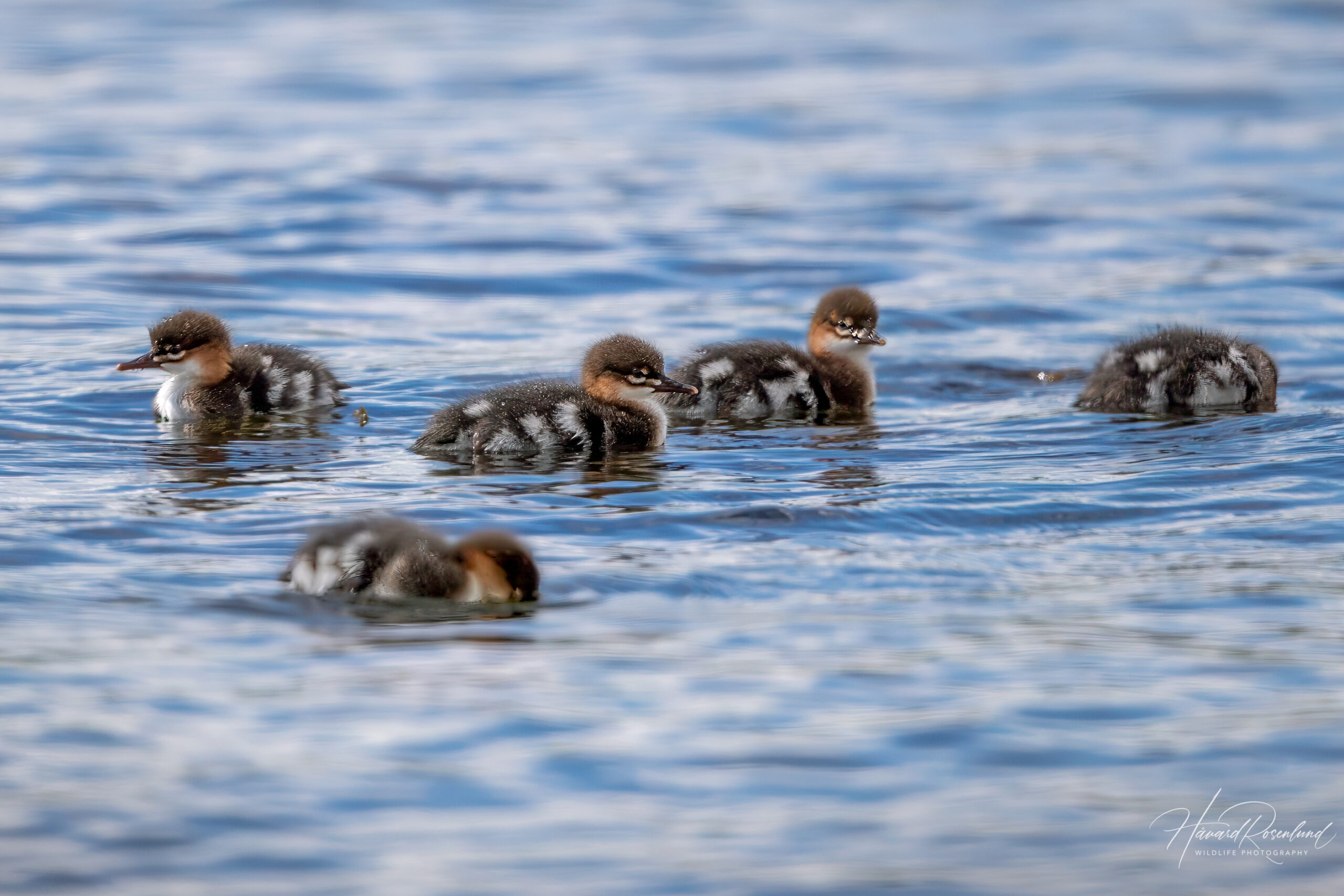
Conspecific brood parasitism can occur in dense nesting colonies: other females may lay eggs in an active merganser nest, so unusually large clutches can contain eggs from several females. The downy ducklings are precocial, meaning they hatch well developed, and leave the nest soon after hatching to follow the female to water. They can feed for themselves but remain under maternal protection while growing. Full flight ability is normally reached after roughly 60–65 days. Females may nest relatively close to one another in suitable island habitat, and studies of such colonies have found local genetic structure among nesting birds.
Status
The red-breasted merganser is classified as least concern on the IUCN Red List. Its very large Holarctic range keeps the global extinction risk low, but regional populations do not all show the same pattern.
The European breeding population is assessed as Near Threatened, and British winter monitoring shows a 46% decrease between 1998 and 2023. Several regional populations have therefore declined substantially even though the species remains secure globally.
Image gallery
Loading map and observations…
Have you seen this species?
Independent species archive
Did you find this species page useful?
Wildlife Vagabond is independently built and maintained. Voluntary support helps cover hosting, maps, data storage and continued improvements to the species archive.
Support Wildlife VagabondSpecies content will remain freely available.
References
Information about the species’ global distribution and status is based primarily on global Red List data. See the references below for details.
- BirdLife International. (n.d.). Red-breasted Merganser species factsheet. https://datazone.birdlife.org/species/factsheet/red-breasted-merganser-mergus-serrator
- British Trust for Ornithology. (n.d.). BirdFacts – Red-breasted Merganser. https://www.bto.org/learn/about-birds/birdfacts/red-breasted-merganser
- Cornell Lab of Ornithology. (n.d.). Cornell Lab – Red-breasted Merganser. https://www.allaboutbirds.org/guide/Red-breasted_Merganser/overview
- Fishman, D. J., Craik, S. R., Zadworny, D., & Titman, R. D. (2011). Spatial-genetic structuring in a red-breasted merganser (Mergus serrator) colony in the Canadian Maritimes. Ecology and evolution, 1(2), 107-18. https://doi.org/10.1002/ece3.10
- International Union for Conservation of Nature. (n.d.). Red-breasted Merganser. The IUCN Red List of Threatened Species. https://www.iucnredlist.org/species/22680485/132053220
- Sjöberg, K. (1985). Foraging activity patterns in the goosander (Mergus merganser) and the red-breasted merganser (M. serrator) in relation to patterns of activity in their major prey species. Oecologia, 67(1), 35–39. https://doi.org/10.1007/BF00378448
- Sjöberg, K. (1989). Time-related predator/prey interactions between birds and fish in a northern Swedish river. Oecologia, 80(1), 1-10. https://doi.org/10.1007/BF00789924
- U.S. Geological Survey. (2009). Migratory patterns and population structure among mergansers. https://www.usgs.gov/publications/migratory-patterns-and-population-structure-among-breeding-and-wintering-red-breasted