
Cotton Pygmy-Goose
Nettapus coromandelianus
At a glance
Habitat
- Vegetated freshwater lakes, ponds, marshes and slow-flowing waterways
Diet
- Mostly aquatic plants and seeds, with some small aquatic invertebrates
Activity
- Mainly diurnal
Size
- Length: 26–30 cm Weight: about 280 g
Range
- South and Southeast Asia to southern China and Indonesia, with a separate population in Australia
Description
The cotton pygmy-goose (Nettapus coromandelianus) is one of the world's smallest waterfowl. This compact duck inhabits tropical and subtropical wetlands from South and Southeast Asia to Australia. Adults are about 26–30 cm long and weigh roughly 280 g. Despite its English name, it is a small duck rather than a true goose.
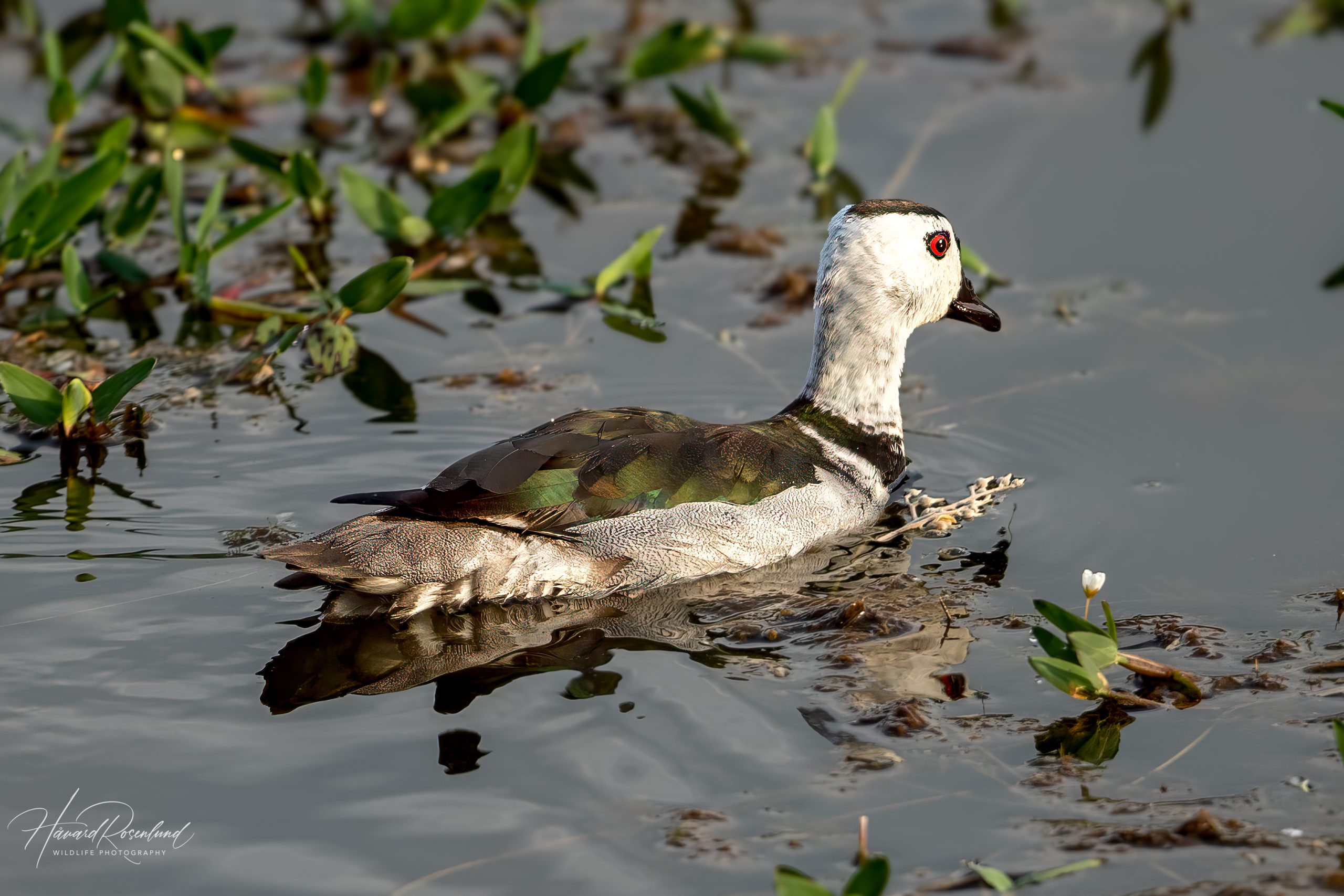
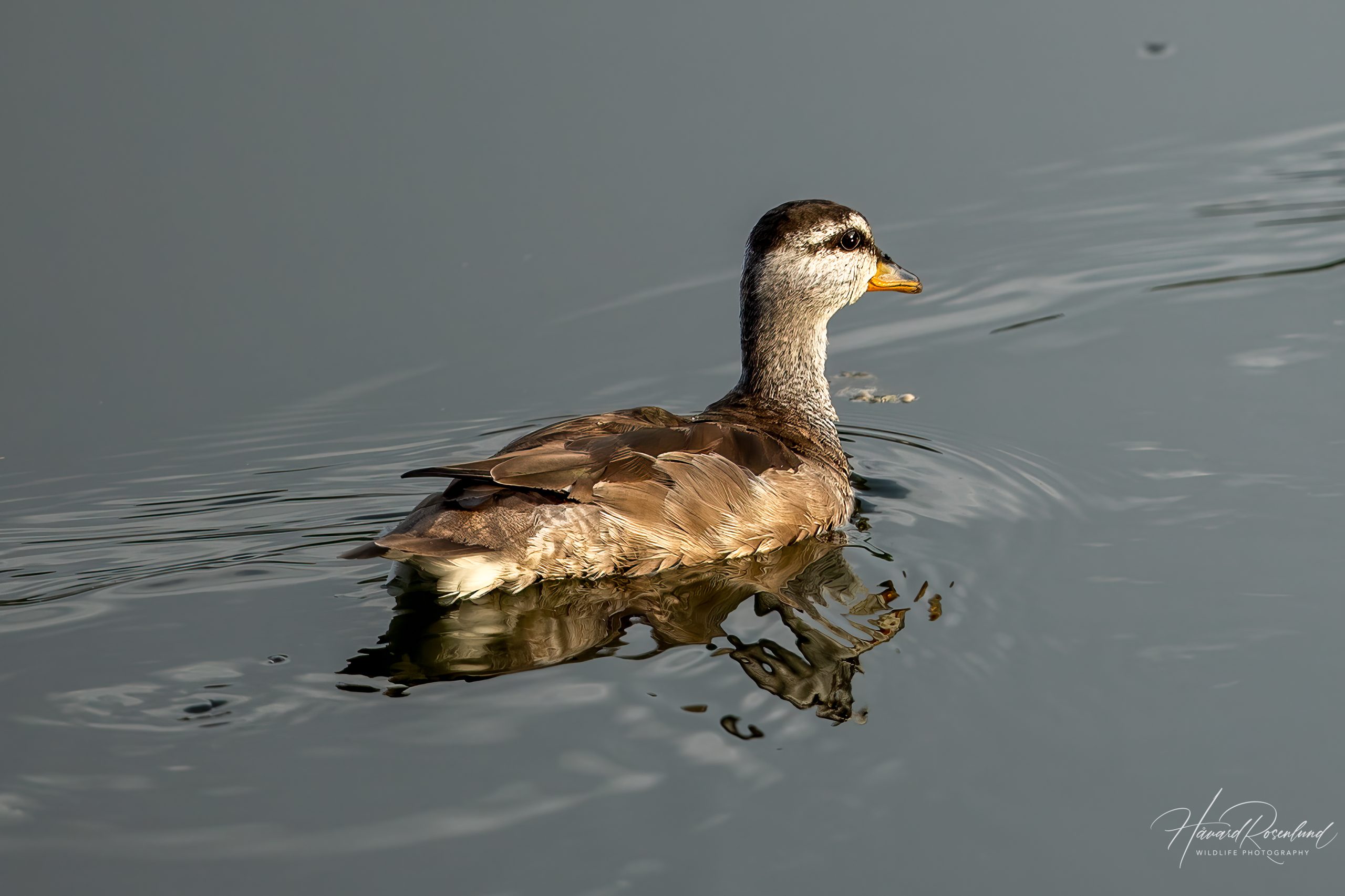
Adult males are strikingly patterned, with a largely white head, neck and underparts, glossy dark green upperparts, a dark collar around the base of the neck, and red eyes. Females are duller grey-brown, with a dark eye-stripe and pale eyebrow. Two subspecies are recognised, with the Australian N. c. albipennis geographically separated from the nominate Asian form.
Habitat
Cotton pygmy-geese favour lowland freshwater wetlands with abundant aquatic vegetation. Typical habitats include shallow lakes, ponds, marshes, reservoirs and quiet sections of rivers, especially where floating-leaved plants provide both food and cover.
The birds can use natural wetlands as well as suitable artificial water bodies, and in parts of South Asia they occur on relatively small village ponds. Their strong association with well-vegetated freshwater makes the loss or degradation of shallow wetlands particularly important at a local level.
Diet
The diet is dominated by plant material, especially seeds and parts of aquatic plants gathered at or close to the water surface. Small aquatic invertebrates are also eaten, adding an animal component to an otherwise largely herbivorous diet.
Most food is taken by dabbling, picking from floating vegetation or feeding directly at the surface rather than by prolonged diving. This feeding style helps explain the species' close association with calm, plant-rich wetlands.
Behaviour
Cotton pygmy-geese are usually seen in pairs or small groups, although larger concentrations can form where feeding conditions are favourable. They are mainly active by day and spend much of their time swimming among floating vegetation or resting close to cover.
Unlike many familiar ducks, pygmy-geese readily perch and roost in trees. Their small size and relatively strong feet suit this lifestyle, and trees are also essential during breeding because nests are placed in cavities above the ground.
Breeding
Breeding is closely linked to seasonal rainfall and rising water levels, so timing varies across the wide range. Pairs nest in natural cavities in trees standing in or close to wetlands. The male may accompany the female while a nest site is selected, but incubation is carried out by the female.
Clutches can be remarkably large. A field study published in 2012 in Assam recorded 10–18 eggs per clutch, averaging about 14, with incubation lasting roughly 28–29 days. The ducklings hatch well developed and leave the cavity soon after hatching, dropping to the ground or water and following the adults. The researchers suggested that such large clutches may help offset mortality after the ducklings leave the protected nest cavity.
Status
The cotton pygmy-goose is classified as least concern on the IUCN Red List and remains widespread across southern Asia and into Australia.
The national picture in India is more concerning. State of India’s Birds 2025 reports a rapid long-term decline of about 54.55%, together with a current annual decline of about 2.94%. The species is a resident wetland specialist in India, so continued loss and degradation of shallow vegetated wetlands are especially relevant even though the global category remains LC.
Wetland drainage, loss of aquatic vegetation, pollution and other changes to shallow freshwater habitats can reduce local numbers. Because the species depends on both productive wetlands and suitable cavity-bearing trees, retaining wetland vegetation and mature trees is important even where the species is still locally common.
Image gallery
Loading map and observations…
Have you seen this species?
Independent species archive
Did you find this species page useful?
Wildlife Vagabond is independently built and maintained. Voluntary support helps cover hosting, maps, data storage and continued improvements to the species archive.
Support Wildlife VagabondSpecies content will remain freely available.
References
Information about the species’ global distribution and status is based primarily on global Red List data. See the references below for details.
- BirdLife International. (n.d.). Cotton Pygmy-Goose species factsheet. https://datazone.birdlife.org/species/factsheet/cotton-pygmy-goose-nettapus-coromandelianus
- International Union for Conservation of Nature. (n.d.). Cotton Pygmy-Goose. The IUCN Red List of Threatened Species. https://www.iucnredlist.org/species/22680090/92842427
- Mlodinow, S. G., Kirwan, G. M., Hansasuta, C., & Pyle, P. (2025). Cotton Pygmy-Goose (Nettapus coromandelianus). In Birds of the World. Cornell Lab of Ornithology. https://doi.org/10.2173/bow.copgoo1.02
- Tobias, J. A., Sheard, C., Pigot, A. L., Devenish, A. J. M., Yang, J., Sayol, F., Neate‐Clegg, M. H. C., Alioravainen, N., Weeks, T. L., Barber, R. A., Walkden, P. A., MacGregor, H. E. A., Jones, S. E. I., Vincent, C., Phillips, A. G., Marples, N. M., Montaño‐Centellas, F. A., Leandro‐Silva, V., Claramunt, S., … Schleuning, M. (2022). AVONET: morphological, ecological and geographical data for all birds. Ecology Letters, 25(3), 581-597. https://doi.org/10.1111/ele.13898
- Upadhyaya & Saikia. (2012). Clutch size and egg characteristics of Cotton Pygmy-Goose in Assam, India. Asian Journal of Conservation Biology, 1, 31–34. https://www.researchgate.net/publication/385050339_Clutch_size_and_egg_characteristics_of_Cotton_Pygmy-Goose_in_Assam_India
- Upadhyaya, S., & Kr. Saikia, P. (2012). Study on Conservation and Management of Cotton Pygmy-Goose Population in Assam (India). American Journal of Environmental Engineering, 2(1), 19-22. https://doi.org/10.5923/j.ajee.20120201.04