
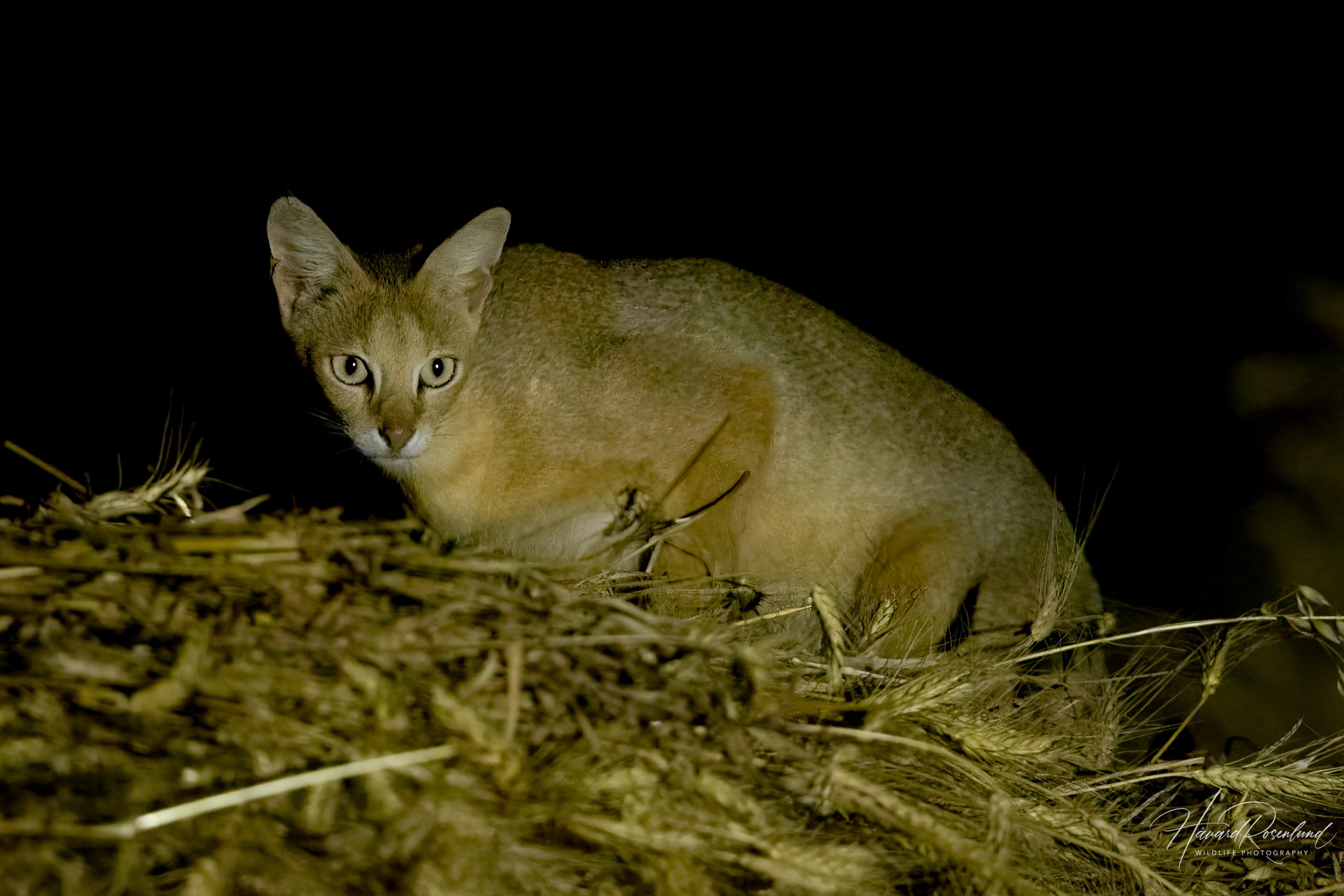
Jungle Cat
Felis chaus
At a glance
Habitat
- Wetlands, reed beds, grasslands, scrub, open woodland and farmland; in India especially warm semi-arid landscapes with moderate vegetation cover
Diet
- Mainly rodents; also birds, reptiles, amphibians, fish and insects
Activity
- Flexible; often crepuscular or nocturnal, but daytime activity also occurs
Size
- Length: about 79–103 cm including tail Weight: about 5–9 kg
Range
- From Egypt and the eastern Mediterranean through the Middle East and Central Asia to South and mainland Southeast Asia
Description
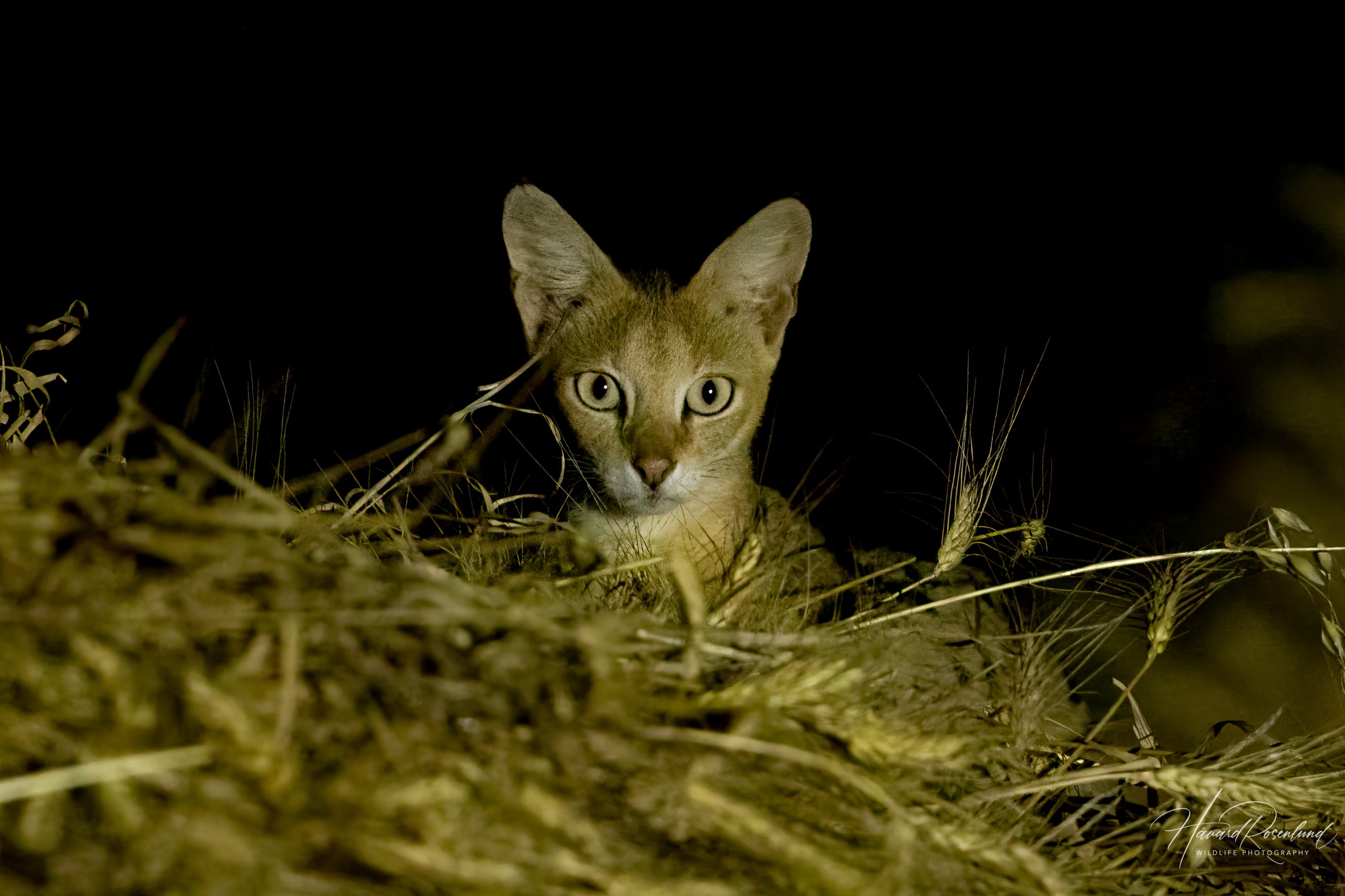
The jungle cat (Felis chaus), also known as the reed cat or swamp cat, is a medium-sized cat distributed from Egypt and the eastern Mediterranean across the Middle East and Central Asia to South and mainland Southeast Asia. Despite its name, it is not a specialist of tropical jungle. Long legs, a relatively short tail and small ear tufts can give it a superficially lynx-like appearance, although it belongs to the genus Felis and is closely related to the domestic cat (Felis catus).
Adults have a head-and-body length of about 58–76 cm, with a tail of roughly 21–27 cm, giving a total length of around 79–103 cm. Typical body mass is about 5–9 kg, with males larger than females. Size also varies geographically, with western populations generally larger than those farther east. The coat ranges from sandy or grey-brown to reddish brown, with darker markings most visible on the legs and tail.
Habitat
Jungle cats are associated with open habitats that provide both cover and abundant small prey. Reed beds, marshes, river margins and other wetlands are important in many parts of the range, but the species also uses grassland, scrub, open woodland and agricultural mosaics.
A large India-wide analysis published in 2026 found the highest habitat suitability in warm, semi-arid landscapes with moderate vegetation cover and low to moderate human and livestock disturbance, while dense forest and heavily transformed landscapes were less suitable. This helps explain why the name “jungle cat” can be misleading: in India the species is often more characteristic of open mosaics than dense jungle.
Diet
Rodents form the core of the diet in many areas, making the jungle cat an important predator of small mammals in grasslands, wetlands and agricultural landscapes. Birds, reptiles, amphibians, fish and large insects are also taken when available.
Hunting
The cat usually hunts on the ground, moving quietly through vegetation before making a short rush or pounce. It can also leap at birds and is a capable swimmer, sometimes entering shallow water while hunting.
Behaviour
Jungle cats are generally solitary and communicate through scent marking, visual signals and vocalisations. They spend most of their time on the ground and climb less routinely than many smaller forest cats.
Activity is flexible rather than strictly nocturnal. Many populations are most active around dusk, at night and around dawn, especially where human activity is high, but daytime activity also occurs. The balance can shift with temperature, prey availability and disturbance, showing how behaviour helps the species use a wide range of open landscapes.
Home ranges
A tracking study published in 2022 followed jungle cats and other mesocarnivores for about three years in an agricultural landscape in Central India. Seasonal jungle-cat home ranges varied from 1.01 to 26.48 km², with a mean of 5.9 km², and did not differ clearly in size between seasons. The same individuals reused much of the same area from season to season, with a mean overlap of about 0.89, showing strong site fidelity despite intensive human land use.
The tracked jungle cats selected human-modified land-cover types at both landscape and home-range scales. Their space use is therefore flexible without being random: prey, water, cover and the structure of agricultural mosaics influence where an individual concentrates its activity, while adults remain predominantly solitary.
Reproduction
Breeding timing varies across the species' wide geographic range. In South Asia mating is often recorded during the cooler part of the year. Gestation lasts roughly 63–66 days, after which the female gives birth in dense vegetation, a hollow, an abandoned burrow or another sheltered den site.
Litters most often contain two to four kittens. The female provides the parental care, and the kittens begin exploring outside the den as they grow. They are usually weaned at around three months and become independent later during their first year.
Status
The jungle cat is classified as least concern on the IUCN Red List and remains widely distributed, but its regional situation varies considerably. A 2021 study in Srepok Wildlife Sanctuary, Cambodia, using camera-trap data from 2009–2019 and DNA-confirmed scats found jungle cats only in dry deciduous dipterocarp forest, where they occurred sparsely. The species now survives in small, isolated populations in much of Southeast Asia, where habitat modification and widespread indiscriminate snaring are thought to have driven severe declines.
India presents a very different picture. A countrywide assessment published in 2026 drew on 26,838 camera-trap locations and, after spatial filtering and addition of verified records, 6,151 unique presence locations. The resulting models estimated about 545,280 km² of potentially occupied habitat and a potential national population of roughly 308,585 jungle cats, with a wide 95% interval of about 157,917–459,253 individuals. These are model-based estimates rather than a direct census. The same study identified habitat fragmentation, expanding infrastructure and road mortality, disease and other pressure associated with free-ranging domestic dogs (Canis familiaris), and possible genetic mixing through hybridisation with domestic cats (Felis catus). Poultry losses can also lead to local persecution.
Image gallery
Loading map and observations…
Have you seen this species?
Independent species archive
Did you find this species page useful?
Wildlife Vagabond is independently built and maintained. Voluntary support helps cover hosting, maps, data storage and continued improvements to the species archive.
Support Wildlife VagabondSpecies content will remain freely available.
References
Information about the species’ global distribution and status is based primarily on global Red List data. See the references below for details.
- Animal Diversity Web. (n.d.). Felis chaus. https://animaldiversity.org/accounts/Felis_chaus/
- Bandyopadhyay, K., Jain, D., Koprowski, J., Qureshi, Q., & Jhala, Y. V. (2026). Distribution and conservation status of the jungle cat (Felis chaus) across India. Scientific Reports, 16(1), 7798. https://doi.org/10.1038/s41598-026-39033-1
- International Union for Conservation of Nature. (n.d.). Jungle Cat. The IUCN Red List of Threatened Species. https://www.iucnredlist.org/species/8540/200639312
- IUCN SSC Cat Specialist Group. (n.d.). IUCN Cat Specialist Group – Jungle Cat. https://www.catsg.org/living-species-junglecat
- Katna, A., Kulkarni, A., Thaker, M., & Vanak, A. T. (2022). Habitat specificity drives differences in space‐use patterns of multiple mesocarnivores in an agroecosystem. Journal of Zoology, 316(2), 92-103. https://doi.org/10.1111/jzo.12933
- Mammal Diversity Database. (n.d.). Canis familiaris. American Society of Mammalogists. https://www.mammaldiversity.org/taxon/1005940/
- Mammal Diversity Database. (n.d.). Felis catus. American Society of Mammalogists. https://www.mammaldiversity.org/taxon/1005985/
- Mammal Diversity Database. (n.d.). Felis chaus. American Society of Mammalogists. https://www.mammaldiversity.org/taxon/1005986/
- Rostro‐García, S., Kamler, J. F., Minge, C., Caragiulo, A., Crouthers, R., Groenenberg, M., Gray, T. N. E., In, V., Pin, C., Sovanna, P., Kéry, M., & Macdonald, D. W. (2021). Small cats in big trouble? Diet, activity, and habitat use of jungle cats and leopard cats in threatened dry deciduous forests, Cambodia. Ecology and Evolution, 11(9), 4205-4217. https://doi.org/10.1002/ece3.7316