
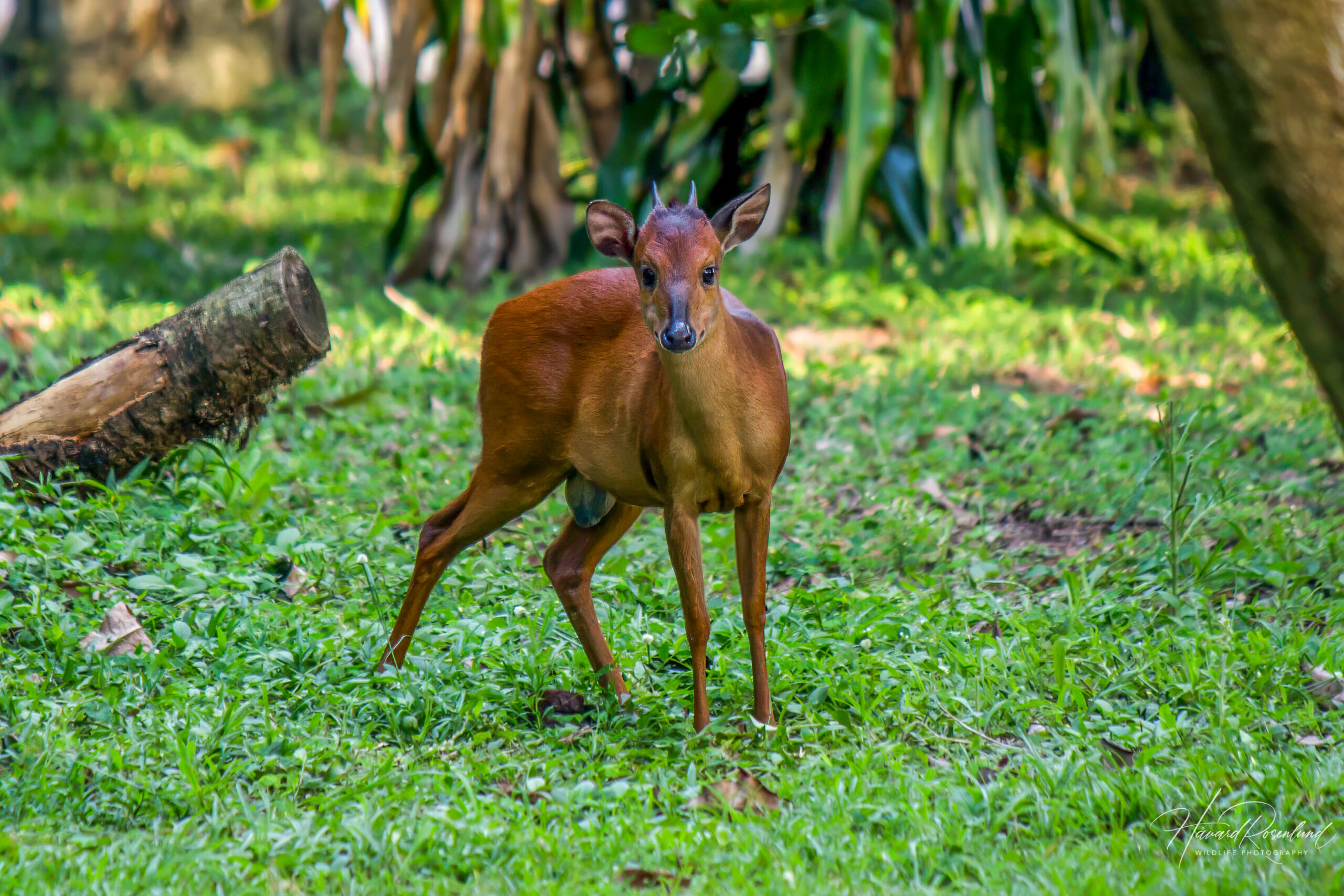
Natal Red Duiker
Cephalophorus natalensis
At a glance
Habitat
- Coastal and montane forest, riverine woodland and dense thickets
Diet
- Fallen fruit, leaves, flowers, fungi and other low-fibre plant material
Activity
- Most active around dawn and dusk, with daytime activity
Size
- Length: 75–87 cm Weight: 12–14 kg
Range
- Southeastern Africa from southern Tanzania to South Africa; broader if Harvey’s duiker is included
Description
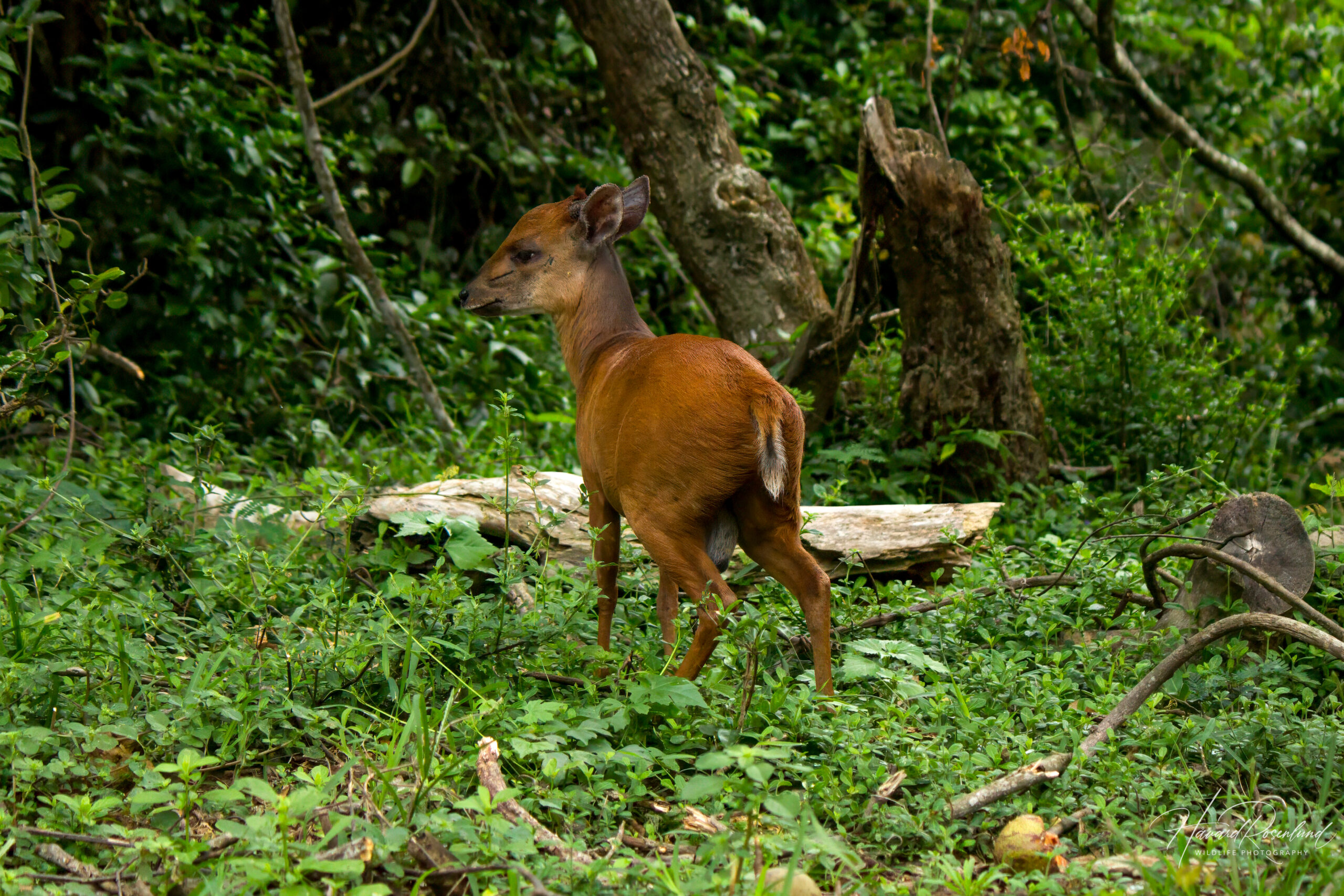
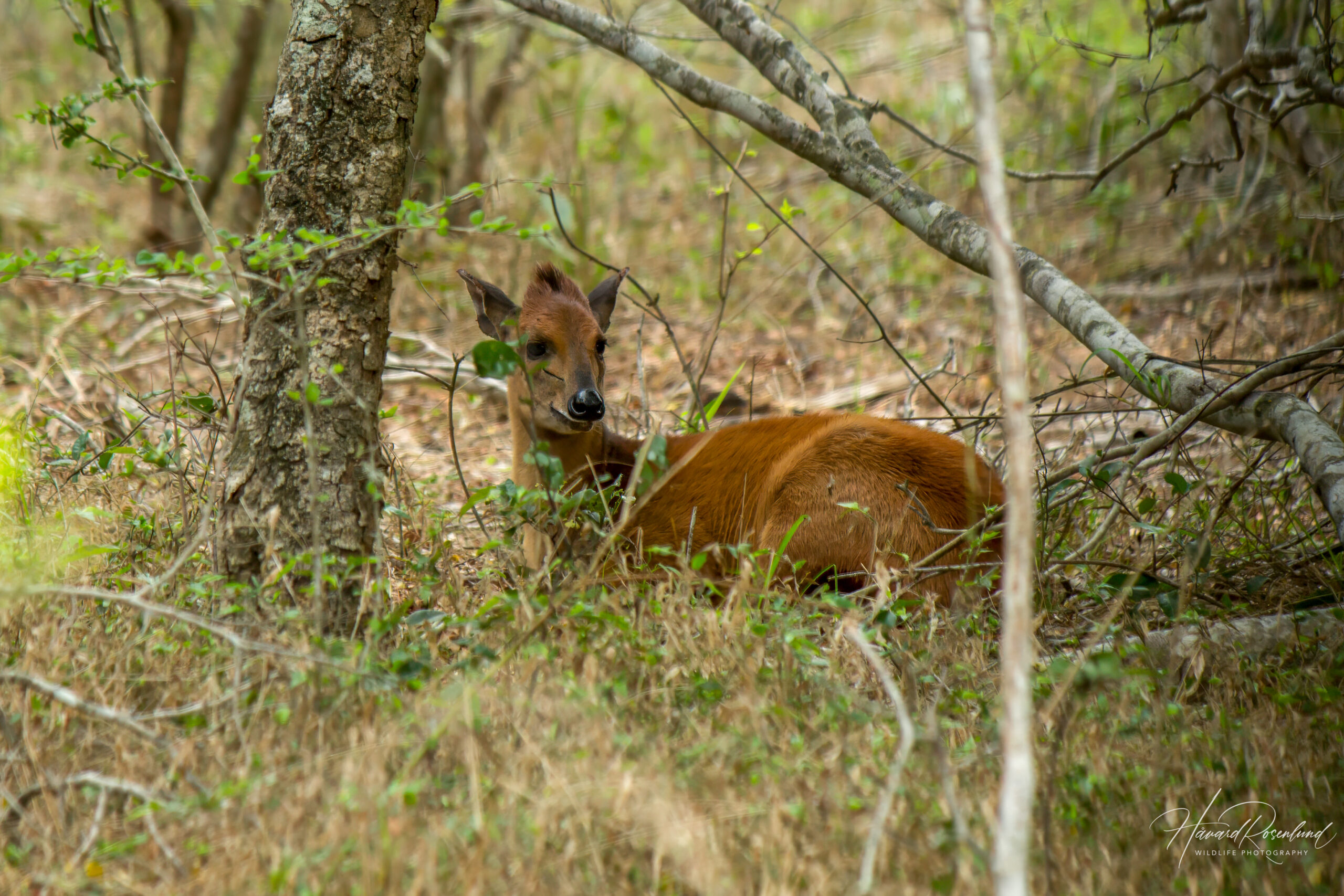
The Natal red duiker, or red forest duiker (Cephalophorus natalensis), is a small forest antelope of eastern and southeastern Africa. Adults are about 75–87 cm long, stand roughly 40 cm at the shoulder and weigh around 12–14 kg.
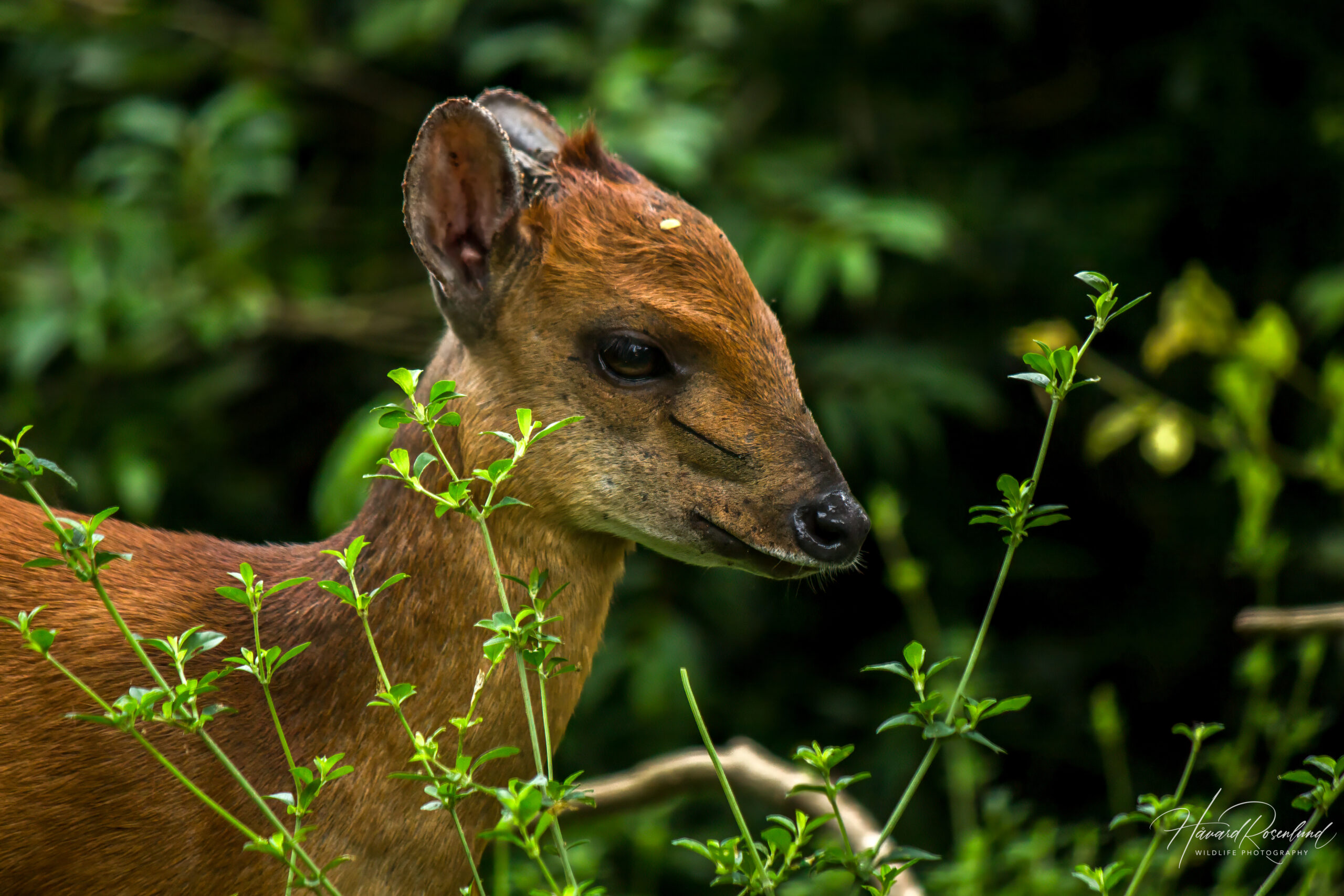
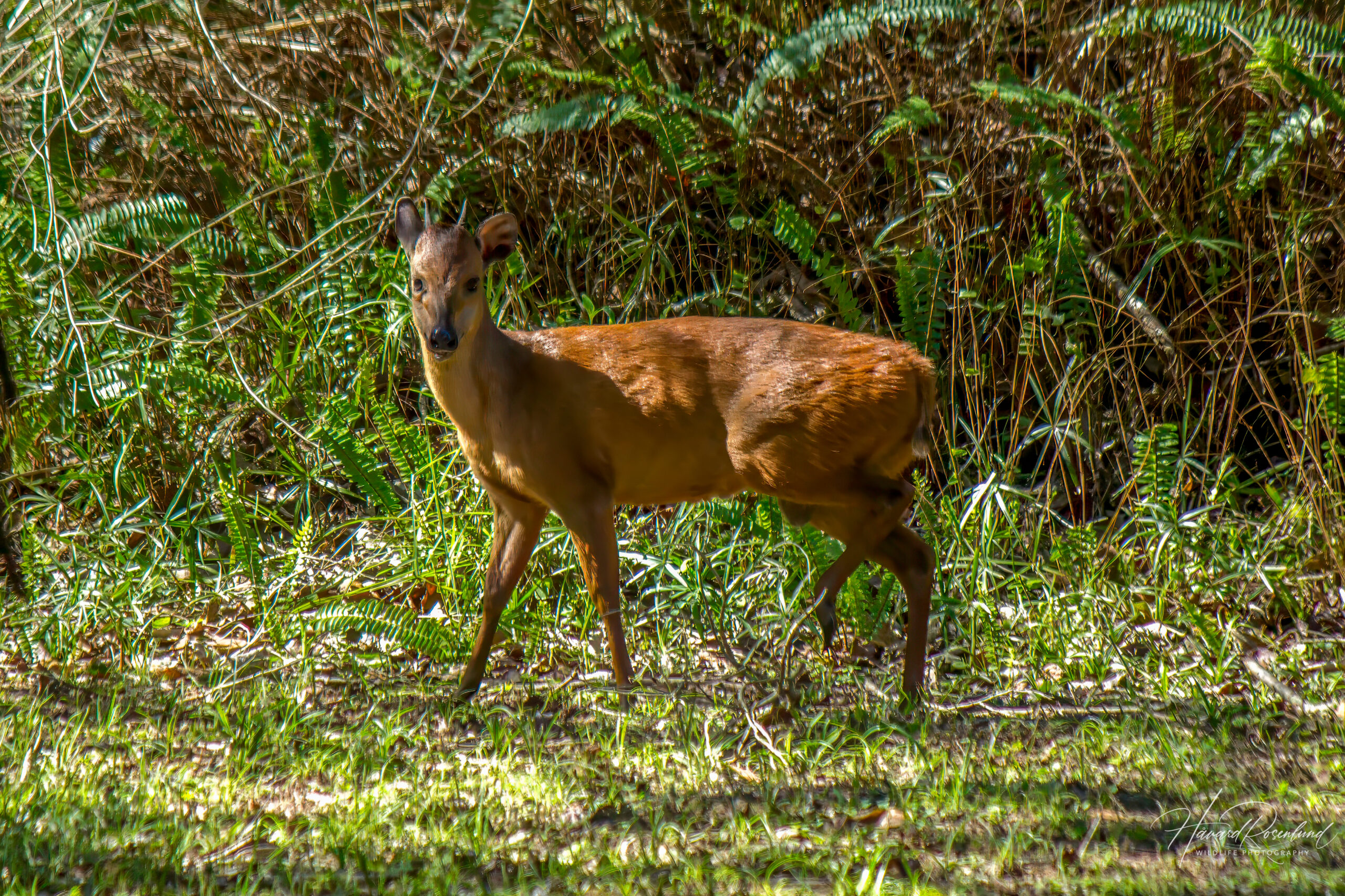
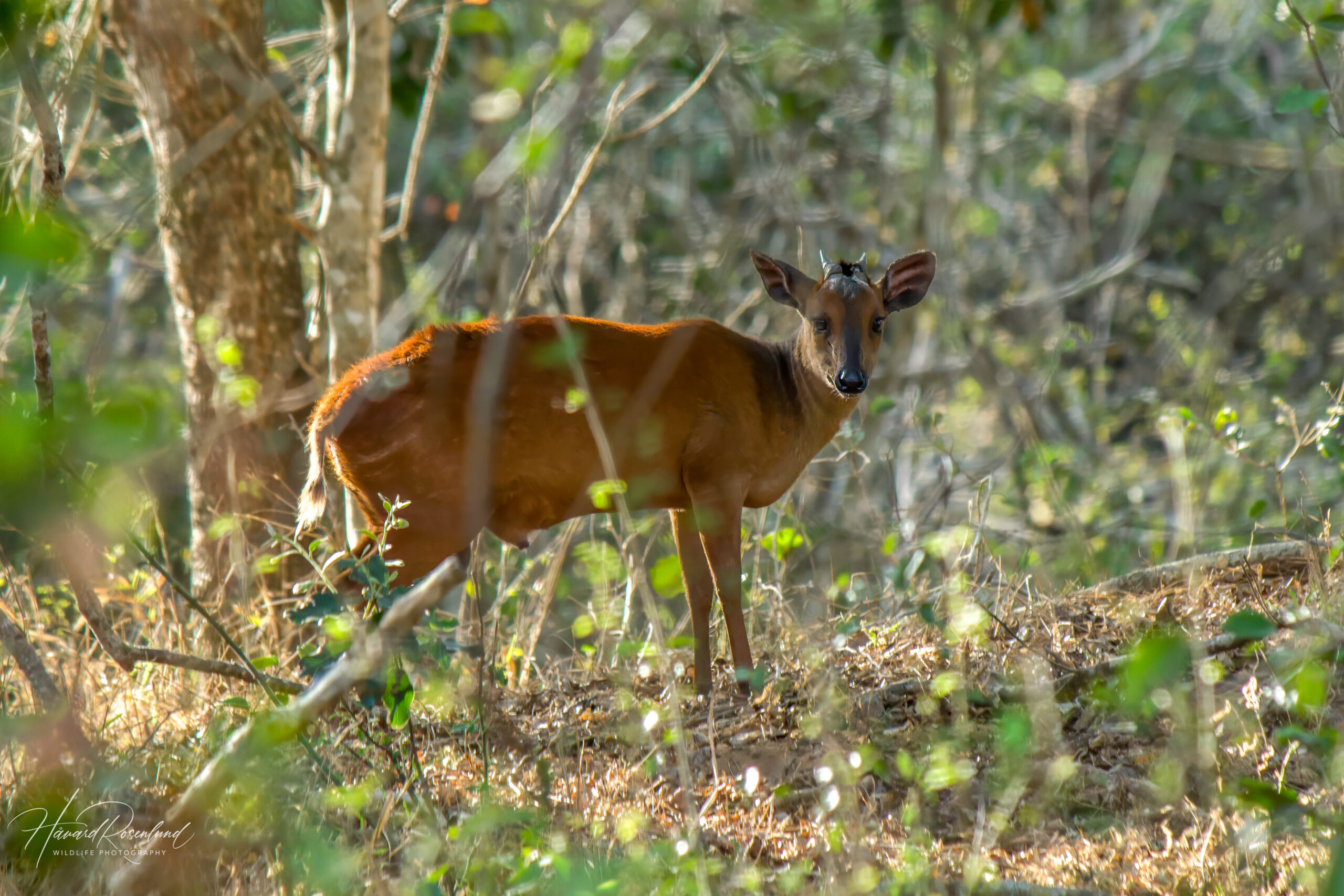
The coat is rich chestnut-red, with darker markings on the face, lower legs and crest between the horns. The neck often becomes bluish grey with age. Both sexes carry short, backward-pointing horns. In males they are commonly around 6 cm long and on average roughly twice as long as those of females; the female’s horns are also thinner and may be partly hidden by the crest. The longest reported horn is about 11 cm. The compact body, relatively long hind legs and arched back are characteristic of duikers and help them accelerate and move quickly through dense vegetation.
Taxonomy
Much of the older literature, including the global IUCN assessment published in 2016, uses the name Cephalophus natalensis. A major revision of duiker relationships published in 2022 moved this species and several close relatives to Cephalophorus, and Mammal Diversity Database v2.5 follows the combination Cephalophorus natalensis.
The species boundary with Harvey’s duiker remains unresolved. IUCN and several other sources treat Harvey’s duiker (Cephalophus harveyi) as a separate species, whereas Mammal Diversity Database v2.5 tentatively includes harveyi within Cephalophorus natalensis pending further research. The stated range therefore varies depending on which taxonomic treatment is followed.
Habitat
Natal red duikers live in coastal and montane forest, riverine woodland, forest margins and dense thickets with good cover near the ground. They can use secondary vegetation and forest–savanna mosaics, but usually remain close to dense vegetation that provides both food and concealment. They are not dependent on open water within their home range; in a KwaZulu-Natal study, only one of the home ranges examined contained a perennial water source.
When Harvey’s duiker is treated as a separate species, the Natal red duiker ranges mainly from southeastern Tanzania through southern Malawi and Mozambique to Eswatini and eastern South Africa, with isolated populations in areas such as Mpumalanga and Limpopo. If Harvey’s duiker is included, as Mammal Diversity Database v2.5 provisionally does, the species range becomes considerably broader and extends north to areas including Kenya and southern Somalia. At the southern edge of the range, coastal forest and thicket have become heavily fragmented.
Diet
Natal red duikers are concentrate selectors adapted to relatively soft, low-fibre food. Recently fallen fruit, leaves and flowers form much of the diet, often including plant material dropped from the canopy by monkeys and birds. Fungi, seeds and occasional animal matter can supplement the plant diet.
An analysis of 19 stomachs from KwaZulu-Natal illustrates the importance of leaves: dicotyledonous leaves accounted for 66% of relative occurrence in the samples, seeds and fruits for 25%, and flowers for 1%. Natal red duikers also tend to select easily digested plant material with high water and protein content.
Fruit feeding also gives the species an ecological role as a seed disperser. By swallowing fruits and moving through forest and thicket, red duikers can transport viable seeds away from parent plants.
Behaviour
Natal red duikers are mainly diurnal, with clear peaks in activity around dawn and dusk. Field studies in KwaZulu-Natal found little evidence of nocturnal activity. They also spend a substantial part of the day resting or ruminating in dense cover, and the amount of time spent moving varies with factors such as habitat quality and food availability.
They can remain remarkably inconspicuous even where locally common. When disturbed, they may give a hoarse, whistling alarm call.
This video shows a male drinking at a waterhole in Tembe Elephant Park, where the species is locally common.
Predation
Natal red duikers are important prey for several predators. Leopards (Panthera pardus) are well-documented predators, including on the forested southern slopes of the Soutpansberg in South Africa. Crowned eagles (Stephanoaetus coronatus) and African rock pythons (Python sebae) can also take red duikers, while young animals are vulnerable to several smaller and medium-sized predators.
When alarmed, a Natal red duiker often freezes briefly and then plunges into thick vegetation. The name “duiker” comes from Afrikaans for “diver”, referring to this characteristic escape into cover. The species is also an exceptional jumper; individuals have been recorded clearing nets or fences more than 1.3 m high.
Social behaviour
Natal red duikers are predominantly solitary. Females are accompanied by young that are still dependent on them, and small temporary aggregations may form where fallen fruit is concentrated. These feeding gatherings are not stable herds.
Home ranges can overlap extensively, in some studies by as much as 80–100%, including their core areas. There is therefore little evidence that Natal red duikers defend exclusive territories. Secretions from the large preorbital glands in front of the eyes are nevertheless rubbed onto stems and branches, and communal dung heaps may be used near home-range boundaries. Scent marking therefore occurs alongside very extensive overlap between home ranges.
Reproduction
Breeding can occur throughout the year. After a gestation of about 210 days, the female normally gives birth to a single calf. In a small captive sample, the average interval between births was 236 days, with a range of 222–273 days, and newborn calves weighed about 1 kg.
The calf spends much of its early life hidden in dense vegetation while the mother moves away to feed, and the mother–young bond is the only well-documented lasting social association in the species. Field literature gives a potential lifespan of about 8–9 years, while captive individuals have lived for at least 15 years.
Status
The global IUCN assessment published in 2016 under the name Cephalophus natalensis lists the Natal red duiker as Least Concern on the IUCN Red List, with a decreasing population trend. More recent SANBI material continues to describe the global status as Least Concern.
The latest regional assessment for South Africa, Lesotho and Eswatini dates from 2016 and classified the species as Near Threatened. It estimated 3,046–4,210 individuals in KwaZulu-Natal protected areas from counts conducted in 2012–2014. The largest subpopulation was in iSimangaliso Wetland Park, estimated at 1,666–2,150 animals. These are historical estimates from the assessment data, but they show the importance of the large protected areas of northern KwaZulu-Natal.
Coastal and montane forest has been fragmented by agriculture, timber plantations, mining and settlement, while hunting with dogs and trapping for bushmeat can cause local declines outside protected areas. Important southern populations remain in iSimangaliso Wetland Park, Tembe Elephant Park and other KwaZulu-Natal forest reserves. Conserving and reconnecting forest, riverine vegetation and dense thicket is therefore particularly important.
Image gallery
Loading map and observations…
National Red List status
| Country | Status | Assessment | Source |
|---|---|---|---|
| South Africa | NTNear Threatened | Red List of South African Species 2016Assessed as Cephalophus natalensis | SANBI – Red List of South African Species |
Have you seen this species?
Independent species archive
Did you find this species page useful?
Wildlife Vagabond is independently built and maintained. Voluntary support helps cover hosting, maps, data storage and continued improvements to the species archive.
Support Wildlife VagabondSpecies content will remain freely available.
References
Information about the species’ global distribution and status is based primarily on global Red List data. See the references below for details.
- Bowland, A. E., & Perrin, M. R. (1995). Temporal and spatial patterns in blue duikers Philatomba monticola and red duikers Cephalophus natalensis. Journal of Zoology, 237(3), 487-498. https://doi.org/10.1111/j.1469-7998.1995.tb02776.x
- Bowland. (1990). The ecology and conservation of blue duiker and red duiker in Natal. PhD thesis, University of Natal. https://researchspace.ukzn.ac.za/items/4a07401d-b696-4e5e-a191-cc0b1b27084a
- Bärmann, E. V., Fonseca, V. G., Langen, K., & Kaleme, P. (2022). New insights into the taxonomy of duiker antelopes (Artiodactyla: Bovidae) from the eastern Democratic Republic of the Congo, with the formal description of a new genus. Mammalian Biology, 102(5-6), 1793-1809. https://doi.org/10.1007/s42991-022-00279-7
- Ehlers-Smith, Y., Williams, S., Relton, C., & Child, M. F. (2016). A conservation assessment of <i>Cephalophus natalensis</i>. South African National Biodiversity Institute and Endangered Wildlife Trust. https://ewt.org/wp-content/uploads/2022/11/4.-Natal-Red-Duiker-Cephalophus-natalensis_NT.pdf
- Hoffmann & Bowland. (2013). Cephalophus natalensis – Natal Red Duiker. In: Mammals of Africa, Volume VI, pp. 258–261. https://www.researchgate.net/publication/311546072_Cephalophus_natalensis_Natal_Red_Duiker
- International Union for Conservation of Nature. (2016). Cephalophus natalensis. The IUCN Red List of Threatened Species. https://www.iucnredlist.org/species/4144/50183272
- Mammal Diversity Database. (n.d.). Cephalophorus natalensis, current taxonomy and distribution. American Society of Mammalogists. https://www.mammaldiversity.org/taxon/1006220/
- South African National Biodiversity Institute. (n.d.). Cephalophus natalensis regional assessment. https://speciesstatus.sanbi.org/assessment/last-assessment/1978/
- South African National Biodiversity Institute. (n.d.). Red Forest Duiker: identification, habitat and ecology. https://www.sanbi.org/animal-of-the-week/red-forest-duiker/