
Cape Bushbuck
Tragelaphus sylvaticus
At a glance
Habitat
- Forest, thicket and savanna with dense vegetation cover
Diet
- Browser: leaves, shoots, herbs and other plant material
Activity
- Mostly crepuscular and nocturnal
Size
- Length: 114–145 cm Weight: 24–80 kg
Range
- Eastern and southern Africa
Description
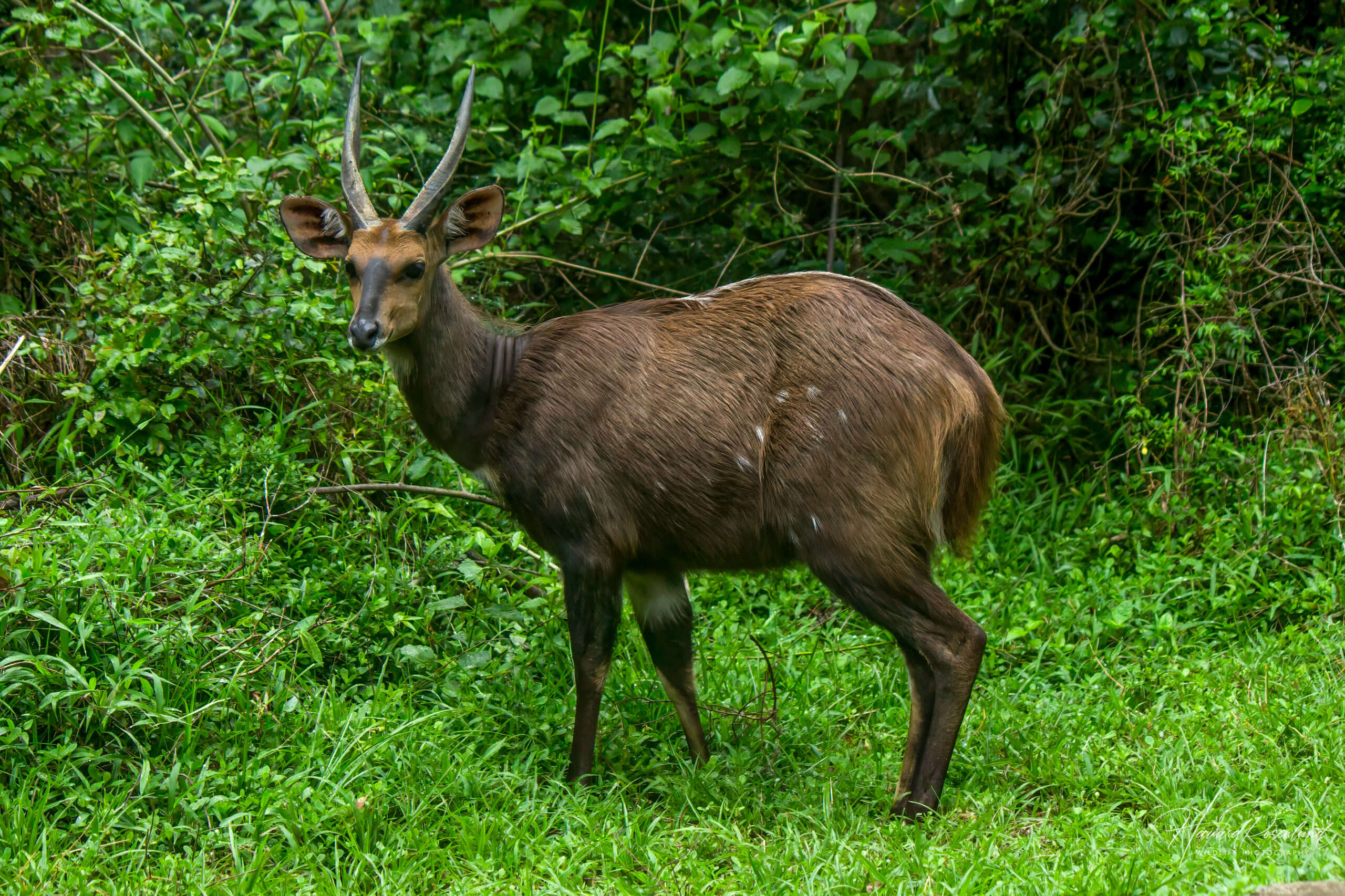
The Cape bushbuck, southern bushbuck or imbabala (Tragelaphus sylvaticus) is a medium-sized spiral-horned antelope of eastern and southern Africa. Head-and-body length is roughly 114–145 cm. Females weigh about 24–60 kg and males about 40–80 kg, with substantial geographic variation.
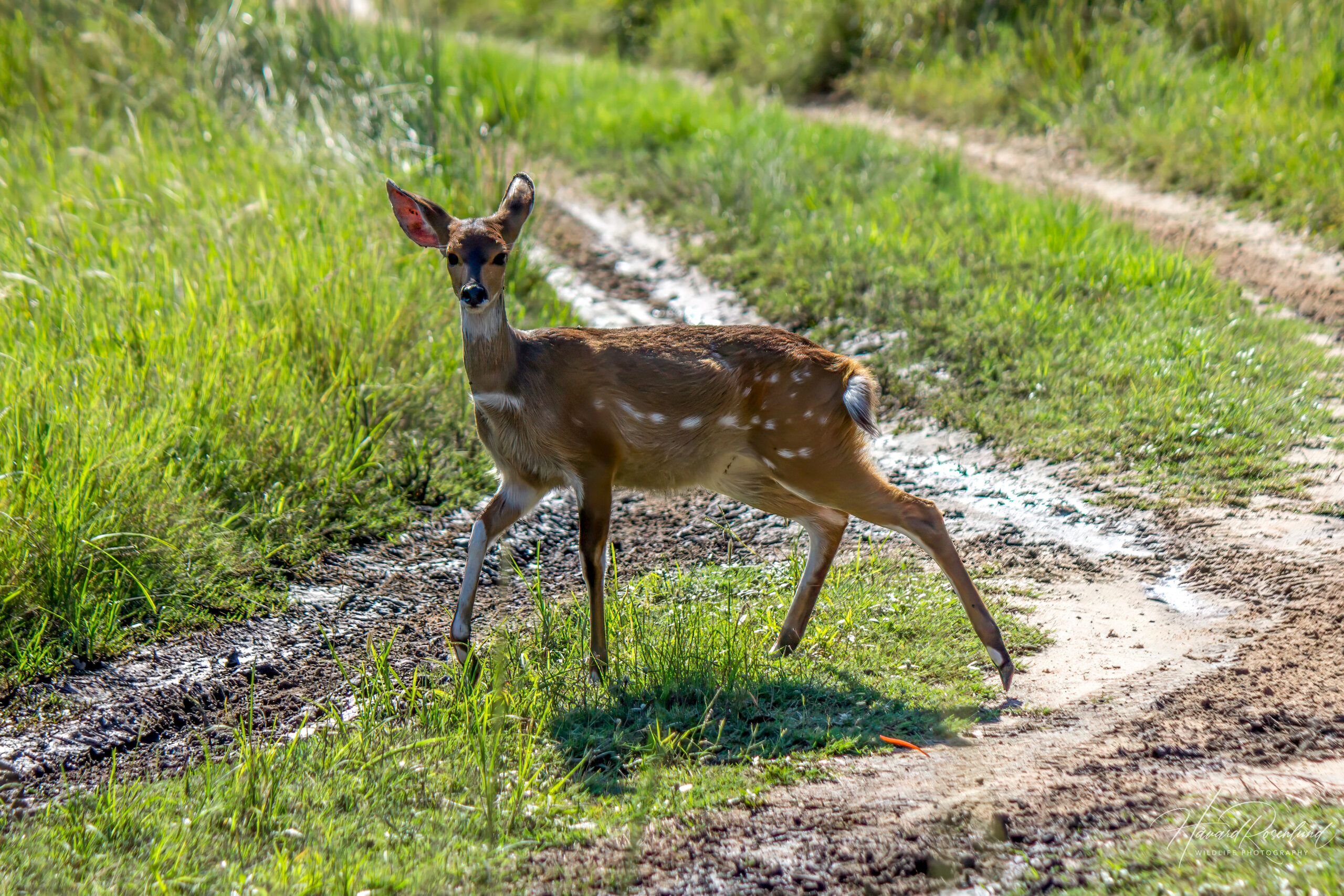
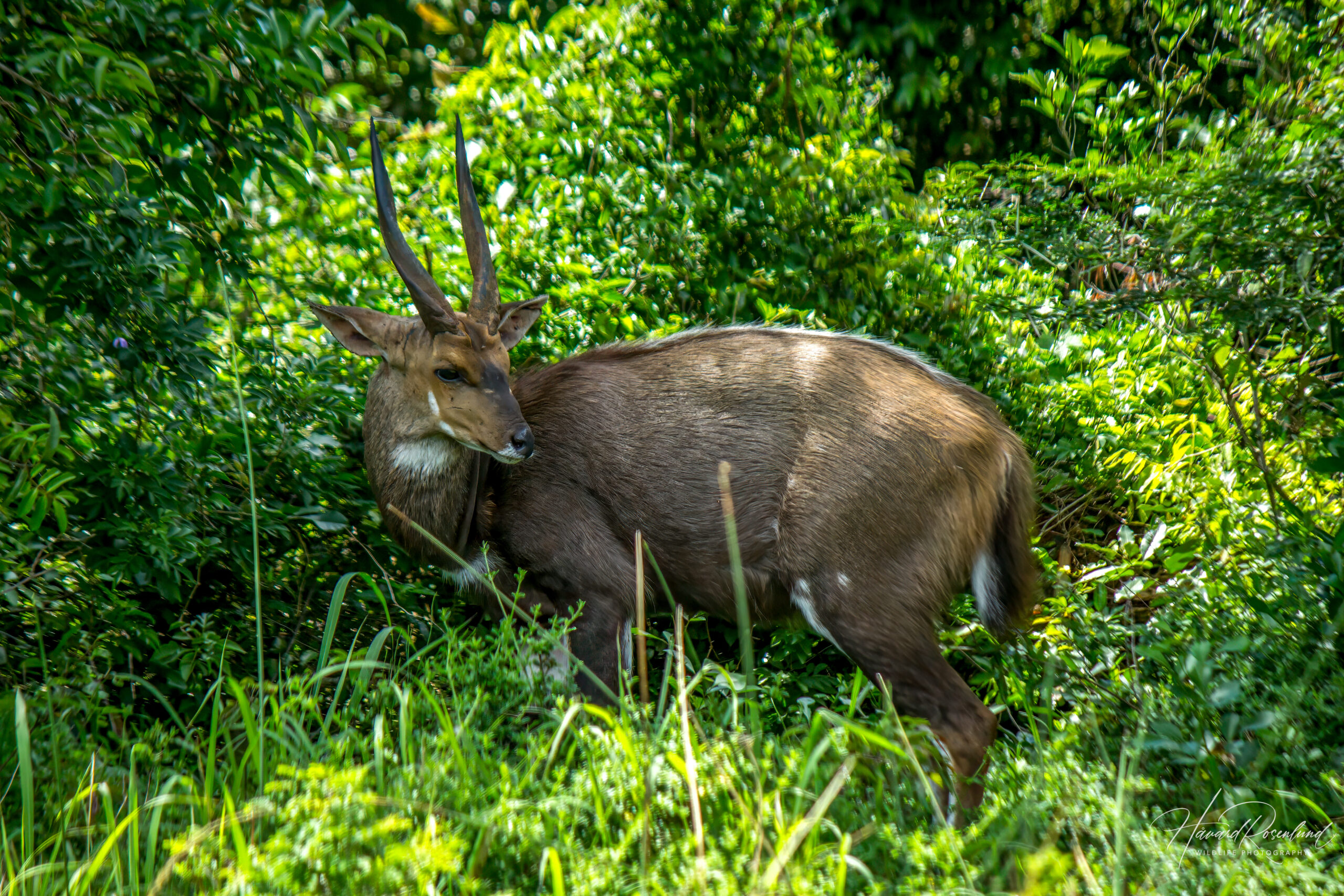
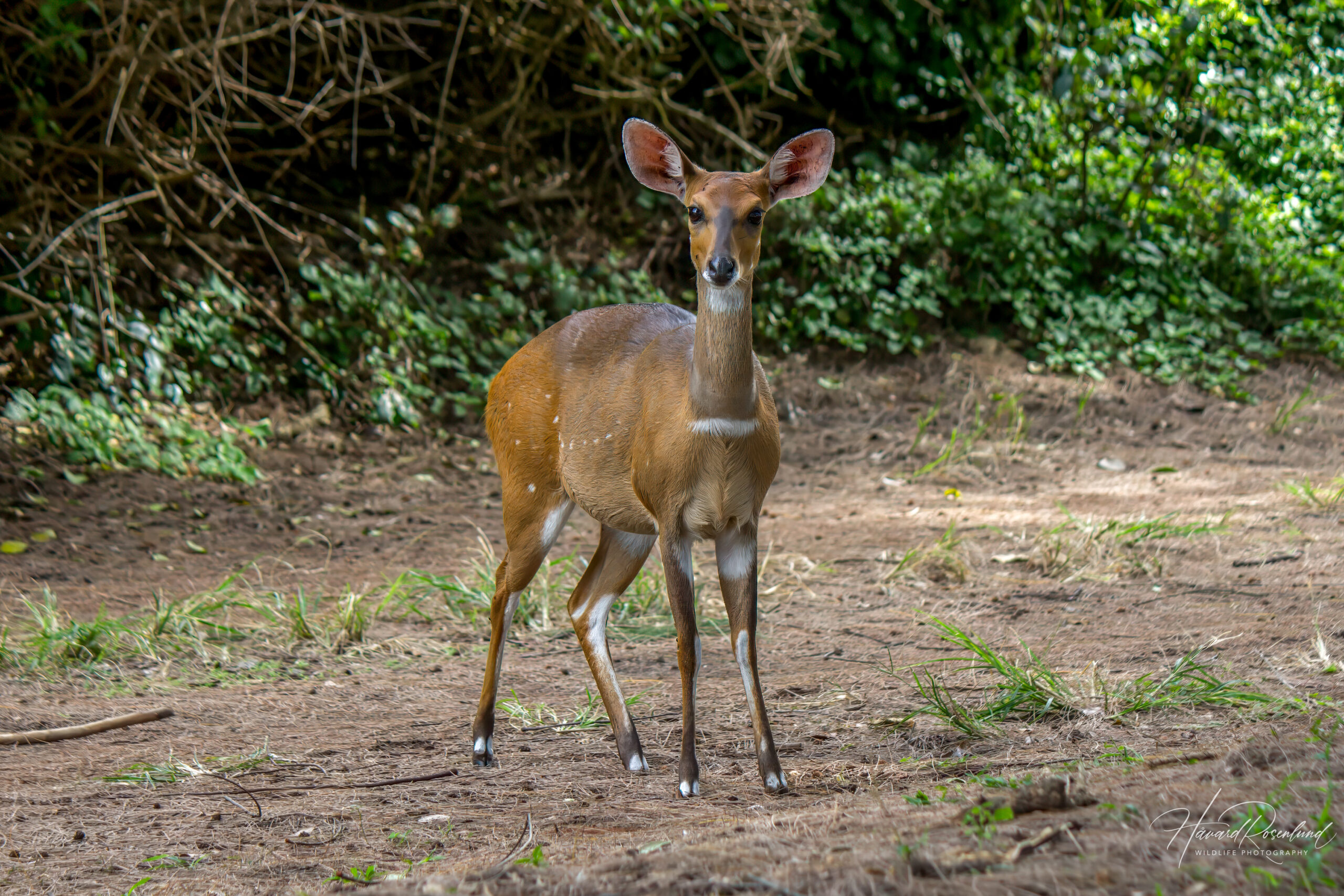
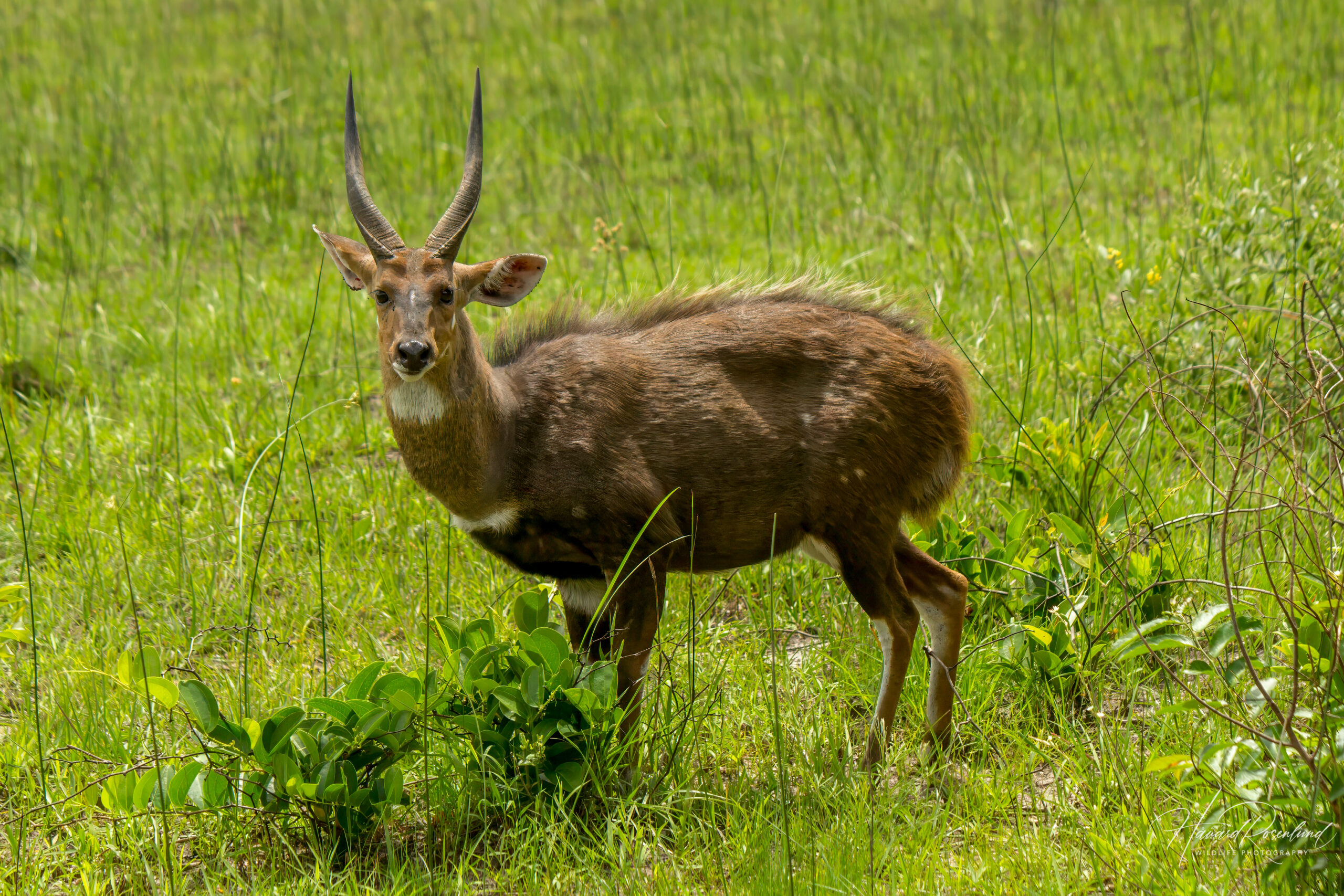
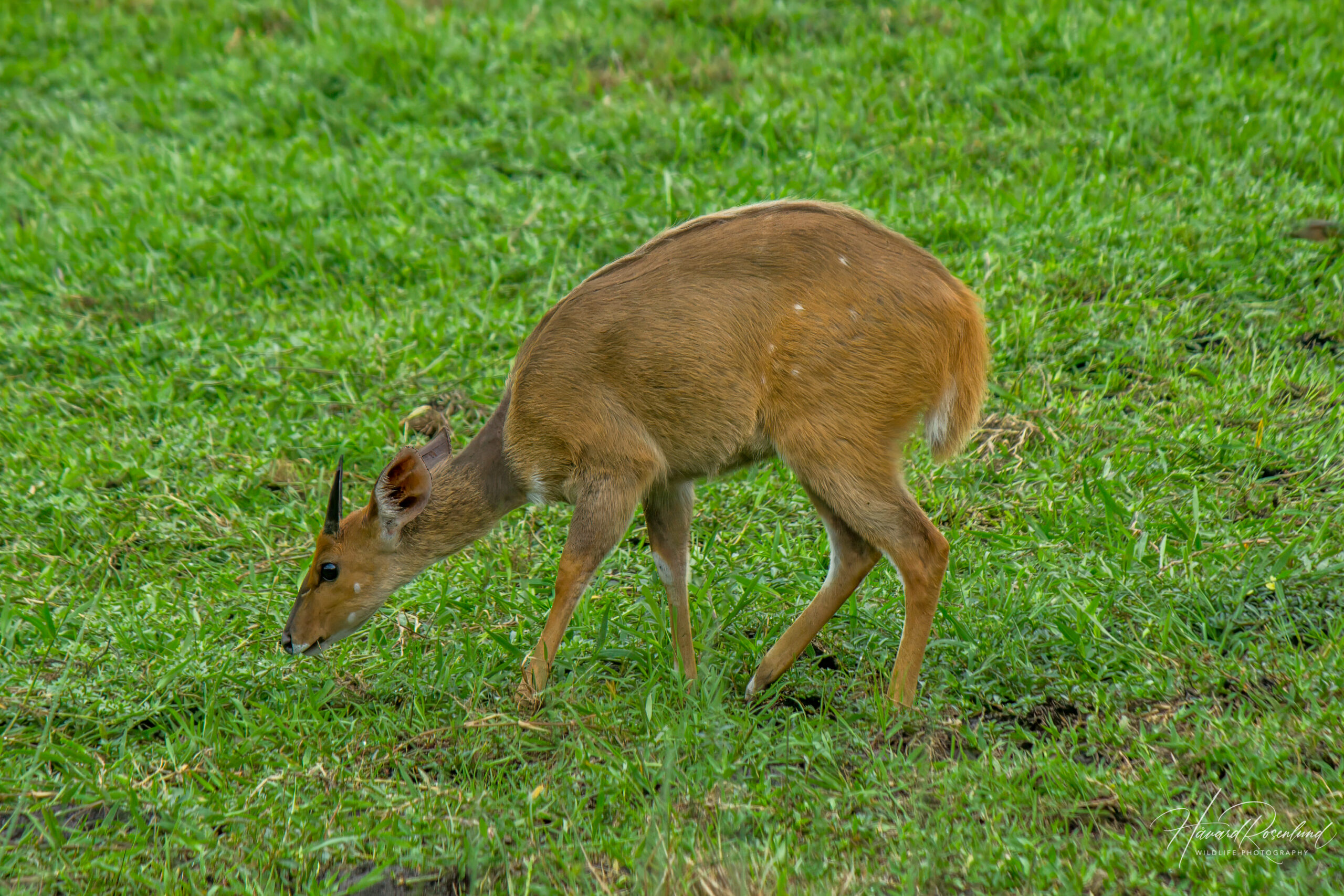
The species shows pronounced sexual dimorphism. Coat colour and pattern vary more between sexes than in most African antelopes. Females are usually reddish brown, while adult males often become dark brown or greyish. White spots and short stripes occur on the face, throat, legs and flanks, but some southern populations carry very few markings on the sides. Both sexes look more similar when young, with males darkening as they mature.
Only males carry horns; these form a single spiral and can reach about 55 cm. Horn growth usually begins at around ten months of age, and the first spiral develops as the male reaches sexual maturity. The horns continue growing for several years.
Taxonomy
Bushbuck taxonomy remains unusually unsettled. A genetic study published in 2018 supported a division into two species, with Tragelaphus scriptus in north-western Africa and T. sylvaticus across much of south-eastern Africa. A more recent study from 2024, combining genetic data with skull measurements, instead concluded that the two forms were better treated within a single species, T. scriptus.
Mammal Diversity Database v2.5 nevertheless continues to recognise Tragelaphus sylvaticus as Southern Bushbuck and T. scriptus as Northern Bushbuck. Genetic studies clearly show differences between the northern and southern populations; the main question is whether those differences are large enough to justify recognising two species.
Habitat
Cape bushbuck live wherever dense vegetation provides reliable cover, from rainforest and montane forest to riverine woodland, thicket, wooded savanna and forest–grassland mosaics. They usually remain close to shrubs, reeds or forest edges and can occur from lowlands to high elevations.
Cover is central to the species’ way of life. Bushbuck often rest inside dense vegetation during the day and move into more open patches when light levels fall. They can persist surprisingly close to settlements and cultivated land where enough thicket or riparian vegetation remains, but usually adjust their activity to avoid people.
Diet
Cape bushbuck are mainly browsers. They select leaves, shoots, herbs, flowers and other broad-leaved plants, and also take fallen fruit and other seasonal plant foods. Grass is generally less important than browse.
The broad plant diet helps bushbuck occupy many different vegetation types. They normally feed close enough to dense cover to retreat quickly if disturbed, so the location of food is often as important as the plant species itself.
Behaviour
Bushbuck are most active around dawn and dusk and during the night. In quiet areas they may also feed by day, while populations exposed to frequent human disturbance can become markedly more nocturnal. Much of the daytime is spent resting in dense cover.
The amount of movement can change markedly with season. Studies from southern Africa describe very restricted movements during the dry season, with animals ranging more widely in the warm wet season when food, water and dense cover are available in more places. This fits the species’ general strategy: bushbuck can exploit many habitat types but rarely move far from reliable concealment.
Social behaviour
Bushbuck are among the least gregarious African antelopes. Adults are usually encountered alone, although females may be accompanied by calves and small temporary associations form where resources are concentrated. Home ranges overlap considerably. In South African valley bushveld, for example, home ranges of about 32–34 ha have been recorded for males and 12–14 ha for females, although size varies greatly between landscapes.
The apparently solitary lifestyle conceals a more complex social organisation. Detailed work in Uganda found that related females used much of the same area and formed loose family-based groups, even though they seldom moved together as a herd. Adult males likewise do not fit a simple dominance order in which the oldest male automatically dominates all others. Instead, adults may defend core areas, while younger males form loose bachelor groups and eventually challenge territory holders.
Encounters between males are often resolved without fighting. During a confrontation, a male may present broadside with the crest raised, back arched, ears directed backwards and a stiff-legged gait, and rivals may circle as they assess one another. The Ugandan studies also documented a distinctive behaviour the researchers termed “escorting”: a territorial male could guide an intruder towards the edge of his area rather than immediately attacking. Direct horn fights occur, but are much less common than these ritualised encounters.
Young males tend to disperse farther from their birthplace than females. As a result, females living in the same area can remain more closely related over time, contributing to the pronounced local kin structure documented in the species.
Predation
Leopards (Panthera pardus) are especially important predators of bushbuck. Comparative studies across Africa identify bushbuck as one of the leopard’s preferred prey species, and in some South African landscapes they are among the most frequently taken prey. Lions (Panthera leo), spotted hyenas (Crocuta crocuta), African wild dogs (Lycaon pictus) and crocodiles also take bushbuck where their ranges overlap.
When danger is detected, a bushbuck normally freezes or slips into thick vegetation rather than relying on a long chase across open ground. The white underside of the tail can become conspicuous when the tail is raised during escape. Dense cover is therefore both habitat and defence. Adult males can use their horns when escape is blocked, while newborn calves rely primarily on concealment and remaining inconspicuous.
Reproduction
Breeding can occur throughout the year, with local peaks associated with rainfall and food availability. When a female is in oestrus, a male may defend the area around her against rivals. Gestation lasts about six months and normally produces one calf weighing around 4 kg.
The newborn calf has a pronounced hiding phase. It spends long periods concealed in dense vegetation while the mother returns periodically, and some accounts describe calves not regularly following the mother into more open areas until around four months of age. The mother stimulates urination and defecation in the calf and may consume the dung, reducing scent cues around the hiding place.
Detailed field observations have shown nursing bouts lasting about 5–10 minutes and occurring roughly 2–5 times in 24 hours. Weaning generally takes place at 4–6 months. In the same long-term Ugandan study, an adult male was once observed allowing a calf to shelter between his legs while keeping other males away. The researchers knew both the male and the mother well and considered him the likely father. The observation shows that paternal care can occur, but it is not known to be typical of the species.
Females can reproduce again relatively quickly under good conditions, and young animals remain associated with the mother beyond the hiding phase. Sexual maturity is reached before males have completed horn growth; the horns continue developing for several years.
Relationship with humans
Bushbuck often live remarkably close to people where dense vegetation survives, but increased disturbance usually shifts their activity towards the night. They are used as a source of meat in parts of their range and are also managed as game animals on private properties in southern Africa.
Adult males have a long-standing reputation in southern African hunting tradition for strong defensive behaviour when wounded or cornered, which led to the historical nickname “poor man’s buffalo”, comparing them with the African buffalo (Syncerus caffer). The nickname refers to this defensive response; otherwise the species is generally shy and evasive.
Translocations can support local wildlife management, but the animals’ geographic origin should be considered because populations from different parts of Africa show clear genetic differences.
Status
On this page, the Cape Bushbuck is treated as Tragelaphus sylvaticus, following the Mammal Diversity Database. The IUCN Red List currently includes the southern populations within the broader species Tragelaphus scriptus, which is assessed as Least Concern. For that reason, this page also shows Least Concern, and the status badge links to the IUCN assessment of T. scriptus; this is not a separate global assessment of T. sylvaticus.
The South African regional assessment treats Southern Bushbuck as Least Concern. The species remains widespread in suitable dense habitat and occurs in many protected areas, although abundance varies greatly between landscapes.
Local populations can still decline where thicket, forest edge and riverine vegetation are cleared or fragmented, or where unregulated use becomes intense. Retaining dense vegetation along rivers and between habitat patches helps maintain both cover and movement routes. Because the taxonomy remains unsettled and populations from different parts of Africa show clear genetic differences, translocations should take the animals’ origin into account.
Image gallery
Loading map and observations…
Have you seen this species?
Independent species archive
Did you find this species page useful?
Wildlife Vagabond is independently built and maintained. Voluntary support helps cover hosting, maps, data storage and continued improvements to the species archive.
Support Wildlife VagabondSpecies content will remain freely available.
References
Information about the species’ global distribution and status is based primarily on global Red List data. See the references below for details.
- African Wildlife Foundation. (n.d.). Bushbuck: horn development and life history. https://www.awf.org/wildlife-conservation/bushbuck
- Baird, C. N., Ernst, M., Waurick, I., Blom, M. P. K., & Bibi, F. (2024). Integrative taxonomy using historical specimens provides evidence for a single species of bushbuck, Tragelaphus scriptus (Mammalia: Bovidae). Zoological Journal of the Linnean Society, 200(2), 532-546. https://doi.org/10.1093/zoolinnean/zlad096
- Hassanin, A., Houck, M. L., Tshikung, D., Kadjo, B., Davis, H., & Ropiquet, A. (2018). Multi-locus phylogeny of the tribe Tragelaphini (Mammalia, Bovidae) and species delimitation in bushbuck: Evidence for chromosomal speciation mediated by interspecific hybridization. Molecular Phylogenetics and Evolution, 129, 96-105. https://doi.org/10.1016/j.ympev.2018.08.006
- International Union for Conservation of Nature. (n.d.). Tragelaphus scriptus (Bushbuck), broad assessment including southern populations. The IUCN Red List of Threatened Species. https://www.iucnredlist.org/species/22051/115165242
- Mammal Diversity Database. (2026). Tragelaphus sylvaticus (Southern Bushbuck), current taxonomic treatment. American Society of Mammalogists. https://www.mammaldiversity.org/taxon/1006284/
- Plumptre & Wronski. (2013). Tragelaphus scriptus – Bushbuck. In: Mammals of Africa, Volume VI, pp. 163–172. https://www.researchgate.net/publication/242019174_Tragelaphus_scriptus_Bushbuck
- South African National Biodiversity Institute. (n.d.). Bushbuck: identification, habitat and ecology. https://www.sanbi.org/animal-of-the-week/bushbuck/
- South African National Biodiversity Institute. (n.d.). Southern Bushbuck: ecology, home ranges and regional conservation. https://speciesstatus.sanbi.org/taxa/detail/2251/
- South African Red List assessment. (n.d.). Southern Bushbuck Tragelaphus sylvaticus. https://ewt.org/wp-content/uploads/2022/11/33.-Southern-Bushbuck-Tragelaphus-sylvaticus_LC.pdf
- Wronski, T., & Apio, A. (2006). Home-range overlap, social vicinity and agonistic interactions denoting matrilineal organisation in bushbuck, Tragelaphus scriptus. Behavioral Ecology and Sociobiology, 59(6), 819-828. https://doi.org/10.1007/s00265-005-0128-2
- Wronski, T., Apio, A., & Plath, M. (2009). Absence of a dominance hierarchy confirms territorial organization in male bushbuck (Tragelaphus scriptus Pallas, 1766). African Journal of Ecology, 47(3), 261-266. https://doi.org/10.1111/j.1365-2028.2007.00876.x
- Wronski, T., Apio, A., Wanker, R., & Plath, M. (2006). Behavioural repertoire of the bushbuck (Tragelaphus scriptus): agonistic interactions, mating behaviour and parent–offspring relations. Journal of Ethology, 24(3), 247-260. https://doi.org/10.1007/s10164-005-0186-y
- Wronski, T. (2005). Home‐range overlap and spatial organization as indicators for territoriality among male bushbuck (Tragelaphus scriptus). Journal of Zoology, 266(3), 227-235. https://doi.org/10.1017/S0952836905006825