
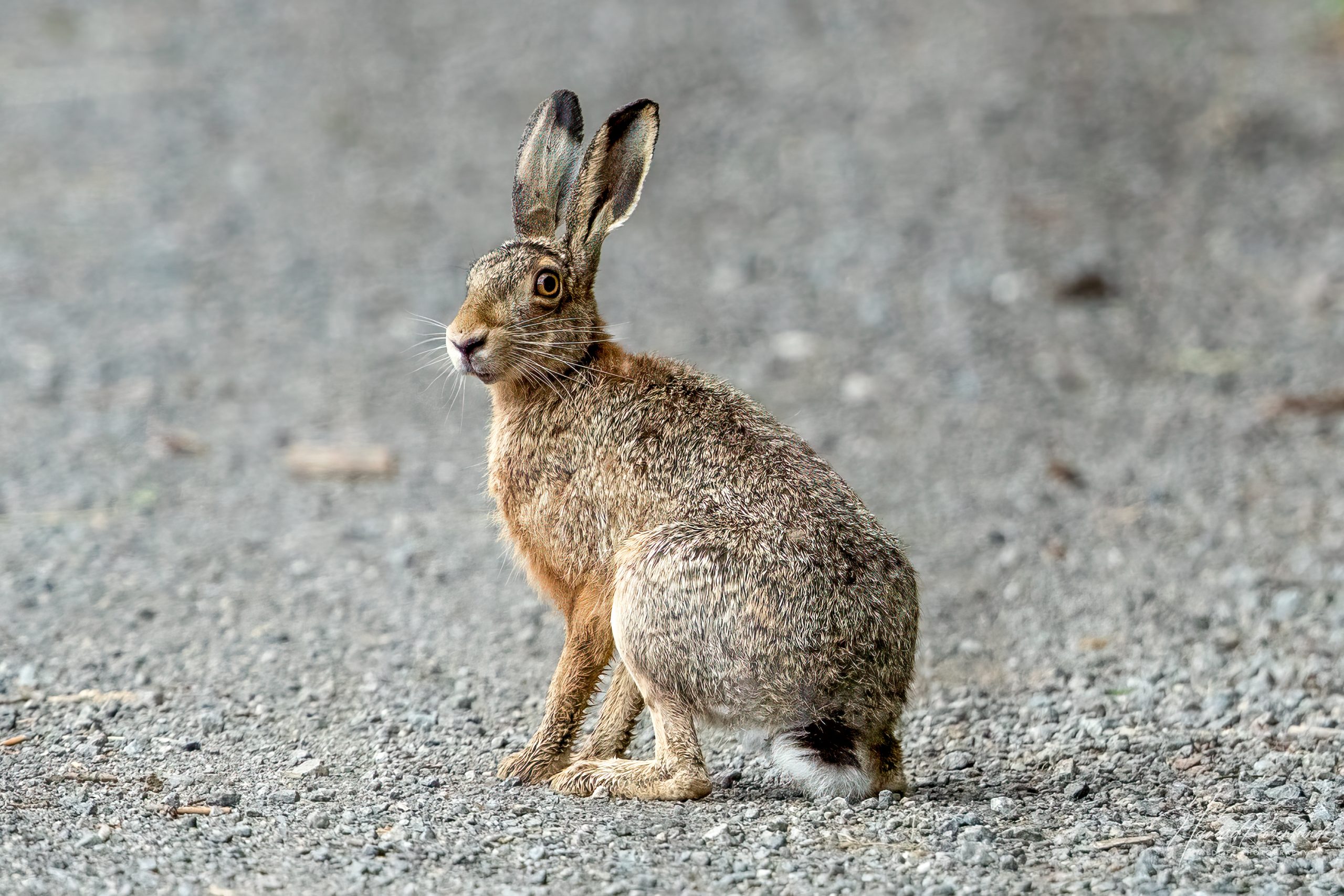
European Hare
Lepus europaeus
At a glance
Habitat
- Open farmland, grassland and other varied lowland landscapes with food, shelter and field edges
Diet
- Herbivore; mainly grasses, herbs and crops, with buds, twigs and bark more important in winter
Activity
- Most active from dusk through the night and around dawn
Size
- Length: 55–70 cm Weight: about 3–5 kg
Range
- Native across much of continental Europe and western Asia; introduced widely elsewhere
Description
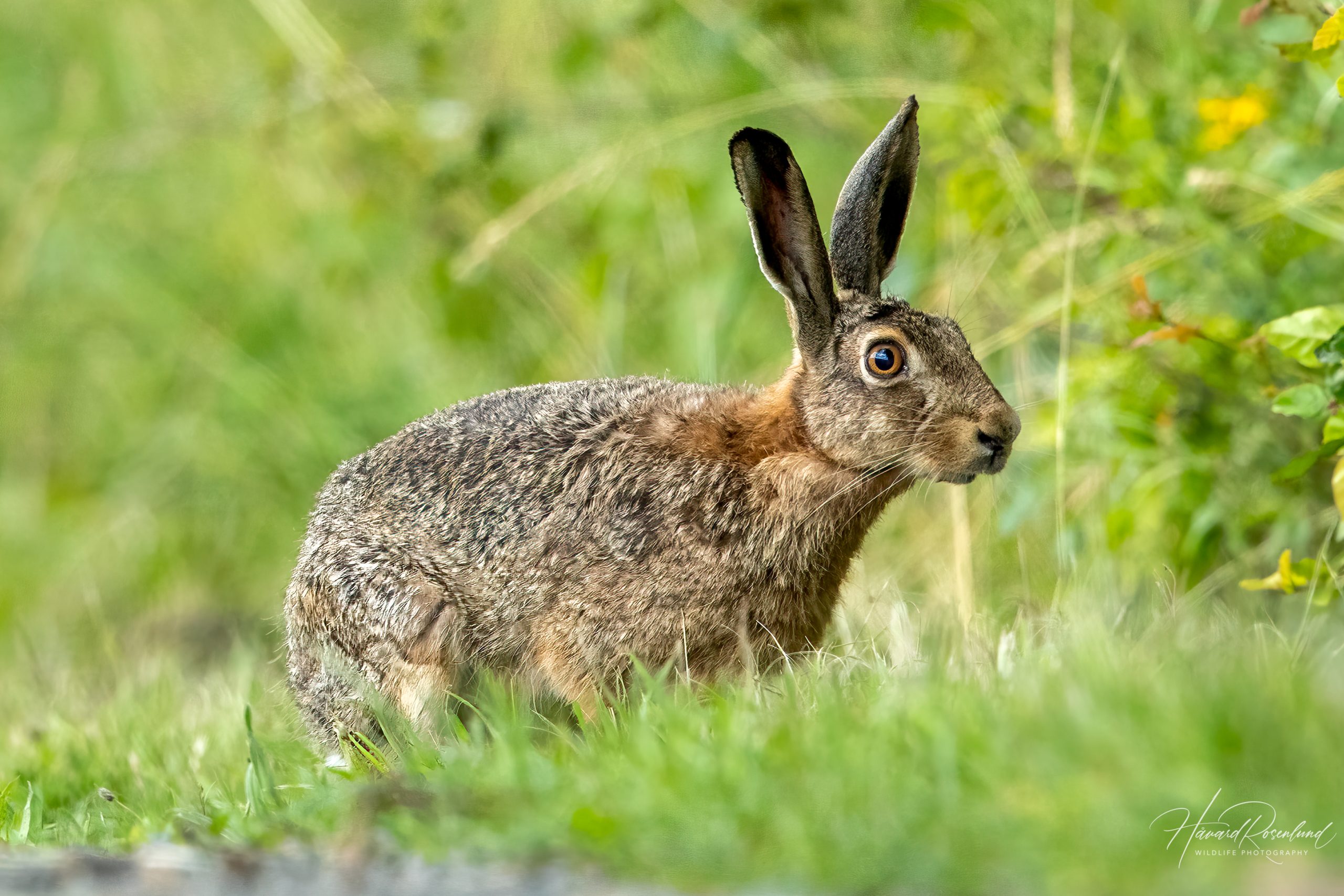
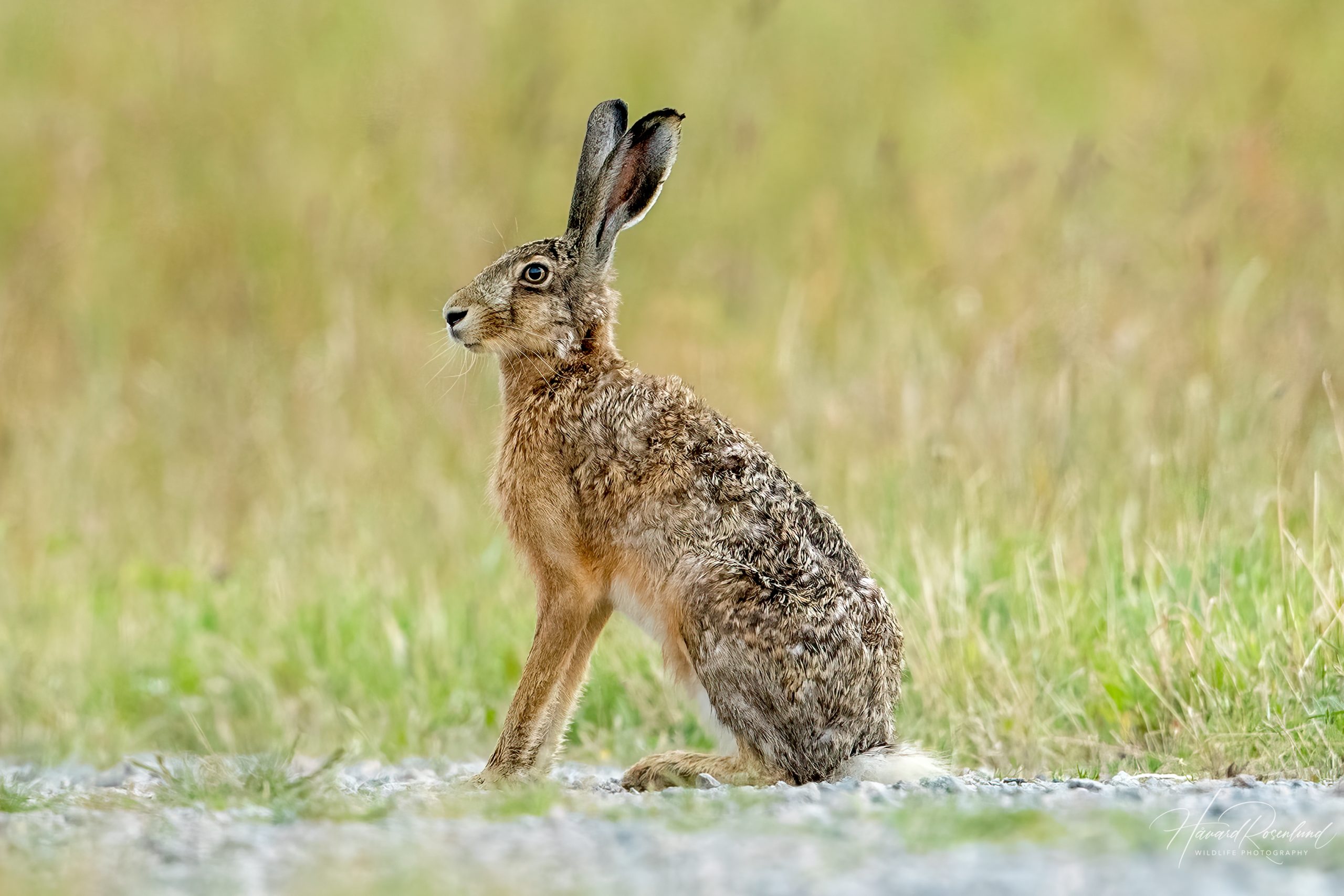
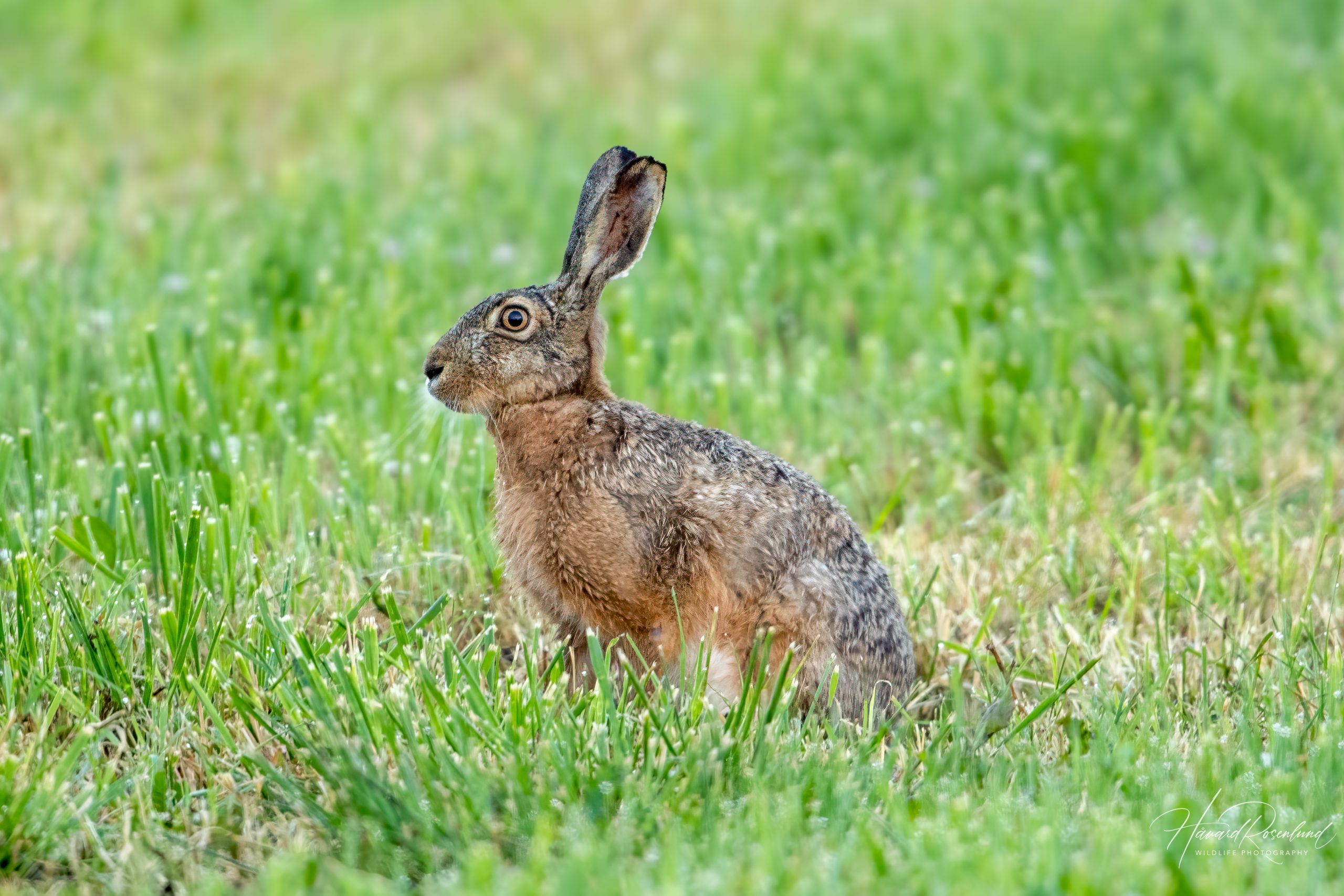
The European hare (Lepus europaeus), also known as the brown hare, is a large hare native to much of continental Europe and western Asia. Adults are about 55–70 cm long and usually weigh around 3–5 kg. The long black-tipped ears, powerful hind legs and warm brown coat are characteristic, while the belly is pale and the tail shows black above and white below.
It is larger and longer-eared than the mountain hare (Lepus timidus). European hares remain brown through winter rather than developing the white winter coat typical of mountain hares in snowy regions, which makes the two species increasingly different in appearance as winter conditions become harsher.
Habitat
The European hare is an open-landscape specialist. It is especially associated with farmland, pasture, meadows, steppe-like grassland and other lowland habitats where feeding areas lie close to field margins, hedges, rough vegetation or other cover. Small patches of woodland may be used, but extensive closed forest is generally less suitable.
A European review published in 2005 linked hare declines particularly to agricultural intensification and the loss of mixed, small-scale farmland. A GPS study published in 2020 followed 36 hares in Germany and also showed how quickly individuals respond to farming operations: recently harvested fields often became attractive feeding areas, while the size and position of their home ranges changed most strongly in landscapes dominated by very large fields. A mosaic of crops and non-crop vegetation gives the animals more options as conditions change through the season.
Diet
European hares are herbivores. Grasses, herbs and cultivated plants form much of the diet, while buds, shoots, twigs and bark become more important when fresh vegetation is scarce. The exact diet changes strongly with season and with which crops and wild plants are available locally.
Like other lagomorphs, European hares make use of fibrous food through fermentation in the caecum. This produces soft, nutrient-rich caecotrophs that are eaten directly, allowing nutrients produced during fermentation to be absorbed when the material passes through the digestive system again. The process is especially important when the diet consists of coarse vegetation with relatively low nutritional value.
Behaviour
European hares spend much of the day resting in a shallow depression in the ground, usually with vegetation or the shape of the terrain providing some cover. Activity rises around dusk and continues through the night and early morning.
Predation
European hares are important prey for several predators, with the red fox (Vulpes vulpes) particularly important across much of Europe. A German study published in 2020 followed young hares from birth through their fifth week. Only about 35% of the radio-tagged leverets survived their first month, and predation accounted for about 42% of confirmed deaths. Red foxes were among the most frequently identified predators.
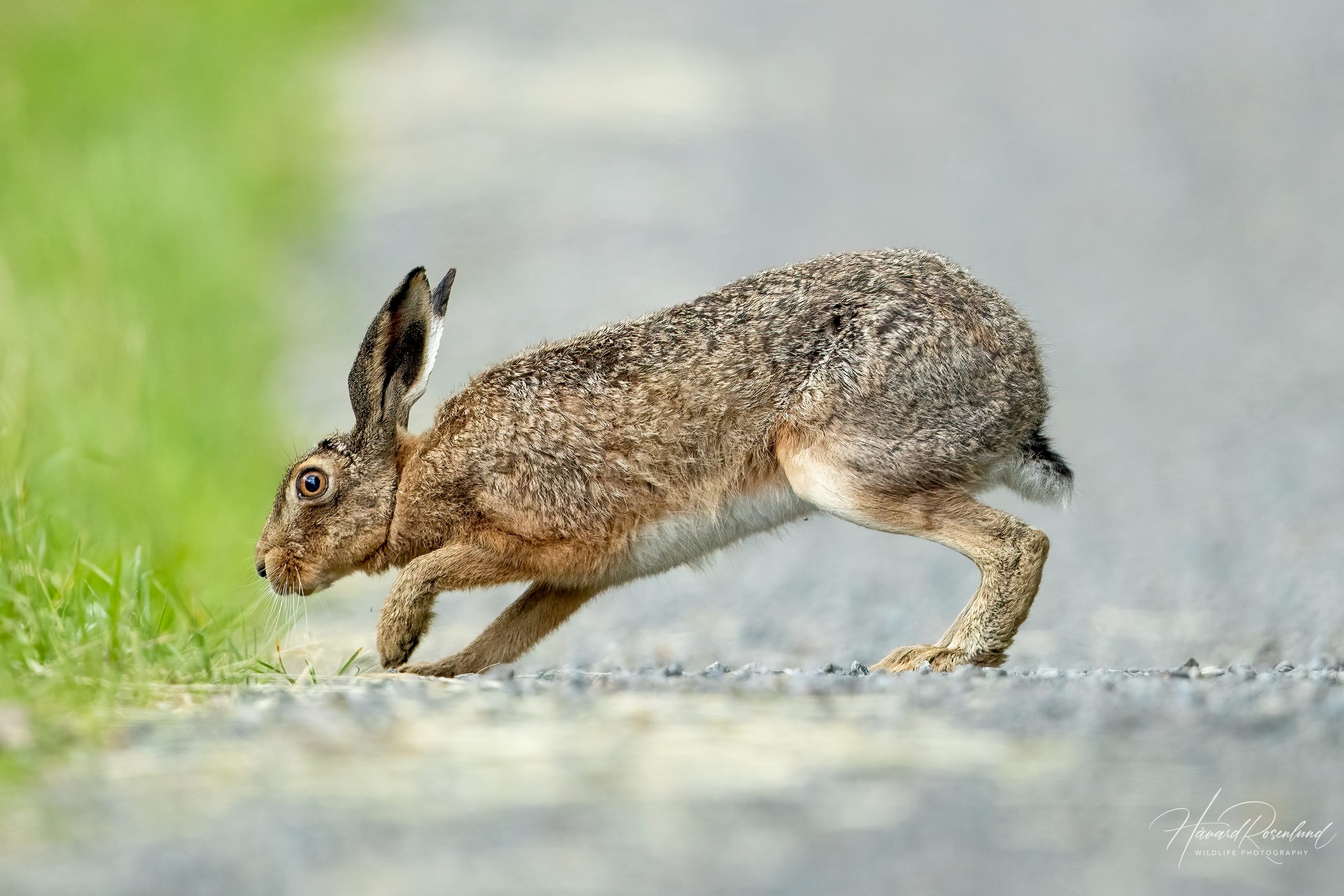
Adults rely on camouflage while resting and on speed, sudden changes of direction and open terrain once detected. European hares have been recorded at around 60 km/h in a straight line and can change direction rapidly when escaping. Predation risk can also change where and when hares feed, showing that predators influence behaviour even when no attack occurs.
Reproduction
Across much of Europe the breeding season lasts roughly from January to August, with particularly high activity in spring. The famous “boxing” is closely linked to mating. It is often described as fighting between males, but many encounters involve a female striking at a male that is pursuing her too persistently. Several animals may chase one another across open fields during the same breeding period, making the normally rather solitary species temporarily much more conspicuous.
Females may produce several litters in a year, usually with one to four young after a gestation of about 42 days. The young, called leverets, are born fully furred with open eyes and can move soon after birth.
The mother does not keep the litter together in a nest. A study published in 1980 showed that after their first few days the young remained dispersed from one another, but gathered briefly at or near the birth site in the evening to nurse for only a few minutes before separating again. Nursing usually continued for about four weeks. This brief contact reduces the time the mother spends near the leverets and therefore the risk of drawing predators to them.
European hares also have an unusual reproductive ability. A study published in 2010 confirmed that a female can mate and conceive again 3–4 days before the previous litter is born. This can shorten the interval between successive litters by about four days and increase reproductive output across the long breeding season.
Introduced populations
European hares have been introduced well beyond their original range, mainly for hunting. Established non-native populations occur in Australia, New Zealand and large parts of South America, and releases have also shaped the species’ modern distribution in northern Europe.
The consequences differ between regions. In south-eastern Australia the hare is an established pest animal. It damages crops, orchards, forestry and revegetation by grazing plants and gnawing bark from young trees and shrubs. In South America it has spread across much of Argentina and Chile and into several neighbouring countries. In parts of Patagonia it has also become an important prey item for native carnivores, meaning that the introduction has changed local food webs as well as adding a new herbivore.
The Scandinavian expansion also illustrates how introductions can interact with native relatives. The Swedish population originated from releases in southern Sweden during the 19th century and later expanded northwards, eventually spreading into south-eastern Norway. Where European hares meet native mountain hares (Lepus timidus), the two species can compete and hybridise. A Fennoscandian study published in 2018 found that gene flow between the species is strongly asymmetric and occurs mainly from mountain hares into European hares. A Finnish study published in 2021 further showed that this gene flow adds functional genetic variation to European hares; some variants involved in heat production may provide an advantage in colder climates. Hybridisation may therefore help speed local adaptation as European hares expand northwards.
Status
The European hare is classified as least concern on the IUCN Red List and remains widespread. However, this global category hides long-term declines in many intensively farmed parts of Europe.
Research across the continent points especially to agricultural intensification: larger uniform fields, loss of field margins and diverse crops, reduced plant diversity and changes in food availability can all lower habitat quality. Hunting, disease and weather also affect local populations. The species fares best where productive feeding areas are interspersed with field margins, varied vegetation and cover available throughout the year.
Image gallery
Loading map and observations…
Have you seen this species?
Independent species archive
Did you find this species page useful?
Wildlife Vagabond is independently built and maintained. Voluntary support helps cover hosting, maps, data storage and continued improvements to the species archive.
Support Wildlife VagabondSpecies content will remain freely available.
References
Information about the species’ global distribution and status is based primarily on global Red List data. See the references below for details.
- Agriculture Victoria – European hare. (n.d.). impacts and management. https://agriculture.vic.gov.au/biosecurity/pest-animals/established-pest-animal-species/european-hare
- Animal Diversity Web. (n.d.). Lepus europaeus. https://animaldiversity.org/accounts/Lepus_europaeus/
- Artsdatabanken. (n.d.). Sørhare, Fremmedartslista 2023. https://lister.artsdatabanken.no/fremmedartslista/2023/2831
- Broekhuizen, S., & Maaskamp, F. (1980). Behaviour of does and leverets of the European hare (Lepus europaem) whilst nursing. Journal of Zoology, 191(4), 487-501. https://doi.org/10.1111/j.1469-7998.1980.tb01480.x
- International Union for Conservation of Nature. (n.d.). European Hare. The IUCN Red List of Threatened Species. https://www.iucnredlist.org/species/41280/45187424
- Jaksic, F. M. (2023). Historical ecology and current status of the European hare Lepus europaeus in South America: a new species in new countries. Studies on Neotropical Fauna and Environment, 59(2), 474-501. https://doi.org/10.1080/01650521.2023.2217064
- Kozdrowski, R., Dzięcioł, M., Stańczyk, E., Ochota, M., Sławuta, P., & Siemieniuch, M. J. (2011). Artificial induction of superfetation in the European hare (Lepus europaeus). European Journal of Wildlife Research, 57(2), 333-336. https://doi.org/10.1007/s10344-010-0435-4
- Levänen, R., Thulin, C.-G., Spong, G., & Pohjoismäki, J. L. O. (2018). Widespread introgression of mountain hare genes into Fennoscandian brown hare populations. PLOS ONE, 13(1), e0191790. https://doi.org/10.1371/journal.pone.0191790
- Novaro, A. J., Funes, M. C., & Susan Walker, R. (2000). Ecological extinction of native prey of a carnivore assemblage in Argentine Patagonia. Biological Conservation, 92(1), 25-33. https://doi.org/10.1016/S0006-3207(99)00065-8
- Pohjoismäki, J. L. O., Michell, C., Levänen, R., & Smith, S. (2021). Hybridization with mountain hares increases the functional allelic repertoire in brown hares. Scientific Reports, 11(1), 15771. https://doi.org/10.1038/s41598-021-95357-0
- Roellig, K., Goeritz, F., Fickel, J., Hermes, R., Hofer, H., & Hildebrandt, T. B. (2010). Superconception in mammalian pregnancy can be detected and increases reproductive output per breeding season. Nature Communications, 1(1), 78. https://doi.org/10.1038/ncomms1079
- Smith, R. K., Vaughan Jennings, N., & Harris, S. (2005). A quantitative analysis of the abundance and demography of European hares Lepus europaeus in relation to habitat type, intensity of agriculture and climate. Mammal Review, 35(1), 1-24. https://doi.org/10.1111/j.1365-2907.2005.00057.x
- Thulin, C.-G., Stone, J., Tegelström, H., & Walker, C. W. (2006). Species assignment and hybrid identification among Scandinavian hares Lepus europaeus and L. timidus. Wildlife Biology, 12(1), 29–38. https://doi.org/10.2981/0909-6396(2006)12[29:SAAHIA]2.0.CO;2
- Ullmann, W., Fischer, C., Kramer-Schadt, S., Pirhofer-Walzl, K., Glemnitz, M., & Blaum, N. (2020). How do agricultural practices affect the movement behaviour of European brown hares (Lepus europaeus)? Agriculture, Ecosystems & Environment, 292, 106819. https://doi.org/10.1016/j.agee.2020.106819
- Voigt, U., & Siebert, U. (2020). Survival rates on pre-weaning European hares (Lepus europaeus) in an intensively used agricultural area. European Journal of Wildlife Research, 66(4), 67. https://doi.org/10.1007/s10344-020-01403-z