
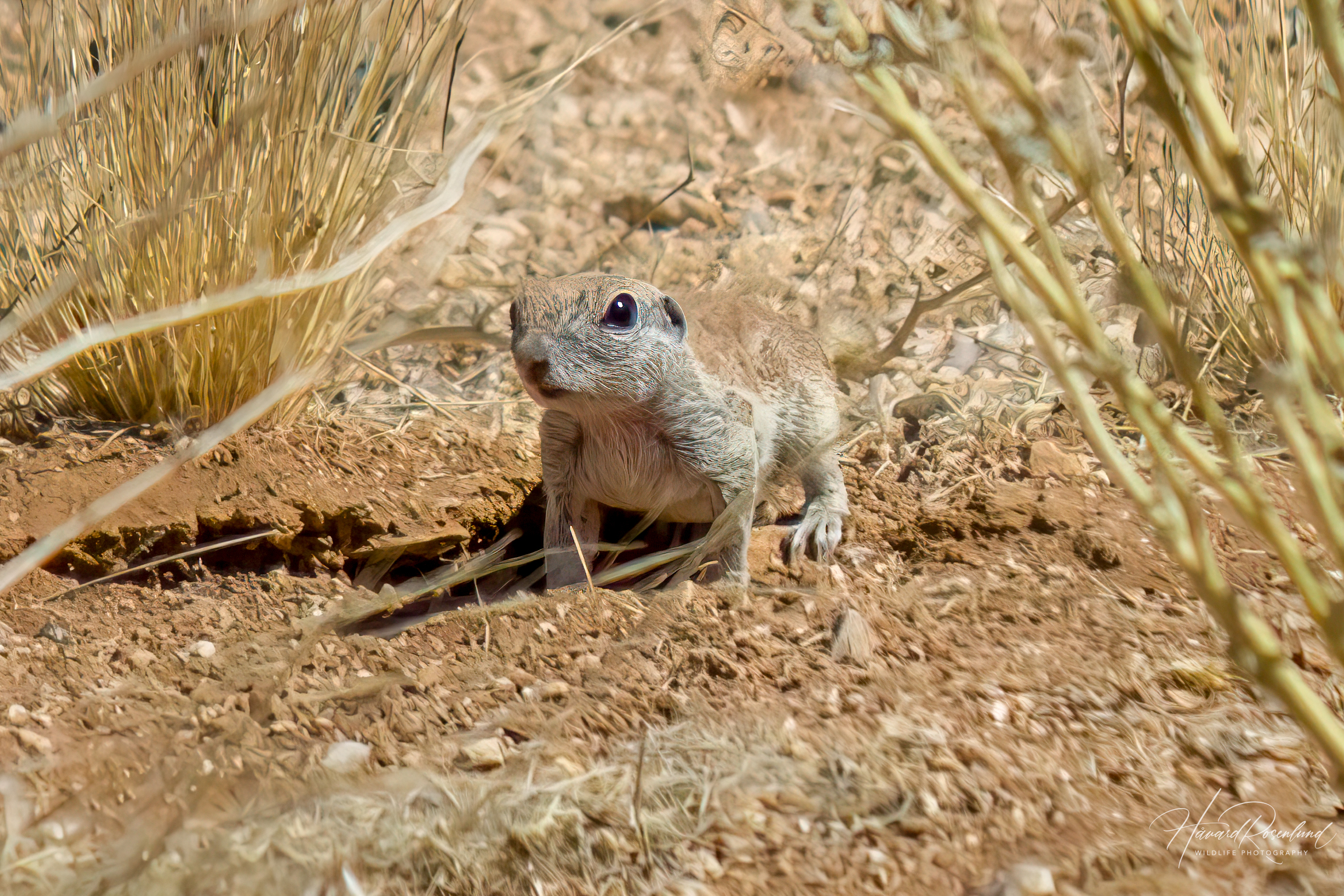
Round-tailed Ground Squirrel
Xerospermophilus tereticaudus
At a glance
Habitat
- Sonoran and Mojave desert scrub, sandy flats, dunes and arid grasslands
Diet
- Mostly green vegetation and seeds; insects form a smaller part of the diet
Activity
- Diurnal when active; long seasonal periods of torpor and inactivity
Size
- Length: 18–22 cm body; tail 7–10 cm Weight: 110–170 g
Range
- Southwestern USA and northwestern Mexico, centred on the Sonoran Desert
Description
The round-tailed ground squirrel (Xerospermophilus tereticaudus) is a small, slender ground squirrel of the deserts of the southwestern United States and northwestern Mexico. The body is about 18–22 cm long, with a narrow rounded tail adding roughly 7–10 cm, and adults commonly weigh around 110–170 g. The coat is plain sandy-grey to buff and lacks the strong lateral stripes of antelope squirrels in the genus Ammospermophilus, providing effective camouflage on pale desert soils.
The species is especially characteristic of the Sonoran Desert but also extends into adjacent desert regions of southeastern California, southern Nevada, western Arizona, northeastern Baja California and Sonora.
Taxonomy
The species was long known as Spermophilus tereticaudus. A major revision of Holarctic ground squirrels in 2009 showed that the traditional broad genus Spermophilus contained several distinct evolutionary lineages, and the species was transferred to Xerospermophilus.
The valid scientific name is now Xerospermophilus tereticaudus. Several geographic subspecies have been named within the species.
Habitat
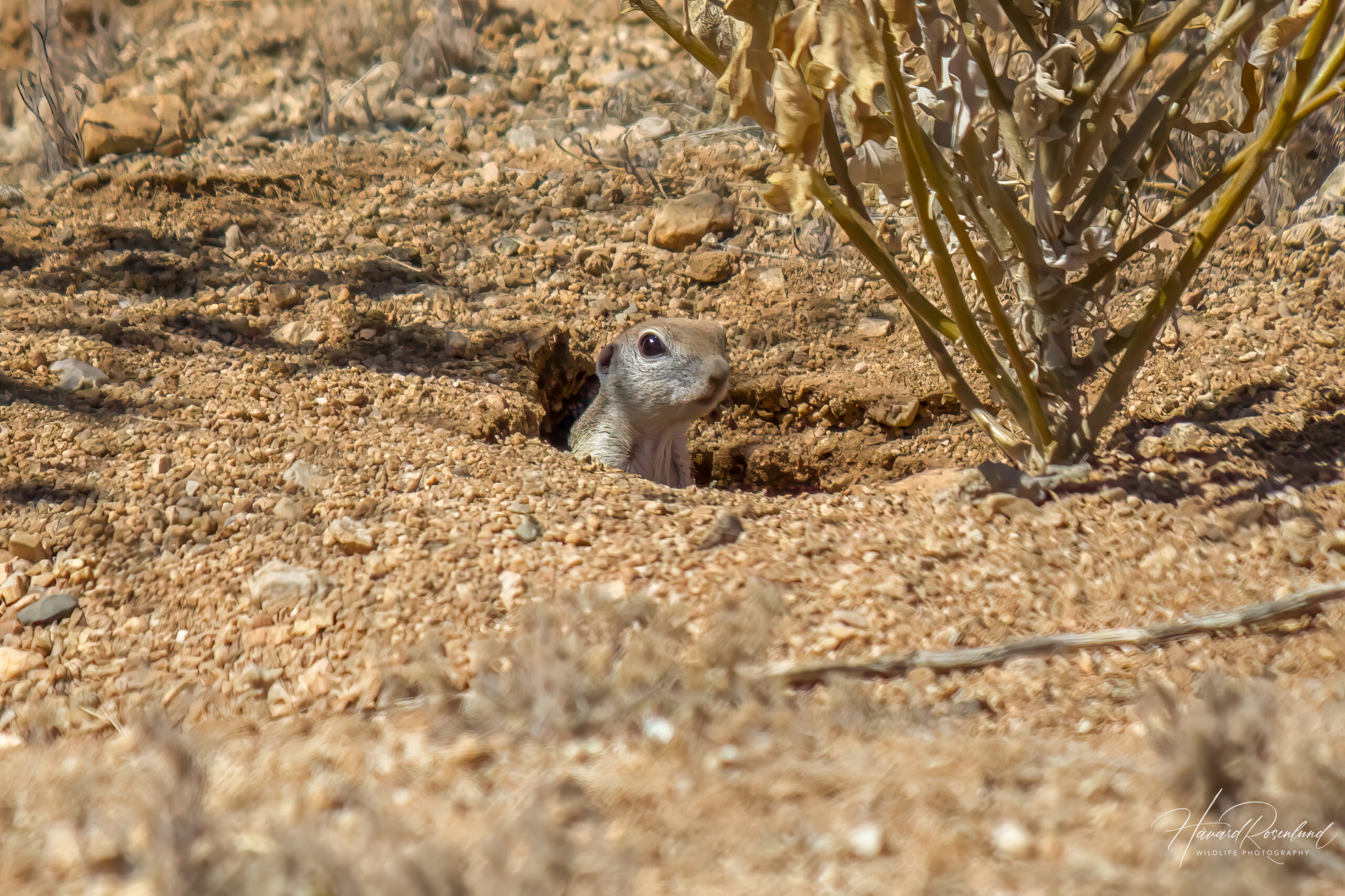
Round-tailed ground squirrels favour open arid country with loose soils that can be excavated easily, including desert scrub, sandy flats, dunes, washes and sparse grassland. Burrows provide refuge from predators and from the extreme surface temperatures of the desert.
Each adult generally uses its own burrow system, although many burrows can occur close together where soil and food are favourable. The animals can also persist in some human-modified desert landscapes such as irrigated margins, archaeological sites and open suburban ground.
Diet
Green vegetation forms much of the diet during the active season, supplemented by seeds and smaller amounts of animal food such as ants, termites and grasshoppers. Water-rich plant material is particularly valuable because the squirrels obtain much of their water through food and do not always need access to drinking water.
The diet follows strong seasonal changes in desert food supply. When fresh growth is available the squirrels feed heavily on green vegetation, while mesquite and seeds from desert annuals become more important as succulent growth becomes scarce. This close link between food and plant growth makes rainfall important to both energy and water balance in an environment where drinking water can be difficult to find.
Behaviour
Round-tailed ground squirrels are active by day when above ground, but their schedule changes with temperature. During hot weather activity is concentrated mainly in the morning and late afternoon, while cooler conditions allow a longer continuous period above ground. Burrows provide a much more stable thermal refuge during the hottest part of the day. Basking is also a conspicuous part of the daily routine; in multi-year observations in Arizona, both males and females spent about one fifth of their above-ground time basking.
The annual cycle also includes prolonged periods of reduced activity and torpor, a controlled lowering of metabolism and body temperature. In Arizona the animals are typically active from late January into August before entering a longer inactive or torpid period. The species can use both shallower and deeper torpor, making its seasonal energy strategy more flexible than a simple description of “winter hibernation”.
Round-tailed ground squirrels can occur at high density and appear colonial, yet adults usually maintain separate burrows and have few direct friendly or aggressive encounters. Neighbouring females also do not appear to be especially closely related even when burrows lie near one another. Juvenile littermates are much more amicable. Alarm whistles cause nearby squirrels to retreat toward their burrows, so close spacing can still allow animals to benefit from information from neighbours without forming a tightly integrated social group.
Reproduction
Breeding occurs once each year, beginning after adults become active in winter and early spring. The mating system is polygynandrous: both males and females can mate with multiple partners. Among 31 genetically analysed litters in Arizona, 55% contained offspring sired by more than one male, and the study reported an average of about 2.5 sires per litter.
Gestation lasts roughly four to five weeks and one litter is produced per year. Litter size varies greatly among years and populations: field studies have reported averages from about four to six or seven young, while individual litters have ranged from one to thirteen.
The young are born hairless with closed eyes and ears and remain under the female's care in the natal burrow. They become increasingly mobile during the following weeks, are weaned at around five weeks and emerge above ground soon afterwards. Juvenile dispersal occurs mainly in early summer, and sexual maturity is reached at roughly 10–11 months, in time for the next breeding season.
Status
The round-tailed ground squirrel is classified as least concern on the IUCN Red List. It remains widespread in suitable desert habitat across southeastern California, southern Nevada, western Arizona, northeastern Baja California and Sonora.
Local numbers can fluctuate markedly with rainfall, vegetation growth, drought and land use. The species also tolerates some modified desert environments, and no severe range-wide decline is currently documented.
Image gallery
Loading map and observations…
Have you seen this species?
Independent species archive
Did you find this species page useful?
Wildlife Vagabond is independently built and maintained. Voluntary support helps cover hosting, maps, data storage and continued improvements to the species archive.
Support Wildlife VagabondSpecies content will remain freely available.
References
Information about the species’ global distribution and status is based primarily on global Red List data. See the references below for details.
- Bickler, P. E. (1984). CO2 balance of a heterothermic rodent: comparison of sleep, torpor, and awake states. American Journal of Physiology-Regulatory, Integrative and Comparative Physiology, 246(1), R49-R55. https://doi.org/10.1152/ajpregu.1984.246.1.R49
- Helgen, K. M., Cole, F. R., Helgen, L. E., & Wilson, D. E. (2009). Generic Revision in the Holarctic Ground Squirrel GenusSpermophilus. Journal of Mammalogy, 90(2), 270-305. https://doi.org/10.1644/07-MAMM-A-309.1
- International Union for Conservation of Nature. (n.d.). Round-tailed Ground Squirrel. The IUCN Red List of Threatened Species. https://www.iucnredlist.org/species/20493/22264318
- Mammal Diversity Database. (n.d.). Xerospermophilus tereticaudus. American Society of Mammalogists. https://www.mammaldiversity.org/taxon/1001801/
- Munroe, K. E., & Koprowski, J. L. (2011). Sociality, Bateman’s gradients, and the polygynandrous genetic mating system of round-tailed ground squirrels (Xerospermophilus tereticaudus). Behavioral Ecology and Sociobiology, 65(9), 1811-1824. https://doi.org/10.1007/s00265-011-1189-z
- Munroe, K. E., & Koprowski, J. L. (2014). Levels of social behaviors and genetic structure in a population of round-tailed ground squirrels (Xerospermophilus tereticaudus). Behavioral Ecology and Sociobiology, 68(4), 629–638. https://doi.org/10.1007/s00265-013-1677-4
- NatureServe. (n.d.). Xerospermophilus tereticaudus. NatureServe Explorer. https://explorer.natureserve.org/Taxon/ELEMENT_GLOBAL.2.103413/Xerospermophilus_tereticaudus