
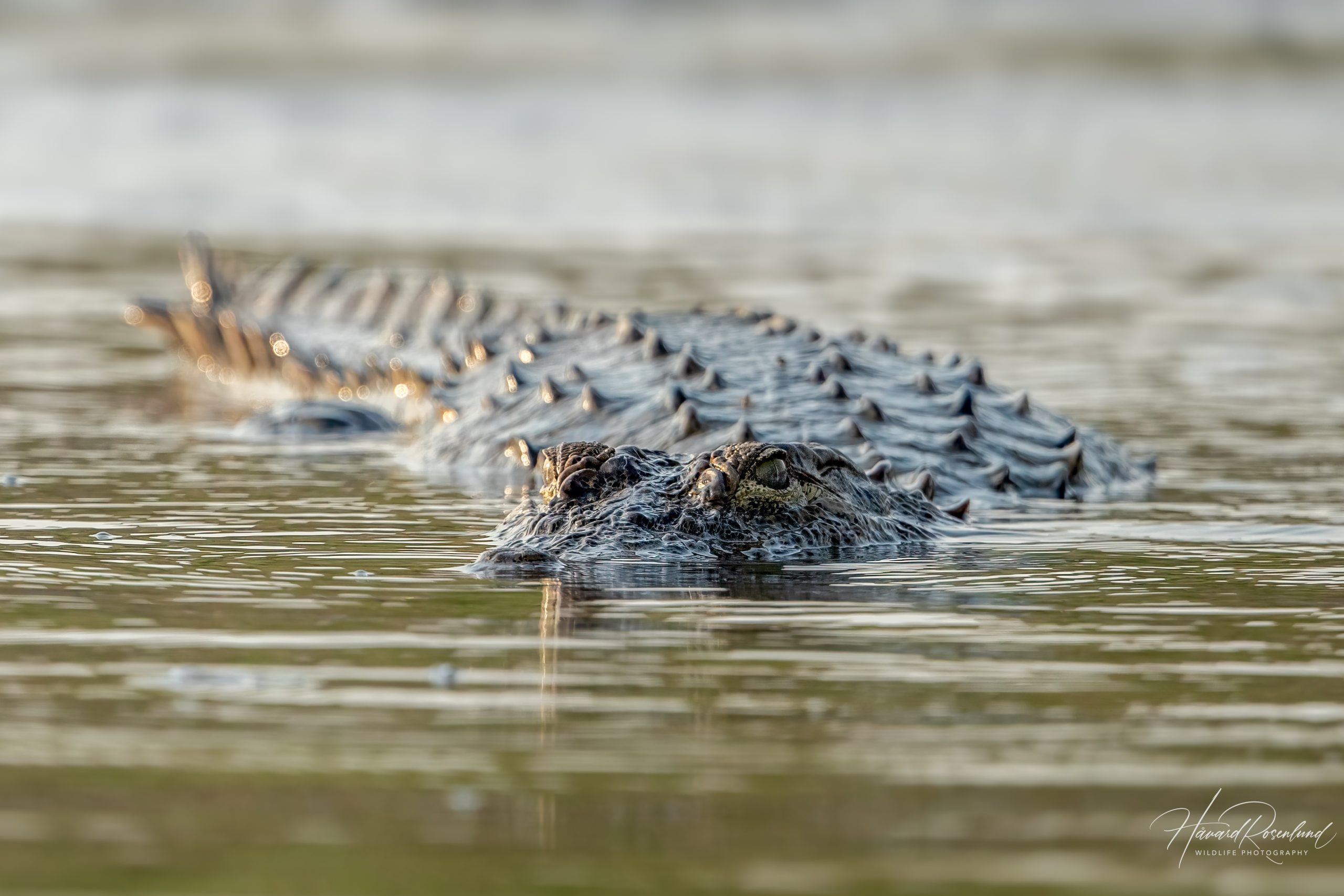
Mugger Crocodile
Crocodylus palustris
At a glance
Habitat
- Rivers, lakes, marshes, ponds, reservoirs and irrigation canals
Diet
- Fish, amphibians, reptiles, birds and mammals
Activity
- Mostly nocturnal; basks by day
Size
- Length: Usually 3–4 m; exceptionally 4–5 m Weight: Exceptionally up to ca. 700 kg
Range
- Indian subcontinent and south-eastern Iran
Description
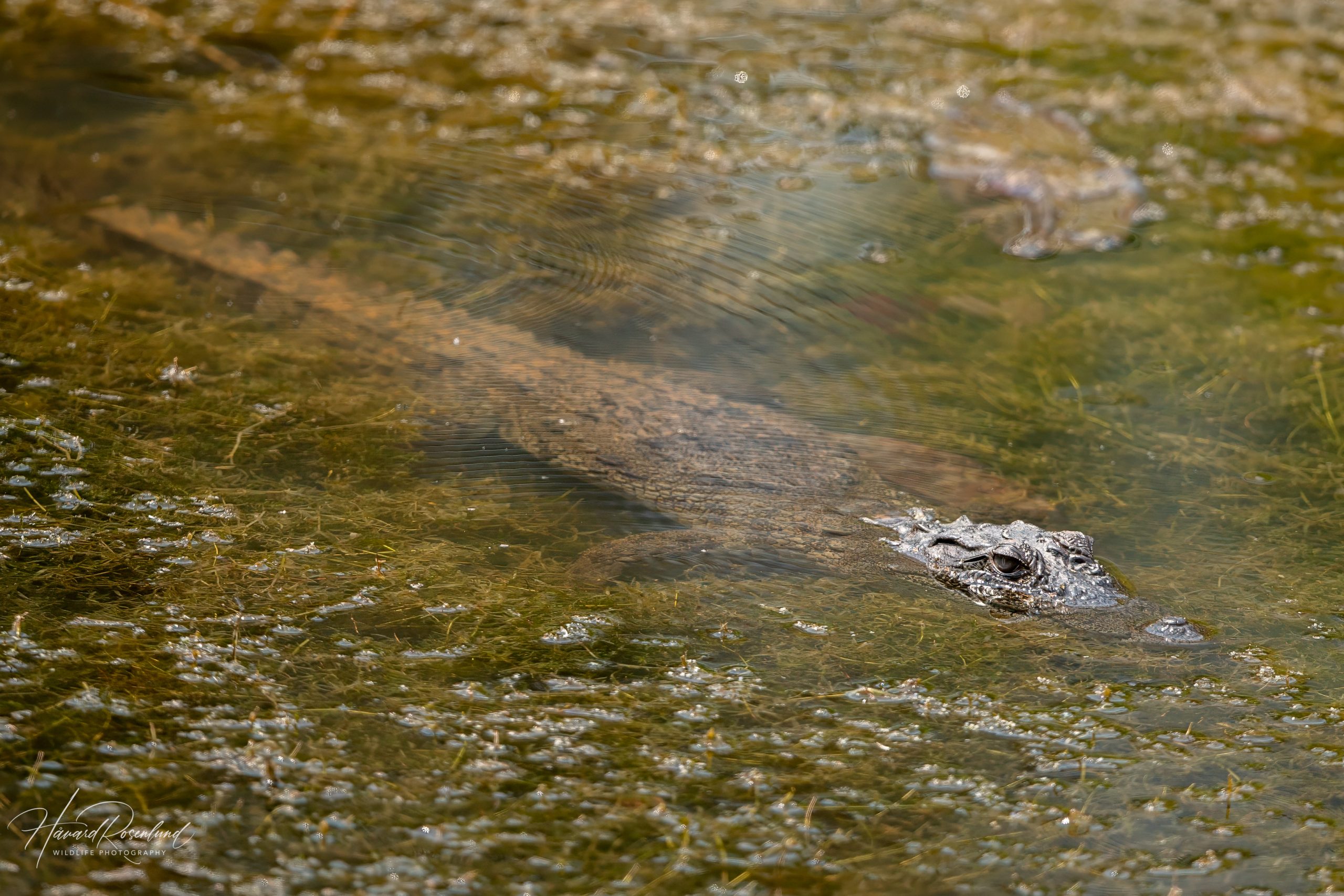
The mugger crocodile (Crocodylus palustris), also called the marsh crocodile, is a broad-snouted crocodilian native to South Asia and south-eastern Iran. Adults commonly reach about 3–4 m, while exceptional males may approach 4–5 m. Females are substantially smaller than the largest males.
The mugger has the broadest snout among living species of Crocodylus. Its heavily armoured olive-brown body provides effective camouflage in turbid freshwater. The broad head, robust build and generally smaller maximum size help distinguish it from the saltwater crocodile (Crocodylus porosus) where both occur.
Habitat
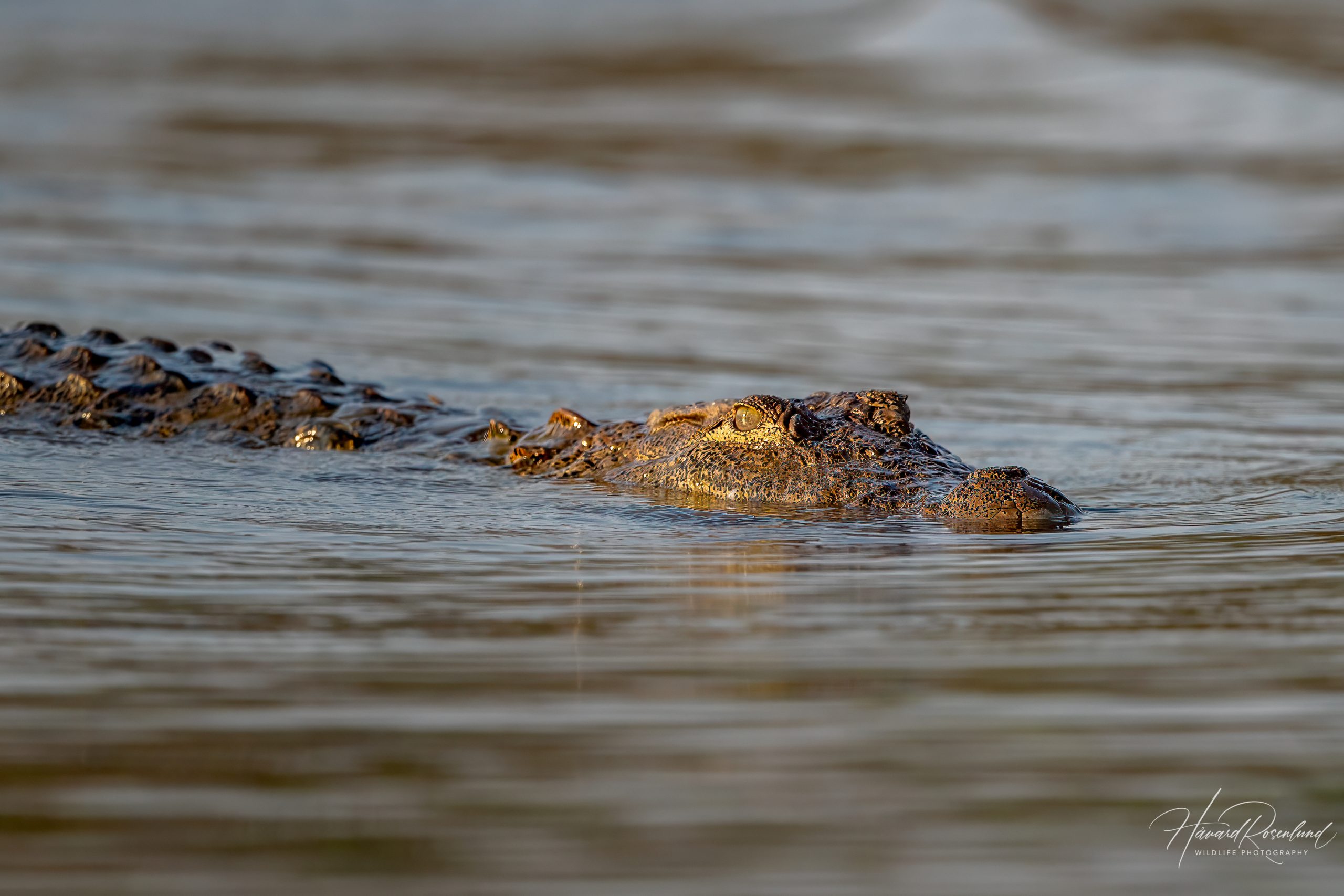
Muggers are primarily freshwater crocodiles and use rivers, lakes, marshes, village ponds, reservoirs and irrigation canals. They can also enter coastal lagoons and estuaries. Compared with many crocodilians, they readily use water bodies created by people.
Seasonal drying can force individuals to move between water bodies. Muggers are capable of travelling considerable distances over land and may shelter in burrows, tunnels or deep pools during extreme heat, cold or drought. These refuges help protect them from extreme or rapidly changing temperatures.
Diet
Young muggers feed heavily on insects, crustaceans, frogs and small fish. As they grow, the diet broadens to include larger fish, turtles, snakes, waterbirds and mammals. Carrion may also be eaten. The exact balance of prey changes strongly with crocodile size and local availability.
Hunting
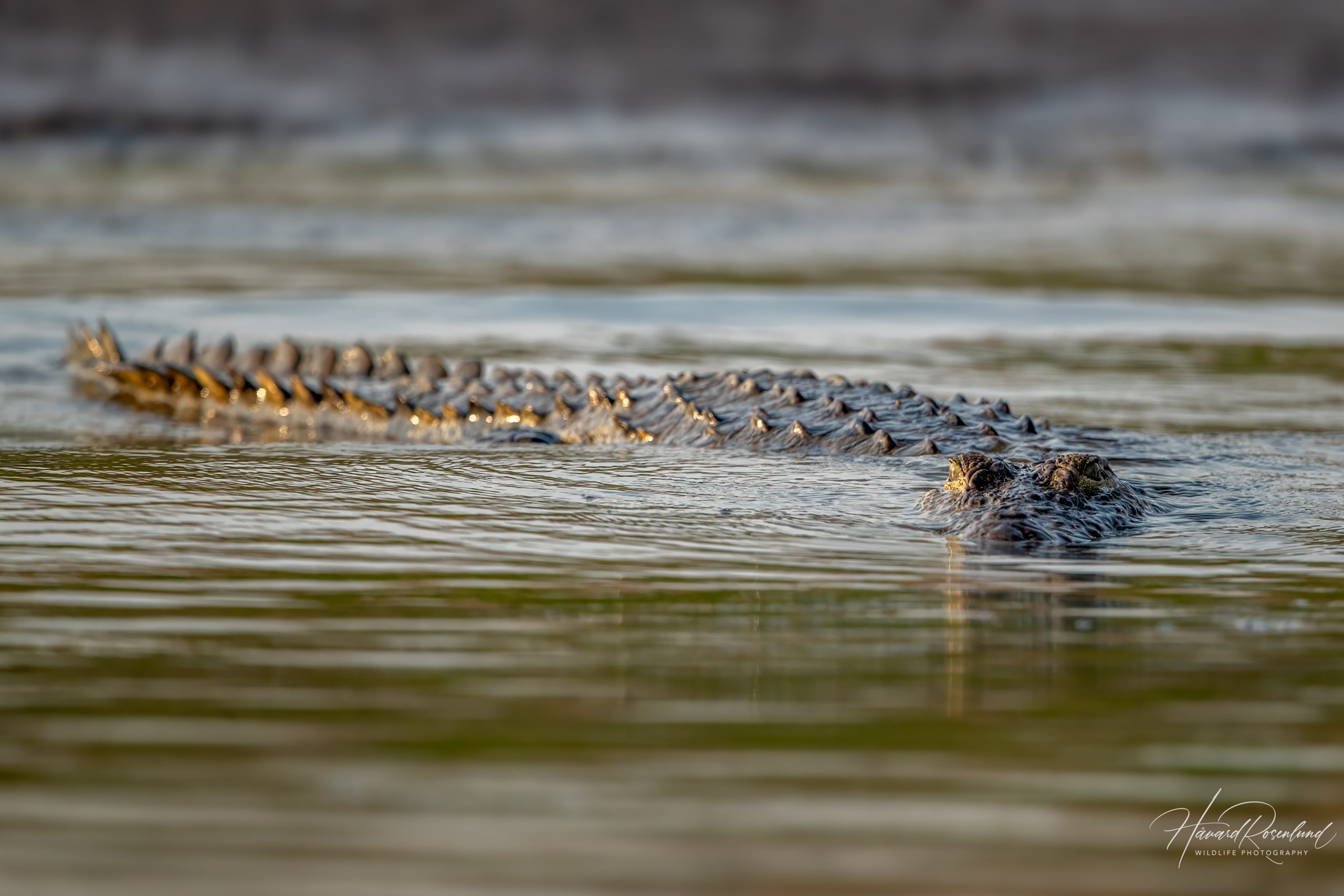
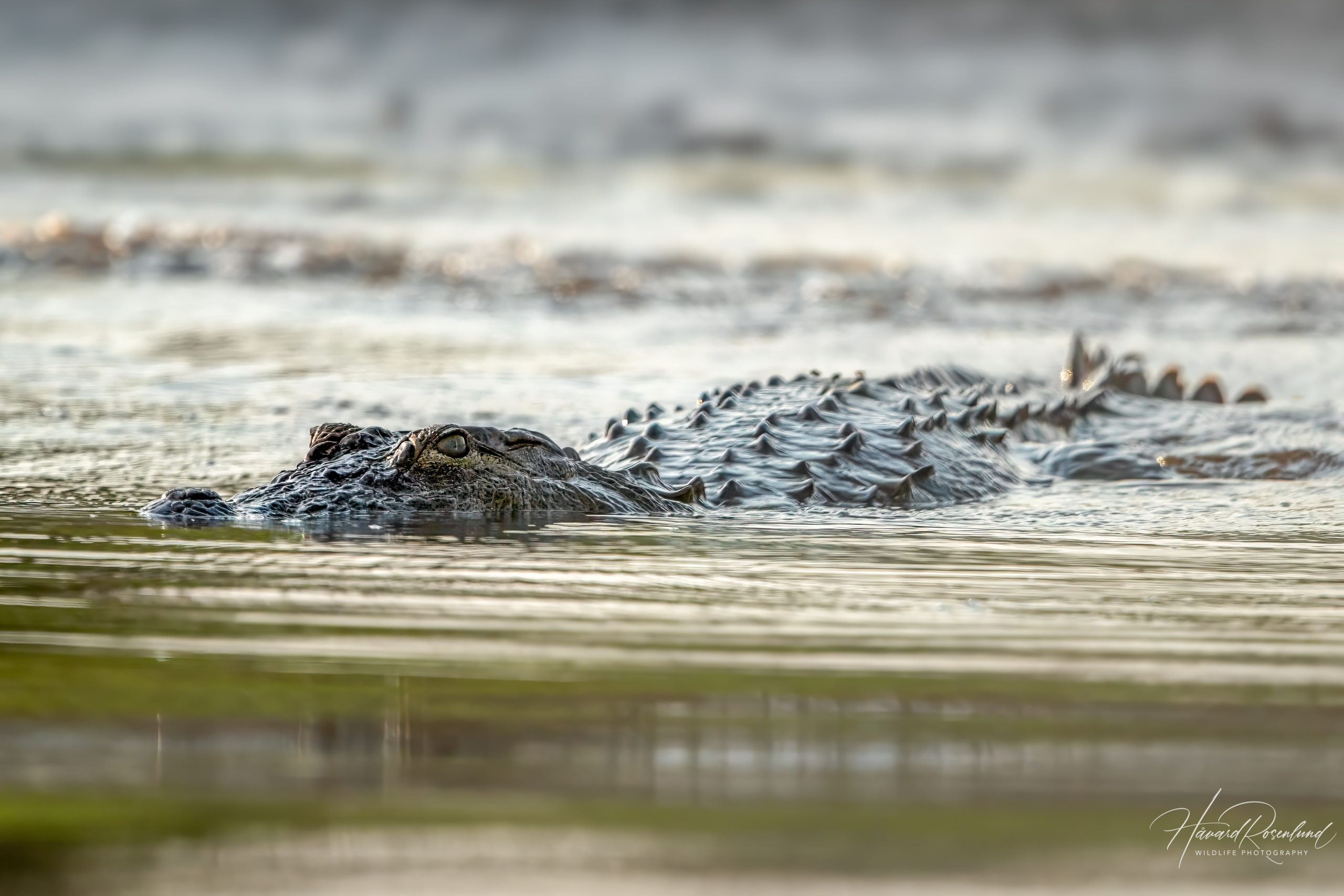
Mugger crocodiles are opportunistic hunters. They may approach prey while largely submerged, wait at the water's edge or exploit concentrations of fish and other animals in shrinking pools. Large prey can be held underwater or torn apart with powerful twisting movements, including the characteristic “death roll”.
A study published in 2013 described repeated observations from Madras Crocodile Bank in Tamil Nadu, India, where large muggers lay partly submerged with sticks or twigs resting across their snouts. On one occasion an egret approached a stick and the crocodile lunged but missed. The authors suggested that the sticks could function as lures for birds collecting nest material, but the mugger observations alone could not establish whether the crocodiles had positioned them deliberately.
Behaviour
Muggers spend much of the day basking or resting near the surface and are often most active from dusk through the night. Moving between sun, shade and water allows them to regulate body temperature behaviourally. Adults are generally solitary, although several individuals may share waterholes with abundant food, good basking banks or sheltered refuges.
They are strong swimmers but also travel readily on land when water bodies shrink or become unsuitable. Communication includes postures, vocalisations and movements that create vibrations in the water, while hatchlings and adults use calls in the context of parental care.
Reproduction
Breeding and nesting are timed to local seasonal conditions, often around the dry season. Courtship involves visual, acoustic and water-borne signals, and males may become more territorial around breeding areas. Females dig hole nests in sand or soil near water, and clutches commonly contain about 10–30 eggs. Females guard the nest and respond to calls from the young as hatching approaches; parental care by both females and males has been documented in the species.
Experiments at Madras Crocodile Bank in India, published in 1989, showed that incubation temperature, rather than sex chromosomes, determines sex. Constant temperatures of 28–31 °C produced only females and 32.5 °C only males, while nearby temperatures produced mixed sex ratios. Temperature also strongly affects developmental rate, and incubation typically lasts about 55–75 days.
After hatching, adults may help excavate the nest and transport young to water. Hatchlings remain around nursery areas where parental defence can continue for some time.
Relationship with humans
Muggers can live in reservoirs, canals, village ponds and even rivers passing through cities, bringing them into close contact with people, livestock and fishing activity. This ability to live alongside people is one reason some Indian populations have recovered, but it also creates serious safety challenges.
Attacks on people are strongly concentrated in a few local hotspots. A review published in 2017 documented 64 mugger attacks in Gujarat from 1960 to 2013, 33 of them fatal; 52 occurred in central Gujarat, and attacks were most frequent from April to September, peaking in May. Risk increases where people routinely enter crocodile habitat for bathing, washing, fishing or collecting water. Where people and crocodiles share water, safer access points and clear local information can reduce exposure.
Status
The mugger crocodile remains classified as vulnerable on the IUCN Red List. The current listing is based on an older assessment. A range-wide assessment published in 2025 estimated more than 20,000 adults globally, including about 10,000–12,000 in India and around 7,500 in Sri Lanka. Populations were reported as increasing in India, Iran, Nepal and Sri Lanka and stable in Pakistan. The species is extinct in Bhutan and Myanmar, while Bangladesh is considered possibly extinct; fewer than ten adults were estimated there, and these may include transient animals from India.
A study published in 2024 using 17 years of monitoring in the National Chambal Sanctuary, India, found sustained population growth from 2003 to 2019, estimated at about 10.6% per year. This is a strong example of local recovery, although populations and threats remain highly uneven across the species' range.
Threats
The main threats across the range are habitat degradation and conflict with people. Wetland conversion, river modification, water extraction, pollution and loss of nesting or basking sites fragment populations and reduce habitat quality.
Fishing nets can drown crocodiles, while deliberate killing may follow attacks on people or livestock. Poaching and use of crocodile meat or body parts also persist locally, although the large commercial skin trade was primarily a historical pressure. Roads and development around wetlands add further risk. The importance of these threats varies greatly among regions.
Conservation
India's crocodile recovery programmes, begun in the 1970s, combined legal protection, captive breeding, reintroduction and protected areas, helping restore muggers to several former strongholds. Conservation today increasingly focuses on maintaining viable wild populations while reducing dangerous encounters where people and crocodiles share water.
The IUCN-SSC Crocodile Specialist Group published an updated species action plan in 2025. It highlights fragmented populations, loss of nesting and basking habitat, accidental mortality in fishing gear and conflict with people as continuing concerns, alongside the need to maintain connections between suitable habitats.
Image gallery
Loading map and observations…
Have you seen this species?
Independent species archive
Did you find this species page useful?
Wildlife Vagabond is independently built and maintained. Voluntary support helps cover hosting, maps, data storage and continued improvements to the species archive.
Support Wildlife VagabondSpecies content will remain freely available.
References
Information about the species’ global distribution and status is based primarily on global Red List data. See the references below for details.
- Bors, M. S., Gowri Shankar, P., & Gruszczyńska, J. (2024). Current State of Mugger Populations. Animals, 14(5), 691. https://doi.org/10.3390/ani14050691
- Desai, B., Bhowmik, T., Wadekar, A., Bhatt, U., & Ghosal, R. (2025). Investigating reproductive biology of female mugger crocodiles (Crocodylus palustris) by using behaviour and endocrine measures. Applied Animal Behaviour Science, 292, 106832. https://doi.org/10.1016/j.applanim.2025.106832
- Dinets, V., Brueggen, J., & Brueggen, J. (2015). Crocodilians use tools for hunting. Ethology Ecology & Evolution, 27(1), 74-78. https://doi.org/10.1080/03949370.2013.858276
- International Union for Conservation of Nature. (n.d.). Crocodylus palustris. The IUCN Red List of Threatened Species. https://www.iucnredlist.org/species/5667/3046723
- IUCN SSC Crocodile Specialist Group. (n.d.). IUCN-SSC Crocodile Specialist Group – Crocodylus palustris Action Plan (2025). https://www.iucncsg.org/365_docs/attachments/protarea/1b50c4af9119656246f593e34497385e.pdf
- Lang, J. W., Andrews, H., & Whitaker, R. (1989). Sex Determination and Sex Ratios inCrocodylus palustris. American Zoologist, 29(3), 935-952. https://doi.org/10.1093/icb/29.3.935
- Sharma, S. P., Ghazi, M. G., Katdare, S., Badola, R., & Hussain, S. A. (2024). Population status and genetic assessment of mugger (Crocodylus palustris) in a tropical regulated river system in North India. Scientific Reports, 14(1), 7438. https://doi.org/10.1038/s41598-024-57983-2
- The Reptile Database. (n.d.). Crocodylus palustris. https://reptile-database.reptarium.cz/Crocodylus/palustris
- Vyas, R., & Stevenson, C. (2017). Review and analysis of human and Mugger Crocodile conflict in Gujarat, India from 1960 to 2013. Journal of Threatened Taxa, 9(12), 11016. https://doi.org/10.11609/jott.3790.9.12.11016-11024