
Indian Flapshell Turtle
Lissemys punctata
At a glance
Habitat
- Shallow freshwater ponds, marshes, lakes, canals, rice fields and slow rivers; also some brackish wetlands
Diet
- Omnivorous: aquatic invertebrates, snails, frogs, small fish, carrion and a range of plant material
Activity
- Mostly diurnal, but activity varies with temperature, water conditions and disturbance; during drought it can remain buried and largely inactive
Size
- Length: Up to 35 cm shell length Weight: Up to 7 kg
Range
- Pakistan, India, Nepal and Bangladesh, extending locally into western Myanmar; Sri Lankan populations are treated separately
Description
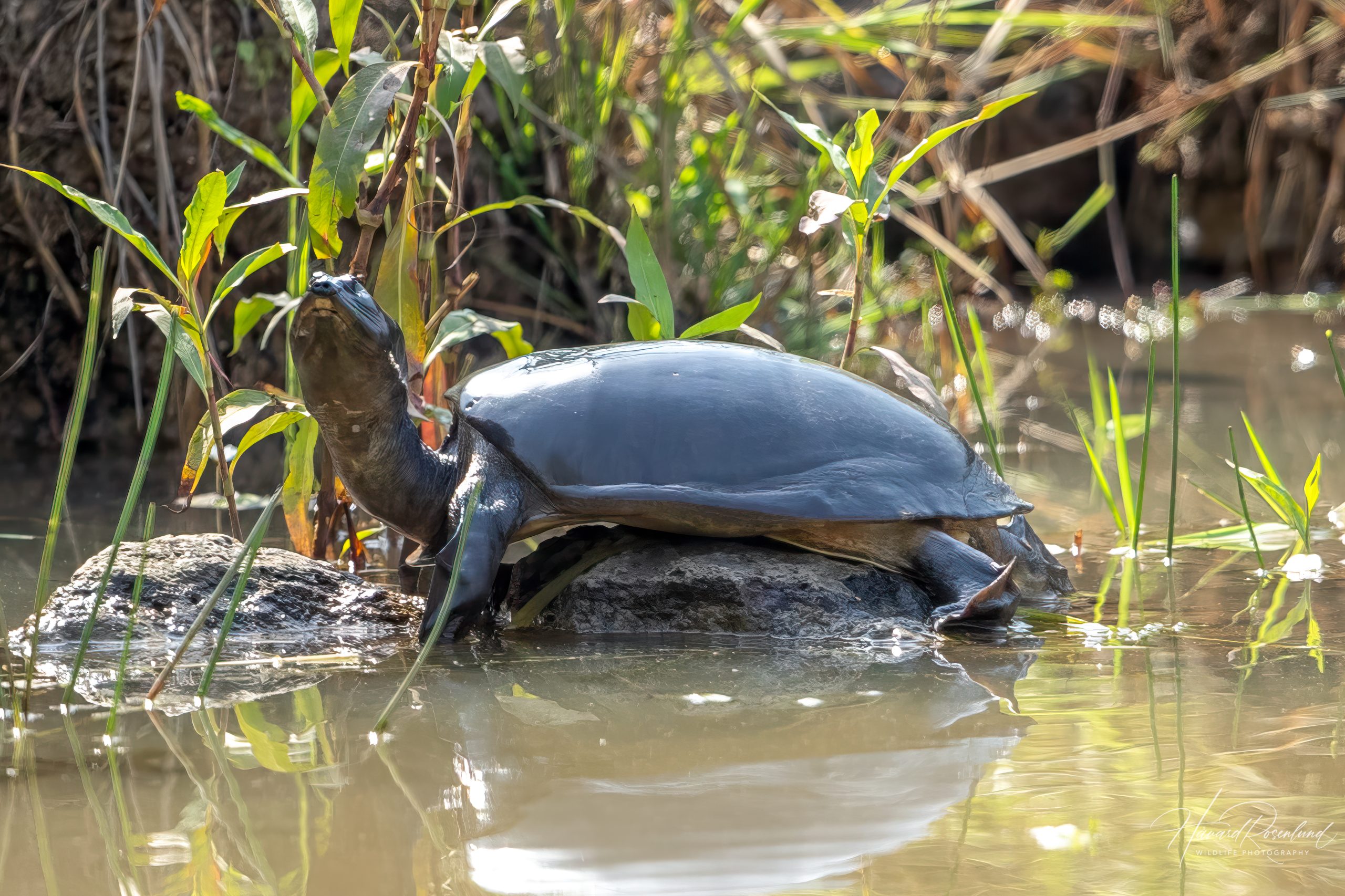
The Indian flapshell turtle (Lissemys punctata) is a relatively small South Asian softshell turtle. According to Animal Diversity Web, adults are about 22–35 cm in carapace length, and females generally grow larger than males. The smooth leathery upper shell is olive-brown to brown and may carry yellow spots or blotches, especially in younger animals.
Its most distinctive feature gives the turtle its name. Fleshy flaps on the underside near the hind limbs, together with a movable front section of the lower shell, allow the retracted head and limbs to be covered much more completely than in most softshell turtles. This helps protect the animal from predators and also reduces water loss when conditions become dry.
Taxonomy
The limits of Lissemys punctata have changed with taxonomic revisions of flapshell turtles. Sri Lankan populations formerly included within this species are now recognised as the separate Sri Lankan flapshell turtle (Lissemys ceylonensis), while the Burmese flapshell turtle (Lissemys scutata) is also treated as a distinct species.
Three subspecies are currently recognised within L. punctata: L. p. punctata in southern peninsular India, L. p. andersoni across northern South Asia and into western Myanmar, and L. p. vittata across much of central India. Their boundaries are not equally sharp everywhere, and older literature may use a broader concept of the species than modern sources.
Habitat
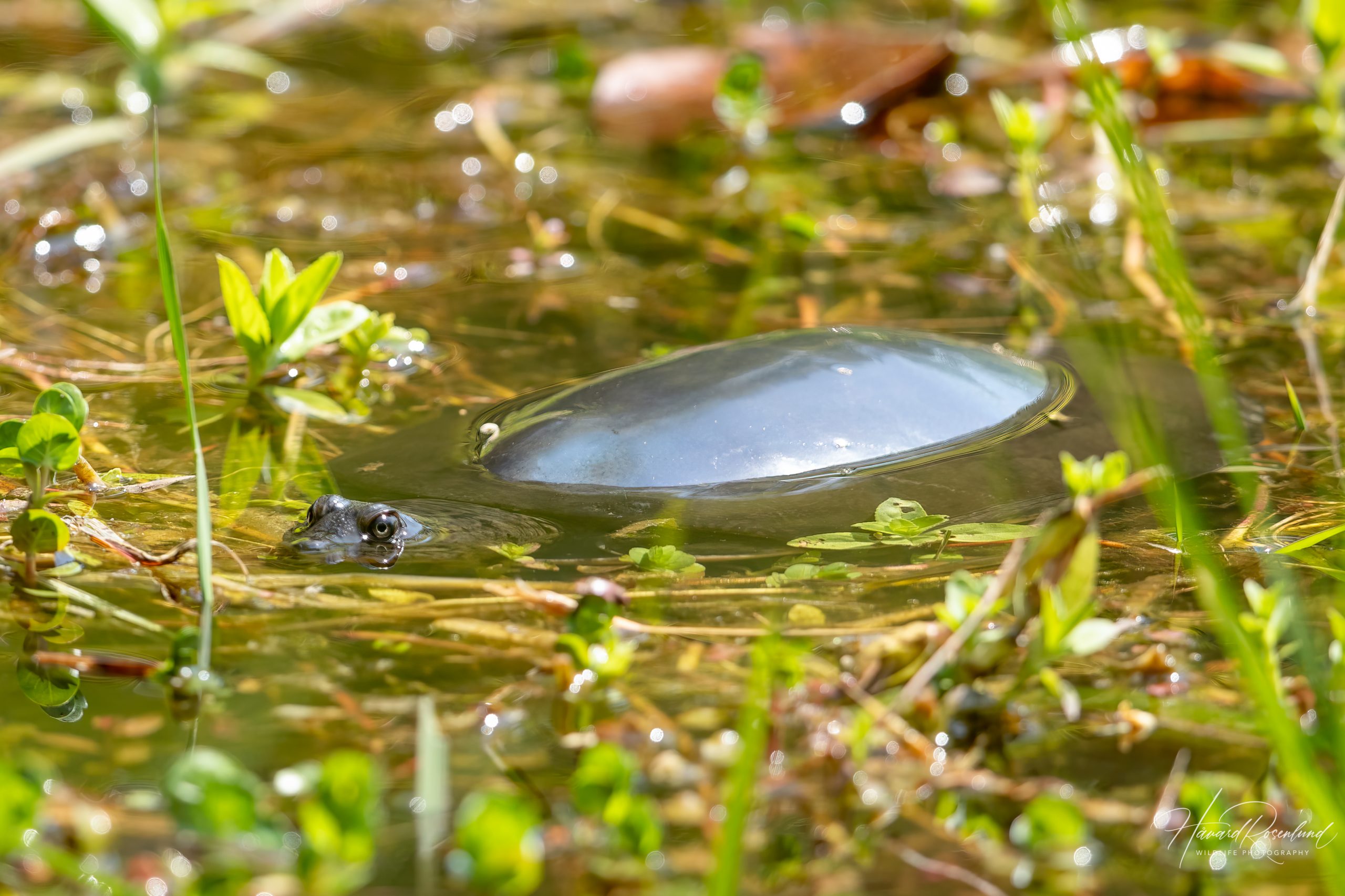
Indian flapshell turtles use an unusually broad range of freshwater habitats, including ponds, marshes, lakes, irrigation tanks, canals, rice fields and slow-moving rivers. They usually favour shallow water with mud or sand bottoms where they can burrow, and they can also occur in brackish lagoons and highly modified wetlands close to people.
The species is adaptable, but suitable water conditions still matter. A 2026 study of a semi-urban pond in Rajasthan found that a local population persisted where water levels remained stable, pollution was comparatively low and oxygen and food availability were adequate. This illustrates how even a tolerant turtle can depend on the basic ecological quality of small wetlands.
Diet
The species is an opportunistic omnivore. Animal food includes snails and other molluscs, insects, crustaceans, frogs, small fish and carrion, while aquatic vegetation, leaves, fruit, grasses and seeds are also eaten. A feeding study published in 1986 on Indian freshwater turtles found L. punctata to be omnivorous, in contrast to several more strongly carnivorous softshell turtles.
Much feeding takes place in shallow water or along muddy bottoms. The broad diet allows flapshell turtles to exploit temporary wetlands and agricultural waters where food availability changes strongly through the year.
Behaviour
Indian flapshell turtles spend much of their time in water but readily bury themselves in soft mud. During drought they can leave shrinking water bodies and travel over land in search of better conditions. A 1981 field study in Keoladeo, Rajasthan, found that falling water depth, rising temperature and loss of cover helped trigger these movements; leaving before the last pools disappeared also reduced the risk of becoming trapped in hardening mud.
If no suitable water remains, a turtle can instead stay buried on land for long periods with greatly reduced activity and metabolism until water returns. The ability to close the shell around the body is particularly useful during these dry periods because it limits water loss. This combination of overland movement and prolonged aestivation makes the species unusually resilient in landscapes where ponds and seasonal wetlands repeatedly dry out and refill with the monsoon.
Reproduction
Breeding and nesting vary with climate and monsoon timing. Females dig nests on land near water and lay round, hard-shelled eggs. Reported clutch sizes range from 2 to 16 eggs, and several clutches can be produced in a year.
A study of reproduction in Bangladesh from 1997 to 2001 found females laying three clutches per year, with an average of about 13 eggs per clutch. Incubation averaged roughly 173 days and varied strongly with nest temperature, moisture and season. A 1996 study from western India recorded a much longer incubation of 241–412 days under outdoor conditions, with hatchlings emerging the following year. Newly hatched young measure about 3.5–4.4 cm in carapace length and are often greener or more clearly patterned than older animals. Hatchlings receive no parental care after emerging.
Status
The Indian flapshell turtle is classified as vulnerable on the IUCN Red List. It remains widespread across much of South Asia and can still be locally common, but populations face substantial pressures across the range.
Threats
Collection for meat and other forms of trade is one of the most important threats. Repeated collection can reduce populations even in landscapes where suitable wetlands remain. Wetland drainage, pollution, altered water regimes and development further reduce habitat quality.
Fishing gear can injure or drown turtles, while animals moving over land between wetlands are vulnerable to road traffic and other human activity. The species' ability to survive drought and use modified habitats provides resilience, but cannot compensate indefinitely for heavy collection combined with the loss or degradation of aquatic habitat.
Conservation
Conservation of the species depends both on reducing unsustainable collection and on maintaining the freshwater habitats it relies on. Protecting and restoring ponds, marshes, canals and other shallow wetlands, maintaining good water quality and natural seasonal changes in water level, and reducing accidental mortality in fishing gear and on roads can all benefit local populations.
Controls on trade and enforcement of protection laws remain important because the species has long been exploited. Population monitoring is also useful because turtles can remain present in a wetland even while numbers are gradually declining. Recent habitat studies show the value of retaining small wetlands with stable water levels and relatively low pollution within human-dominated landscapes.
Image gallery
Loading map and observations…
Have you seen this species?
Independent species archive
Did you find this species page useful?
Wildlife Vagabond is independently built and maintained. Voluntary support helps cover hosting, maps, data storage and continued improvements to the species archive.
Support Wildlife VagabondSpecies content will remain freely available.
References
Information about the species’ global distribution and status is based primarily on global Red List data. See the references below for details.
- Animal Diversity Web. (n.d.). Lissemys punctata (Indian Flap-shelled Turtle). https://animaldiversity.org/accounts/Lissemys_punctata/
- Auffenberg. (1981). Behaviour of Lissemys punctata (Reptilia, Testudinata, Trionychidae) in a drying lake in Rajasthan, India. Journal of the Bombay Natural History Society, 78, 487–493. https://www.biodiversitylibrary.org/page/48229025
- Bhupathy, Webb & Praschag. (2014). Lissemys punctata – Indian Flapshell Turtle. Chelonian Research Monographs 5:076.1–12. https://iucn-tftsg.org/cbftt/species-accounts/lissemys-punctata-076/
- Hossain, M. L., Sarker, S. U., & Sarker, N. J. (2010). Breeding biology aspects of spotted flapshell Turtle, Lissemys punctata (Lacepede 1788), in Bangladesh. Saudi Journal of Biological Sciences, 17(1), 5-12. https://doi.org/10.1016/j.sjbs.2009.12.002
- International Union for Conservation of Nature. (n.d.). Indian Flapshell Turtle. The IUCN Red List of Threatened Species. https://www.iucnredlist.org/species/123802477/3008930
- The Reptile Database. (n.d.). Lissemys punctata. https://reptile-database.reptarium.cz/species?genus=Lissemys&species=punctata
- Turtle Taxonomy Working Group. (2025). Turtles of the World, 10th Edition. https://iucn-tftsg.org/resources/turtles-of-the-world-checklists/
- Vaishnav, M. P., & Arora, A. (2026). Population dynamics and habitat assessment of Indian Flapshell Turtle <i>Lissemys punctata vittata</i> (Reptilia: Testudines: Trionychidae) in Chawandiya, Rajasthan, India. Journal of Threatened Taxa, 18(5), 28919-28925. https://doi.org/10.11609/jott.10141.18.5.28919-28925
- Varghese, G., & Tonapi, G. (1986). Observations on the identity of some Indian freshwater turtles and their feeding habits. Biological Conservation, 37(1), 87-92. https://doi.org/10.1016/0006-3207(86)90036-4