
South American Harris’s Hawk Form Reached Definitive Adult Plumage After Four Annual Molts
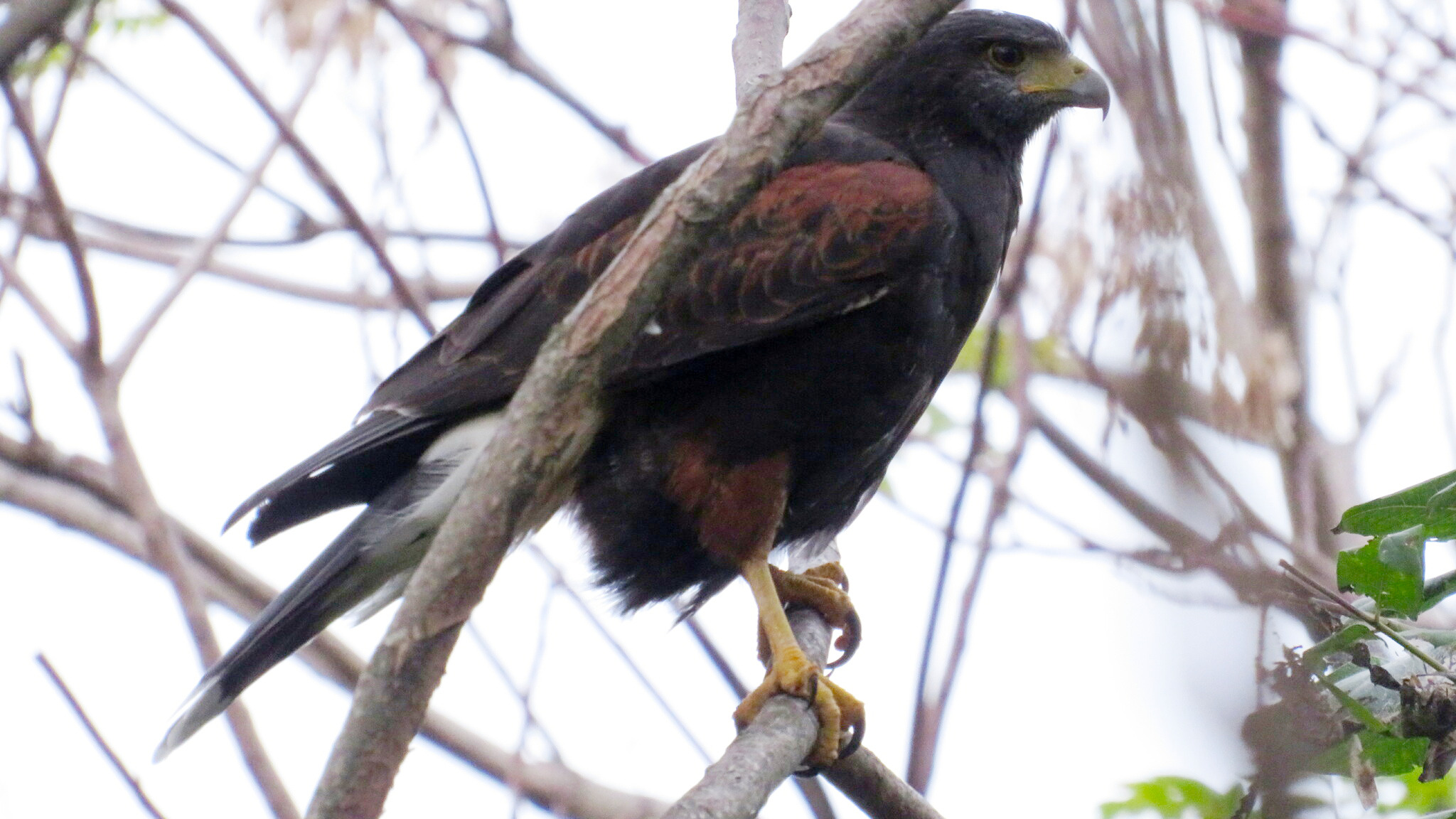
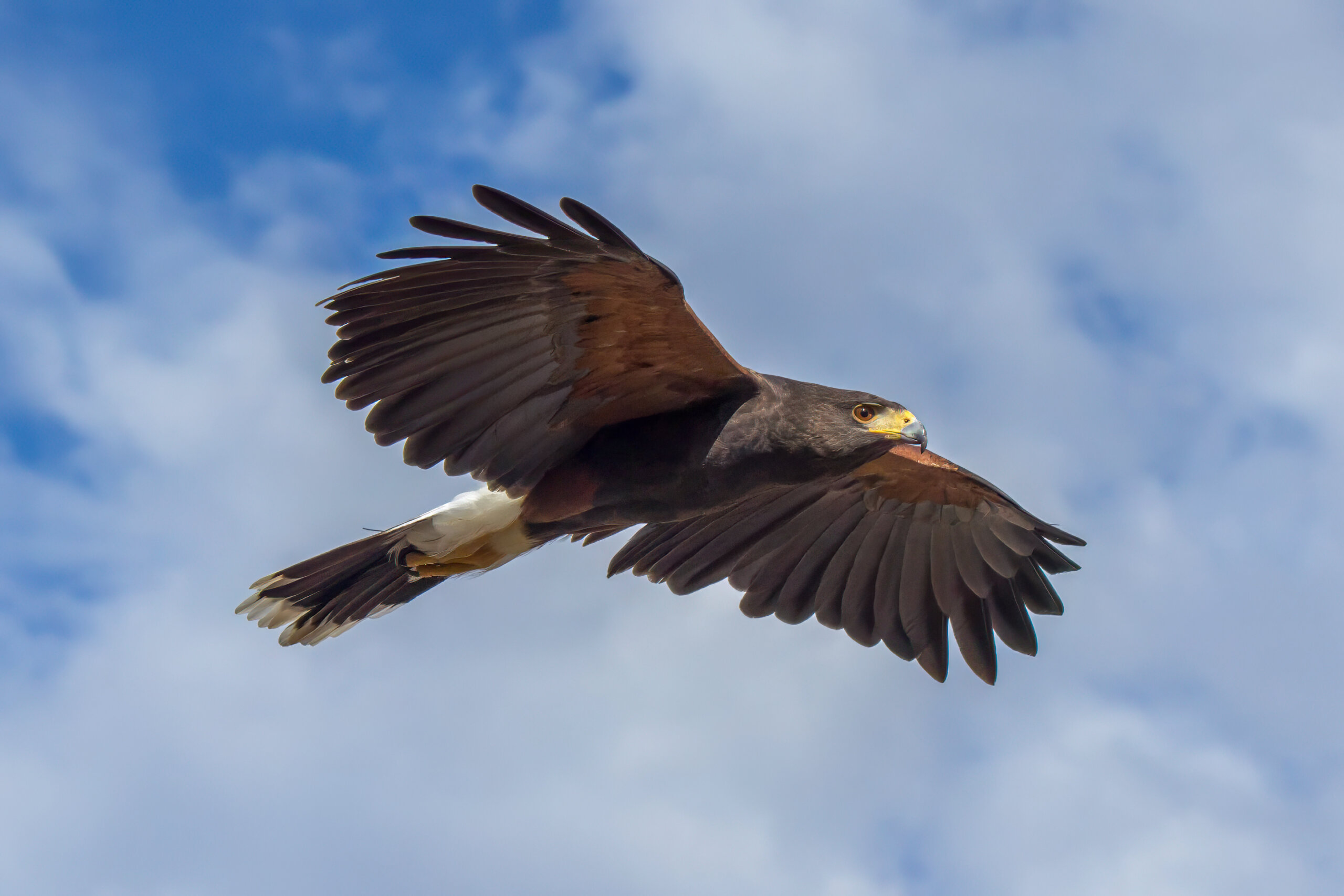
A study of the South American nominate form of Harris’s hawk (Parabuteo unicinctus unicinctus), referred to by the author as the bay-winged hawk, found that the birds pass through five recognizable age-related plumages before reaching definitive adult plumage after four annual molt cycles. The study was published on 20 March 2026 in Ornithology Research and examined natural-history traits that are important for reassessing the taxonomy of the Parabuteo unicinctus complex.
Matías A. Juhant analysed the plumage of 139 photographed individuals of the South American form across the Austral Temperate Region and combined these records with field observations of breeding and social behaviour. The photographs allowed individuals to be placed into age classes according to their molt stage and plumage.
Definitive adult plumage followed four annual molts
Five age classes were identified. Basic I–V describe successive plumages associated with the annual molt cycles. Birds in Basic I were up to eight months old, Basic II covered roughly 9–20 months, Basic III 21–32 months and Basic IV 32–44 months. Definitive Basic Plumage, Basic V, was reached from about 45 months of age, after four annual molt cycles. The sequence differs from previous descriptions of plumage development in the South American form and gives observers a more detailed basis for ageing birds in the field.
Three nests suggested breeding may occur year-round
The field observations also added information about breeding. Three active nests were documented, two during the austral winter and one in spring. Juhant interprets these records as evidence that breeding may occur throughout the year rather than being confined to a single season.
Mixed-age groups and a breeding trio were observed
Social behaviour was another prominent feature. Mixed-age groups of five to eight individuals were repeatedly observed soaring or perching together, and one active nest was associated with a trio. These observations add further evidence of complex social behaviour in the southern form, which belongs to a raptor complex already known for group living and cooperative behaviour.
The study places these natural-history differences in a taxonomic context. The South American form is currently treated as P. u. unicinctus, while the northern form is generally treated as P. u. harrisi. Juhant argues that better field information on plumage maturation, breeding phenology and social behaviour is important when assessing relationships within the complex. He particularly highlights tropical South America, where the two forms meet, as a key region for further fieldwork.
Evolution & taxonomy
Related news
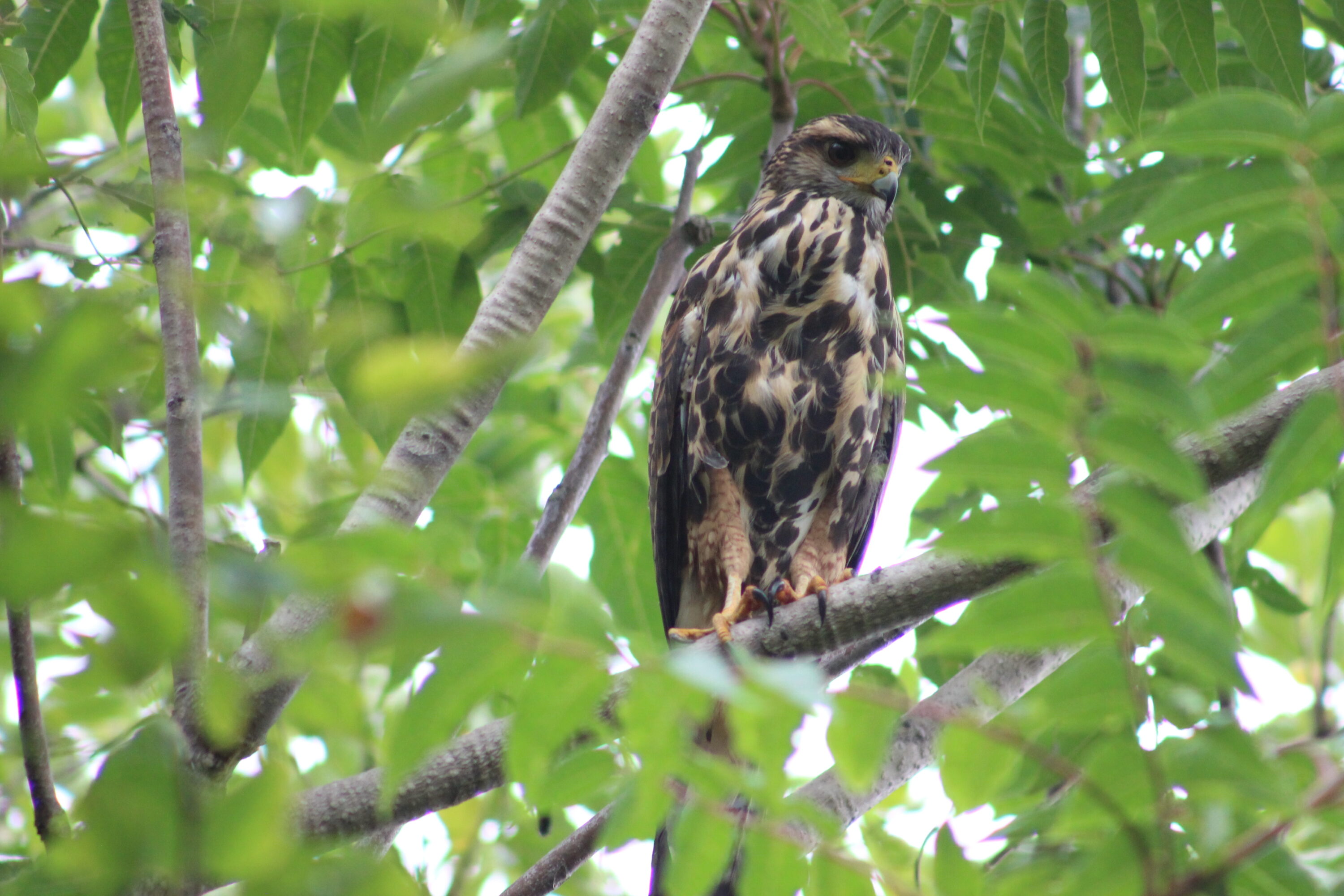
Young Harris’s Hawks Gripped Pine Cones Like Prey
Two young Harris’s hawks in Argentina pulled pine cones from trees and gripped and tore at them with…
Read story →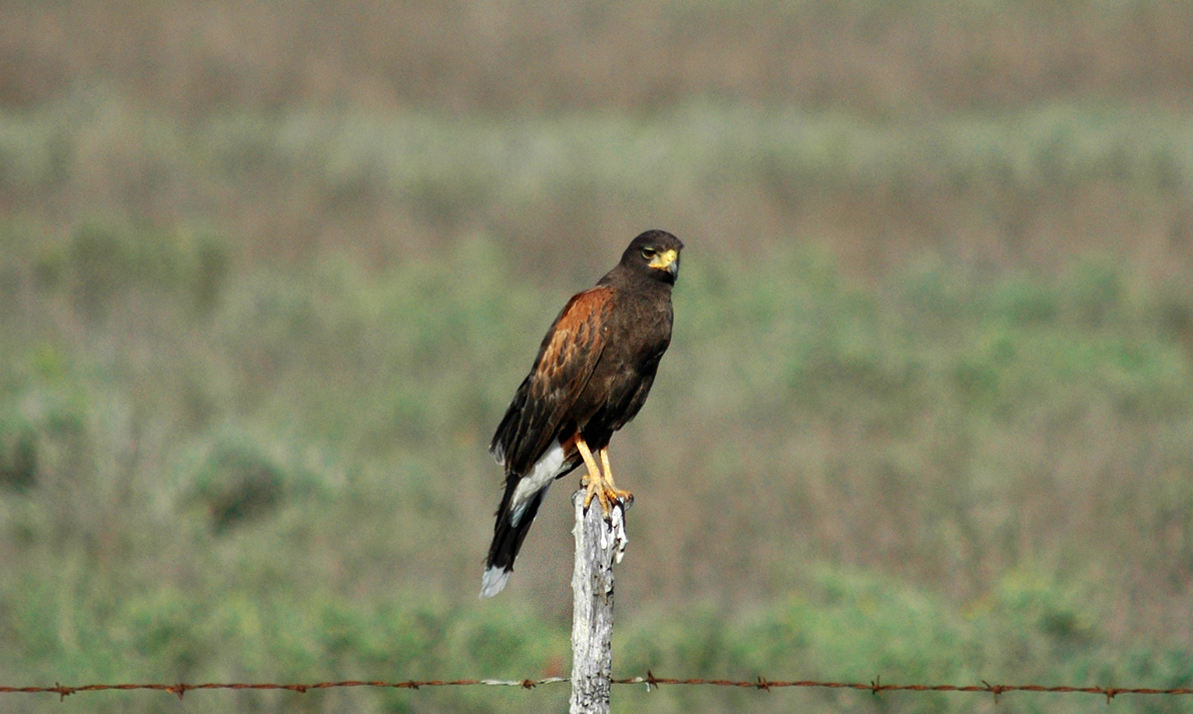
Preliminary Evidence Shows Harris’s Hawks Can Prey on Invasive Red-bellied Squirrels in Buenos Aires
Pellets, prey remains and direct observations in Buenos Aires provided preliminary evidence that Harris’s hawks can capture and…
Read story →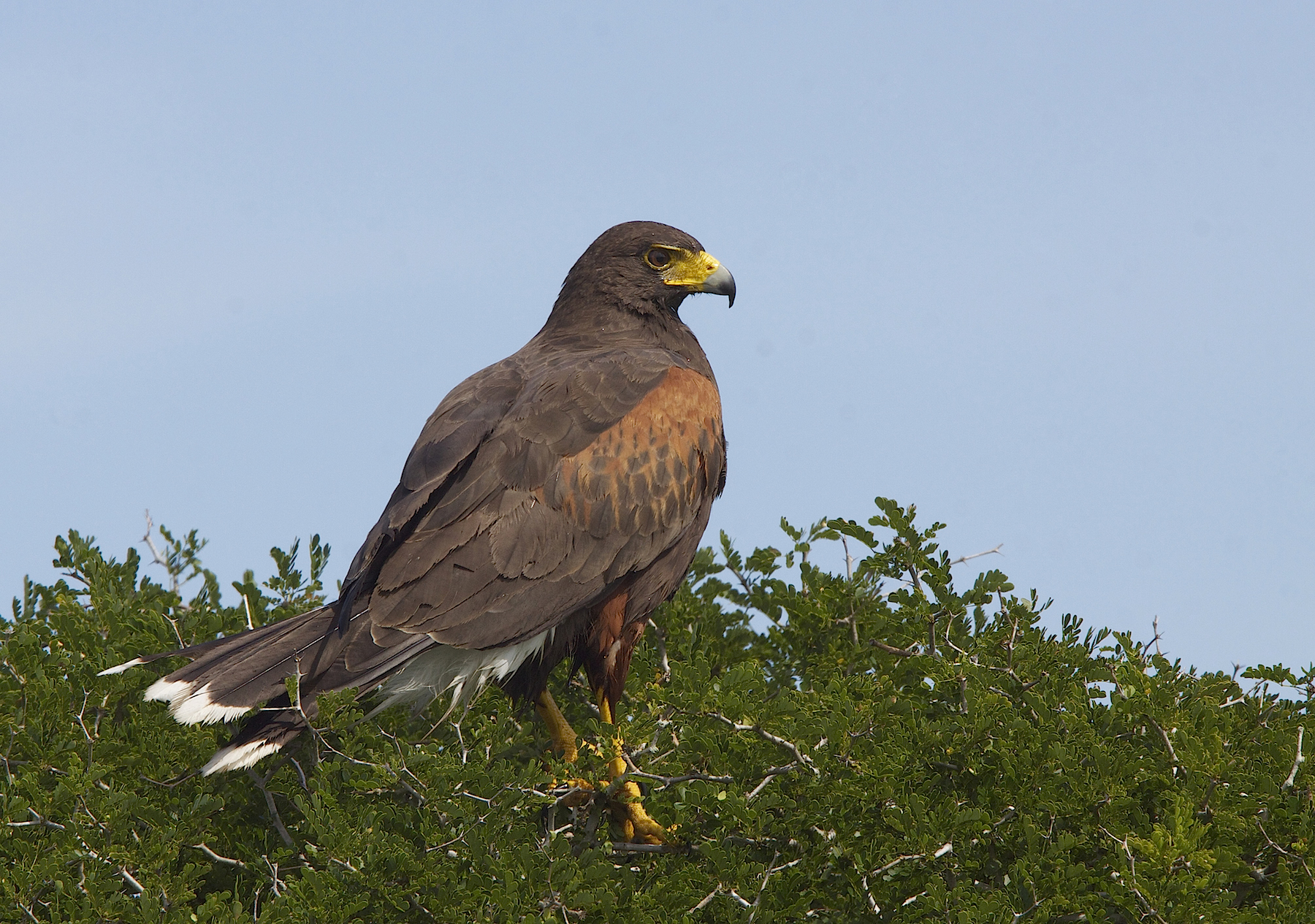
All Six Juvenile Harris's Hawks Left Their Natal Ranges After Repeated Exploratory Movements
AirTag tracking of 11 wild Harris's hawks in south Texas showed that all six juveniles made repeated exploratory…
Read story →SPECIES IN THIS STORY
Species in this story
Independent research and conservation news archive
Did you find this information useful?
Wildlife Vagabond is independently built and maintained. Voluntary support helps cover source verification, hosting and continued work on research and conservation news.
Support Wildlife VagabondThe news archive will remain freely available.