
Black Drongos Had Lower Estimated Density at Sites With More Trees and Greater Canopy Cover in Northern India
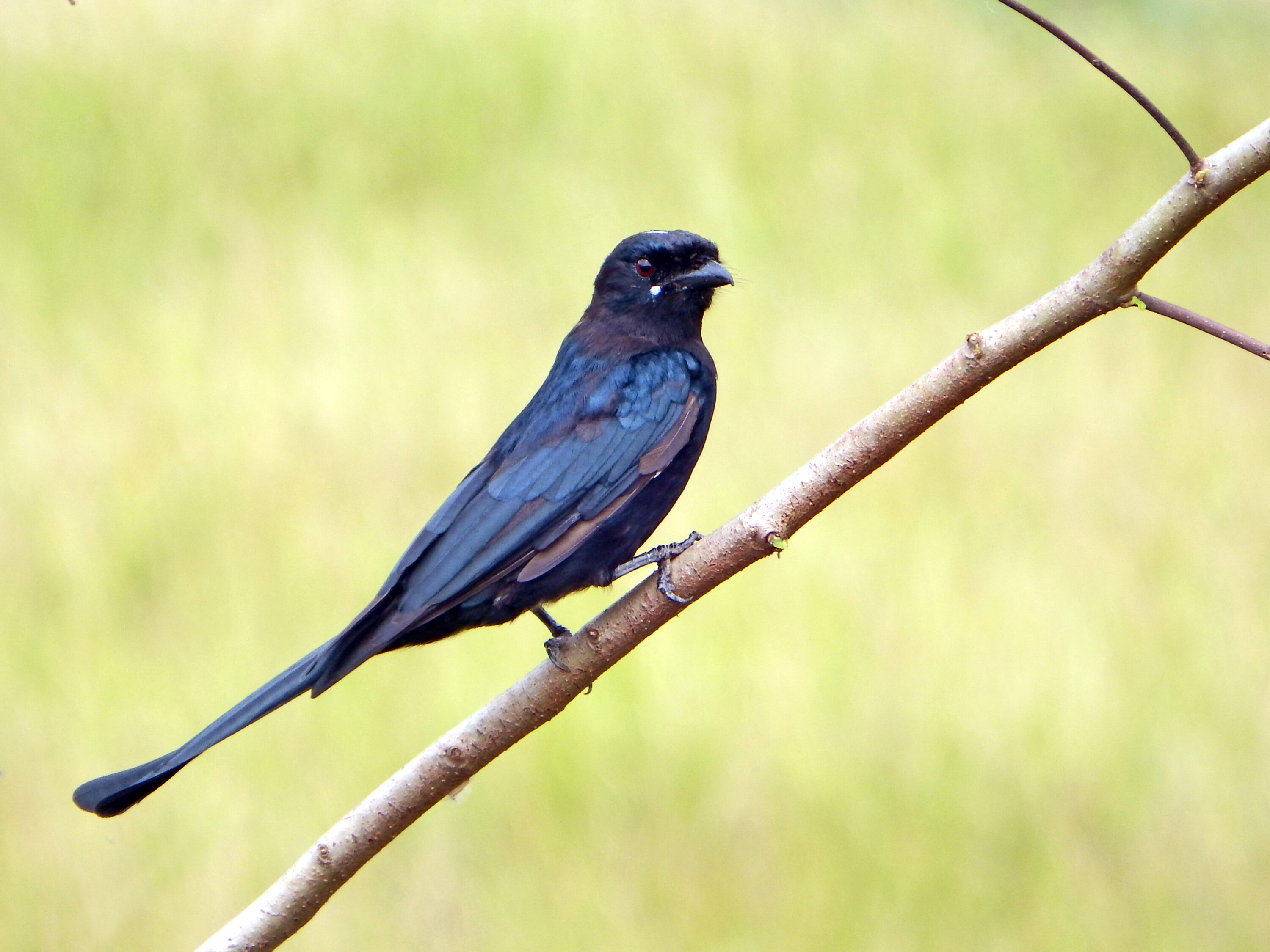
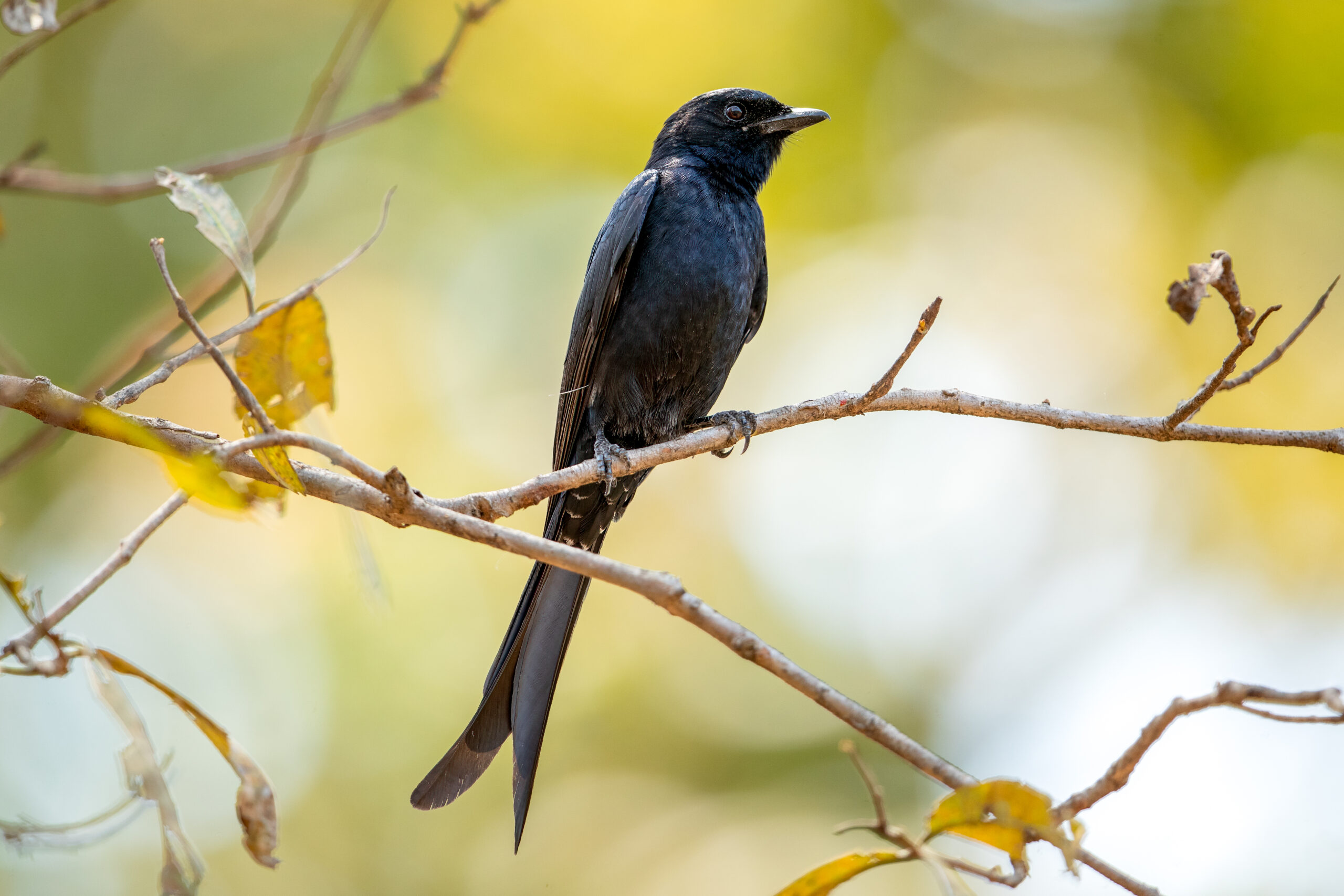
A broader survey of 35 common bird species along a rural–urban gradient in the Mirzapur and Bhadohi districts of Uttar Pradesh, India found that predicted density of black drongos (Dicrurus macrocercus) was lower at sites with more trees and greater canopy cover. The result was one species-specific response in a study designed to compare bird density across rural, semi-urban and urban landscapes.
A point count is a survey in which observers remain at a fixed location for a set period and record birds seen or heard, allowing sites to be compared in a standardised way.
Researchers established 183 point-count stations across rural, semi-urban and urban areas and surveyed each station three times from March to May 2024. Across the full study, they recorded 27,818 individuals belonging to 35 resident bird species. Because black drongos were less likely to be detected as wind speed increased, the density models accounted for this change in detectability.
Estimated density was lower where trees and canopy cover were greater
After local vegetation, land cover, human activity and housing variables were considered, predicted black drongo density was lower at sites with more trees and greater canopy cover. The authors discuss this pattern in the wider context of insectivorous birds that were often associated with open agricultural or shrub-dominated habitats in the study landscape.
Black drongos and Asian green bee-eaters (Merops orientalis) partly overlapped as aerial foragers in open habitats. More broadly, 27 of the 35 modelled species varied in density along the rural–urban gradient, but the direction of the response differed among species and foraging guilds.
The study represents one season
The authors describe the study as a one-season snapshot. The black drongo result therefore describes spatial differences in estimated density across the surveyed landscape from March to May 2024, not a long-term population trend.
Ecology
Related news
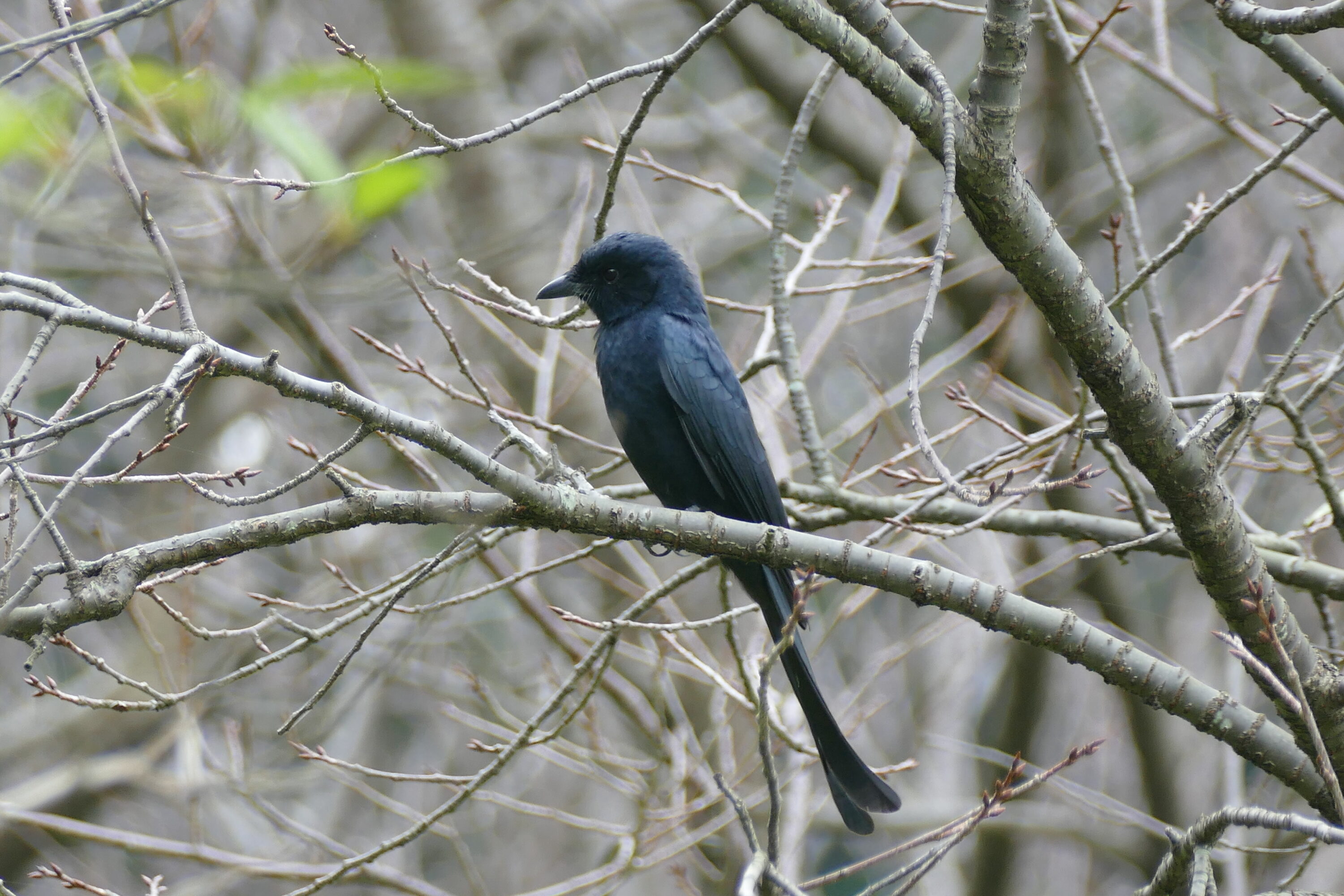
114,357 ha of Taiwan Farmland Was Modelled as Suitable for Four Bird Species
Suitable habitat for black drongo, common moorhen, zitting cisticola and scaly-breasted munia overlapped across 114,357 hectares of Taiwan…
Read story →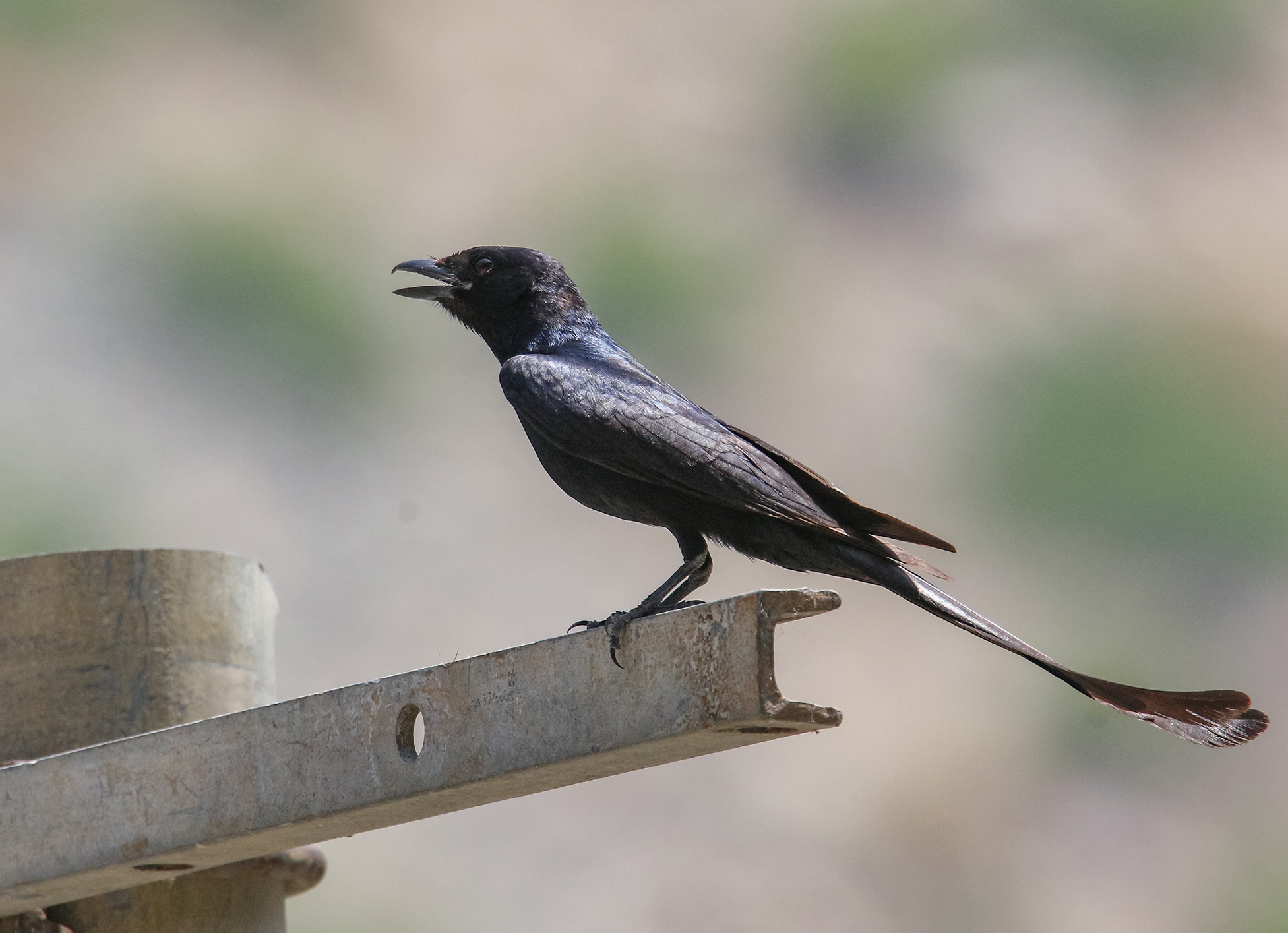
Seven Examined Black Drongo Nests Averaged 4.97 m High, Versus 4.50 m for Seven Long-tailed Shrike Nests
Seven examined Black Drongo nests averaged 4.97 m above ground versus 4.50 m for seven Long-tailed Shrike nests…
Read story →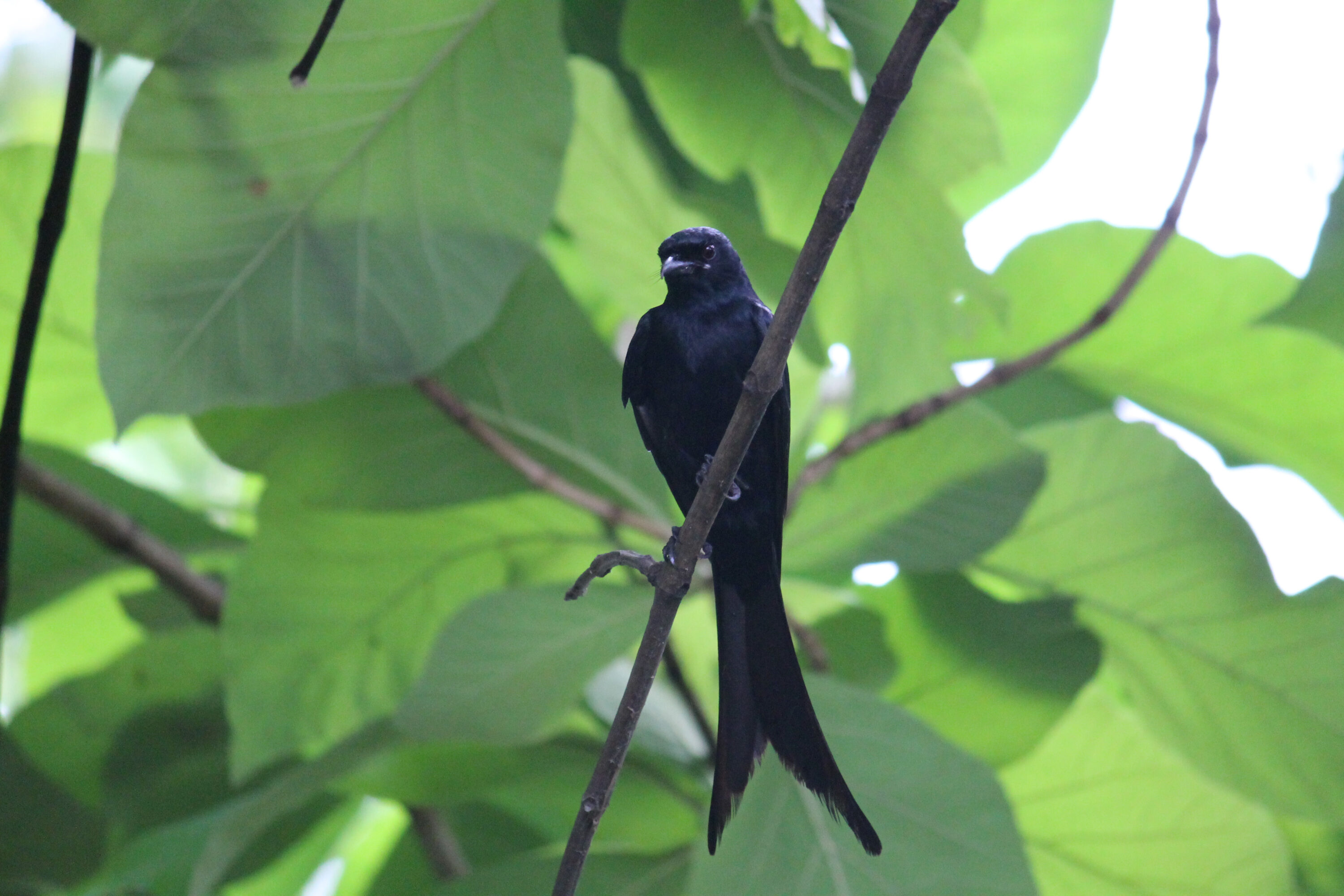
Black Drongo Index Showed Clear Long-term Increase in India, While Recent Trend Was Unclear
The 2025 State of India’s Birds update estimated a +48.5% long-term trend for black drongo in India, clearly…
Read story →SPECIES IN THIS STORY
Species in this story
Independent research and conservation news archive
Did you find this information useful?
Wildlife Vagabond is independently built and maintained. Voluntary support helps cover source verification, hosting and continued work on research and conservation news.
Support Wildlife VagabondThe news archive will remain freely available.