
More MHC Supertypes Did Not Generally Mean Fewer Blood-Parasite Infections in Bluethroats
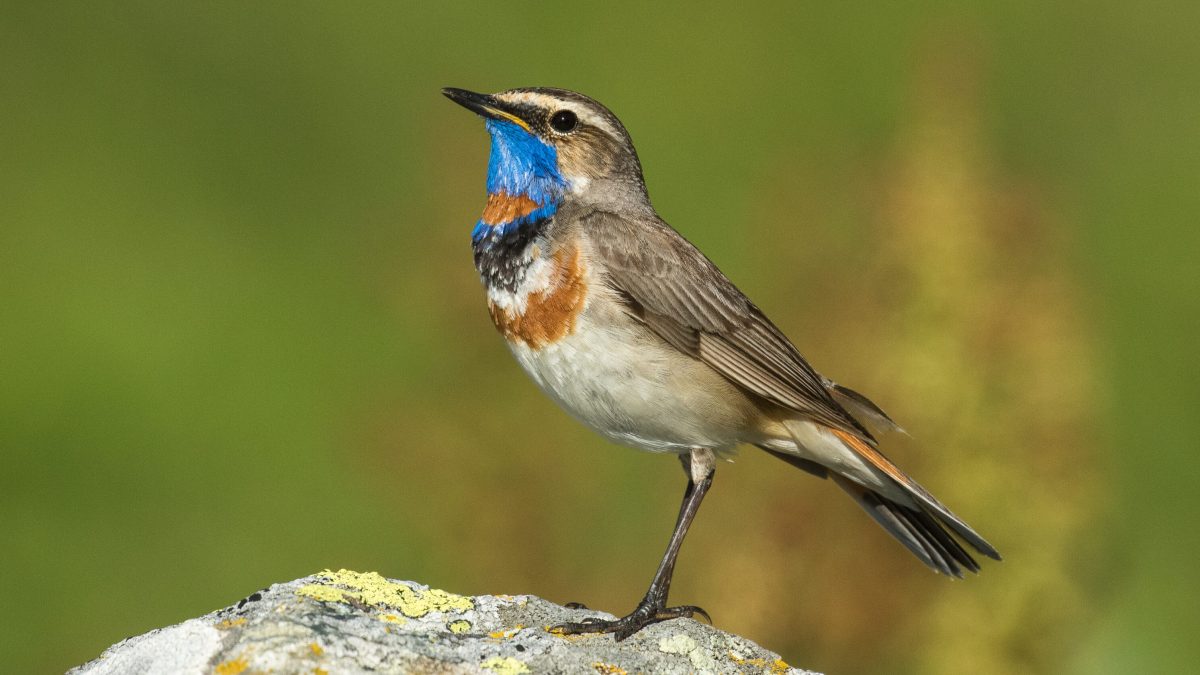
A 2026 study of European bluethroats (Luscinia svecica) found extensive diversity in immune-system genes, but birds carrying more MHC class I supertypes were not generally less likely to be infected by the blood parasites Plasmodium or Leucocytozoon. The result argues against a simple “more MHC diversity means fewer infections” relationship.
Plasmodium and Leucocytozoon are vector-borne, single-celled haemosporidian parasites. They infect blood cells and other tissues in birds and can reduce host condition through effects such as anaemia. Because immune genes determine how hosts recognise pathogens, these parasites provide a useful system for testing whether particular kinds of immunogenetic diversity are associated with infection.
MHC and TLR genes represent different parts of immunity
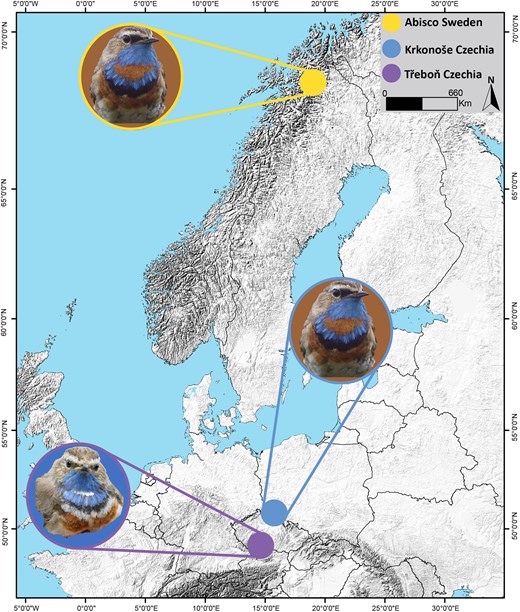
The researchers analysed 198 birds from three populations: 150 red-spotted bluethroats (L. s. svecica) from the Krkonoše Mountains in the Czech Republic, 24 red-spotted birds from Abisko in Sweden and 24 white-spotted bluethroats (L. s. cyanecula) from Třeboň in the Czech Republic.
They examined MHC class I exon 3 together with the Toll-like receptor genes TLR3 and TLR4. MHC class I molecules bind short fragments of proteins from inside cells and present them to immune cells, helping the adaptive immune system recognise infected or abnormal cells. Exon 3 forms part of the peptide-binding region, so variation there can change which pathogen-derived peptides an MHC molecule can present.
TLR3 and TLR4 belong to the innate immune system. Toll-like receptors recognise broad molecular patterns associated with pathogens rather than the highly specific antigen fragments recognised through MHC-mediated adaptive immunity.
172 MHC alleles were grouped into eight functional supertypes
Across the birds, the researchers identified 172 unique MHC class I exon 3 alleles. Because many different MHC alleles can bind chemically similar groups of peptides, the team also grouped alleles by predicted binding properties into eight “supertypes”. A supertype therefore represents a functional class of MHC variants rather than one particular DNA sequence.
Counting supertypes allowed the researchers to ask whether birds able to present a broader set of pathogen peptides were less likely to carry blood parasites. The infection analyses used 174 eligible birds, with a smaller set of 112 birds available for models that also included body condition and genome-wide genetic diversity.
More supertypes did not generally mean fewer infections
The number of MHC supertypes carried by an individual did not generally predict whether it was infected with Plasmodium or Leucocytozoon, nor did it consistently predict how many parasite genetic units were detected. Birds with relatively high and low MHC-supertype diversity had broadly similar probabilities of infection.
This does not mean that all MHC variants were biologically equivalent. A few associations occurred between particular supertypes and particular parasite lineages. The main result is that simply adding more functionally different MHC classes did not produce a cumulative, general reduction in infection.
Population identity was a stronger predictor of infection patterns. Plasmodium occurred in all three populations, whereas Leucocytozoon was detected in the two red-spotted populations but not in the white-spotted Třeboň birds. The authors argue that habitat, vector distributions and other ecological differences can therefore outweigh a simple effect of total MHC-supertype number.
TLR genes were conserved, while MHC showed opposing selection pressures
The evolutionary analyses showed strong signs of purifying selection in the TLR genes. Purifying selection removes amino-acid-changing mutations that reduce function, preserving a molecular structure that is important for recognising conserved pathogen signals. TLR4 showed especially strong evidence of this constraint.
MHC class I exon 3 showed a mixture of purifying and diversifying selection at different amino-acid positions. Diversifying selection favours different amino-acid variants when variation improves recognition of a changing range of pathogens, whereas purifying selection removes damaging changes. The combination fits the biological role of MHC: the molecule must remain functional while its peptide-binding region also benefits from diversity.
The study therefore found high immunogenetic diversity without a simple relationship between “more diversity” and lower haemosporidian infection. The authors conclude that parasite exposure is shaped by an interaction between particular immune variants, local parasite communities and ecological conditions rather than by MHC diversity alone.
Genetics & genomics
Related news

A Bluethroat’s Two Copies of Chromosome 35 Had Very Different MHC Structures
A genome study of a female bluethroat from Øvre Heimdalen in Norway found major differences in the number…
Read story →
Tracked L. s. namnetum Bluethroats Wintered in Western Iberia; One Reached 4,430 Metres Above Sea Level
Tracking of the range-restricted Bluethroat subspecies L. s. namnetum showed wintering in western Iberia; one multi-sensor bird migrated…
Read story →
Common Grasshopper Warblers and Eurasian Tree Sparrows Declined Sharply at a Portuguese Ringing Station
A 27-year Portuguese ringing study found declines in all five long-distance migrants; common grasshopper warblers now barely occur…
Read story →SPECIES IN THIS STORY
Species in this story

Independent research and conservation news archive
Did you find this information useful?
Wildlife Vagabond is independently built and maintained. Voluntary support helps cover source verification, hosting and continued work on research and conservation news.
Support Wildlife VagabondThe news archive will remain freely available.