
Tracked L. s. namnetum Bluethroats Wintered in Western Iberia; One Reached 4,430 Metres Above Sea Level

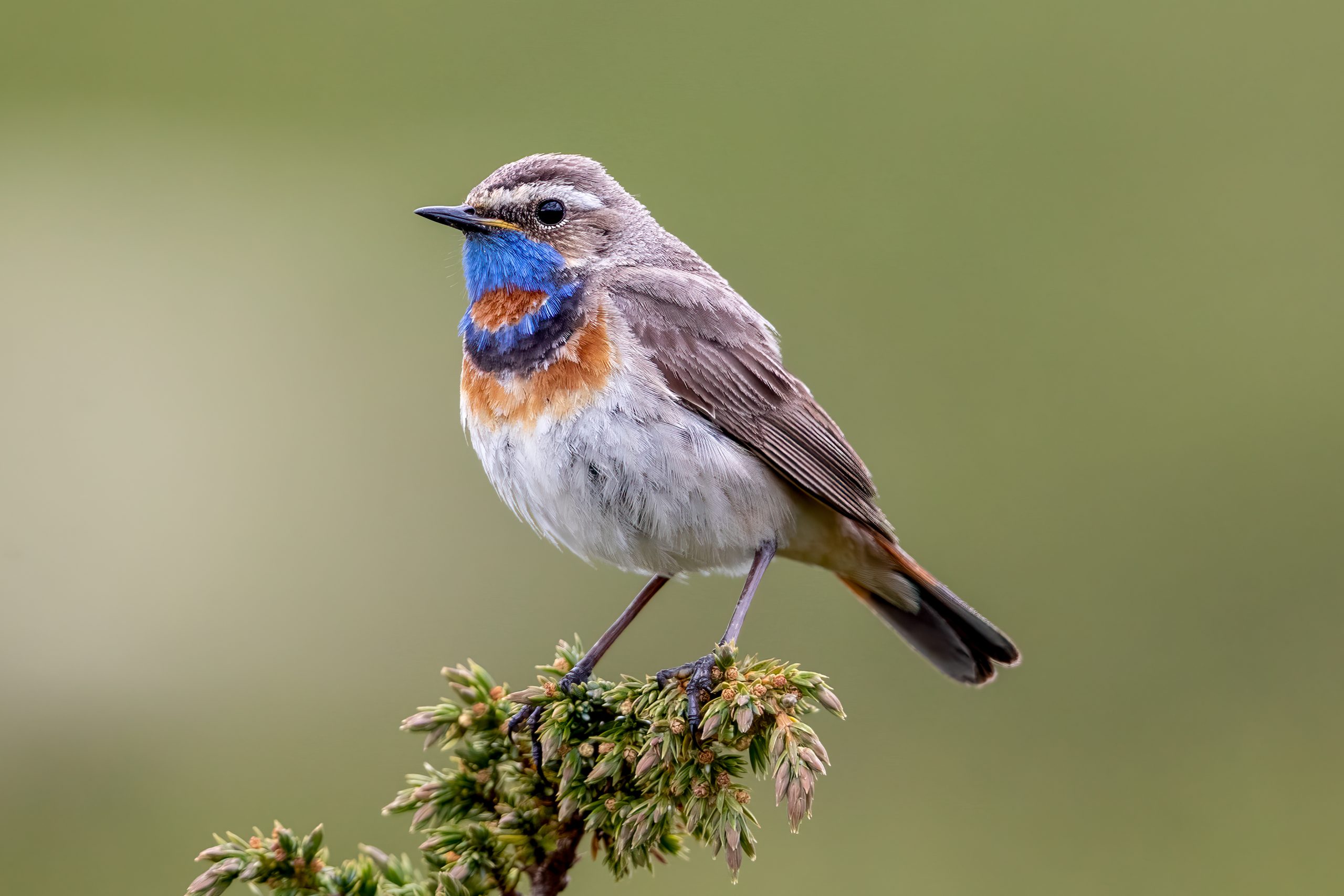
Tracking data published in 2026 provided the first full annual-cycle records for the range-restricted white-spotted bluethroat Luscinia svecica namnetum. Birds breeding in Charente-Maritime in western France migrated to the Iberian Peninsula, with four light-level geolocator birds broadly wintering in western Iberian coastal regions.
Light-level geolocators estimate broad position from sunrise and sunset timing and day length, while the newer multi-sensor loggers can add information such as activity and flight altitude.
Researchers fitted 31 males with light-level geolocators in 2016 and 2017 and another 20 males with multi-sensor loggers in 2024. Only five birds were recaptured in the following springs, but their tracks revealed migration timing, stopovers and wintering areas that had previously been poorly known for the subspecies.
The tracked bird crossed to western Iberia in seven flights
The bird carrying a multi-sensor logger left the breeding area in late August and reached southwestern Spain in seven flights. It spent about a month staging in central Spain at around 950 metres elevation before continuing to its wintering area in Andalucía. Its spring journey was faster and more direct, with three nocturnal flights in early March.
All ten recorded migratory flights of the bird carrying the multi-sensor logger occurred at night — seven in autumn and three in spring. The logger recorded flight altitudes reaching up to 4,430 metres above sea level while over land. The authors conclude that L. s. namnetum is a short-distance migrant that depends on a set of specific Iberian habitats, including southern and western wetlands and middle-elevation areas in central Spain, during different parts of its annual cycle.
Ecology
Related news

A Bluethroat’s Two Copies of Chromosome 35 Had Very Different MHC Structures
A genome study of a female bluethroat from Øvre Heimdalen in Norway found major differences in the number…
Read story →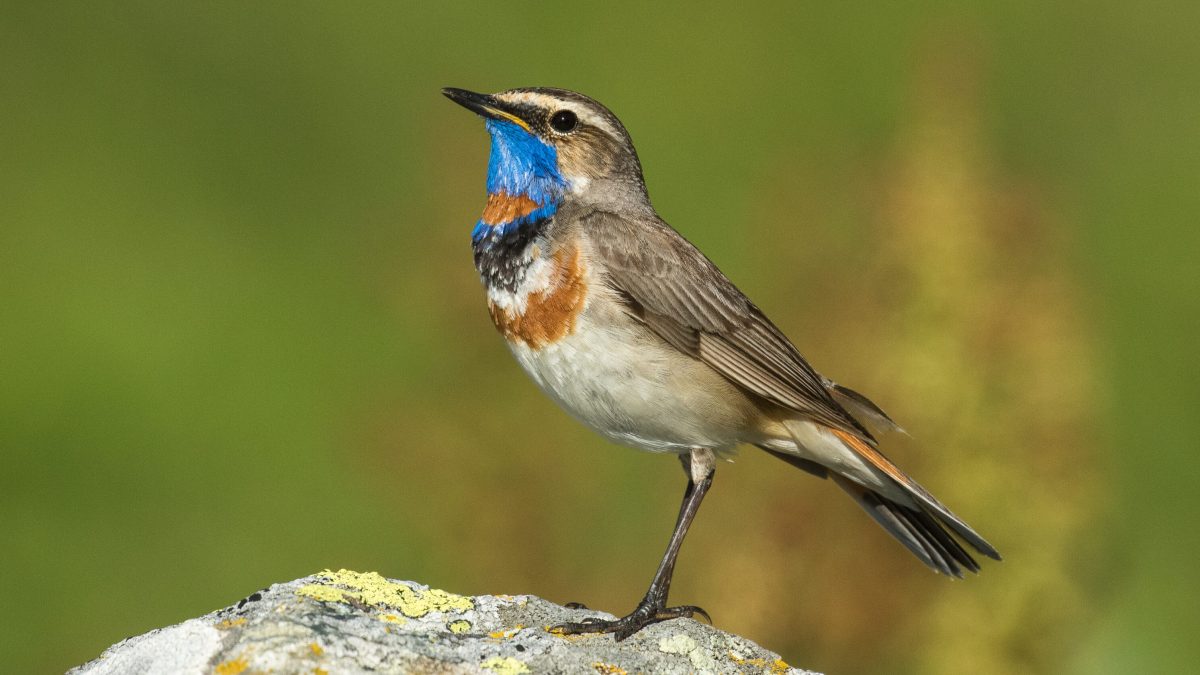
More MHC Supertypes Did Not Generally Mean Fewer Blood-Parasite Infections in Bluethroats
Among 198 European bluethroats, researchers found 172 MHC class I alleles and eight functional supertypes. Carrying more supertypes…
Read story →
Common Grasshopper Warblers and Eurasian Tree Sparrows Declined Sharply at a Portuguese Ringing Station
A 27-year Portuguese ringing study found declines in all five long-distance migrants; common grasshopper warblers now barely occur…
Read story →SPECIES IN THIS STORY
Species in this story
Independent research and conservation news archive
Did you find this information useful?
Wildlife Vagabond is independently built and maintained. Voluntary support helps cover source verification, hosting and continued work on research and conservation news.
Support Wildlife VagabondThe news archive will remain freely available.