
Body Reserves Predicted Apparent Survival During a Greenfinch Trichomonosis Outbreak
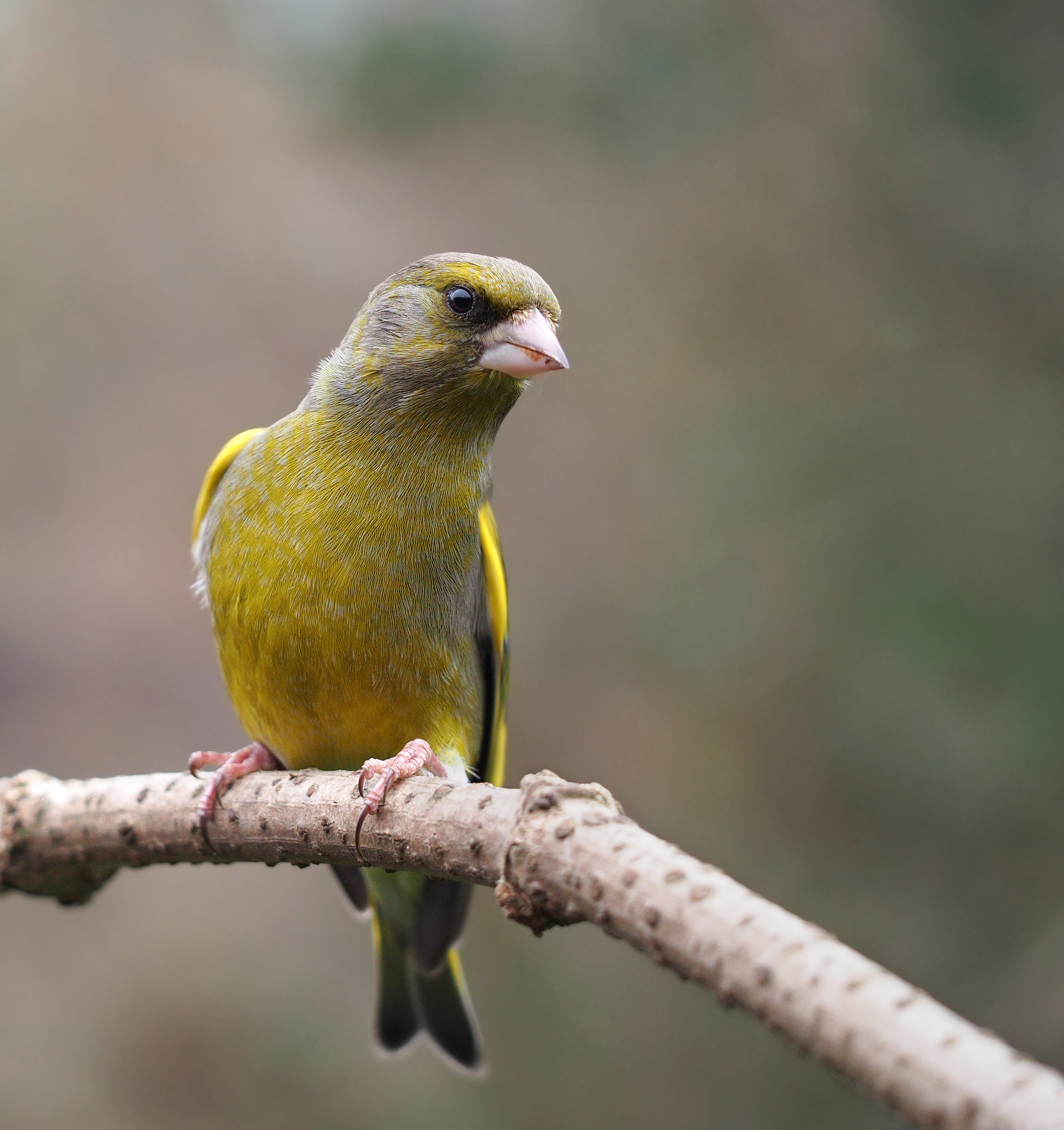
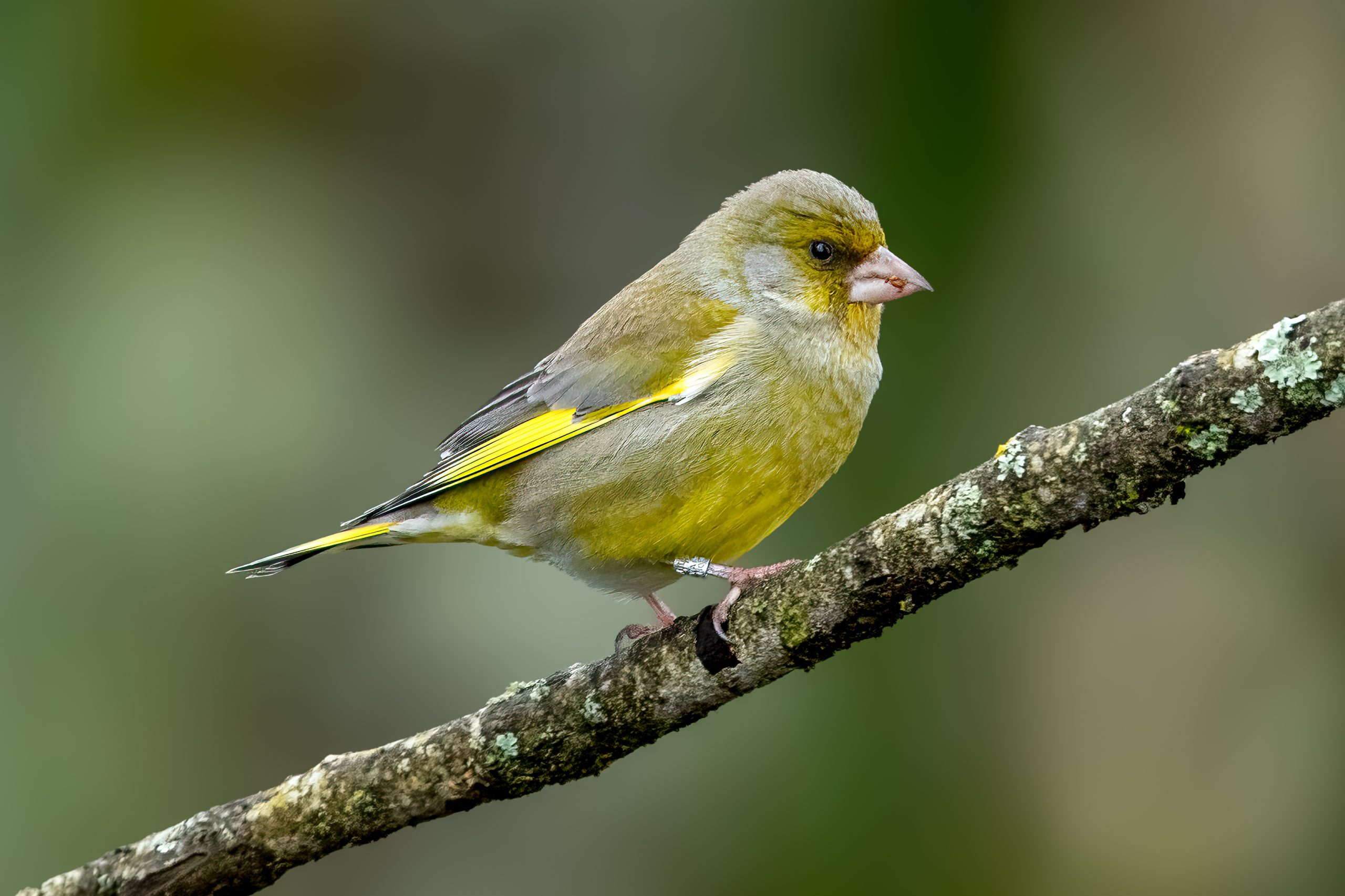
A study of 894 individually marked European greenfinches (Chloris chloris) found that the value of carrying extra body reserves changed sharply during a winter outbreak of trichomonosis. During the 2021 epidemic, birds in better body condition had a much higher probability of remaining alive and present until spring. In the two winters without an outbreak, the relationship between body condition and apparent survival was weakly negative.
The study was carried out around Krāslava in south-eastern Latvia during the winters of 2019–2021. Greenfinches were colour-ringed at feeding sites, and researchers recorded body mass, wing length, social dominance and flock size. Mass and wing length were combined into a body mass index (BMI), used as a size-adjusted proxy for body reserves rather than a direct measure of fat. The monitored population formed 52 winter flocks ranging from six to 360 birds. The 2021 outbreak was documented through increased mortality, widespread clinical signs and repeated detection of living Trichomonas gallinae parasites in oral and crop swabs.
Disease changed the value of body reserves
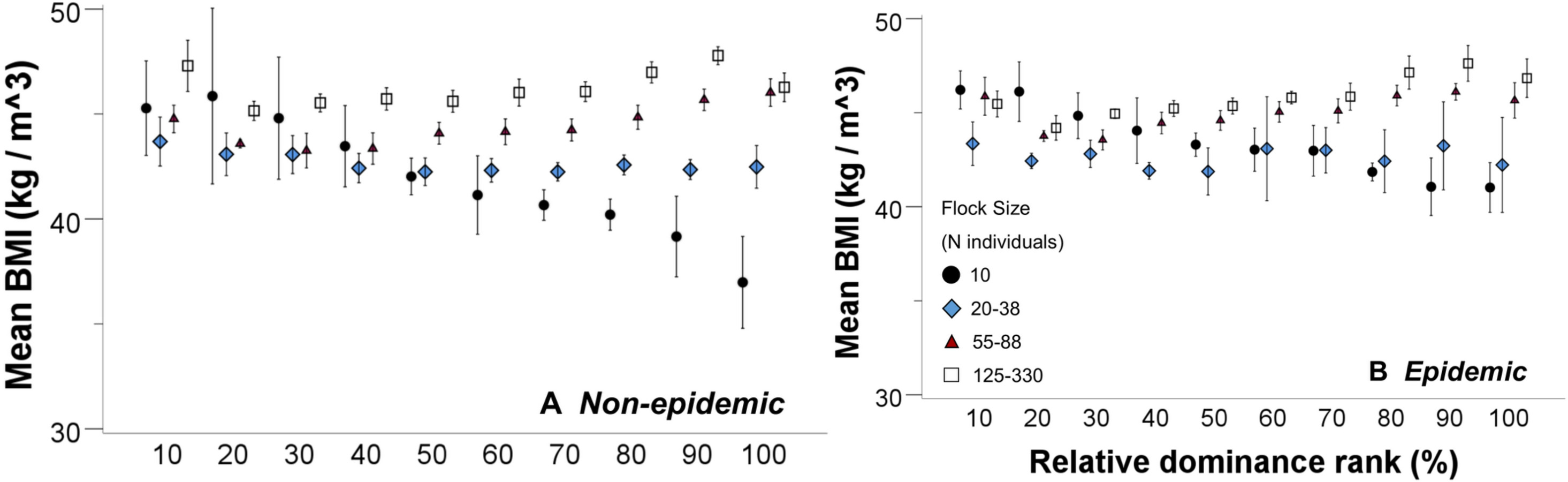
During the epidemic, higher BMI was strongly associated with higher apparent survival. Trichomonosis can interfere with swallowing and reduce food and water intake, so larger energy reserves may provide an important buffer while sick birds are eating less and losing condition.
Outside epidemic conditions, higher BMI instead showed a small negative association with survival. This fits a familiar winter trade-off in small birds: reserves can protect against food shortage, but carrying extra mass can also reduce manoeuvrability or increase vulnerability to predators. At the same time, birds that were heavier than expected for their structural size had better winter survival overall, suggesting that other somatic reserves, potentially including lean tissue, also mattered. The study therefore suggests that different kinds of stored energy can contribute to survival in different ways, depending on ecological and disease conditions.
Social rank and flock size also mattered
Higher-ranking birds had better apparent overwinter survival on average. Body condition was also related to dominance in a flock-size-dependent way: in medium-sized and very large flocks, dominant birds tended to maintain higher BMI than subordinates, whereas no clear rank-related difference was detected in smaller flocks. During the epidemic, this positive relationship weakened, especially in medium-sized flocks, indicating that disease altered how social advantage translated into energetic condition.
The study measured apparent survival
Survival was inferred from repeated resightings at feeding sites, so a bird that permanently left the study area could be counted as dead. Strong winter site fidelity makes this less likely, but the measure remains apparent rather than confirmed survival. Individual parasite load was also not measured for every bird, so the analysis compares an epidemic winter with two non-epidemic winters rather than proving that every missing or low-condition bird had trichomonosis. BMI is an imperfect proxy that cannot separate fat, muscle and immune condition, and predator abundance or hunting activity was not measured.
Within those limits, the study shows how an infectious-disease outbreak can change the balance between social rank, body reserves and winter survival. Energy reserves that may carry small costs in an ordinary winter became a strong predictor of persistence to spring when trichomonosis was widespread.
Disease, parasites & microbiology
Related news
Type A Trichomonas Was More Than Twice as Prevalent in British Birds at Supplementary-fed Sites
Type A of the bird parasite Trichomonas gallinae was more than twice as prevalent in British birds at…
Read story →
Feather Element Profiles Differed Between Farmland- and Forest-associated Songbirds
At one Polish winter feeding site, greenfinches and goldfinches showed wider variation in feather element profiles than two…
Read story →
Scientists Reject Live-Decoy Method for Counting Wild Finches
Thirty-three researchers argue that counts made with caged goldfinches, greenfinches and linnets cannot yield reliable population estimates and…
Read story →SPECIES IN THIS STORY
Species in this story
Independent research and conservation news archive
Did you find this information useful?
Wildlife Vagabond is independently built and maintained. Voluntary support helps cover source verification, hosting and continued work on research and conservation news.
Support Wildlife VagabondThe news archive will remain freely available.