
Broad-Area Culling Limited Fallow Deer Invasion More Effectively in Tasmanian Model
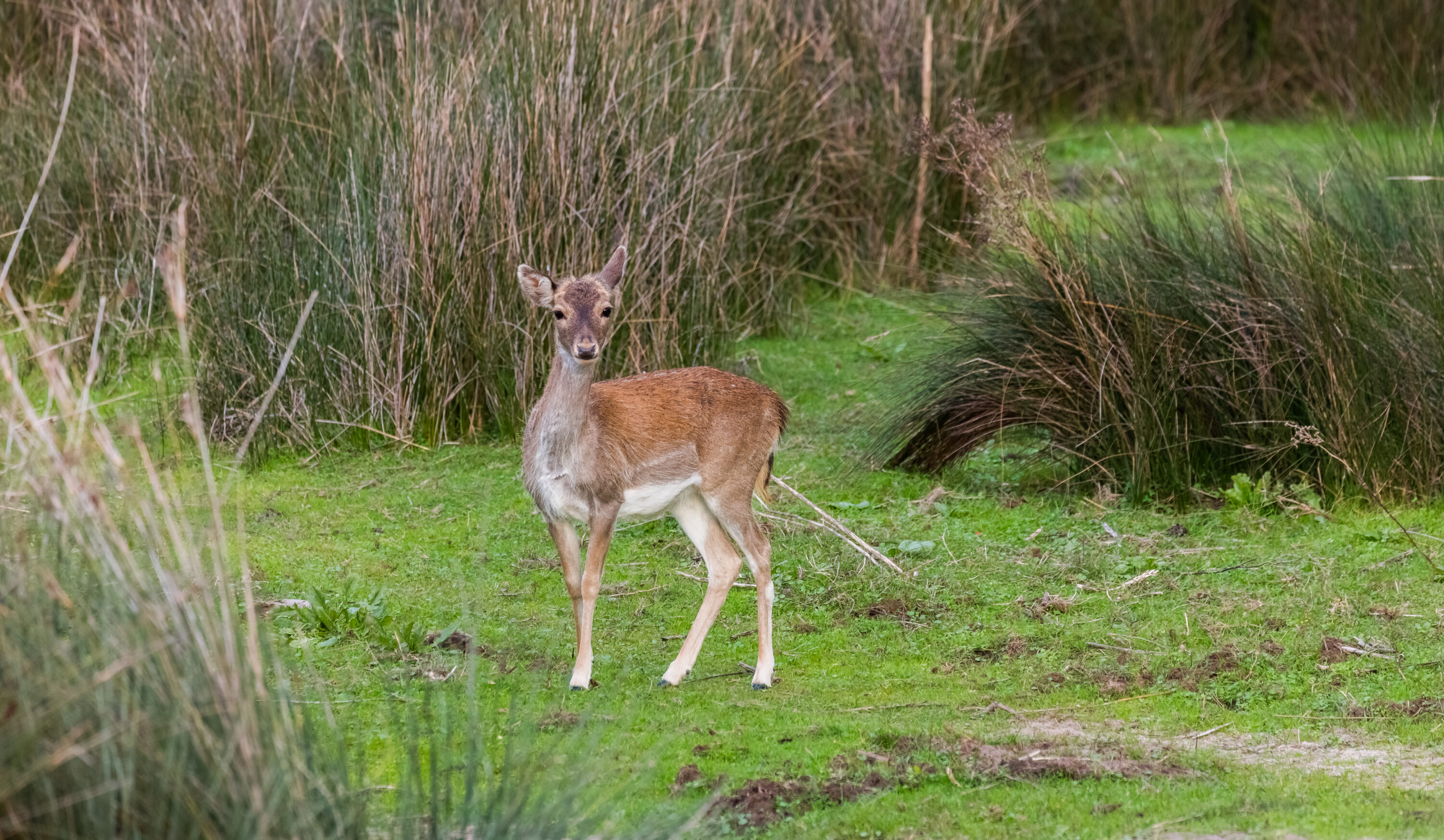
Modelling from Tasmania, Australia indicates that controlling European fallow deer (Dama dama) across a broad area around Walls of Jerusalem National Park would limit invasion more effectively than concentrating aerial culling only where deer densities are currently highest. The study compared six feasible management strategies through to 2060.
Researchers combined a spatially explicit population model with empirical data on the efficiency of aerial culling. The six scenarios paired annual, biennial or five-yearly culling with either a broad 1,056 km² management zone or a concentrated 425 km² zone, and were compared with a baseline in which no further management followed the May 2023 cull.
Broad-area control slowed invasion more effectively
The model began with no fallow deer inside the national park in 2023. Without further management, it projected more than 300 female deer in the park by 2060, with deer occupying about 52% of the park. All six management scenarios reduced invasion relative to this baseline, but the spatial extent of culling had a stronger effect than how frequently it was repeated. Broad-area culling every year or every two years produced the best balance between limiting invasion and management effort among the six feasible scenarios. Because these strategies suppressed the population earlier, they also resulted in fewer deer being culled over the full management period than less effective strategies.
More intensive control could prevent establishment
The researchers also tested a more intensive scenario designed to keep fallow deer completely out of the park. This required annual culling across an expanded 2,013 km² area and almost four times as much effort as the strategies aimed at minimising, rather than eliminating, invasion. The authors found that concentrating control only in the smaller high-density zone left an important pathway for deer to move toward the park from suitable habitat to the north-east.
Management
Related news
Male and Female Fallow Deer Followed Different Daily Schedules Outside the Rut
In 4,114 sexed camera-trap detections from a Dutch dune reserve, fallow deer favoured twilight and night. Outside the…
Read story →
Estimated M. bovis Seroprevalence Was 26.6% in Exmoor Red Deer
A survey of 432 wild deer in the Exmoor area estimated Mycobacterium bovis seroprevalence at 26.6% in red…
Read story →
Wild Deer Near Farmland Had Greater Strongyle Diversity in Victoria
Metabarcoding of 194 faecal samples from sambar, fallow and hog deer in Victoria detected 11 strongyle taxa. Deer…
Read story →SPECIES IN THIS STORY
Species in this story

Independent research and conservation news archive
Did you find this information useful?
Wildlife Vagabond is independently built and maintained. Voluntary support helps cover source verification, hosting and continued work on research and conservation news.
Support Wildlife VagabondThe news archive will remain freely available.