
Global Phylogeny Supported Little Heron as a Separate Old World Species
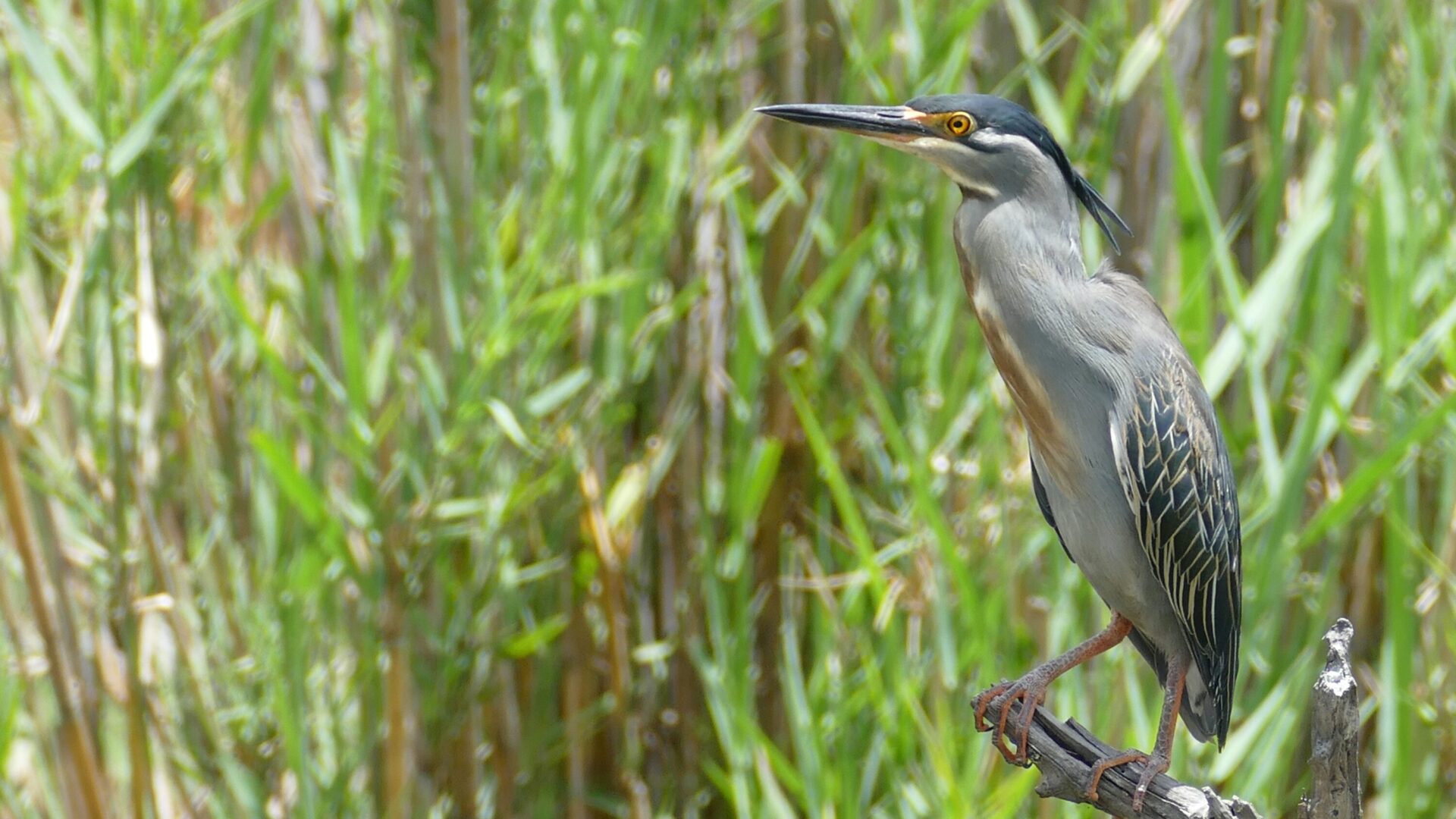
A global analysis of Butorides herons has provided new genetic and morphological support for treating the little heron (Butorides atricapilla) as a species distinct from the South American striated heron (B. striata). The study was first published online in March 2026 in Molecular Phylogenetics and Evolution.
The researchers reconstructed relationships within the genus using thousands of ultraconserved elements, regions of the genome that can be compared across distantly related populations. They combined these data with morphological measurements from 308 live and preserved specimens drawn from across the broad distribution of Butorides.
Nuclear genomes separated Old World and New World lineages
The nuclear genomic data revealed a clear biogeographic division between Old World and New World lineages. The results supported splitting the former broadly defined striated heron complex into the South American B. striata, the Old World little heron B. atricapilla and the Galápagos lava heron B. sundevalli. All sampled lava herons grouped together as a single evolutionary lineage, which was sister to green herons rather than falling within South American striated herons.
The mitochondrial DNA did not reproduce every relationship seen in the nuclear genome, a pattern known as mito-nuclear discordance. The study therefore shows why taxonomic conclusions in this group benefit from combining different genetic datasets with morphology rather than relying on a single genetic marker.
Morphology supported the species split
Morphological comparisons added further evidence. Lava herons differed in bill dimensions from related populations, and Galápagos birds with a more striated-heron-like appearance still matched lava herons genetically and in culmen length, the length of the upper bill. Together with the broader genetic structure, this showed that the old worldwide use of the name B. striata concealed several evolutionarily distinct lineages. The results therefore support the recent taxonomic treatment in which little heron covers the Old World populations formerly included within the much broader striated heron.
Evolution & taxonomy
Related news
mFISH Mapped 16 of 22 Rhesus Macaque Chromosome Types to a Single Human Chromosome
Human chromosome-painting probes showed one-to-one homology for 16 of 22 rhesus macaque chromosome types, while three macaque chromosomes…
Read story →
DNA Methylation Shifted as Namibian Male Cheetahs Became Territorial
Paired blood samples from ten free-ranging Namibian males revealed widespread, predominantly increased DNA methylation after the same cheetahs…
Read story →
Zoonotic Sarcocystis Found in 3.3% of Polish Wild Boar Hunted for Food
Molecular testing of 241 wild boar from all 16 Polish provinces found Sarcocystis miescheriana DNA in 90% and…
Read story →SPECIES IN THIS STORY
Species in this story

Independent research and conservation news archive
Did you find this information useful?
Wildlife Vagabond is independently built and maintained. Voluntary support helps cover source verification, hosting and continued work on research and conservation news.
Support Wildlife VagabondThe news archive will remain freely available.