
Common Murres Had Higher Blood Mercury in 2022 as Foraging Shifted Closer to Shore and Seafloor

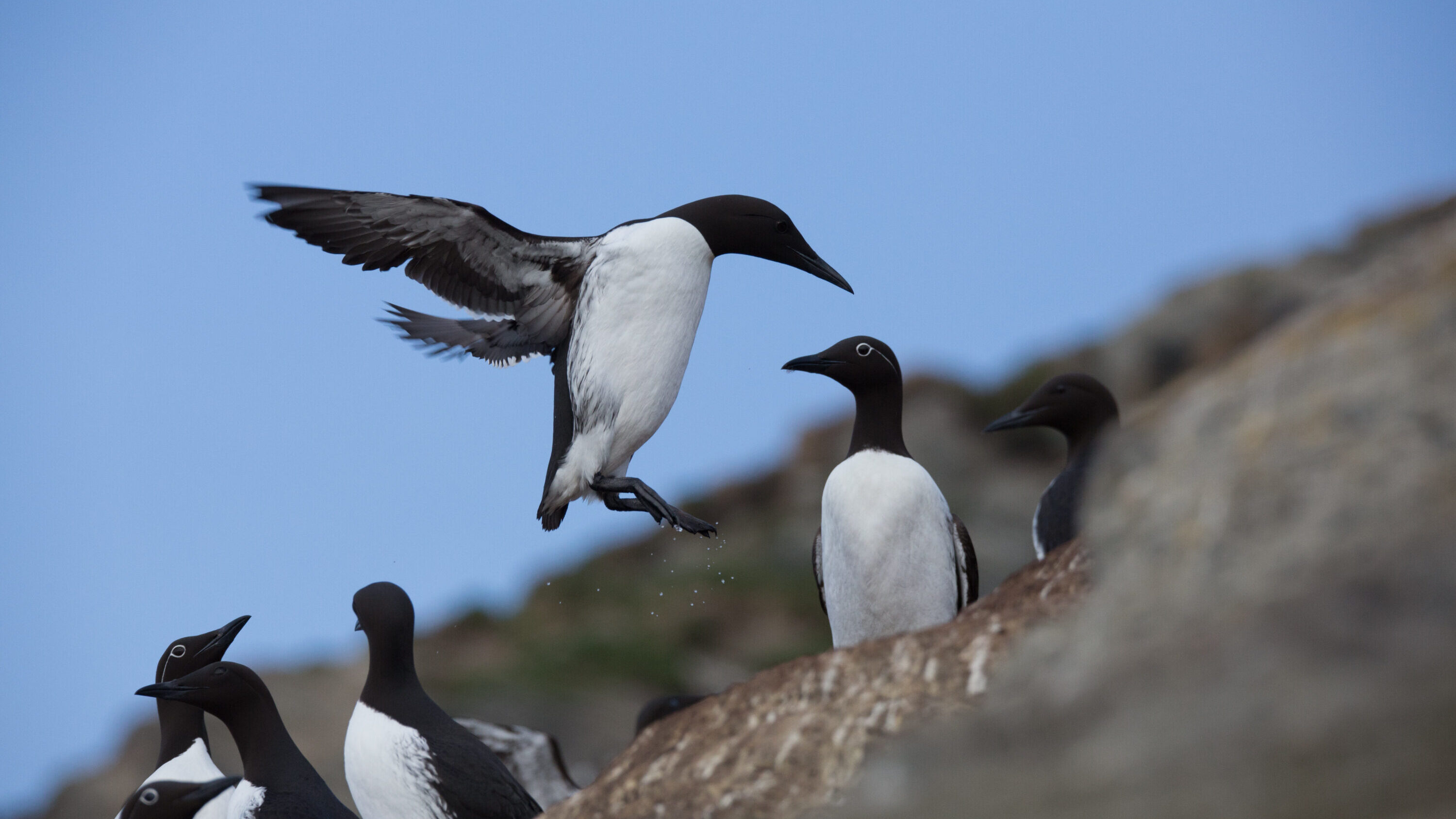
Adult common murres (Uria aalge) raising chicks in the Gulf of St. Lawrence had markedly higher mercury concentrations in their red blood cells in 2022 than in 2021. The same year, the birds changed how and where they foraged: they fed at a higher trophic level, used more coastal and benthic — seafloor-associated — habitat, dived more shallowly and foraged closer to both shore and the seabed.
The researchers combined red-blood-cell mercury measurements with GPS tracking, time-depth recorders and stable-isotope analyses during the two breeding seasons. Red blood cells reflect relatively recent dietary mercury exposure. GPS showed where the birds travelled, while time-depth recorders logged their diving behaviour.
Blood mercury was clearly higher in 2022
Red-blood-cell mercury concentrations ranged from 0.388 to 0.720 µg/g wet weight in 2021 and from 0.774 to 1.12 µg/g in 2022. The two annual ranges did not overlap, and the statistical analysis supported a clear year difference.
The study therefore shows that mercury exposure in the same breeding population can change substantially between consecutive chick-rearing seasons rather than remaining at a stable background level.
Foraging shifted toward coastal and benthic food webs
The tracking data showed that murres foraged closer to shore and closer to the seafloor in 2022 and made shallower dives. Stable isotopes independently supported the same ecological shift. A higher nitrogen-isotope signal indicated feeding at a higher trophic position, while the carbon- and sulfur-isotope signals were consistent with greater use of coastal and benthic food webs.
Stable isotopes are chemical signatures incorporated from food. They do not identify every prey item directly, but they can show broad differences in trophic level and feeding habitat that complement the fine-scale movement information from the tracking devices.
Closer-to-shore feeding was not proven to be the sole cause
The higher mercury concentrations and the foraging shift occurred in the same year, but the study does not show that moving closer to shore alone caused the increase. The authors interpret the 2022 exposure as potentially reflecting both the birds’ altered trophic and habitat use and year-to-year changes in how much mercury was environmentally available to the food web.
The results therefore highlight strong interannual variation in contaminant exposure. Combining blood measurements with movement, diving and isotope data helps distinguish changes in a predator’s feeding ecology from broader environmental changes when interpreting why mercury exposure rises or falls between years.
Ecology
Related news
Negative Link Between Spring Capelin Landings and Adult Survival Was Supported Only for Hjelmsøya Common Murres
Across eight Barents Sea seabird populations, a direct negative association between spring capelin landings and overwinter adult survival…
Read story →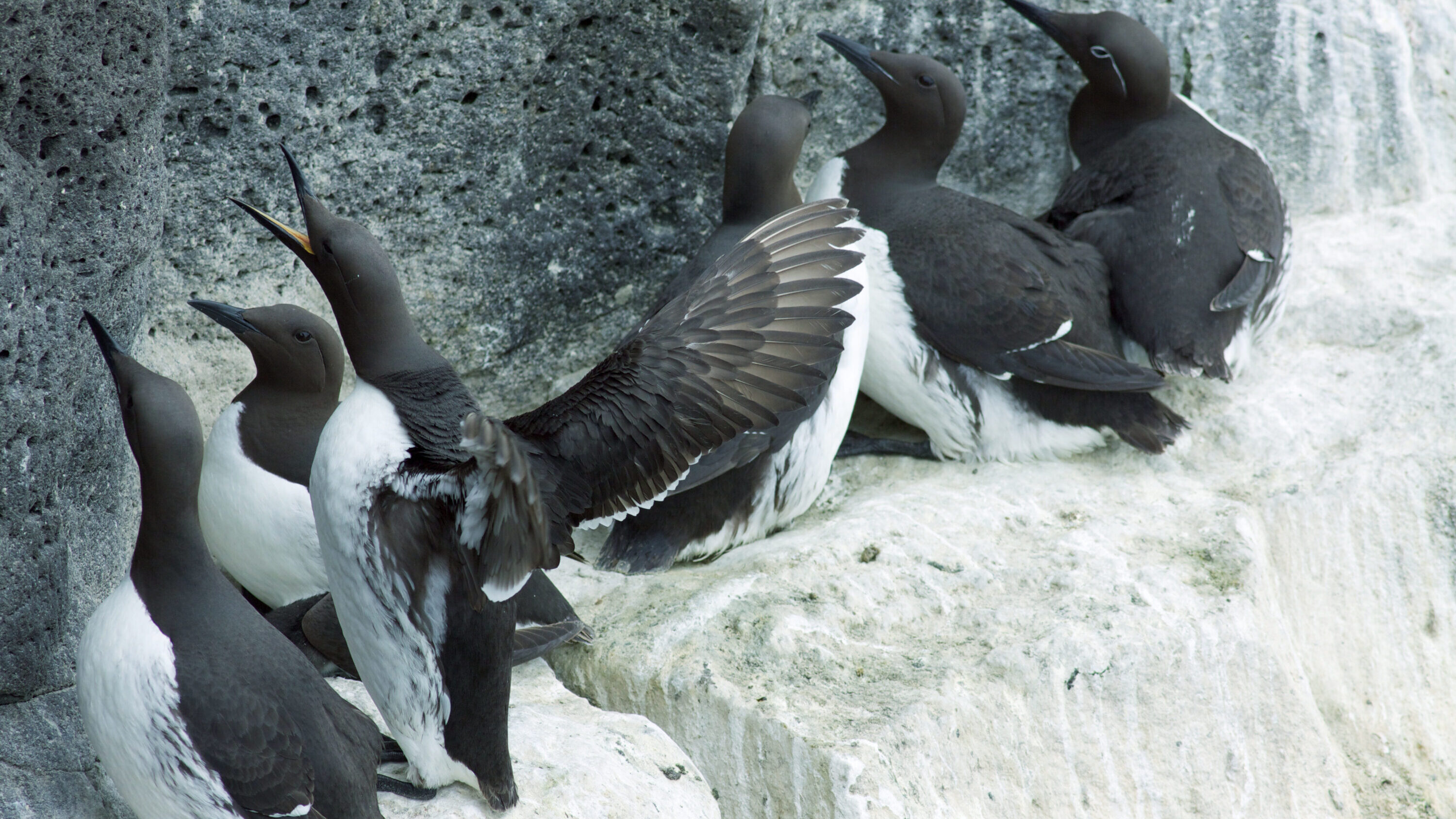
Water Masses and Foraging Structured PFAS Variability in Icelandic Common and Thick-billed Murres
Plasma from 67 common murres and 45 thick-billed murres showed that PFOS variability was strongest in Atlantic-influenced waters,…
Read story →
Common Murre Numbers in Bjørnøya Monitoring Plots Grew About 2% a Year From 2015 to 2025
Updated Norwegian Polar Institute monitoring shows about 2% annual growth in Bjørnøya common murre plots from 2015 to…
Read story →SPECIES IN THIS STORY
Species in this story

Independent research and conservation news archive
Did you find this information useful?
Wildlife Vagabond is independently built and maintained. Voluntary support helps cover source verification, hosting and continued work on research and conservation news.
Support Wildlife VagabondThe news archive will remain freely available.