
Cyprus Grass Snakes Were Detected Mainly After Sunset in Summer Surveys
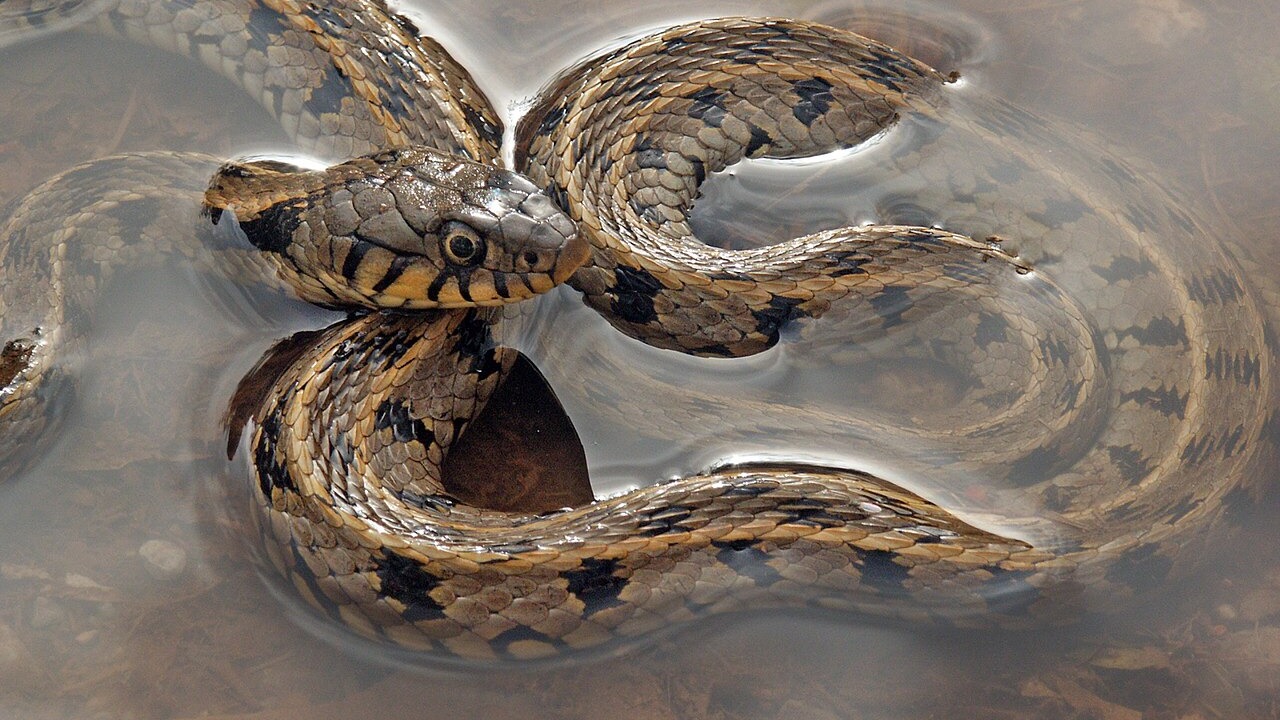
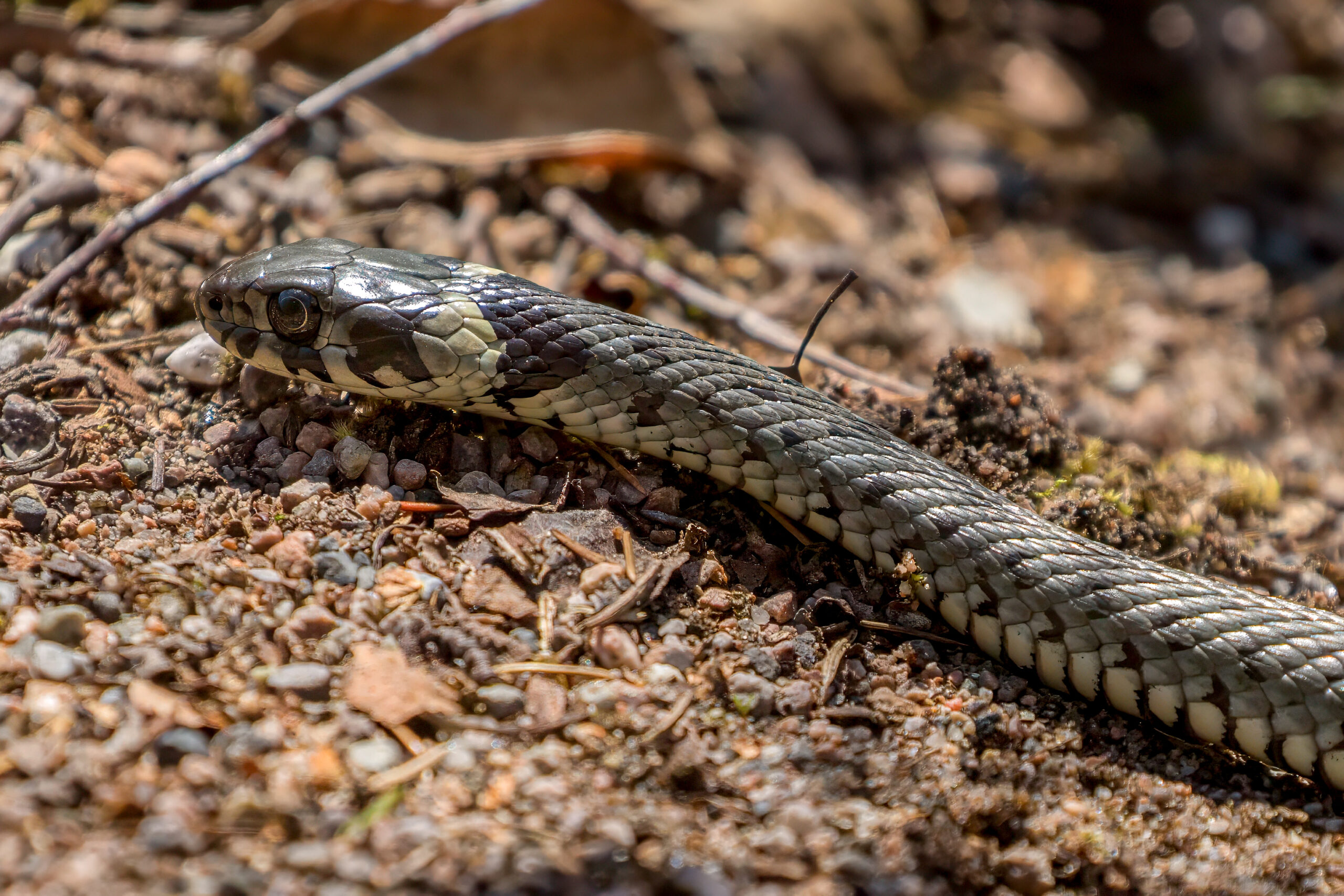
Grass snakes of the Cyprus population (Natrix natrix moreotica) were detected mainly during evening surveys in a 2023 study of the vulnerable lowland population around Paralimni and Ayia Napa. The study, published on 18 March 2026, recorded 18 individual snakes, 13 of them during evening surveys and five during morning surveys.
A transect is a predefined line or route used to survey an area systematically, with observations, signs or sampling points recorded along it.
The researchers first mapped 52 possible transects and selected the 20 most promising for repeated monitoring between March and October. Seventeen transects were around Paralimni and three near Ayia Napa. In total, the team conducted 52 morning transect surveys between 06:00 and 13:00 and 14 evening surveys between 17:00 and 23:00.
Most sightings came between 19:00 and 22:00
Evening searches produced roughly ten times as many snake observations per day of survey effort as morning searches. Most observations were made between 19:00 and 22:00, around and after sunset. Evening observations included snakes swimming, hunting and moving in and out of the water.
The authors conclude that Cyprus grass snakes in the lowlands adopt a nocturnal activity strategy during summer. They suggest that several factors may contribute: daytime heat and aridity can constrain thermoregulation, amphibian prey are more active around dusk, and evening activity may reduce exposure to diurnal predators and human disturbance. The scarcity of records from this population may therefore partly reflect the methods traditionally used to search for the snakes, rather than only the species’ elusiveness.
The comparison had an important limitation
The researchers note that the study did not use morning and evening surveys equally throughout the season. The first part of the field period was spent assessing possible sites, and evening transects were introduced only later in the summer. They therefore recommend that future monitoring use standardised nocturnal surveys to test the pattern more systematically.
A fragmented population under pressure
Snake presence was recorded on only four of the 20 repeatedly surveyed transects. The lowland population occupies a highly urbanised and fragmented landscape, with pressures including water extraction, drought, roads, fences, agriculture, hunters and tourism. The authors point out that these barriers can also restrict movements between suitable water bodies.
Behaviour
Related news
Coiled Grass Snake Models Had Higher Estimated Daily Survival on a Gravel Road
In a Hungarian experiment with 240 plasticine grass snake models, coiled postures had higher estimated daily survival on…
Read story →
Introduced Grass Snake Ancestry Has Mixed Into Native Berlin Populations
Genetic analyses of Berlin grass snakes found introduced Natrix natrix moreotica ancestry mixed into the native subspecies, while…
Read story →
Larger Grass Snakes Took Larger Prey, While Fish Were Proportionally Larger Than Frogs
Among 39 grass snakes from a historical Plovdiv dataset, larger snakes contained larger prey. Frog size tracked snake…
Read story →SPECIES IN THIS STORY
Species in this story
Independent research and conservation news archive
Did you find this information useful?
Wildlife Vagabond is independently built and maintained. Voluntary support helps cover source verification, hosting and continued work on research and conservation news.
Support Wildlife VagabondThe news archive will remain freely available.