
European Honey-buzzards Tracked from Germany Used Flexible Routes to Africa
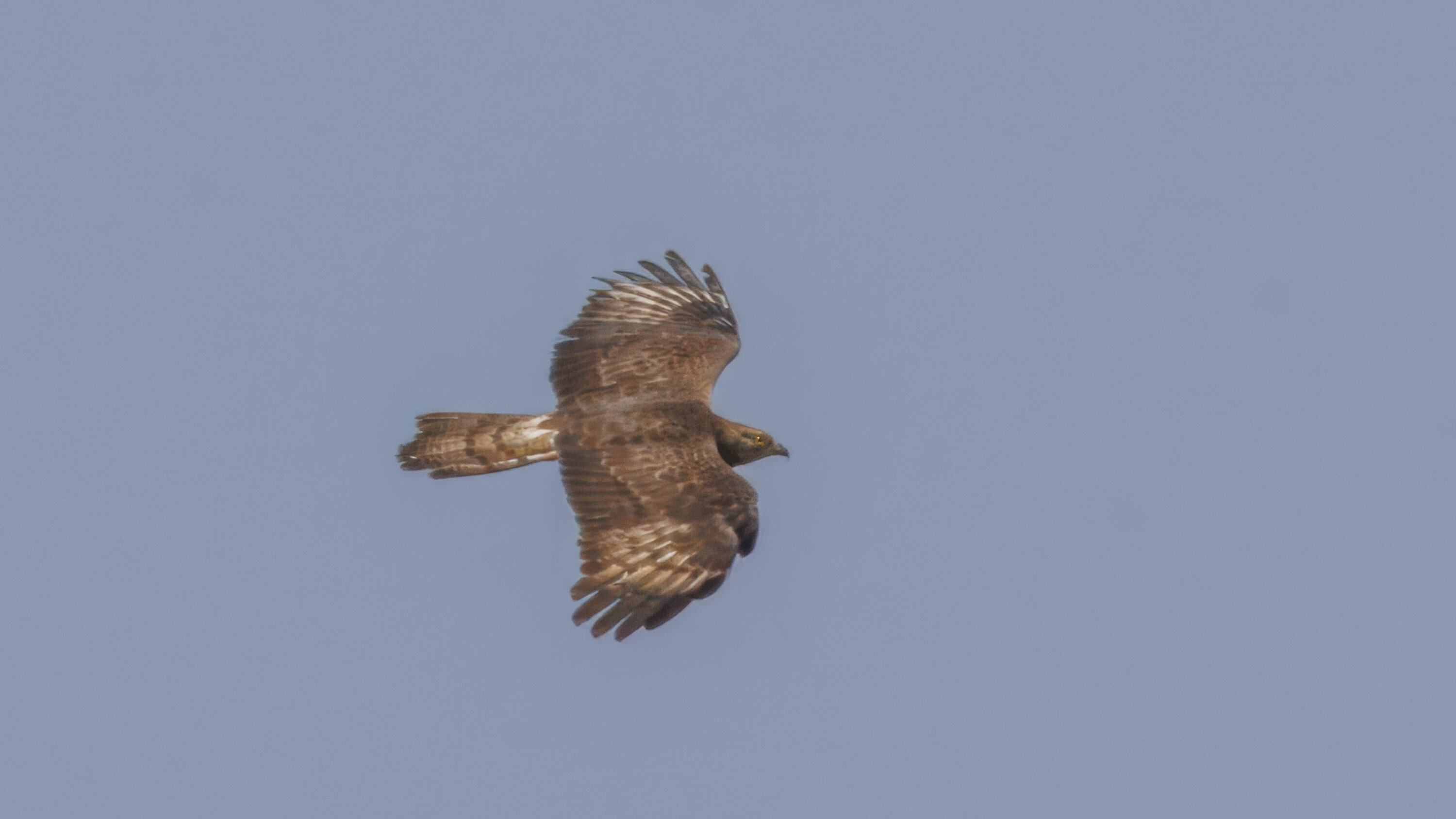
Twelve adult European honey-buzzards (Pernis apivorus) breeding in Germany were followed by satellite telemetry for up to five years in a study published in 2026. The birds were tagged between 2001 and 2011. Eight reached identified wintering areas in West and Central Africa, recorded in Liberia, Nigeria, Cameroon, Gabon and the Republic of the Congo.
Autumn routes generally ran through France and Spain. In 13 of 20 recorded autumn migrations, involving nine birds, the honey-buzzards crossed the western third of the Pyrenees. Ten birds used the Strait of Gibraltar in 16 migrations, while two birds made three longer crossings over the Mediterranean. Routes were not fixed: individual birds could use different paths in different years, and spring routes generally lay farther east than autumn routes.
The distances between breeding and wintering areas ranged from 6,128 km for a bird wintering in Liberia to 8,645 km for one reaching the Republic of the Congo. Autumn migration lasted 36–99 days and spring migration 23–55 days. Birds covered up to 600 km in a day and reached a maximum recorded speed of 109 km/h.
Females left the breeding area about eight days earlier than males. Four individuals returned to the same wintering area in consecutive years, in some cases across as many as four winters. The researchers also calculated small winter home ranges for two birds from GPS fixes.
Ecology
Related news
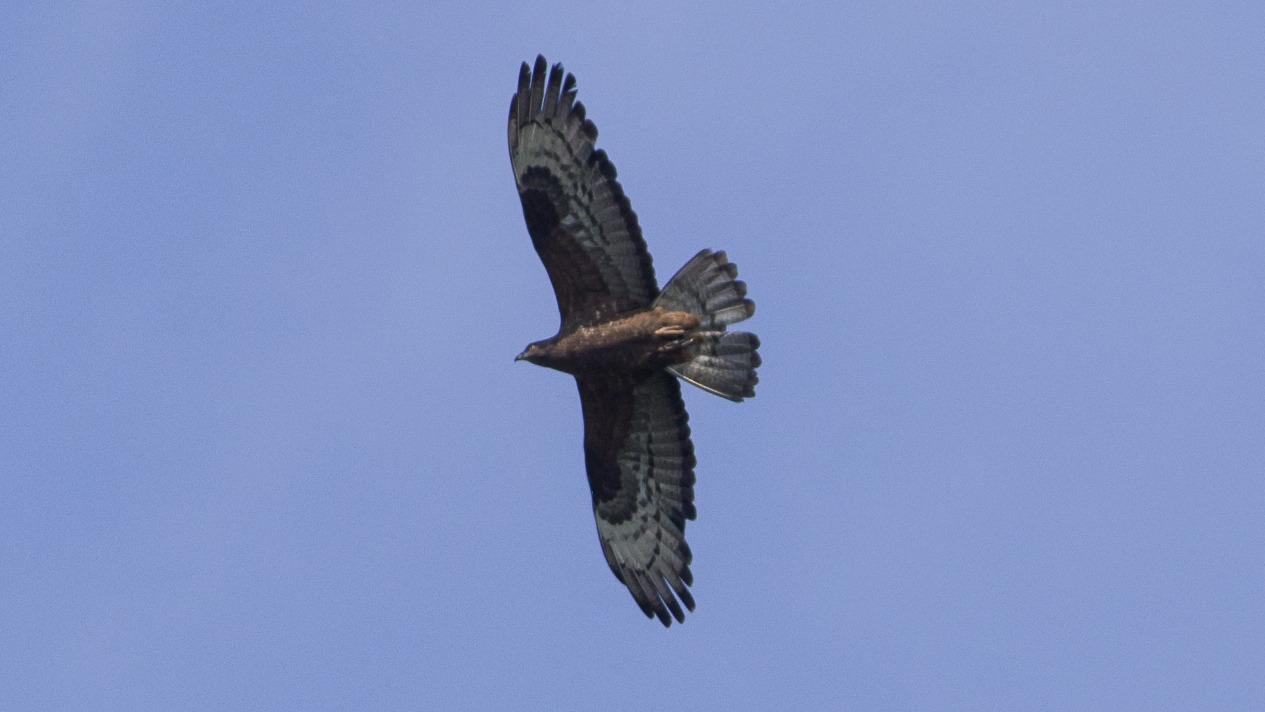
Five European Honey-buzzards from One Polish Population Used Four Migration Flyways
Five adult male European honey-buzzards breeding within 60 km of one another in north-eastern Poland used four distinct…
Read story →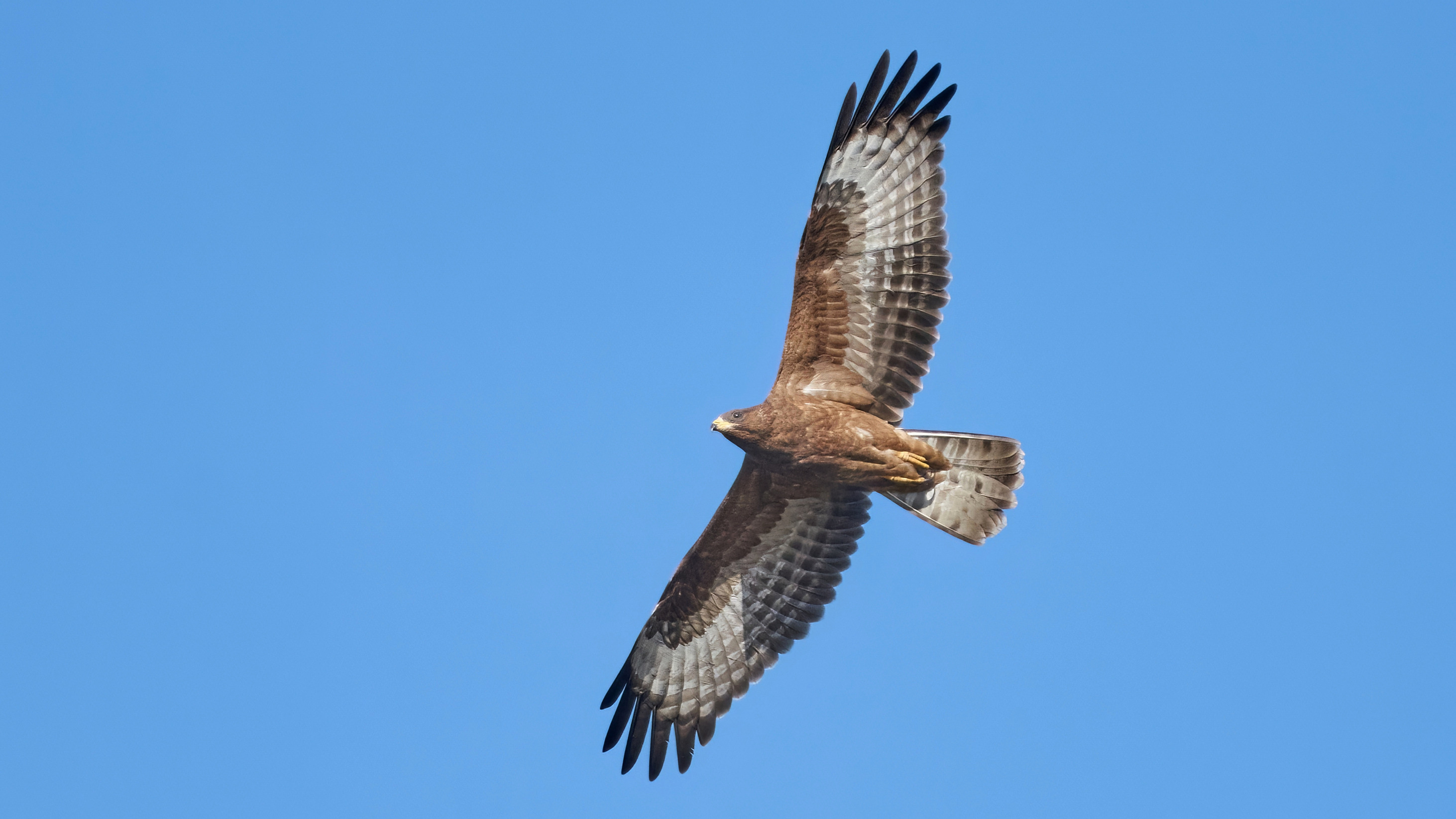
European Honey-buzzards Dominated Batumi’s Early Count as the Raw Total Passed 500,000
Batumi Raptor Count passed 500,000 raw raptor detections on 3 September after three days above 90,000 birds; European…
Read story →
Camera Traps Recorded Six Passerine Nest Raids by Male European Honey-buzzards
Camera monitoring of 147 passerine nests in the Voronezh Nature Reserve recorded male European honey-buzzards raiding six nests—4.1%…
Read story →SPECIES IN THIS STORY
Species in this story

Independent research and conservation news archive
Did you find this information useful?
Wildlife Vagabond is independently built and maintained. Voluntary support helps cover source verification, hosting and continued work on research and conservation news.
Support Wildlife VagabondThe news archive will remain freely available.