
Estimated European Fallow Deer Density on Rhodes Was Highest in Mixed Habitats
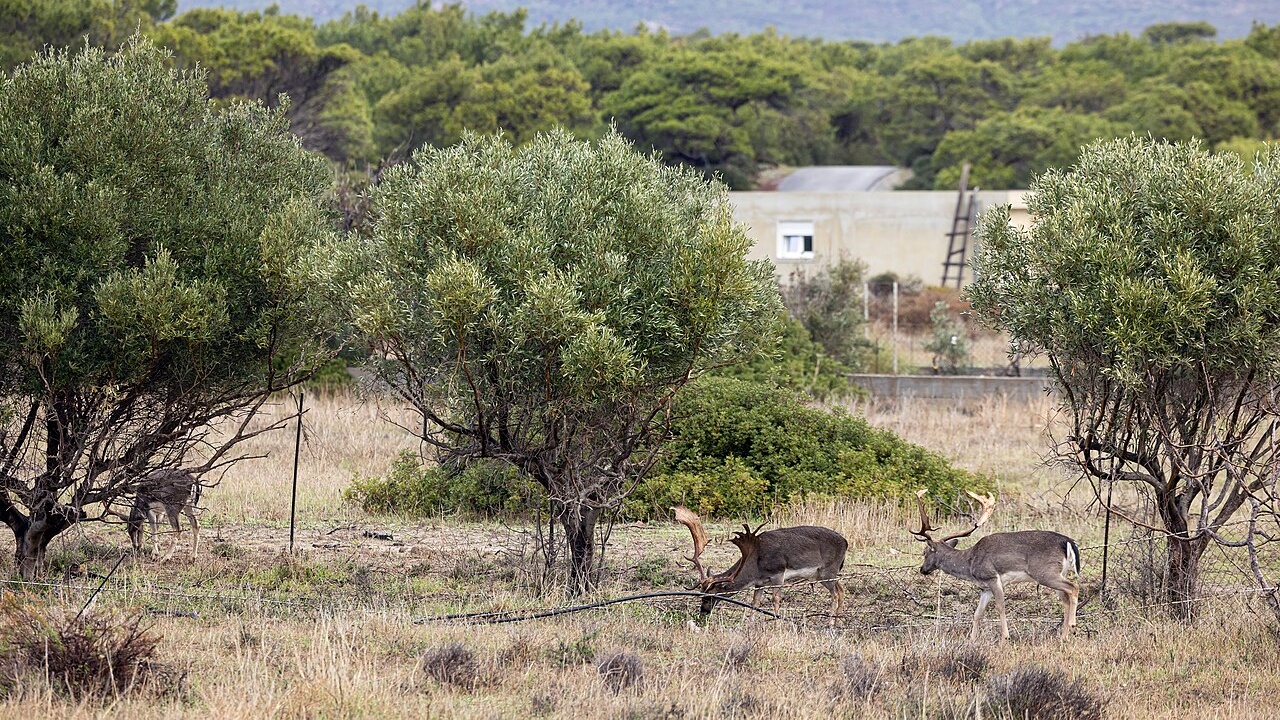
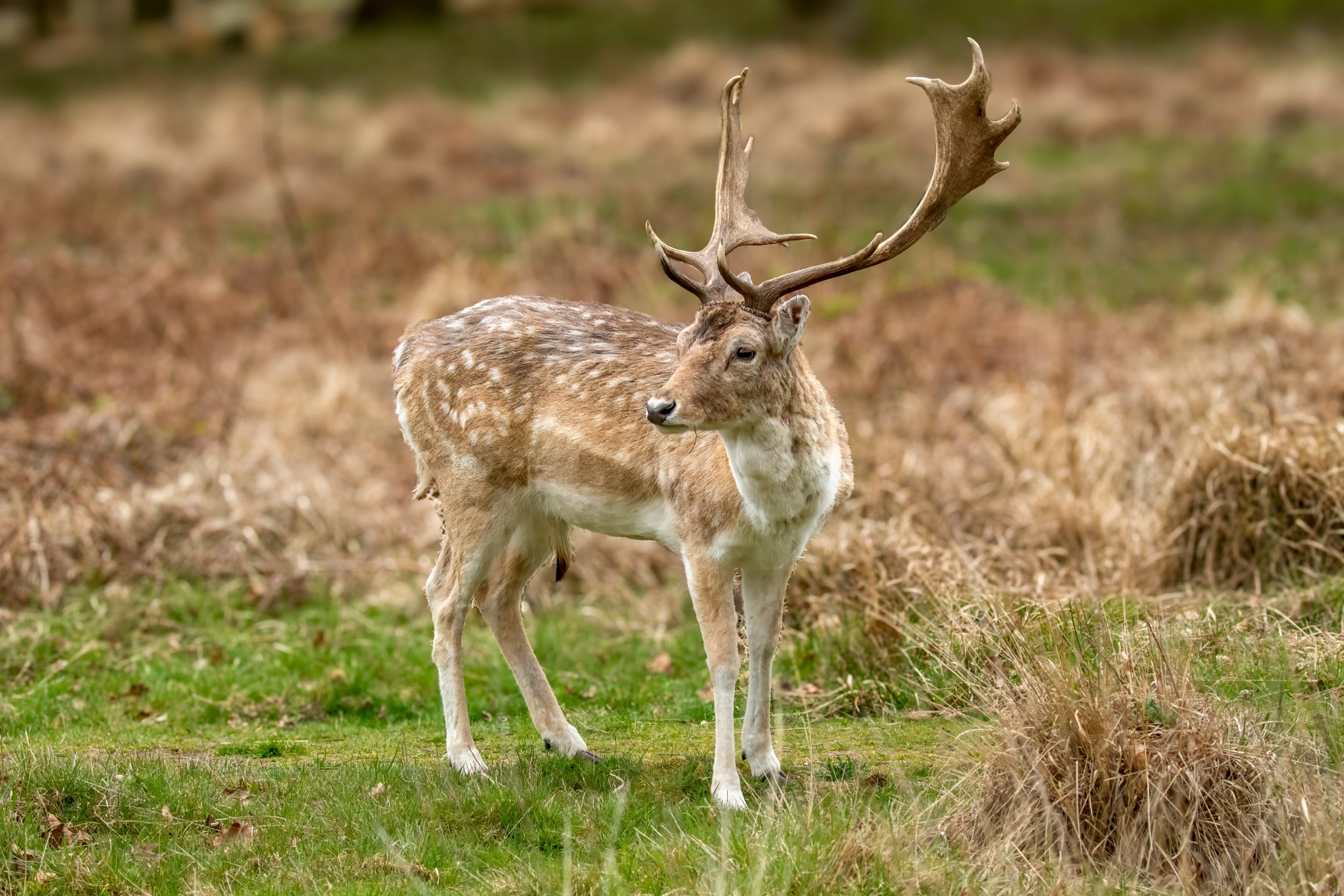
A study of European fallow deer (Dama dama) on Rhodes, Greece, found that estimated deer density was consistently highest in mixed habitats, where cultivated fields and olive groves form a mosaic with natural vegetation. Across four direct and indirect survey approaches, estimates in these habitats ranged from 7.85 to 10 individuals per km², compared with 2.24–2.64 per km² in shrublands and 0.65–2.96 per km² in forests.
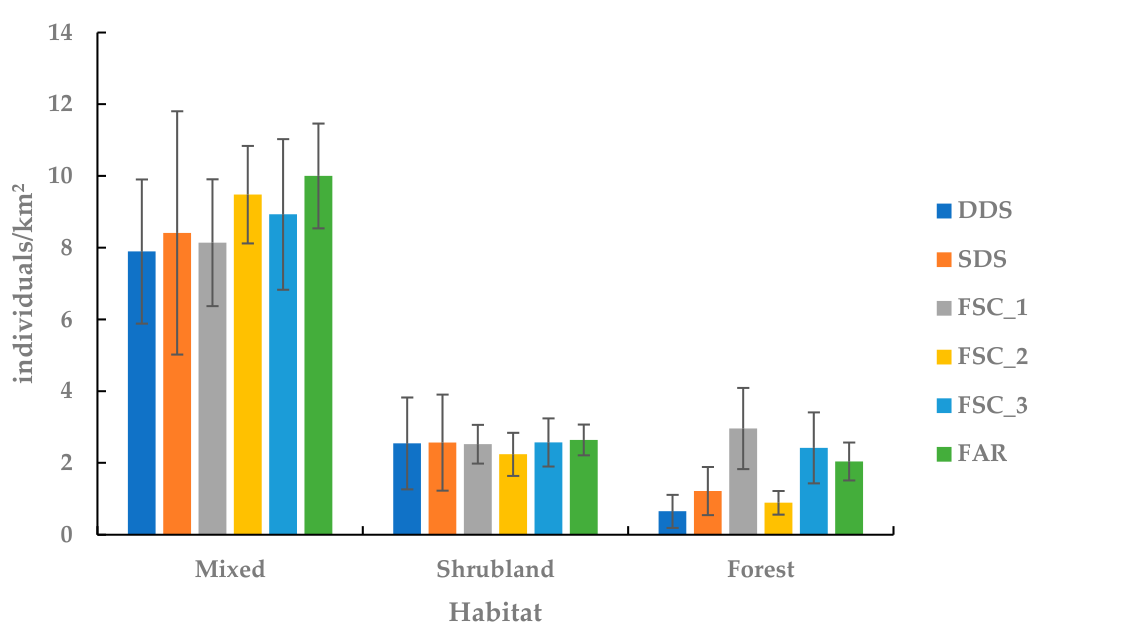
Researchers surveyed the island during the rut in October 2022 using both daytime and spotlight distance sampling. They drove the same road transects slowly, recorded deer or groups on both sides and measured the perpendicular distance from the route to each detection; these distances allow the model to account for animals becoming less likely to be seen farther from the survey line. They also estimated density from faecal counts, using the standing crop method in October 2022 and January 2023 and the accumulation-rate method after revisiting plots in January 2023.
Mixed habitats consistently had the highest density
The daytime surveys recorded 102 sightings of individuals or groups, and the spotlight surveys recorded 95. The authors note that uncertainty around several habitat-specific estimates was large, reflecting relatively low precision where encounters were fewer and habitats more heterogeneous.
One faecal-count method gave the best efficiency
Among the indirect approaches, counting existing faecal pellet groups in rectangular plots performed best when the researchers compared precision and field effort. They recommend using these counts as the basis for long-term monitoring on Rhodes, supplemented by spotlight surveys when information about the population’s sex and age composition is needed.
Population & status
Related news
Male and Female Fallow Deer Followed Different Daily Schedules Outside the Rut
In 4,114 sexed camera-trap detections from a Dutch dune reserve, fallow deer favoured twilight and night. Outside the…
Read story →
Estimated M. bovis Seroprevalence Was 26.6% in Exmoor Red Deer
A survey of 432 wild deer in the Exmoor area estimated Mycobacterium bovis seroprevalence at 26.6% in red…
Read story →
Wild Deer Near Farmland Had Greater Strongyle Diversity in Victoria
Metabarcoding of 194 faecal samples from sambar, fallow and hog deer in Victoria detected 11 strongyle taxa. Deer…
Read story →SPECIES IN THIS STORY
Species in this story
Independent research and conservation news archive
Did you find this information useful?
Wildlife Vagabond is independently built and maintained. Voluntary support helps cover source verification, hosting and continued work on research and conservation news.
Support Wildlife VagabondThe news archive will remain freely available.