
Golden Jackals Occurred Closer to People Where Wolves Were Common
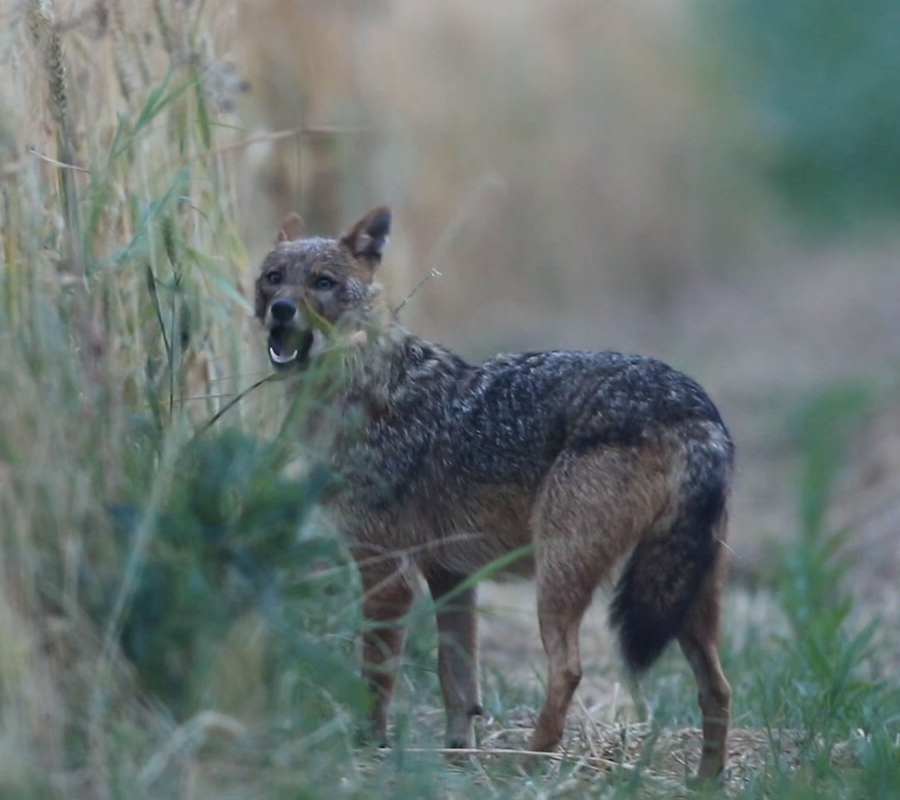
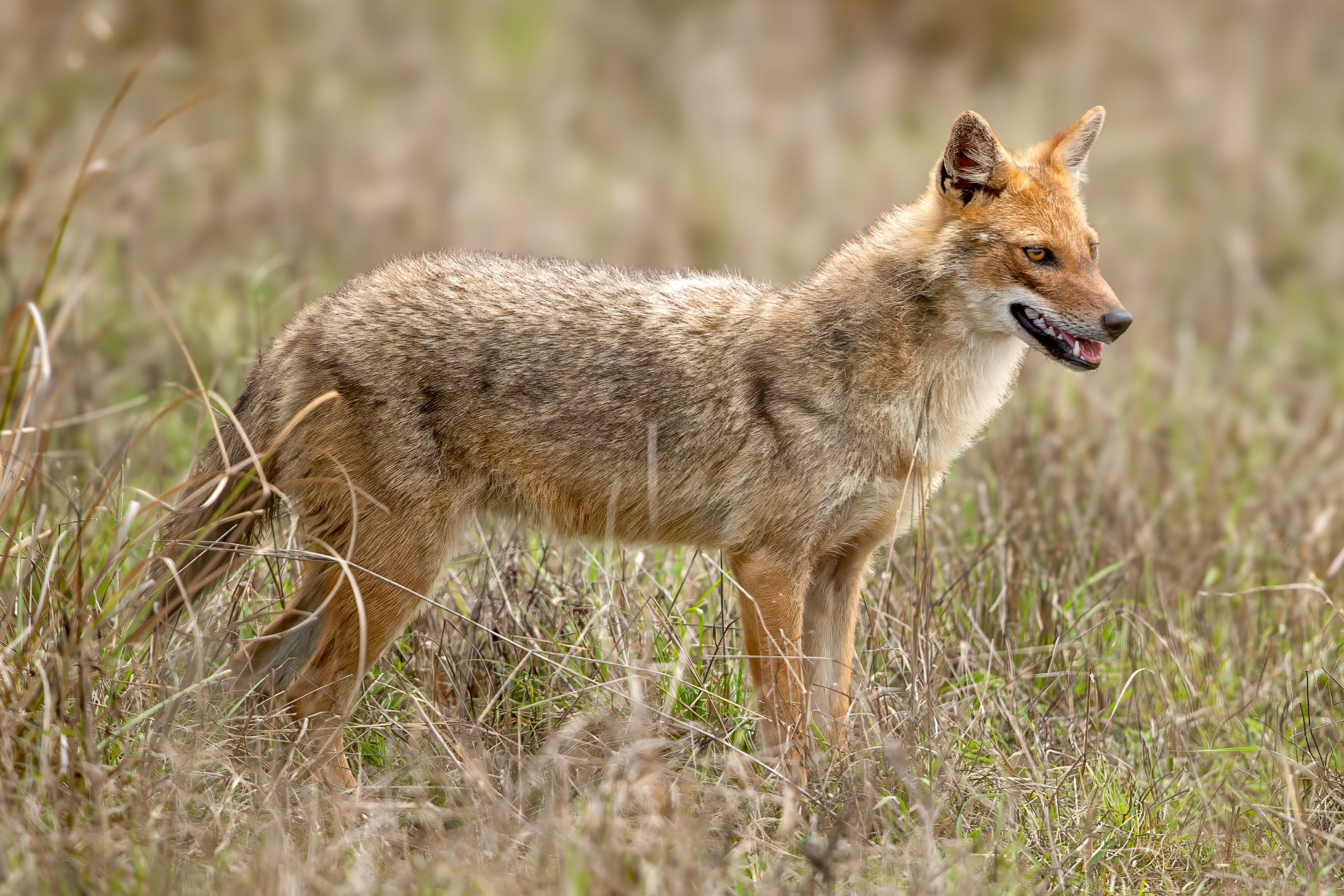
Human presence can weaken the suppressive effect of grey wolves on golden jackals, helping the smaller canid expand across Europe, according to a continent-wide study published on 25 May 2026. The researchers combined acoustic playback surveys from 8,991 calling stations in 13 European countries with wolf-occurrence, climate and landscape data. Playback surveys use standardized broadcast calls and listening periods to detect responding territorial jackal groups, allowing the team to model where golden jackals (Canis aureus) were likely to occur in relation to people and the grey wolf (Canis lupus).
Among the factors examined, wolf presence was the strongest limitation on jackal occurrence. Where wolves were present, jackals were less likely to occur. That effect, however, became substantially weaker in areas with greater human presence.
People acted as a shield from wolves
The researchers describe this pattern as a human-shield effect. Where wolves were absent, jackals were more likely to occur farther from human development. In core wolf areas the relationship reversed: jackals were more likely near human development, where the negative association with wolves was weaker. The study therefore supports the idea that people can alter the spatial interaction between the two predators, rather than simply attracting jackals everywhere.
The fitted distribution model suggested that large parts of continental Europe remain suitable for further jackal expansion. Under the model, golden jackals had the potential to occupy up to 75% of the continent, almost six times the area of their current range. This is a modelled potential distribution, not a statement that jackals already occupy three quarters of Europe.
Wolf recovery could reduce suitable expansion areas
Europe’s recovering wolf populations could reduce the area suitable for expanding jackals by as much as 18% in the near future, according to the model. At the same time, the authors expect the human-shield effect, together with climate warming and landscape modification, to continue supporting jackal expansion across the continent.
The study therefore describes the expansion as the outcome of several interacting forces. Wolves suppress jackal occurrence, while human presence can partly weaken that interaction and provide spaces where jackals are less exposed to their larger competitor.
The findings show that recovery of an apex predator does not operate independently of human land use. The researchers conclude that human activity can modify the ecological effects of wolves on smaller carnivores and thereby influence where expanding species such as the golden jackal can establish.
Ecology
Related news
Similar Mammal Diversity, Different Activity Patterns in Grazed and Ungrazed Areas
Camera traps in four northern Israeli reserves found similar numbers of mammal species with and without livestock grazing.…
Read story →
Climate Best Explained Fine-Scale Genetic Connectivity in Expanding Golden Jackals
A Eurasian landscape-genomics study of 363 golden jackals found that geography dominated genetic structure at continental scale, while…
Read story →
Most New Golden Jackal Samples Around the Adriatic Matched the Pannonian Genetic Cluster
Microsatellite analysis of 27 new golden jackal samples from Croatia, Italy, Austria and Greece assigned most animals to…
Read story →SPECIES IN THIS STORY
Species in this story
Independent research and conservation news archive
Did you find this information useful?
Wildlife Vagabond is independently built and maintained. Voluntary support helps cover source verification, hosting and continued work on research and conservation news.
Support Wildlife VagabondThe news archive will remain freely available.