
Nearly Half of Sklinna Murres Were Displaced in Offshore Wind Simulations, but Kittiwake Collisions Were Rare
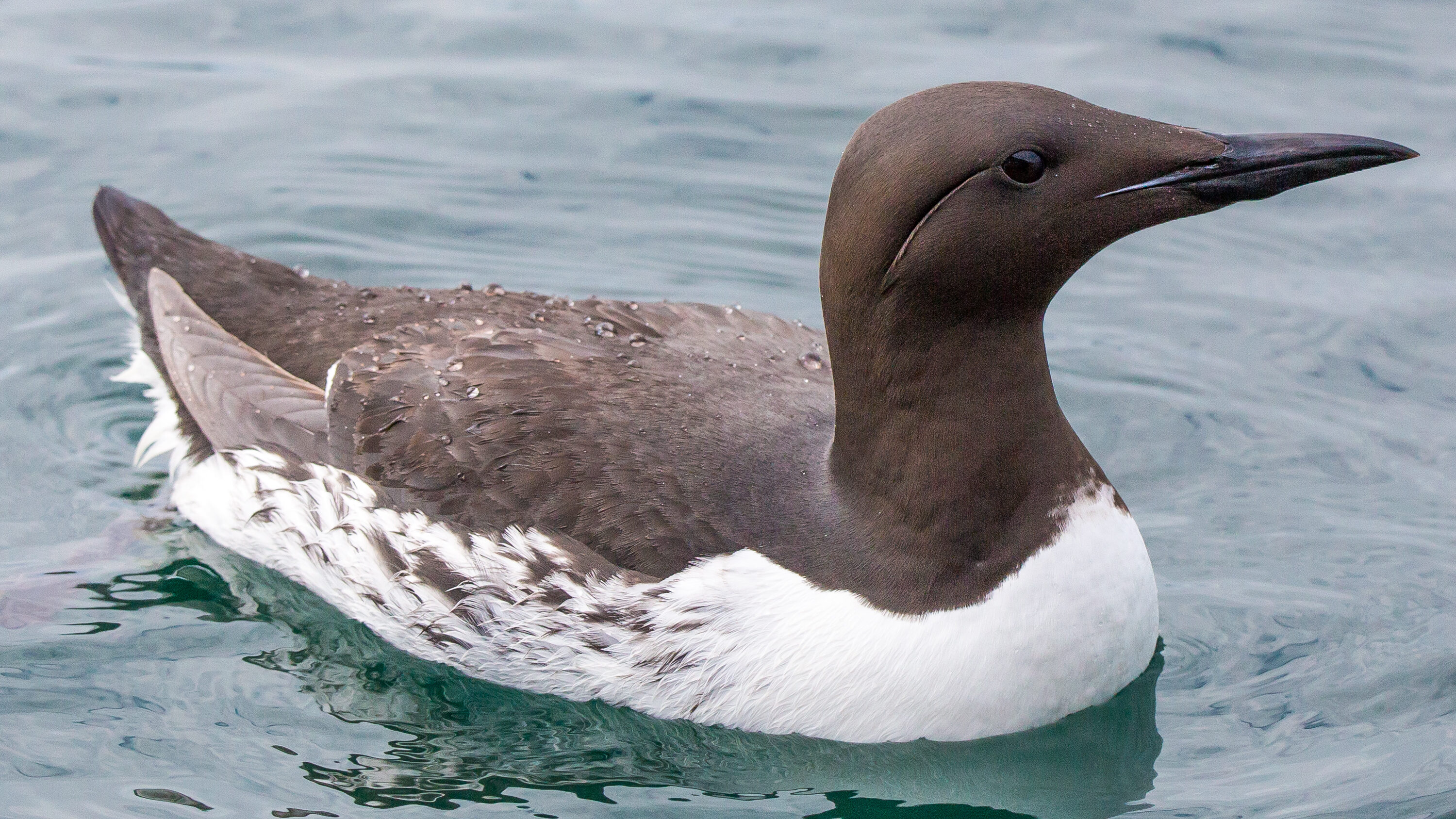
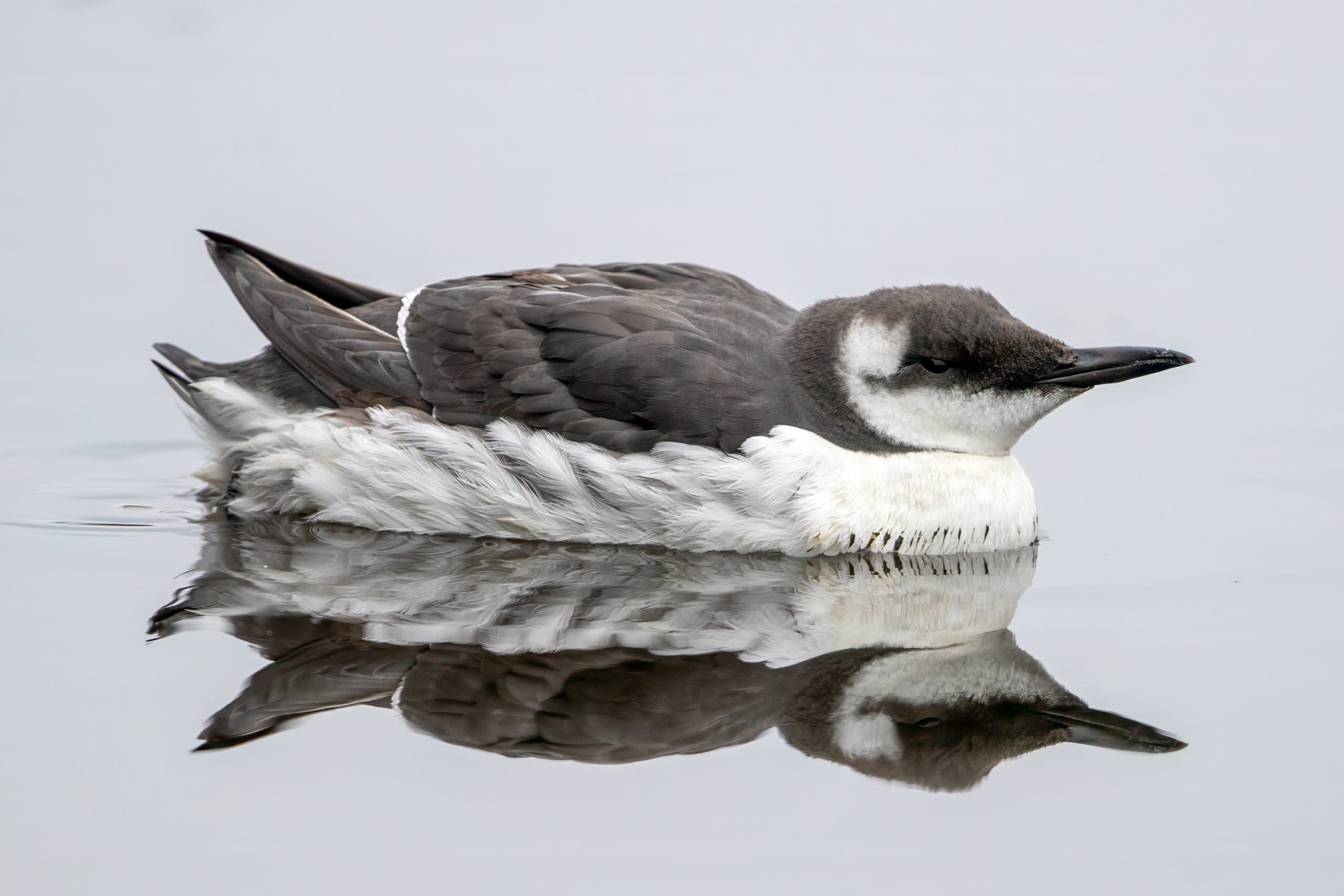
Simulations of ten hypothetical offshore wind farms produced very different outcomes for two Norwegian seabird populations outside the breeding season. Nearly half of the simulated common murres (Uria aalge) from Sklinna experienced displacement, while simulated turbine collisions were extremely rare among black-legged kittiwakes (Rissa tridactyla) from Ålesund.
The researchers used geolocation and salt-water immersion data to estimate seasonal distributions and activity budgets. The percentages in the study are model outputs built from those tracking data; they are not observations of tagged birds encountering operating wind farms.
Nearly half of the simulated Sklinna murres were displaced
After applying season- and distance-specific displacement probabilities from earlier empirical studies, 49.6% of the simulated Sklinna population experienced at least one displacement event during the non-breeding season.
In the model, displacement meant that an affected bird was moved out of the relevant displacement zone and had to use another location. Such changes can increase energetic costs or reduce foraging success, but the size of that cost is poorly known in real murres around offshore wind farms.
The researchers therefore tested a range of assumed displacement costs rather than choosing one fixed value. Depending on that assumption, simulated adult mortality ranged from 0 to about 5.3%, while mean body mass at the end of the non-breeding season ranged from 97.1 to 99.8% of the corresponding no-wind-farm scenario. These values are sensitivity scenarios: they show how strongly the outcome depends on the still-uncertain energetic cost of displacement, not a forecast that a real development would cause one particular mortality rate.
Kittiwakes often crossed wind-farm footprints but rarely collided in the model
The kittiwake simulation produced a different result. Almost all of the simulated Ålesund population — 98.9% — spent some time flying within at least one hypothetical wind-farm footprint. Yet the collision model predicted turbine collisions in only 0.055% of the population.
The low collision estimate mainly resulted from limited overlap between the probable flight height of kittiwakes and the rotor-swept height of the simulated turbines. Passing through the horizontal footprint of a wind farm therefore did not mean that a bird was flying at blade height.
The two species illustrate why exposure alone is not enough to describe offshore-wind risk. For the Sklinna murres, uncertainty about behavioural displacement and its energetic consequences dominated the predicted impact. For the Ålesund kittiwakes, spatial overlap with the wind farms was extensive, but modelled collision risk remained very low because vertical overlap with the rotors was small.
The study presents the framework as a planning tool rather than a measurement of effects at existing wind farms. Its main value is that tracking data from known breeding populations can be linked to different types of wind-farm impact outside the breeding season, while the authors emphasise that better empirical estimates of displacement costs are needed to narrow the range of possible consequences for murres.
Threats
Related news
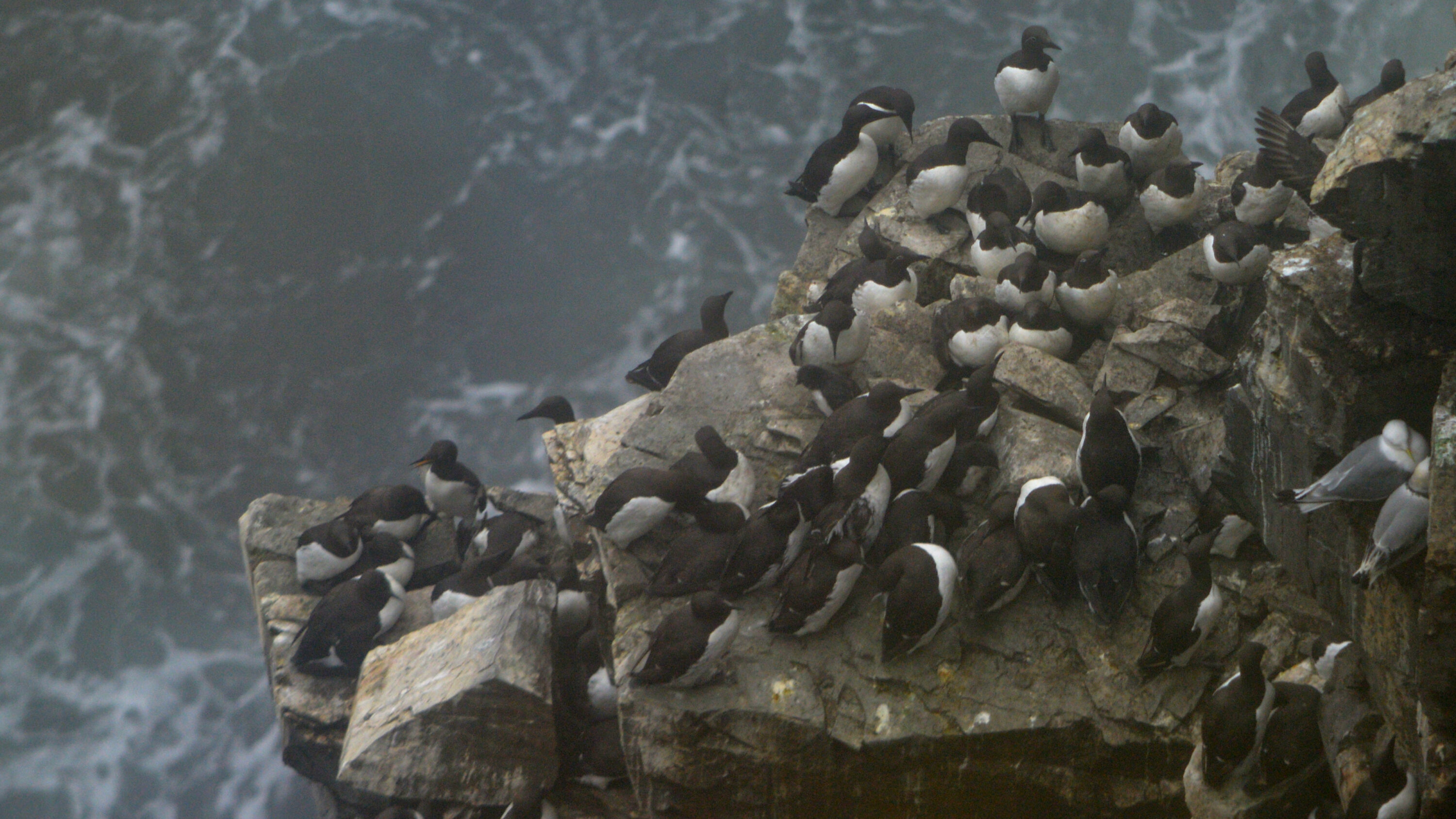
Common Murres Had Higher Blood Mercury in 2022 as Foraging Shifted Closer to Shore and Seafloor
Adult common murres in the Gulf of St. Lawrence had non-overlapping, higher blood-mercury concentrations in 2022 than in…
Read story →
Negative Link Between Spring Capelin Landings and Adult Survival Was Supported Only for Hjelmsøya Common Murres
Across eight Barents Sea seabird populations, a direct negative association between spring capelin landings and overwinter adult survival…
Read story →
Water Masses and Foraging Structured PFAS Variability in Icelandic Common and Thick-billed Murres
Plasma from 67 common murres and 45 thick-billed murres showed that PFOS variability was strongest in Atlantic-influenced waters,…
Read story →SPECIES IN THIS STORY
Species in this story
Independent research and conservation news archive
Did you find this information useful?
Wildlife Vagabond is independently built and maintained. Voluntary support helps cover source verification, hosting and continued work on research and conservation news.
Support Wildlife VagabondThe news archive will remain freely available.