
Muskox Decline Changes the Balance of High Arctic Vegetation
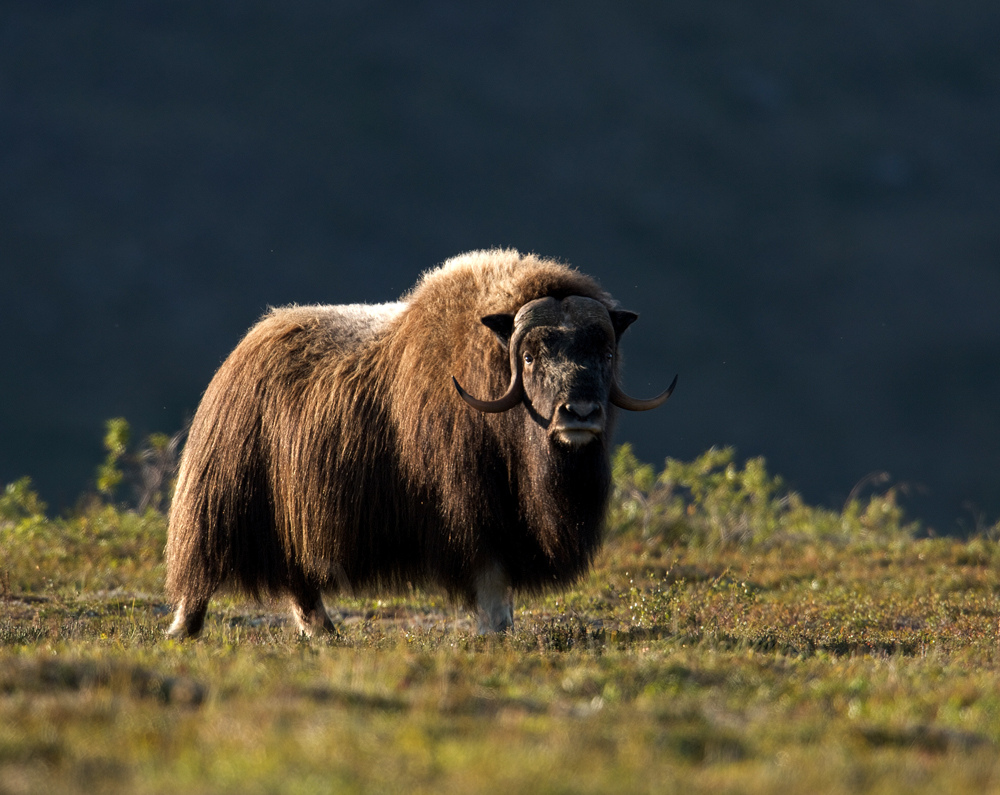
A 13-year experiment in High Arctic Greenland shows how declining numbers of muskoxen (Ovibos moschatus) can change the forces controlling tundra vegetation. At high muskox density, grazing and trampling exert strong top-down control by suppressing plant growth. As that pressure weakened, bottom-up factors such as climate, nutrients and growing conditions increasingly shaped the plant community.
The researchers excluded muskoxen from plots in a productive wet fen at Zackenberg and compared them with nearby control plots. After the first five years, above-ground biomass averaged about 359 g dry weight per square metre inside the exclosures versus 141 g in the grazed controls, and the amount of nitrogen stored in the vegetation was also higher. The contrast showed how strongly grazing and trampling had been limiting vegetation at the start of the experiment.
The biomass difference disappeared after 13 years
During the longer experiment, however, muskox abundance in the surrounding area declined. After 13 years, the clear treatment difference in total plant biomass had disappeared because vegetation also increased strongly in the control plots. Nitrogen stored in the vegetation rose in both treatments as well, although muskox exclusion still had a smaller but statistically significant positive effect on this nitrogen pool in 2023. The decline in grazing pressure outside the fences had therefore greatly reduced, but not erased in every measure, the contrast created by the experiment.
Mosses became dominant as grazing pressure weakened
Mosses showed an especially large increase. The wet-fen community shifted from being dominated by graminoids to being dominated by moss biomass, while the vegetation also became structurally more complex, with more canopy layers. Because moss is not a preferred muskox food, the authors suggest that reduced trampling may have been particularly important in allowing moss biomass to build up. At the same time, neither the number of vascular-plant species nor their Shannon diversity—a measure that combines species richness with how evenly species are represented—changed significantly with the treatment or over the study period. The change was therefore primarily a shift in biomass dominance and structure rather than a simple gain or loss of vascular-plant species.
The authors interpret the change as a loosening of top-down control by muskoxen, allowing warming and other bottom-up processes to play a larger role. They also caution that the study cannot fully separate the effect of fewer muskoxen from the increasing influence of temperature and other environmental change. The result comes from one High Arctic fen, but it illustrates how changes in herbivore abundance can alter the way Arctic ecosystems respond to climate warming.
Ecology
Related news
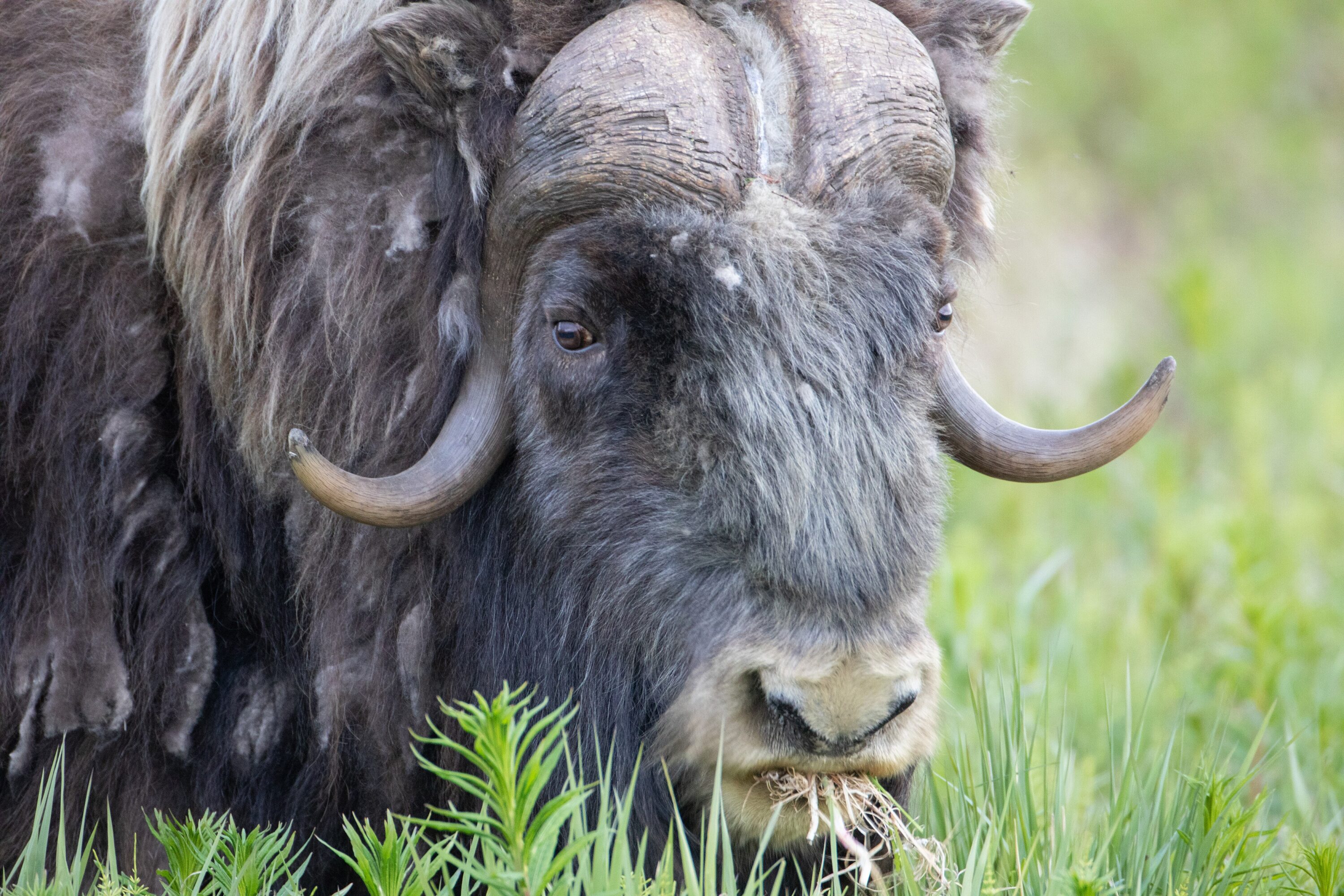
Model Points to Feces and Alternative Hosts in Muskox Bacterial Disease
A 2026 multi-host model of Erysipelothrix rhusiopathiae in Arctic muskoxen found that direct and fecal transmission could sustain…
Read story →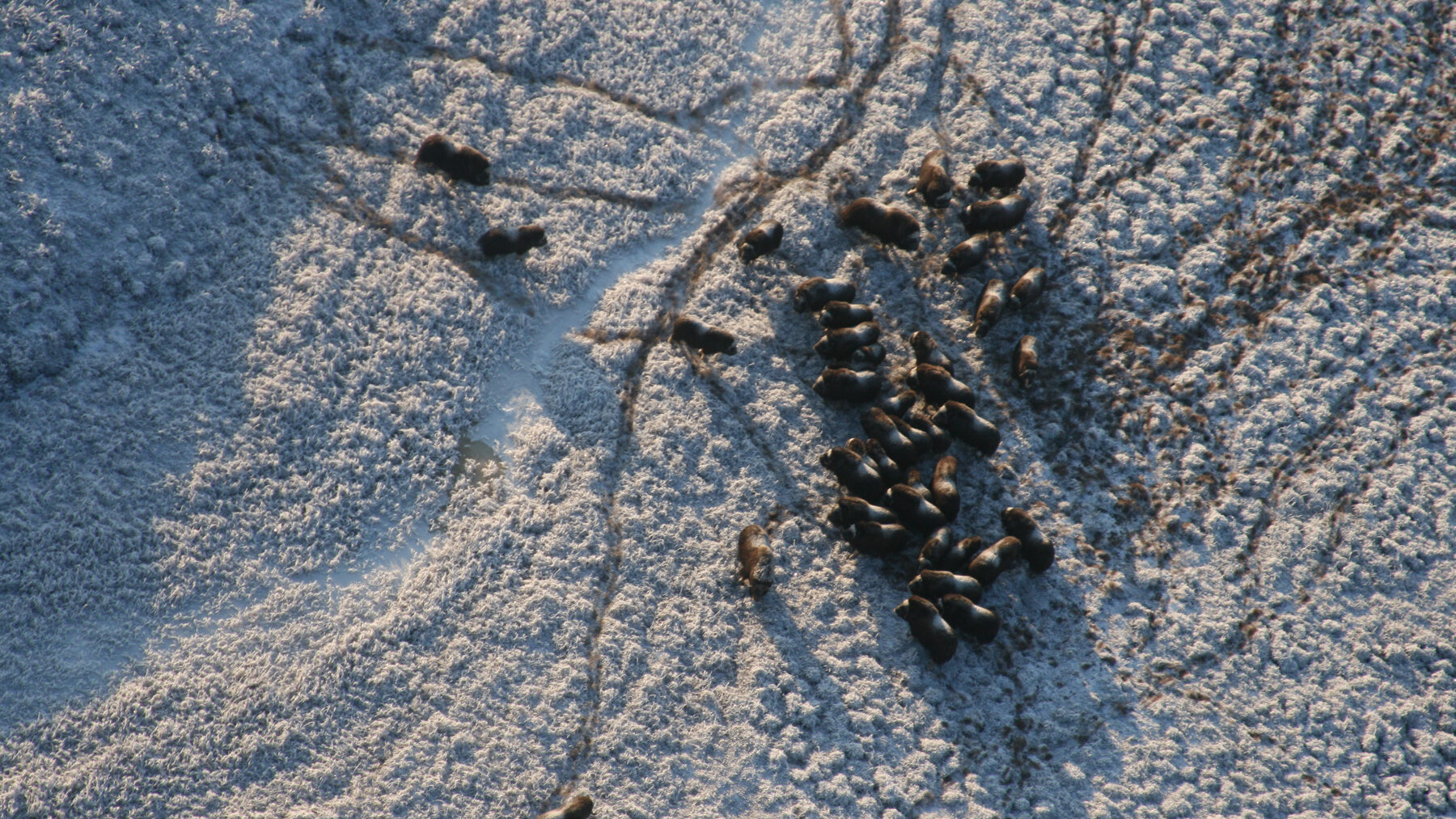
Synthetic Images Helped Train Muskox Detectors When Real Aerial Photos Were Scarce
A 2026 study found that object-detection models trained only on synthetic muskox images could detect more than 80%…
Read story →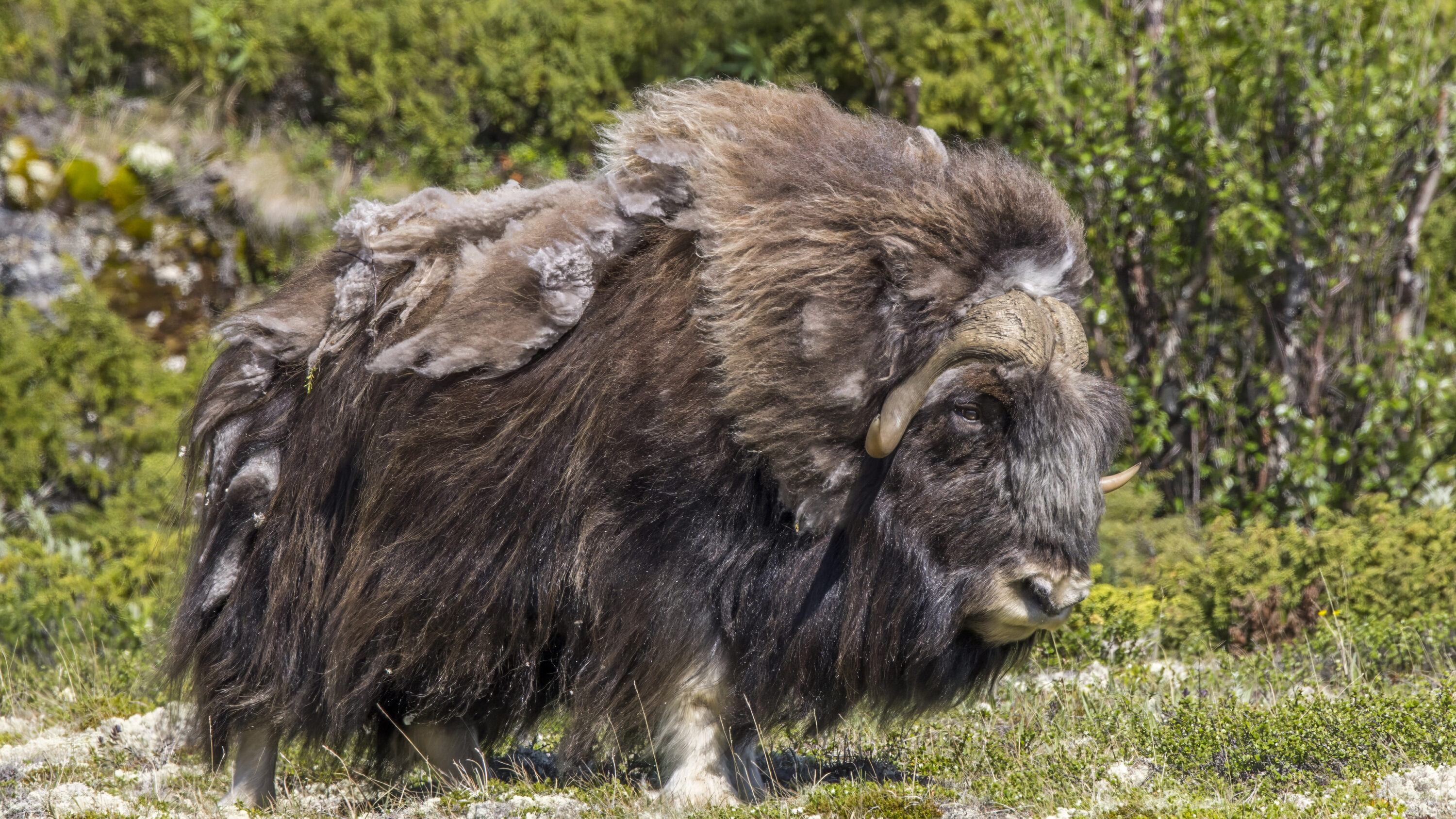
Dovrefjell Winter Count Found 220 Muskoxen, Above the 200-animal Management Target
Norway's 2026 winter count recorded 220 muskoxen on Dovrefjell, including 32 calves. The population has ranged from 200…
Read story →SPECIES IN THIS STORY
Species in this story
Independent research and conservation news archive
Did you find this information useful?
Wildlife Vagabond is independently built and maintained. Voluntary support helps cover source verification, hosting and continued work on research and conservation news.
Support Wildlife VagabondThe news archive will remain freely available.