
Older Common Terns Had More Mercury in Most Feather Types
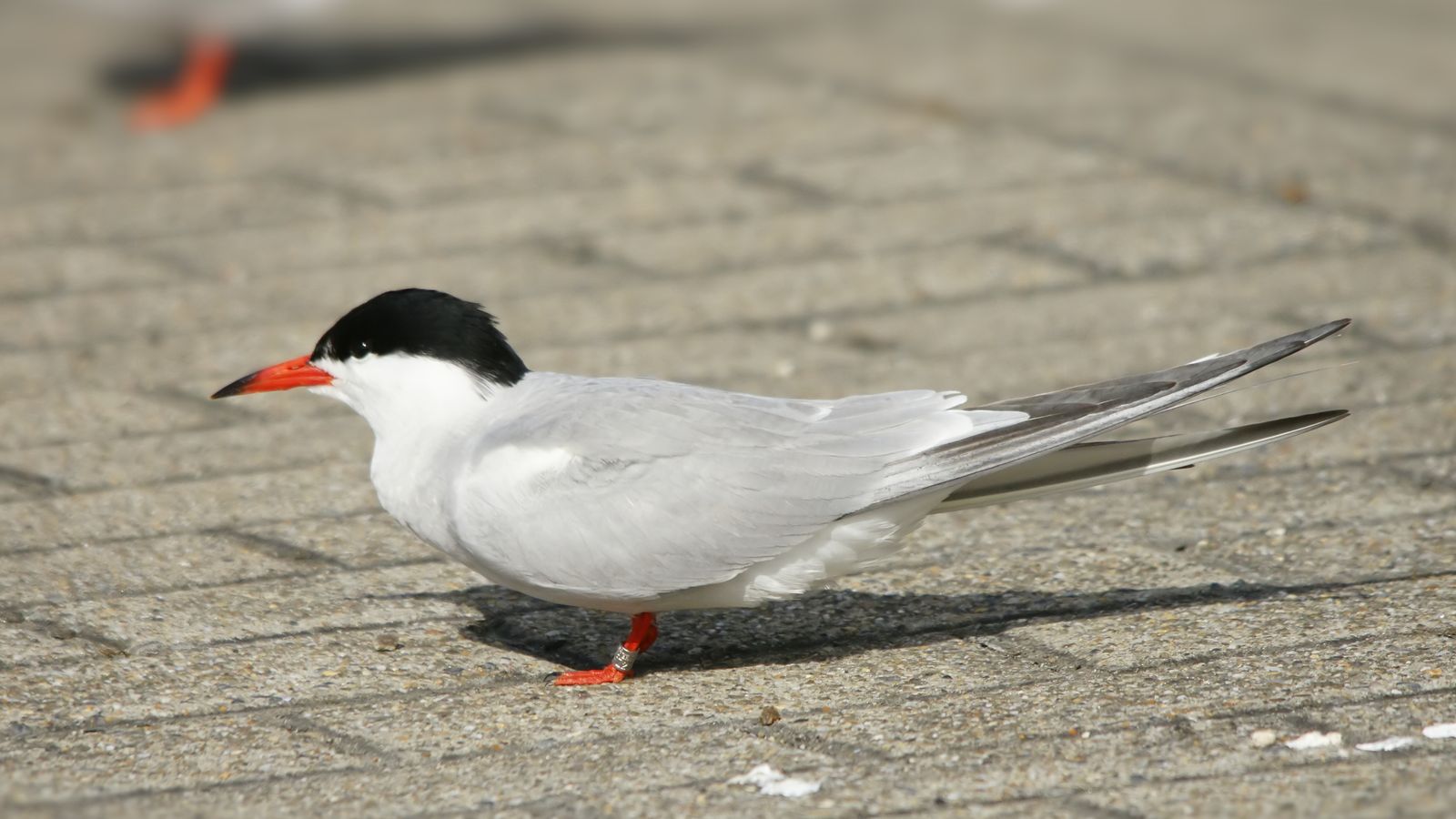
Older common terns (Sterna hirundo) in a long-term study population on Germany’s North Sea coast had higher mercury concentrations in several types of feathers. The study, published on 15 April 2026, also found that mercury in body feathers was related to levels measured in blood, supporting their use for relatively non-invasive monitoring of mercury exposure. Mercury enters birds mainly through contaminated food and can affect health and reproduction; in long-lived seabirds, exposure can also accumulate over time. Mercury circulating in the body is incorporated into feathers as they grow and becomes locked into the keratin once growth is complete, so moult also provides birds with a route for excreting part of their mercury burden.
The researchers analysed dorsal, ventral, primary and tail feathers from 201 common terns of known sex and age that died during highly pathogenic avian influenza outbreaks in 2022 and 2023. Blood samples collected before death were available from 89 of these birds. In addition, 510 dorsal-feather samples collected from 313 individuals between 2017 and 2023 provided repeated measurements across years.
Mercury levels differed among feather types
Across 1,113 feather samples from 313 individuals, total mercury concentrations ranged from 0.17 to 35.15 micrograms per gram of dry feather mass. Ventral feathers had the highest mean concentration, at 3.80 micrograms per gram, while tail feathers had the lowest, at 2.50 micrograms per gram.
Using feather-mercury risk thresholds developed in earlier seabird research, about 18% of samples fell within the no-risk category, 65% within the low-risk category and 16% within the moderate-risk category. Fewer than 1% fell within the high- or severe-risk categories. These categories are comparative toxicity benchmarks rather than health effects measured directly in the common terns, but they show that roughly 17% of samples reached the moderate-or-higher range.
Mercury concentrations were positively correlated across the different feather types within individual birds. Levels in dorsal and ventral feathers, which are grown in the wintering area, were also significantly correlated with mercury measured in blood during the breeding season. The same relationship was not detected for primary or tail feathers.
Older birds had higher levels in three feather types
Males and females did not differ in their feather mercury concentrations. Age, however, was associated with higher concentrations in dorsal, ventral and primary feathers, but not in tail feathers.
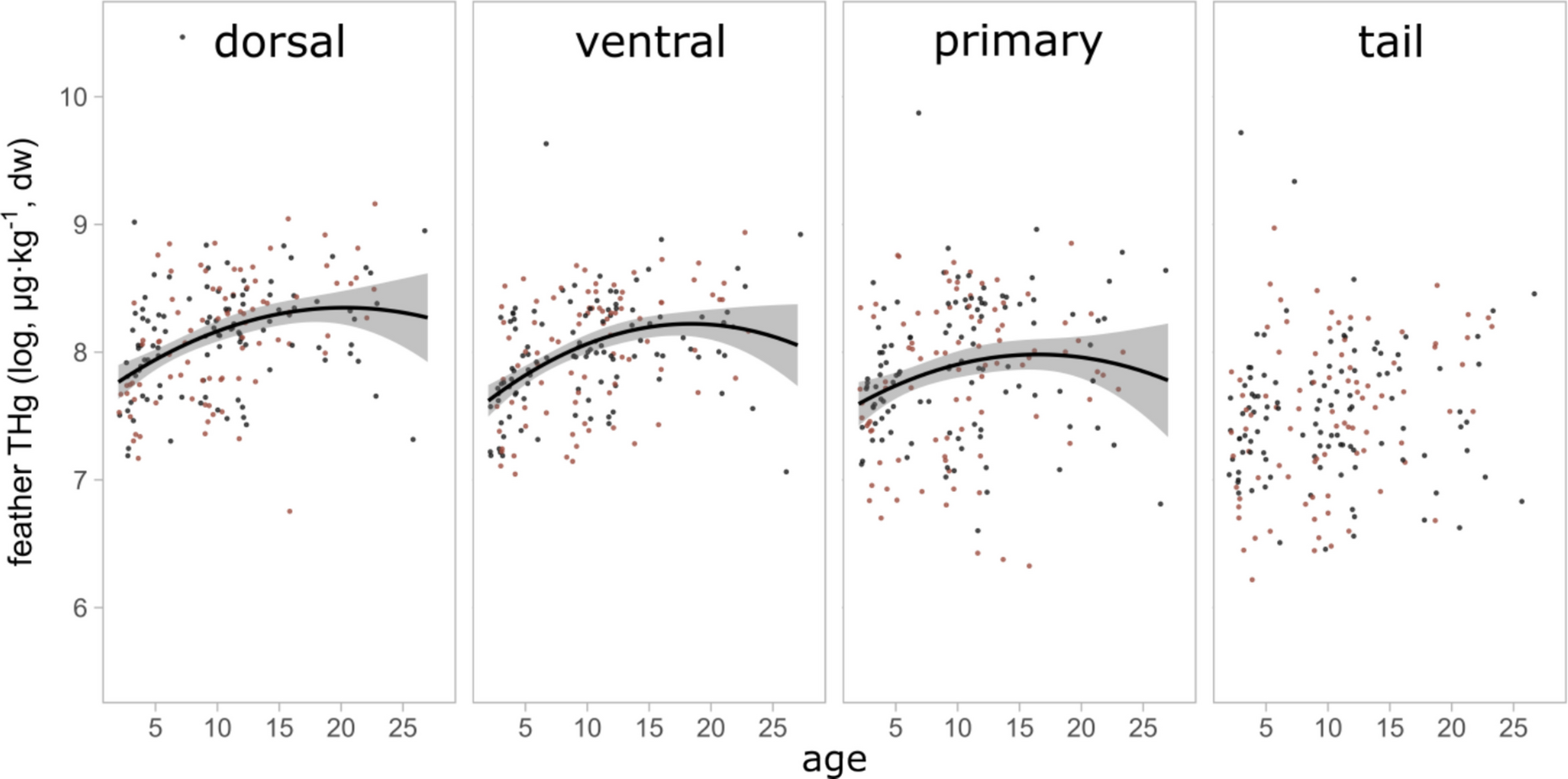
The repeated dorsal-feather samples allowed the researchers to examine whether the age pattern was likely to reflect changes within birds as they grew older. The within-individual age estimate was not statistically significant on its own, but it was very similar to the age difference seen among individuals. The authors therefore consider mercury accumulation within individuals during ageing a likely explanation for why older birds had higher concentrations in most feather types.
Body feathers may be most useful for monitoring
Feathers provide a way to monitor mercury exposure without routinely taking blood from live birds. The authors recommend body feathers in particular because their mercury concentrations were linked to blood levels, they reflected the age pattern and they can be sampled with relatively little disturbance. They interpret body-feather mercury as reflecting repeatable, relatively short-term dietary exposure, whereas primary and tail feathers integrate exposure over longer periods and are more influenced by internal redistribution of mercury. They also stress that the age of sampled birds should be taken into account when comparing mercury levels.
Threats
Related news
Common Tern Eggs Had More PCBs, HCB and Mercury Than Oystercatcher Eggs in 40-Year Wadden Sea Study
Monitoring from 1981–2023 found higher PCB, HCB and mercury levels in common tern eggs than in Eurasian oystercatcher…
Read story →
DNA in Common Tern Chick Droppings Closely Matched the Fish Adults Delivered
Across three breeding seasons, the proportion of dietary DNA reads assigned to each prey type closely matched the…
Read story →
Common Terns Extended Foraging Trips by Up to 87% in Poor Prey and Productivity Years
Four Gulf of Maine breeding seasons showed that common terns increased foraging-trip duration by 23–87% and expanded foraging…
Read story →SPECIES IN THIS STORY
Species in this story

Independent research and conservation news archive
Did you find this information useful?
Wildlife Vagabond is independently built and maintained. Voluntary support helps cover source verification, hosting and continued work on research and conservation news.
Support Wildlife VagabondThe news archive will remain freely available.