
Synthetic Images Helped Train Muskox Detectors When Real Aerial Photos Were Scarce
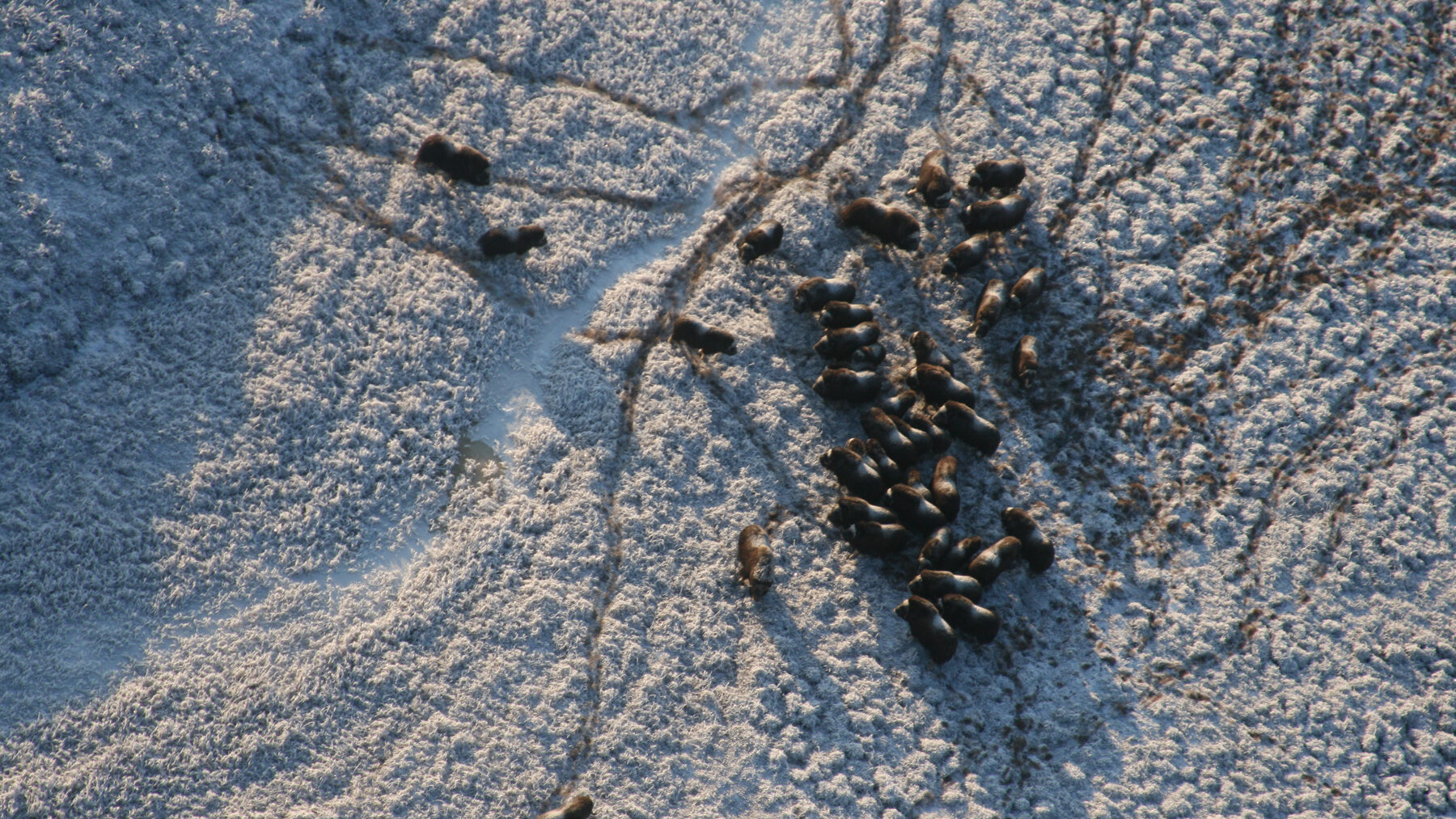
A study published on 13 February 2026 tested whether synthetic images could compensate for the shortage of labelled aerial photographs available for training automated muskox (Ovibos moschatus) detectors. The researchers used DALL-E 2, a diffusion-based image generator, to create aerial-style training images and then tested the resulting object-detection models on real muskox photographs from northern Quebec, Canada.
The study compared zero-shot models trained without any real muskox images with few-shot models that combined a small real training set with synthetic imagery. The generated images required substantial quality control: 84% were discarded because of unrealistic animals, anatomy or viewing angles, leaving 160 synthetic images for model development. A separate set of 996 real aerial photographs was reserved for testing.
Synthetic-only training already detected most muskoxen
Models trained only on synthetic images detected more than 80% of muskoxen in the real test photographs. Increasing the amount of synthetic training data improved precision, recall and F1 score, a combined measure of precision and recall, although the gains levelled off as more synthetic images were added and the models still performed below the baseline trained on real images.
Combining real and synthetic images improved recall
When the small real training set was combined with synthetic images, recall — the share of actual muskoxen that the detector found — increased from about 85% to as much as 93%, while overall performance became broadly comparable with the real-image baseline. The gain came with a trade-off: precision fell by about 4%, so the models missed fewer muskoxen but produced somewhat more false detections that would need human review. The increase in recall was not statistically significant, and the balance between precision and recall did not improve significantly overall. The authors therefore propose synthetic imagery as a way to start or strengthen wildlife detectors before large real datasets exist and then refine the models as field imagery accumulates.
Other research
Related news
Model Points to Feces and Alternative Hosts in Muskox Bacterial Disease
A 2026 multi-host model of Erysipelothrix rhusiopathiae in Arctic muskoxen found that direct and fecal transmission could sustain…
Read story →
Dovrefjell Winter Count Found 220 Muskoxen, Above the 200-animal Management Target
Norway's 2026 winter count recorded 220 muskoxen on Dovrefjell, including 32 calves. The population has ranged from 200…
Read story →
91% of Wild Muskoxen Examined Had Enamel Cracks in the Canadian Arctic
Researchers examining 243 lower jaws from wild muskoxen in the Canadian Arctic found enamel cracks in 91.4% of…
Read story →SPECIES IN THIS STORY
Species in this story
Independent research and conservation news archive
Did you find this information useful?
Wildlife Vagabond is independently built and maintained. Voluntary support helps cover source verification, hosting and continued work on research and conservation news.
Support Wildlife VagabondThe news archive will remain freely available.