
Black Rhinos Grouped More Often in Greener, Patchier Landscapes
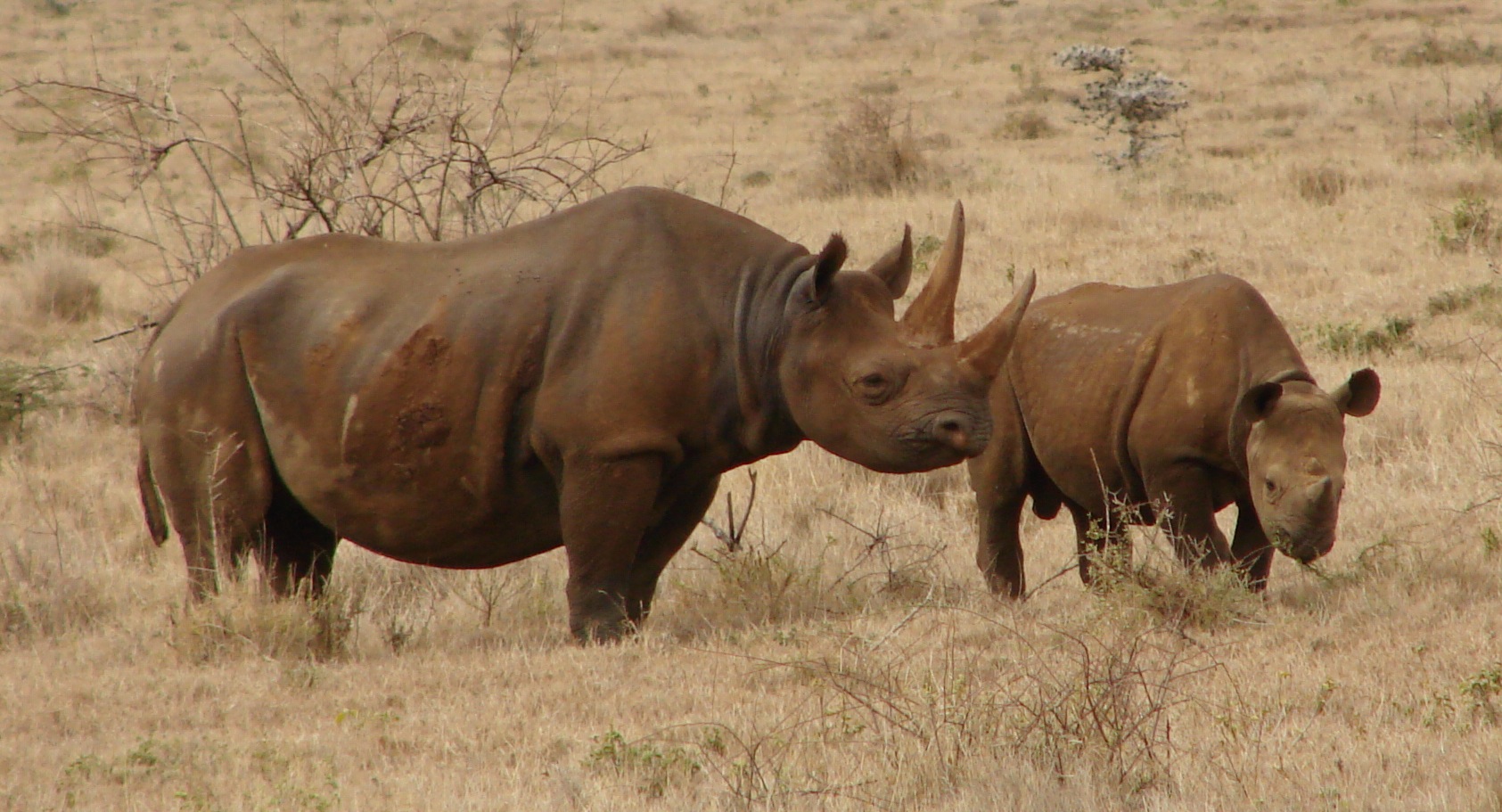
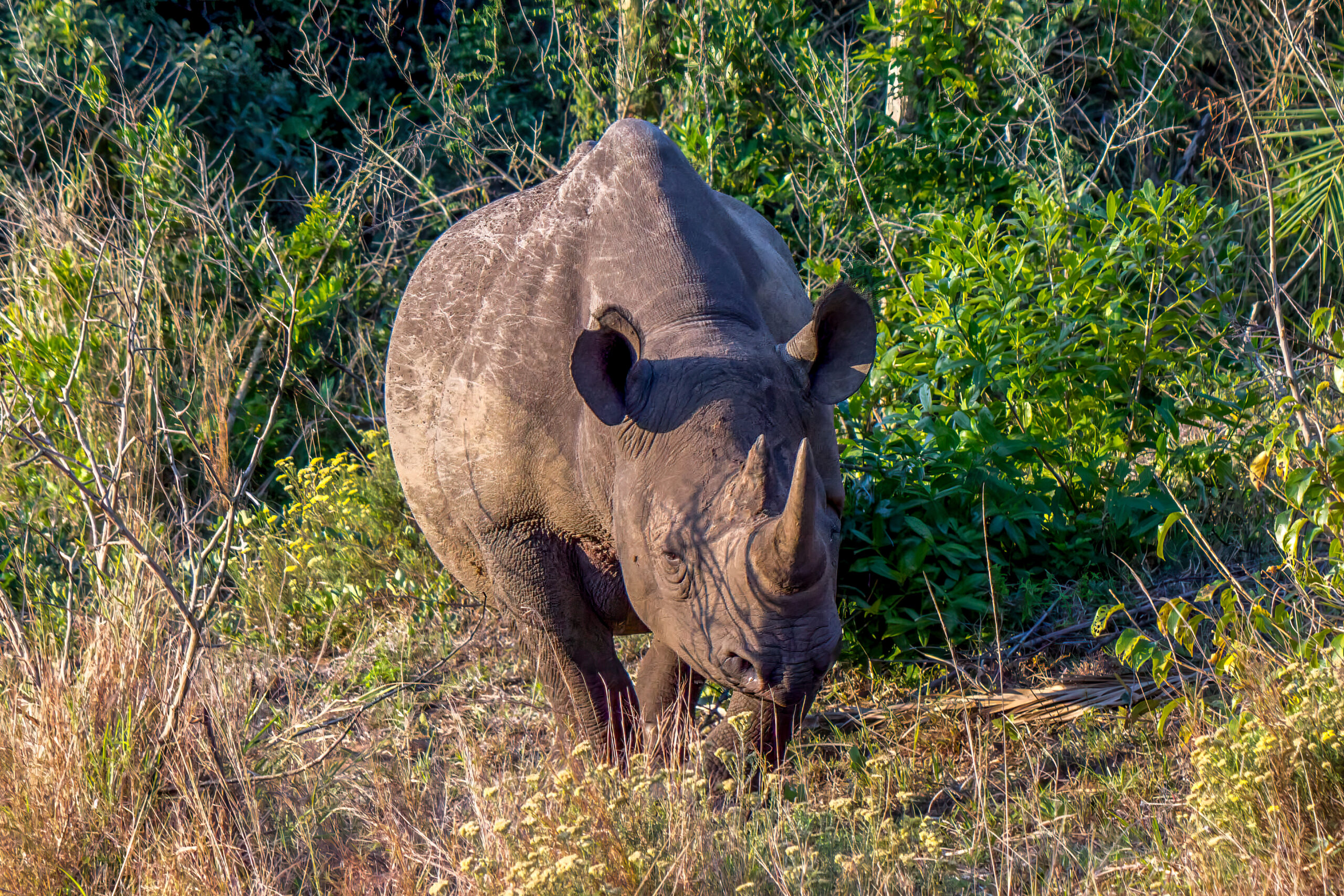
Black rhinos (Diceros bicornis) are often described as solitary, but they sometimes gather. A study of 48,678 sightings of 405 individually identified rhinos across 13 fenced reserves in South Africa and Malawi found that the vegetation around a sighting and the distribution of vegetation across a reserve were associated with whether rhinos were seen in groups—and with how large those groups were.
Reserve monitoring teams recorded rhinos seen within about 50 metres of one another as a group. Researchers compared these observations with satellite measurements of vegetation greenness. Greenness provided an index of vegetation productivity, while variation in productivity across a reserve indicated how patchily resources were distributed.
Productive and patchy vegetation was linked to group formation
Rhinos were more likely to be seen in a group rather than alone at locations with higher vegetation productivity. Group formation was also more likely in reserves where productivity varied more across the landscape. This fits the resource dispersion hypothesis: when resources are abundant and unevenly distributed, several animals may be able to use the same area without competing heavily for food, making it less costly to gather.
Those patterns did not mean that every measure of resource availability was associated with larger groups. Groups tended to be larger in reserves with more variation in productivity, and during the rainy, growing season. But as local vegetation productivity increased, group size tended to decrease. Season also did not significantly predict whether a sighting was of a group or a solitary rhino. In other words, the conditions associated with forming a group differed in part from those associated with having more animals in it.
Group size reflected both resources and rhino social life
Larger groups tended to include more subadult rhinos and to have a less female-biased sex ratio. Their members were also less familiar with one another, meaning they had been recorded together less often. More than 90% of groups with more than two rhinos included at least one cow–calf pair. This points to the importance of maternal care in the formation of larger gatherings, alongside the resource-related patterns. Most sightings were still of solitary animals (68.4%); groups of six or seven were rare.
The composition results suggest that resource conditions and species-specific social behaviour both matter. Black rhinos tend to associate with familiar individuals, and aggression—particularly among males—is a cost of close contact. Yet larger groups were less familiar and were not strongly female-biased. The authors suggest that abundant resources may reduce the costs of sharing space, allowing greater tolerance of unfamiliar rhinos and males.
The study relied on monitoring sightings rather than tracking animals’ movements, so it could not directly measure their home ranges or test every part of the resource dispersion hypothesis. Its results show relationships between vegetation, season and observed grouping, not that vegetation caused rhinos to gather. The authors suggest that resource-rich periods could be considered when planning rhino introductions, which can be risky in part because of aggression between animals. The study did not test whether introductions during those periods are more successful, but understanding when rhinos naturally gather may help managers account for their social behaviour.
Ecology
Related news
Vitamin D3 Was About Twice as High in Summer in Managed Black and White Rhinoceroses
Serum from 75 rhinoceroses at 27 U.S. institutions showed strong seasonal and geographical variation in 25-hydroxyvitamin D3, while…
Read story →
Food Leaves Its Mark on the Gut Bacteria of Kruger’s Wildlife
Gut bacteria in nine mammal species from Kruger National Park followed clear patterns linked to food and digestion.…
Read story →
Rhinos Responded Differently to an Unfamiliar Basket
Black rhinos sniffed, snorted and retreated more often than white rhinos when an unfamiliar basket was placed in…
Read story →SPECIES IN THIS STORY
Species in this story
Independent research and conservation news archive
Did you find this information useful?
Wildlife Vagabond is independently built and maintained. Voluntary support helps cover source verification, hosting and continued work on research and conservation news.
Support Wildlife VagabondThe news archive will remain freely available.