
Brown-throated Martins Reused European Bee-eater Burrows and Mobbed a Snake at One Nest
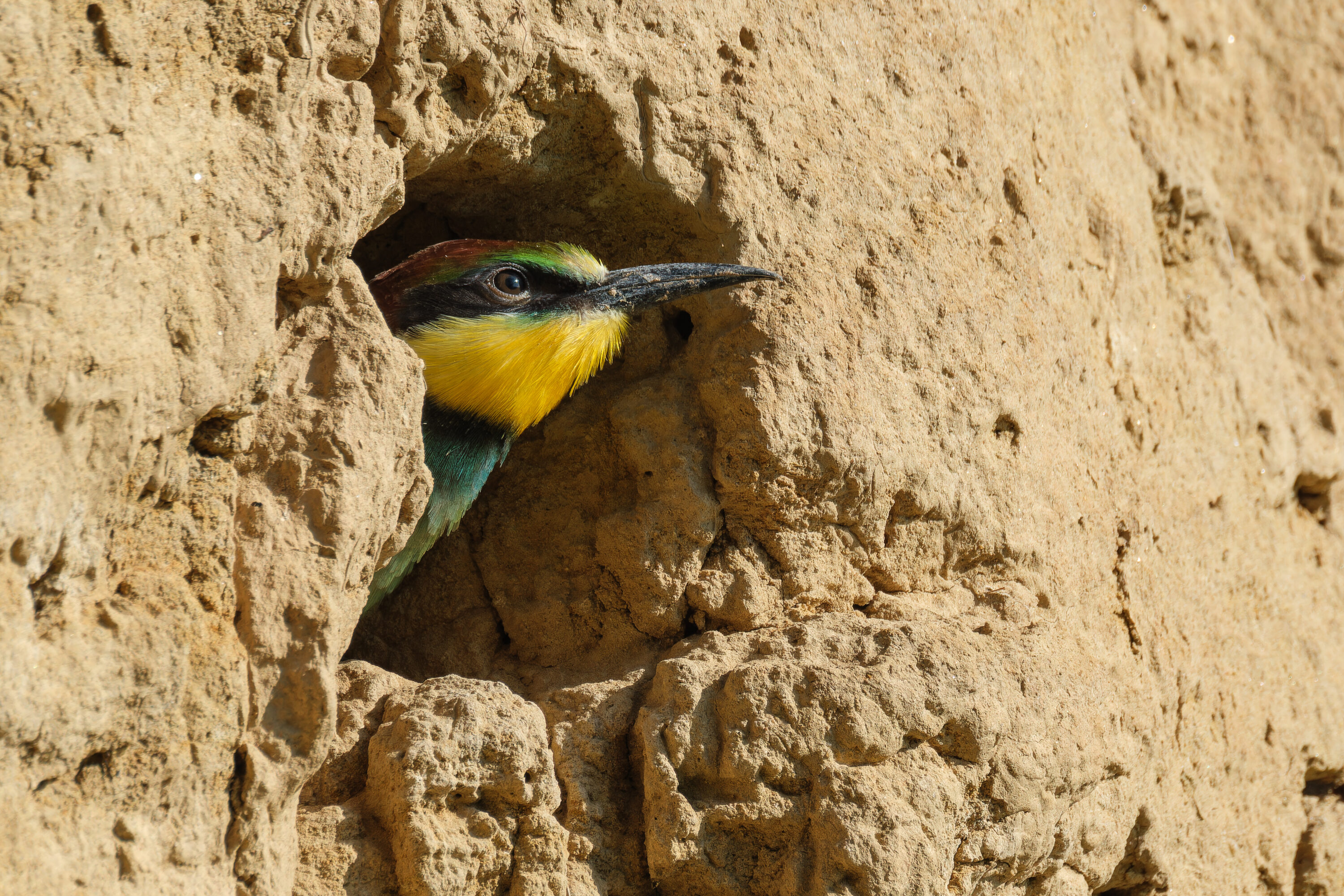
A 2026 short communication from Morocco documents three cases in which brown-throated martins (Riparia paludicola mauritanica) used disused burrows of European bee-eaters (Merops apiaster) for roosting or nesting, together with one observation of martins joining nest defence against a snake.
European bee-eaters excavate long nesting tunnels in earthen banks and cliffs. Brown-throated martins also breed in burrows, but in Morocco their breeding season can occur earlier than that of the migratory bee-eaters. This difference in timing allows the same tunnel to be used by the two species at different times. The observations came from a multi-year monitoring programme in the Zemmour region; a previous Morocco-wide study of martin nesting habitat found no use of European bee-eater burrows, suggesting that the behaviour is uncommon.
The same burrow was reused by both species
In one of the observations, the same bee-eater burrow was used across two successive bee-eater breeding seasons, with brown-throated martins occupying it in between. The martins used the tunnel for both shelter and breeding before the bee-eaters returned to use it again.
Martins mobbed a snake at a bee-eater nest
The most striking interaction occurred when a horseshoe whip snake (Hemorrhois hippocrepis) entered a burrow and preyed on European bee-eater chicks. Brown-throated martins gathered around the entrance and mobbed the snake. The authors interpret this as a possible benefit to bee-eaters that share or alternately use burrows with the martins.
For the martins, the advantage is clearer: abandoned or temporarily unused bee-eater tunnels provide ready-made places to roost and nest. The researchers therefore describe the association as potentially mutualistic, with the martins gaining shelter while bee-eaters may gain additional nest defence.
The authors also point out that the relationship may have costs that have not yet been measured. Competition for burrows and transmission of parasites between the two species remain possible disadvantages and are highlighted as questions for future study. The observations nevertheless show that a bee-eater nest tunnel can function as a shared resource used by two different bird species at different times of the year.
Behaviour
Related news
Usutu Virus RNA Was Found Nearly Three Times as Often as West Nile Virus RNA in Southern France
Among 2,533 wild birds from 69 species in southern France, Usutu virus RNA was detected in 12.0% and…
Read story →
Microplastics Were Found in 77 of 559 Pellets From Eight Italian Bird Species
An Italian study found 78 microplastic items in 77 of 559 bird pellets. Occurrence was significantly higher at…
Read story →
Retained Juvenile Wing Feathers Reveal Second-Year European Bee-eaters
European Bee-eaters can often be recognised in their second calendar year because juvenile primary coverts remain among newer…
Read story →SPECIES IN THIS STORY
Species in this story
Independent research and conservation news archive
Did you find this information useful?
Wildlife Vagabond is independently built and maintained. Voluntary support helps cover source verification, hosting and continued work on research and conservation news.
Support Wildlife VagabondThe news archive will remain freely available.