
Colony Soundscapes Reflected Breeding Stages in Common Terns and Adélie Penguins

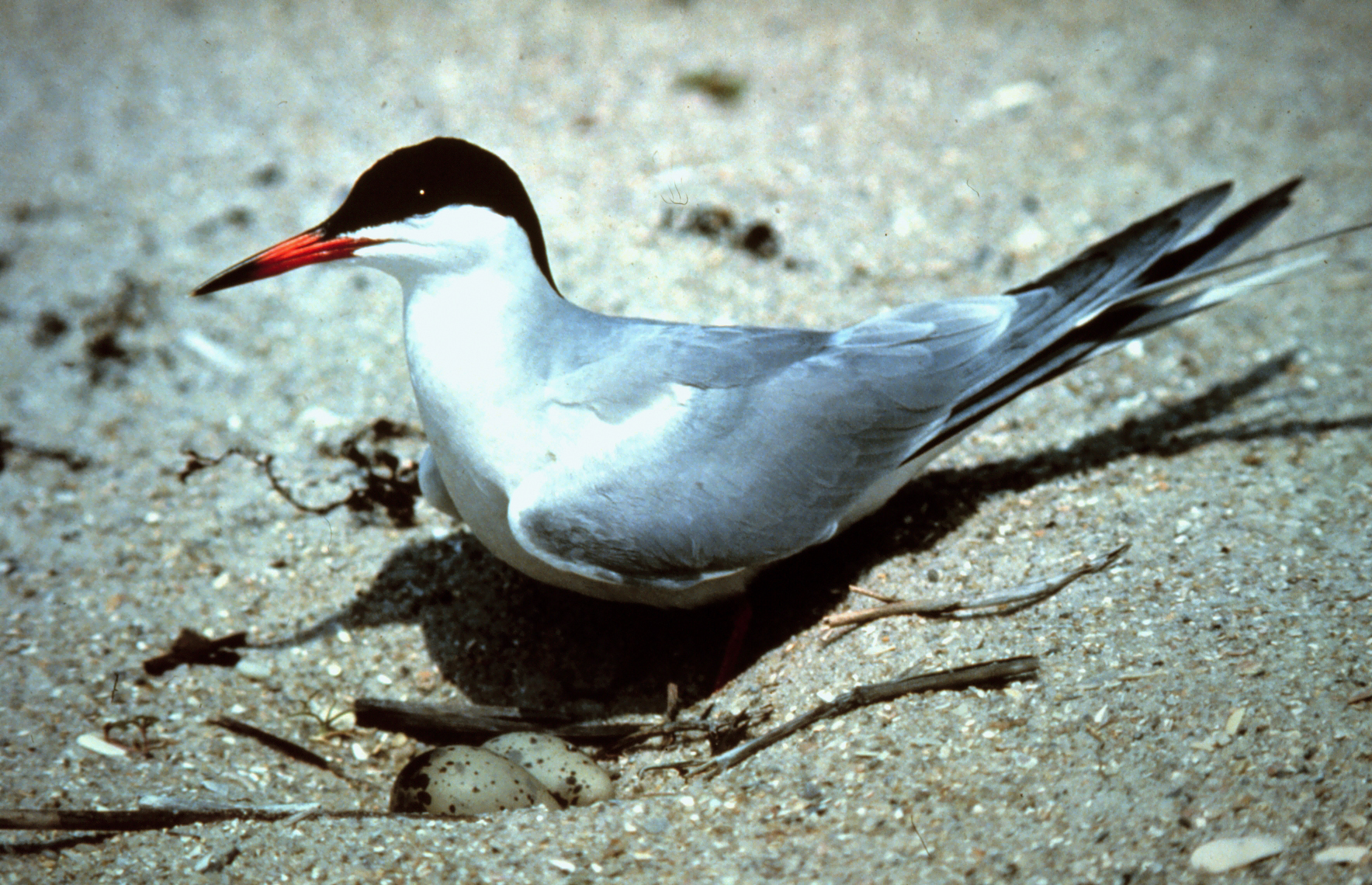
Changes in the collective sound of seabird colonies closely followed breeding stages in common terns (Sterna hirundo) and Adélie penguins (Pygoscelis adeliae) in a bioRxiv preprint posted on 30 May 2026. Rather than trying to identify every overlapping call, the researchers measured colony-wide acoustic energy as relative root-mean-square (RMS) power. RMS summarizes the average strength of the full sound signal over a recording window: a higher value means a more energetic or louder soundscape, but it does not by itself tell how many birds or calls produced that sound.
For Adélie penguins, recorders operated at four functioning rigs across sub-colonies on Torgersen and Humble Islands near Palmer Station on the Western Antarctic Peninsula from 27 November 2022 to 27 February 2023. At the common tern colony on Seavey Island, New Hampshire, 12 AudioMoth recorders sampled from 11 May to 31 August 2024. The acoustic patterns were compared with observed or estimated breeding-stage dates at the colonies.
Breeding stages left different acoustic signatures
In the Adélie penguin colonies, acoustic energy was lowest during incubation. With other modeled factors held constant, mean RMS power was estimated to be 12.4% higher during the guard stage, when a parent remains closely associated with the newly hatched chick, and 27.6% higher during the later post-guard stage than during incubation, before falling as chicks reached the fledging stage and the colonies dispersed. The recorders had been deployed after egg laying, so the penguin data did not cover courtship.
Common terns showed a different sequence. Acoustic energy was high during pair formation, courtship and nest establishment, dropped by an estimated 12.2% during incubation relative to courtship, then rose again through hatching and early fledging. It fell sharply as families dispersed from the colony, with estimated mean RMS power 47.3% lower during dispersal and 57.1% lower after dispersal than during courtship.
A colony-level measure rather than individual calls
Weather and time of day also affected the recordings, and the models accounted for these factors. Rain, for example, increased measured acoustic energy in the tern recordings because raindrops striking the recorders added broadband noise. Even after such covariates were included, breeding stage remained a strong predictor of acoustic energy in both systems.
The authors present acoustic energy as a way to identify major breeding transitions without classifying individual calls in dense colonies. The fact that both the temperate tern colony and polar penguin colonies showed stage-related changes, despite different acoustic sequences, suggests that colony soundscapes can provide a low-disturbance measure of breeding phenology. The study did not show that RMS power alone can estimate breeding-population size or breeding success, and it remains a preprint that had not been peer reviewed when posted.
Reproduction & development
Related news
Common Tern Eggs Had More PCBs, HCB and Mercury Than Oystercatcher Eggs in 40-Year Wadden Sea Study
Monitoring from 1981–2023 found higher PCB, HCB and mercury levels in common tern eggs than in Eurasian oystercatcher…
Read story →
DNA in Common Tern Chick Droppings Closely Matched the Fish Adults Delivered
Across three breeding seasons, the proportion of dietary DNA reads assigned to each prey type closely matched the…
Read story →
Common Terns Extended Foraging Trips by Up to 87% in Poor Prey and Productivity Years
Four Gulf of Maine breeding seasons showed that common terns increased foraging-trip duration by 23–87% and expanded foraging…
Read story →SPECIES IN THIS STORY
Species in this story

Independent research and conservation news archive
Did you find this information useful?
Wildlife Vagabond is independently built and maintained. Voluntary support helps cover source verification, hosting and continued work on research and conservation news.
Support Wildlife VagabondThe news archive will remain freely available.