
European Roe Deer Faecal Hormone Metabolites Varied With Season and Local Environment
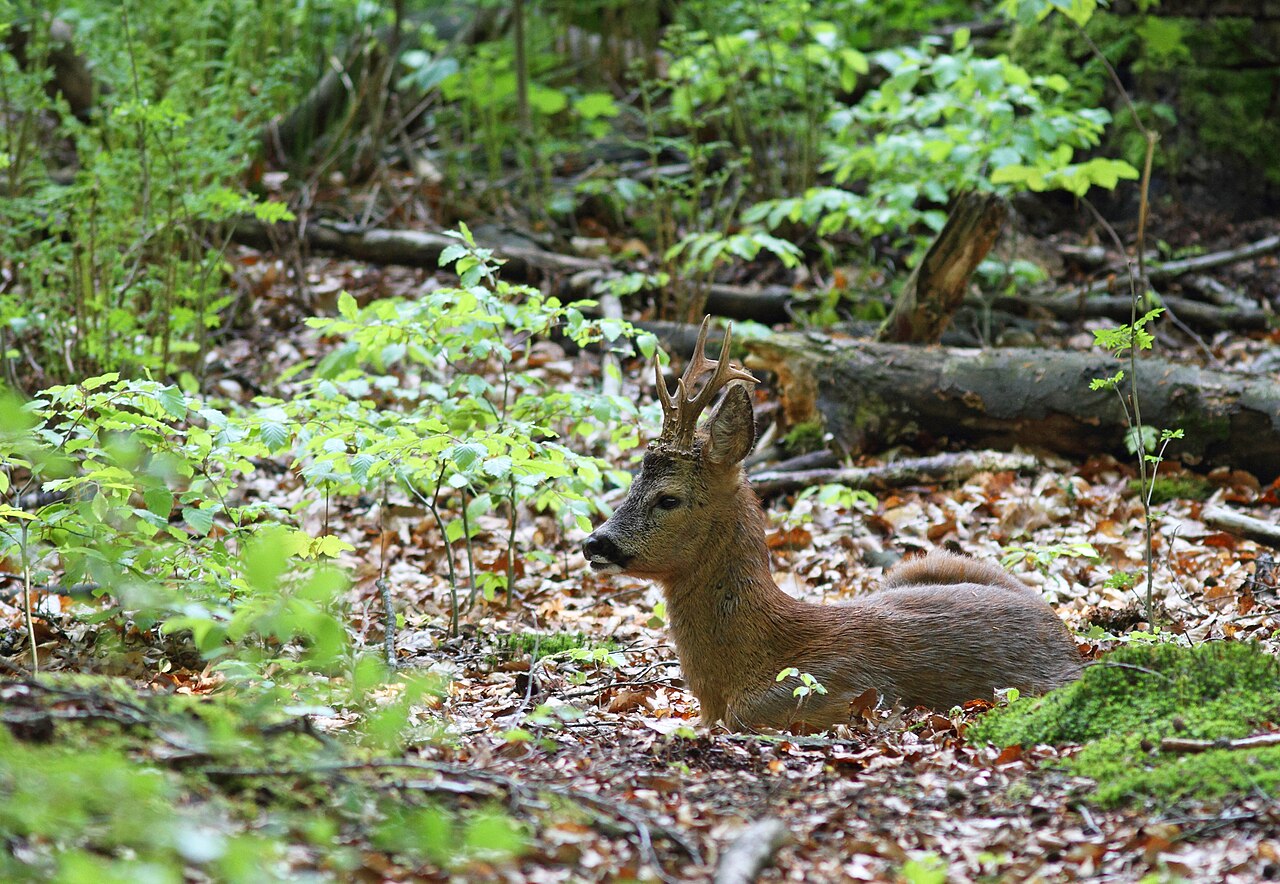
A study of European roe deer (Capreolus capreolus) in northern Iran found that hormone metabolites in faeces varied with season and local environmental conditions. Researchers collected 50 fresh faecal samples during 2023–2024 in Kiasar National Park and the Dodangeh-Chahardangeh Wildlife Refuge in Mazandaran Province.
Hormone metabolites are breakdown products produced as the body processes hormones and then excretes them. Measuring them in faeces allows hormone activity to be studied without capturing or taking blood from the animal, but the samples in this study were not assigned to individually known deer. Sex was estimated from pellet shape together with testosterone and progesterone metabolite patterns rather than confirmed genetically, so sex-specific results refer to samples classified by this method.
Cortisol metabolites were lowest in summer
Faecal cortisol metabolites — breakdown products of a glucocorticoid involved in the body’s physiological response to energetic and environmental demands — were lowest in summer. Samples classified as male had higher concentrations than female-classified samples, and concentrations increased with NDVI.
NDVI is a satellite-derived measure of vegetation greenness: higher values indicate more photosynthetically active green vegetation, but do not by themselves mean that habitat is better for roe deer. Cortisol-metabolite concentrations showed no supported relationship with elevation, monthly temperature or precipitation in the final model.
Reproductive-hormone metabolites also varied
Testosterone metabolites in male-classified samples varied seasonally and declined as elevation and NDVI increased. Progesterone metabolites in female-classified samples peaked in summer and showed no supported relationship with elevation or vegetation greenness in the final model.
The researchers also found no clear correlation between cortisol and testosterone metabolites in male-classified samples or between cortisol and progesterone metabolites in female-classified samples. In this dataset, higher glucocorticoid-metabolite concentrations therefore did not systematically coincide with higher or lower reproductive-hormone metabolite concentrations.
The study has important limits. Only 50 samples were collected across the year, sex was estimated rather than genetically verified, and the commercial enzyme immunoassay used for cortisol metabolites was not biologically validated in roe deer by testing whether it detects a known increase in adrenal activity. The authors therefore caution that faecal glucocorticoid metabolites should not be treated as a direct measure of “stress” on their own. Larger seasonal samples and species-specific validation are needed before the method can be used as a precise physiological stress indicator.
Physiology
Related news

Roe Deer and Wild Boar Remained Key Wolf Prey as Diet Shifted Across North-western Italy
From 2021 to 2025, wolves in north-western Italy continued to feed mainly on wild prey. In the Po…
Read story →
Estimated M. bovis Seroprevalence Was 26.6% in Exmoor Red Deer
A survey of 432 wild deer in the Exmoor area estimated Mycobacterium bovis seroprevalence at 26.6% in red…
Read story →
Roe Deer in Similar Scottish Habitats Had More Similar Diets
DNA metabarcoding from 198 Scottish roe deer found that study site explained about 18% of dietary variation, while…
Read story →SPECIES IN THIS STORY
Species in this story
Independent research and conservation news archive
Did you find this information useful?
Wildlife Vagabond is independently built and maintained. Voluntary support helps cover source verification, hosting and continued work on research and conservation news.
Support Wildlife VagabondThe news archive will remain freely available.