
More wind turbines were associated with larger roe deer home ranges
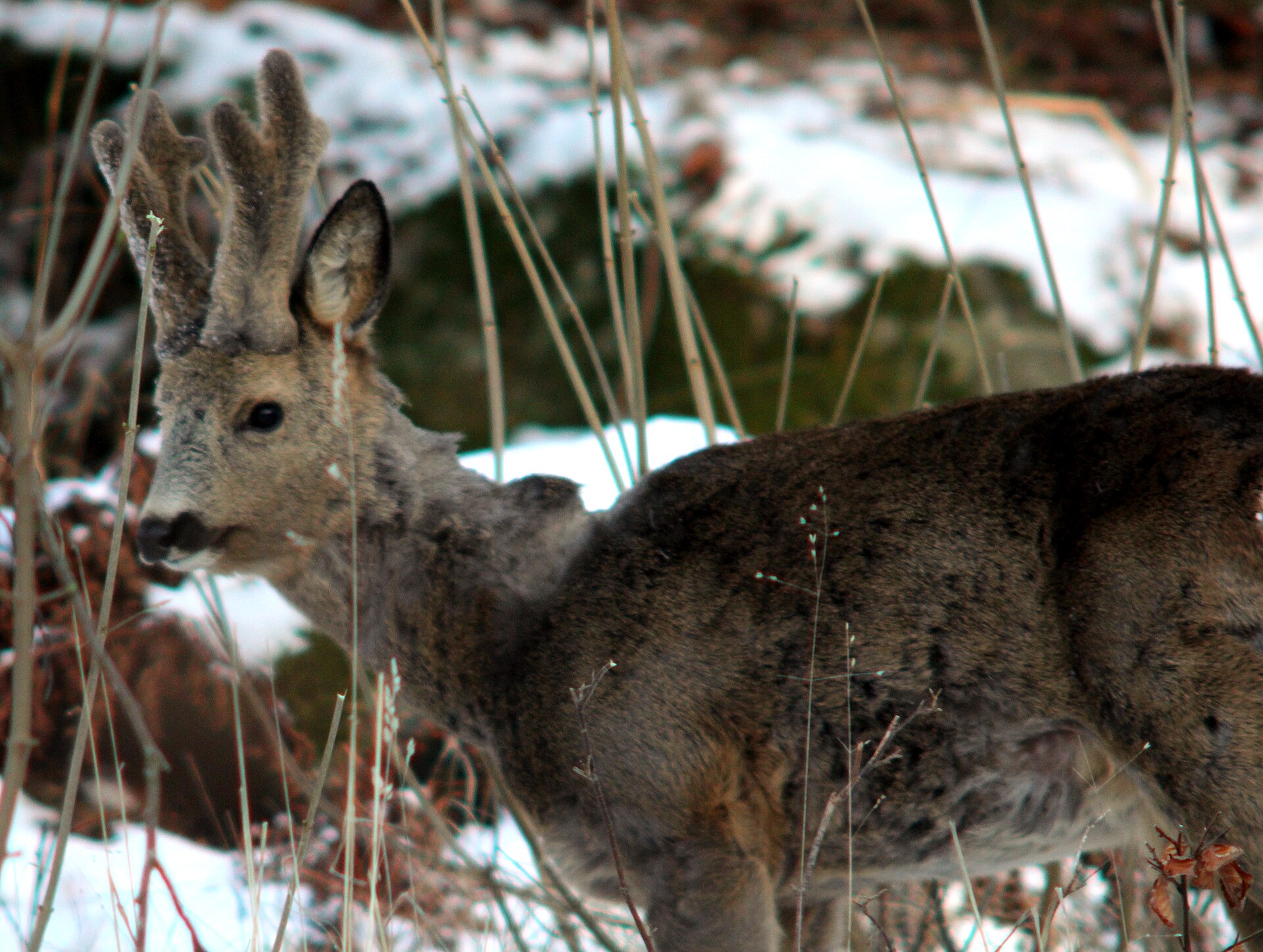
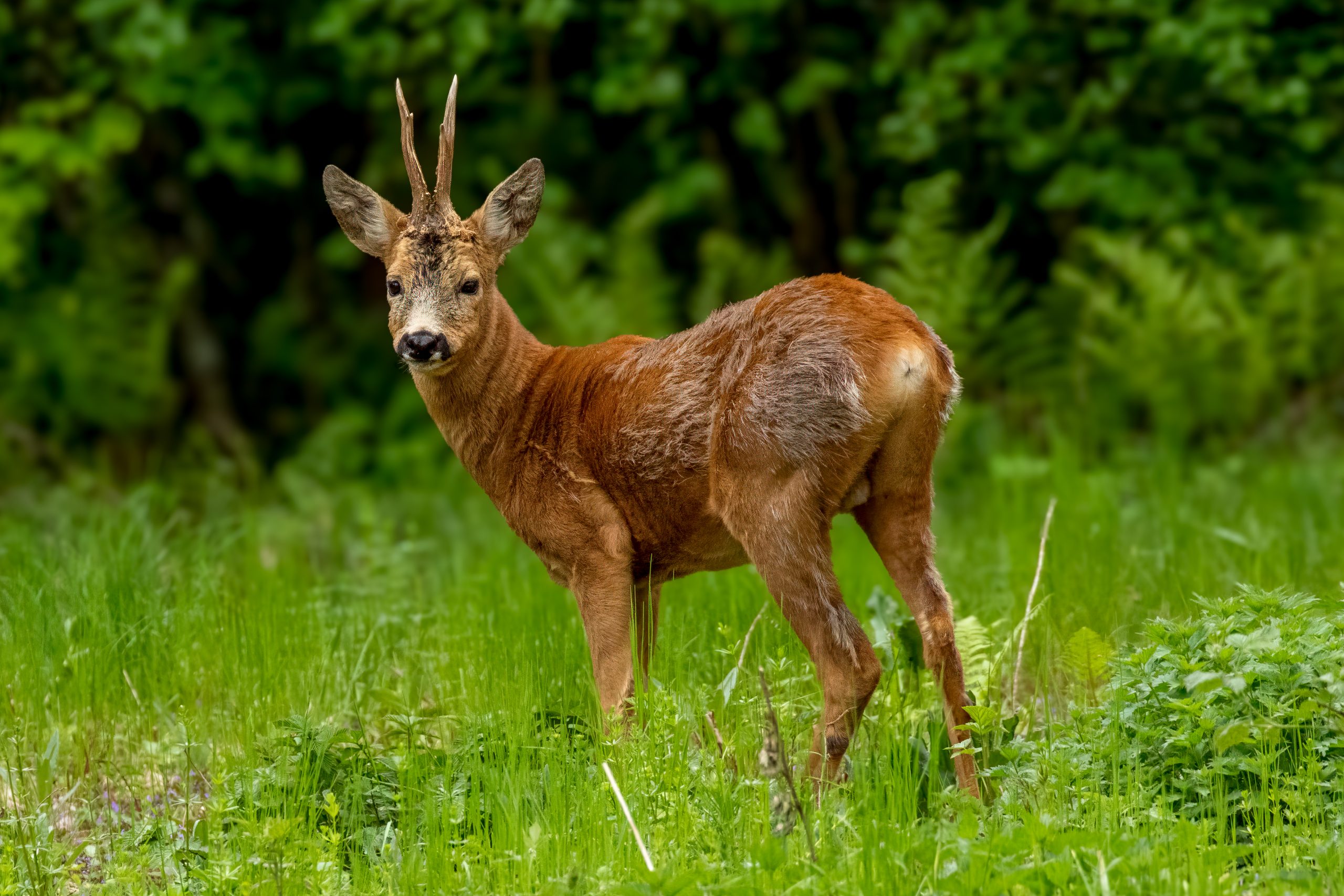
How do roe deer use farmland where wind turbines, forest patches and settlements share the landscape? In east-central Poland, researchers fitted GPS-GSM collars to 10 adult roe deer (Capreolus capreolus)—seven females and three males—and tracked them around three wind farms between 2023 and 2026. They grouped the location records into 21 seasonal tracking periods.
The GPS positions were used to estimate each animal’s home range—the area it used over a tracking period—and its core area, where its locations were most concentrated. Researchers estimated home-range size in two ways. A minimum convex polygon (MCP95) draws a boundary around 95% of an animal’s recorded locations, while a kernel density estimate (KDE95) estimates the area containing 95% of its modeled space use. The average was 136.1 hectares with MCP95 and 69 hectares with KDE95. Because the methods describe space use differently, their estimates are not interchangeable. The mean core area was 10.9 hectares; estimated with KDE50, it is the area containing the 50% of modeled space use where locations are most concentrated.
More turbines, larger ranges—but not larger core areas
Both home-range estimates increased with the number of turbines in the surrounding area, while greater forest cover was associated with smaller home ranges and core areas. The researchers found no relationship between home-range or core-area size and road density or settlement cover. Core-area size was associated with forest cover and sex, but not significantly with turbine numbers or season.
The turbine association was stronger for MCP95 than for KDE95. Because MCP95 is more sensitive to rare, far-reaching movements at the edge of an animal’s range, the authors suggest that occasional peripheral movements may contribute to the pattern. That does not mean the deer’s most intensively used areas expanded in the same way.
The locations of the core areas add another piece to the picture. Their centres were a median 49.8 metres from forests, 154.1 metres from roads, 680.3 metres from settlements and 854.3 metres from turbines. Core areas were significantly closer to forests and roads than to settlements and turbines; distances within the forest–road and settlement–turbine pairs were not statistically different. The authors interpret the similar distances from settlements and turbines as consistent with roe deer treating wind farms much like human settlements. GPS positions from one female showed her bypassing a turbine while moving between areas within her broader home range.
The study compared deer in areas with different numbers of turbines rather than tracking the same deer or areas before and after construction. It therefore cannot establish that turbines caused larger home ranges or separate any turbine effect from associated disturbances such as noise, moving shadows or maintenance activity. Daily distance travelled showed an increasing trend with wind-farm impact, but no statistically clear relationship.
Season and sex shaped movement
Home ranges were larger in winter than in the growing season. Under KDE95, they averaged 81.3 hectares in winter and 52.6 hectares in the growing season. Core areas averaged 11.6 hectares in winter and 9.9 in the growing season, but this seasonal difference was not statistically supported. Males had larger core areas than females: 12.3 hectares compared with 10.2.
Across the 20 tracking periods used to measure daily travel, the deer moved an average of 3.14 kilometres per day. They travelled farther in winter than in the growing season—3.44 versus 2.69 kilometres per day—and males travelled farther than females, 3.47 versus 2.96 kilometres. Daily travel also decreased as forest cover increased.
Together, the results distinguish the broader area roe deer used from the places they used most intensively: turbine numbers were associated with home-range size, while core-area size and daily travel showed no clear relationship with turbine numbers. The authors suggest that adapting to wind farms by using a larger range may carry an energetic cost, particularly in harsh winters.
Ecology
Related news
Fast-growing male Soay lambs had shorter telomeres; in roe deer, habitat mattered
A review found mixed evidence for a growth–telomere link. In wild Soay sheep, postnatal mass gain was associated…
Read story →
How accurately can researchers estimate a roe deer’s age?
A review of 25 publications finds that tooth-based age estimates vary in accuracy. One DNA-methylation method had an…
Read story →
Virus known from sheep and goats detected in an Italian roe deer
Researchers detected small ruminant lentivirus in one of 179 roe deer sampled in central Italy—the first reported molecular…
Read story →SPECIES IN THIS STORY
Species in this story
Independent research and conservation news archive
Did you find this information useful?
Wildlife Vagabond is independently built and maintained. Voluntary support helps cover source verification, hosting and continued work on research and conservation news.
Support Wildlife VagabondThe news archive will remain freely available.