
Fish-community Shifts Matched Changes in PCDD/F Decline in Baltic Murre Eggs
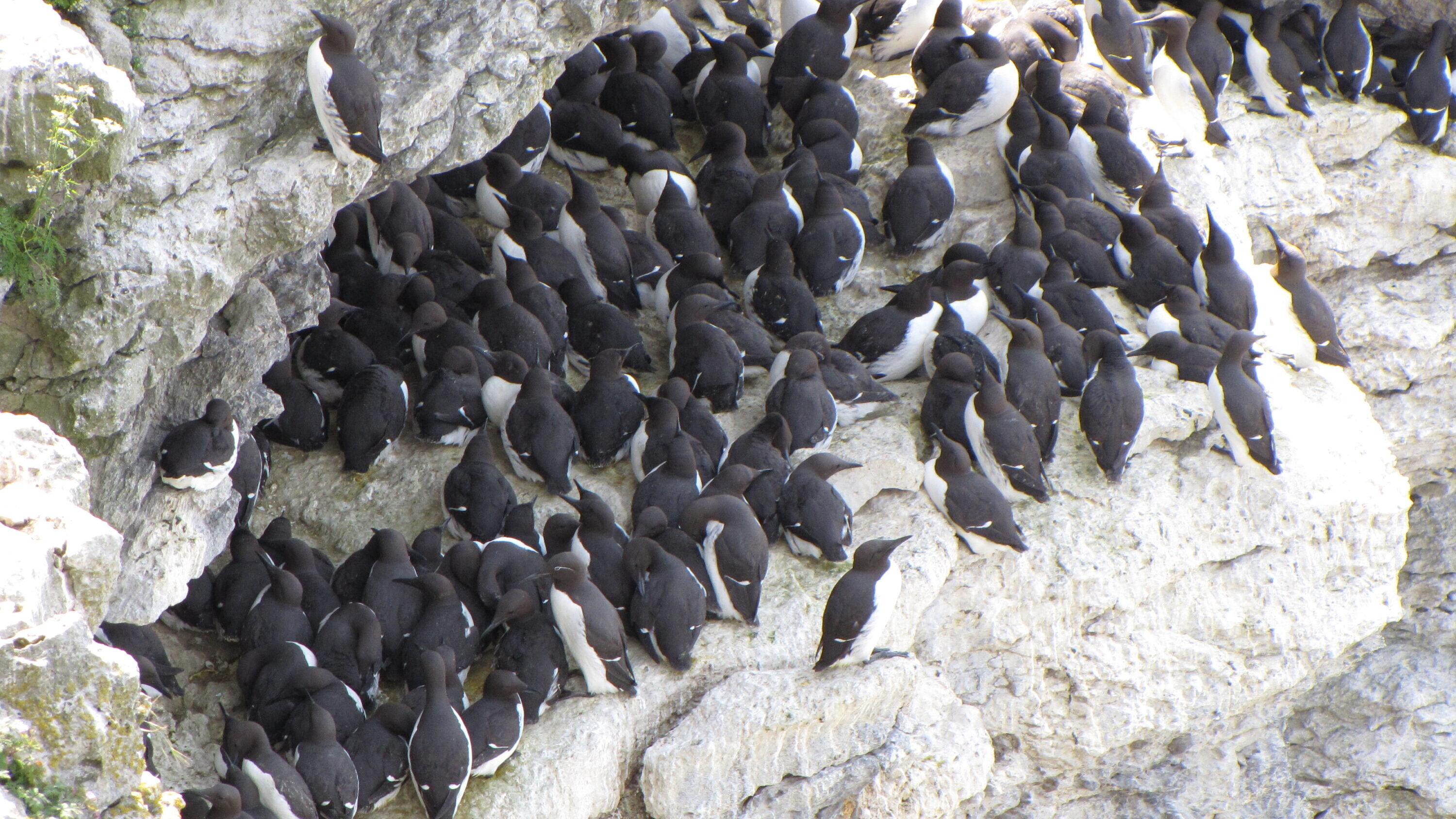
A study published on 3 May 2026 examined how long-term changes in the central Baltic Sea food web coincided with polychlorinated dibenzodioxin and dibenzofuran (PCDD/F) concentrations in eggs of the common murre (Uria aalge) from Stora Karlsö in Sweden. PCDD/Fs are persistent, fat-soluble organic pollutants, produced largely as by-products of industrial and combustion processes, that can build up through food webs. The researchers combined contaminant measurements from eggs collected between 1968 and 2022 with fish-community and environmental data. In the monitoring programme, ten eggs were analysed each year, either individually or as pooled samples.
Three fish-community phases matched three contaminant trends
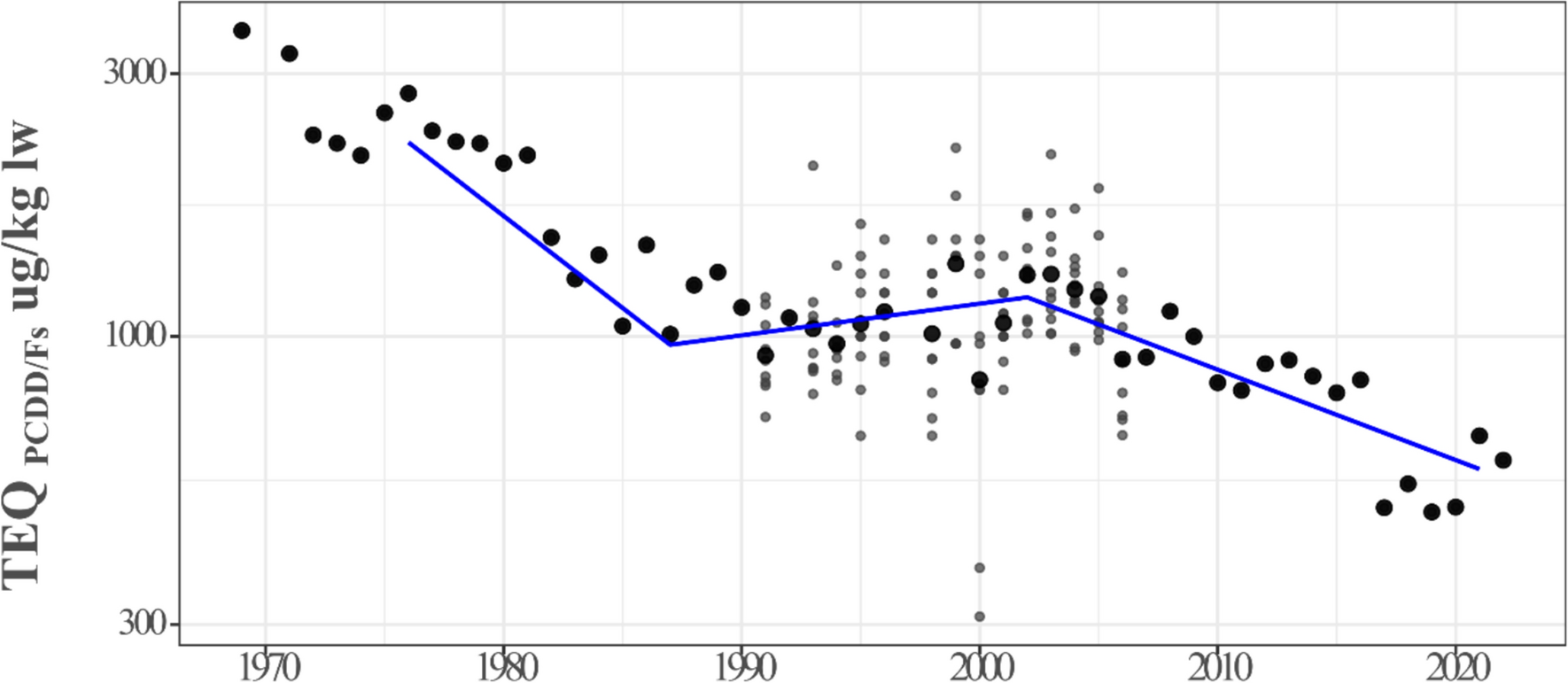
The fish community separated into three major phases. From 1976–1986, cod and herring were prominent; from 1987–2001, sprat dominated; and from 2002–2021, three-spined stickleback increased markedly while cod remained low. These phases coincided with very different trends in the toxic equivalents (TEQ) of PCDD/Fs in murre eggs: a decline of 6.4% per year in the first phase, a near-plateau with an estimated increase of 0.27% per year in the second, and a renewed decline of 3.8% per year in the third. Toxic equivalents combine the concentrations of different PCDD/F congeners into one toxicity-adjusted measure by weighting each compound according to its relative toxicity.
The fish-community shifts reflected broader ecosystem change
The authors also analysed environmental and human pressures associated with the changing fish community. Temperature, salinity, zooplankton size and fishing pressure all contributed to differences between phases. Cod spawning-stock biomass was the strongest variable separating the fish-community states, while the most recent phase was associated with warmer summer water, smaller zooplankton and lower cod abundance.
Diet shifts may have altered contaminant exposure
The link to the murres’ diet was especially important in the authors’ interpretation. During the sprat-dominated phase, high sprat abundance was accompanied by poorer growth and lower fat content in sprat and herring. Murres may therefore have had to consume more prey to obtain the same amount of energy, potentially increasing dietary PCDD/F exposure and helping to explain the 1990s plateau. In the most recent phase, three-spined sticklebacks may have become a more important prey. A recent diet study cited by the authors found that sticklebacks made up 27% of the diet of adult guillemots. Because sticklebacks are shorter-lived than sprat, they may accumulate less PCDD/F, so a dietary shift towards them could have contributed to the renewed decline. The authors stress that this stickleback pathway remains a hypothesis that needs direct testing.
One PCDD/F compound, 2,3,4,7,8-pentachlorodibenzofuran (PeCDF), contributed especially strongly to the overall TEQ trend because it occurred at the highest concentration in the eggs, is highly bioaccumulative and receives a high toxicity weighting for birds in the TEQ calculation.
The researchers conclude that the long-term contaminant pattern in murre eggs cannot be understood from emission reductions alone. The authors could not assess the toxicological significance of the measured egg concentrations because thresholds for adverse effects of PCDD/Fs in birds remain uncertain.
Ecology
Related news

Common Murres Had Higher Blood Mercury in 2022 as Foraging Shifted Closer to Shore and Seafloor
Adult common murres in the Gulf of St. Lawrence had non-overlapping, higher blood-mercury concentrations in 2022 than in…
Read story →
Negative Link Between Spring Capelin Landings and Adult Survival Was Supported Only for Hjelmsøya Common Murres
Across eight Barents Sea seabird populations, a direct negative association between spring capelin landings and overwinter adult survival…
Read story →
Water Masses and Foraging Structured PFAS Variability in Icelandic Common and Thick-billed Murres
Plasma from 67 common murres and 45 thick-billed murres showed that PFOS variability was strongest in Atlantic-influenced waters,…
Read story →SPECIES IN THIS STORY
Species in this story

Independent research and conservation news archive
Did you find this information useful?
Wildlife Vagabond is independently built and maintained. Voluntary support helps cover source verification, hosting and continued work on research and conservation news.
Support Wildlife VagabondThe news archive will remain freely available.