
Future Environmental Change Could Reduce Greater White-fronted Goose Migration Network Integrity by 35–71%
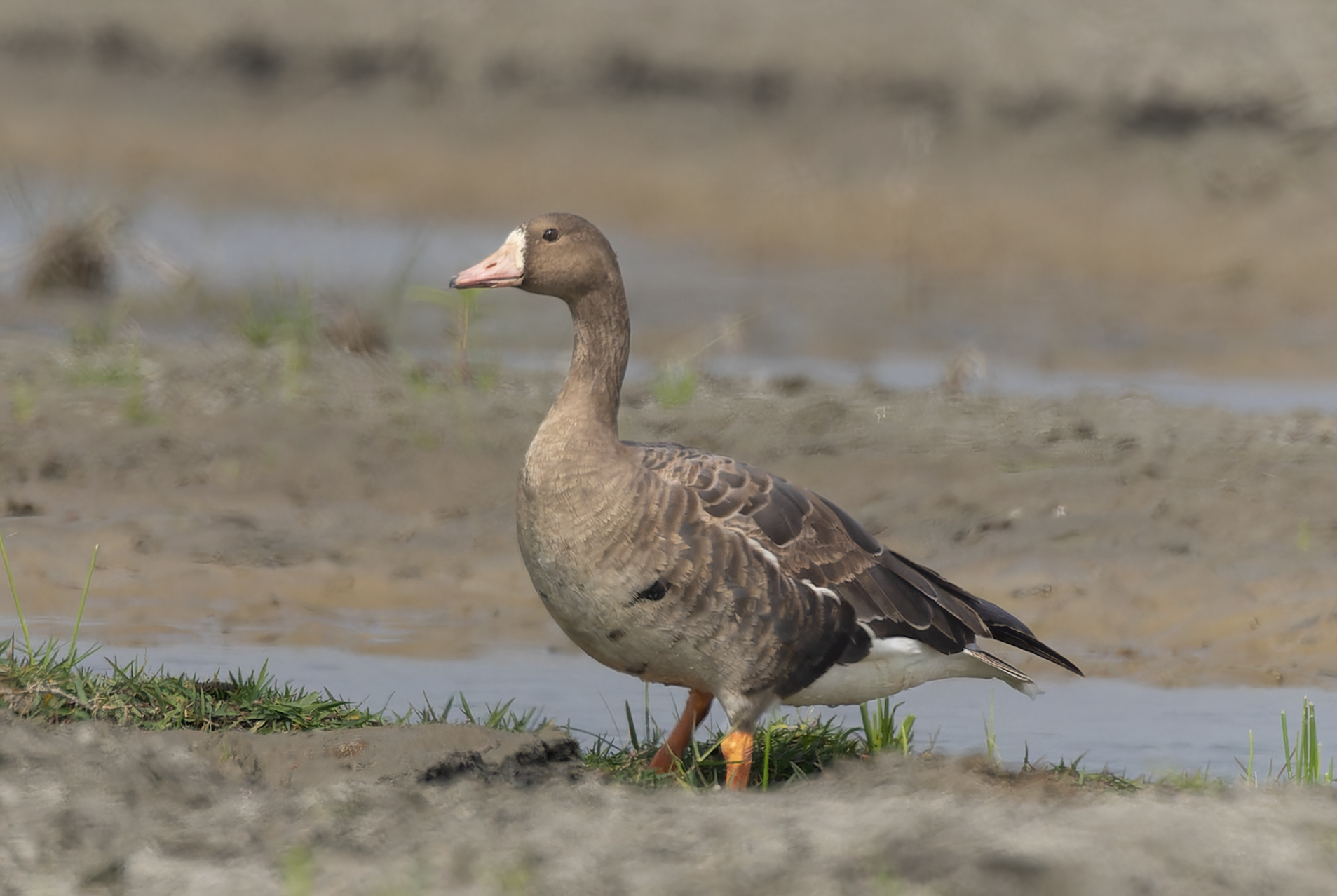
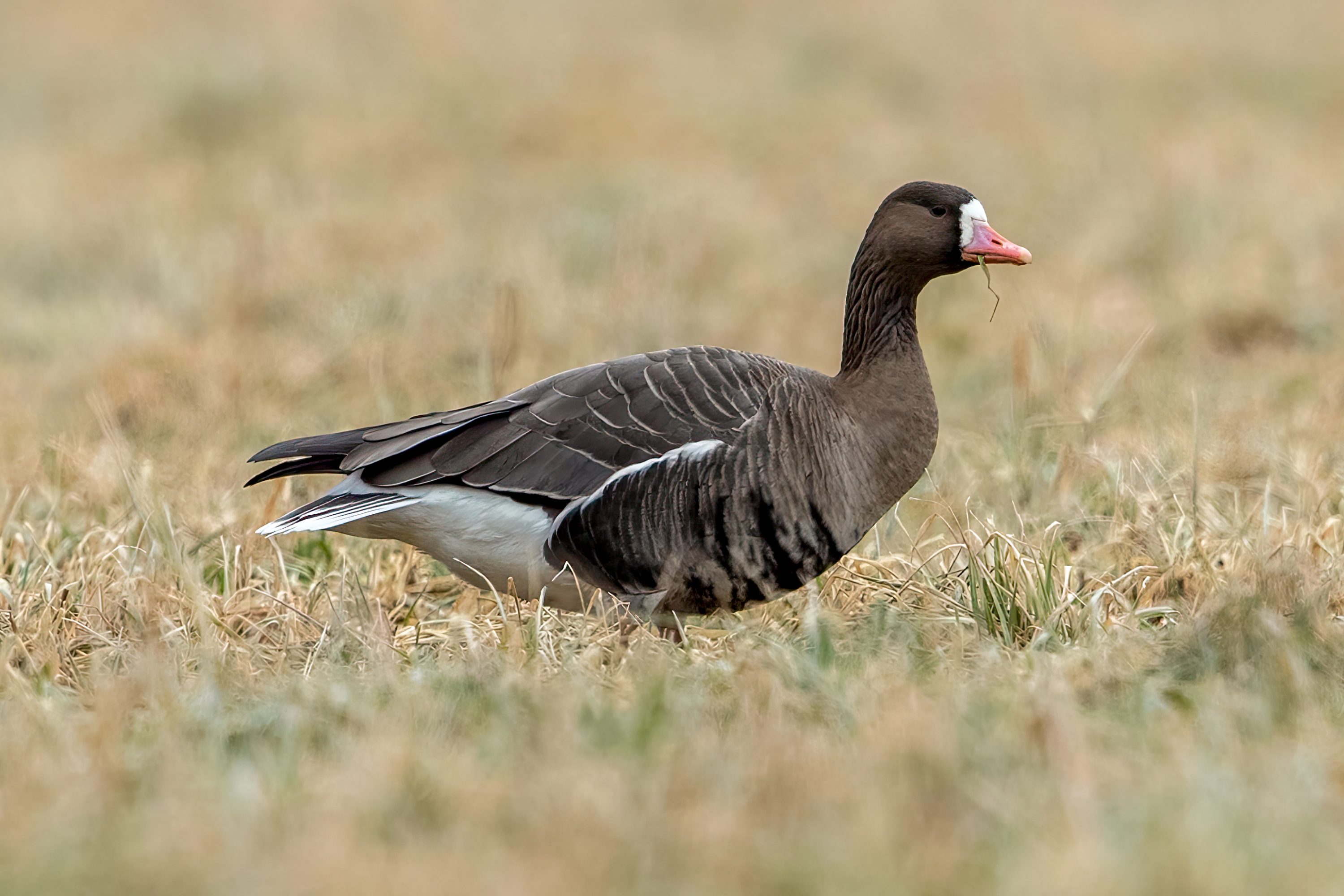
Future climate and land-use change could disrupt the East Asian spring migration system of greater white-fronted geese (Anser albifrons) more severely than habitat-area loss alone would suggest. A study published in Global Ecology and Conservation modelled the migration network from the Yangtze Basin to the Russian Arctic. Across future scenarios, more than 25% of suitable habitat was projected to be lost, while migration-network integrity fell by 35–71%.
Those percentages do not represent a projected decline in goose numbers. The study instead asked whether the chain of wintering, staging and breeding areas would remain sufficiently connected to support long-distance spring migration as climate and land use change.
Network integrity measures functional connectivity
The researchers used species-distribution models to identify potentially suitable areas under current conditions and three future socio-climatic pathways: SSP1-2.6, SSP3-7.0 and SSP5-8.5. Suitable areas were then treated as nodes in a directional network representing northward spring migration.
Network integrity was quantified with Equivalent Connected Area (ECA), a measure of functional connectivity. ECA combines the amount of suitable habitat with the strength of connections among habitat nodes. It can be interpreted as the size of one hypothetical, maximally connected habitat patch that would provide the same overall connectivity as the real network. The network can therefore lose much more functional integrity than habitat area alone when changes affect strategically important links between sites.
Habitat loss exceeded 25% in the future scenarios
More than a quarter of currently suitable habitat along the migration corridor was lost under the future scenarios. The corresponding reduction in ECA was larger, ranging from 35% under the least severe scenario to 71% under the most severe. This difference is important because a migratory species depends not simply on the total amount of habitat, but on a sequence of usable areas that remain connected along the route.
The study is built around the fact that climate and land-use change are uneven along the migration corridor. For a migratory bird, retaining large habitat areas in some places is therefore not enough: the sites also have to remain positioned and functional in ways that allow birds to continue moving through the network.
Ten nodes were critical to both present and future networks
The analysis identified ten key regions needed to sustain both current and future spring migration: the Yangtze River Floodplain, Songnen Plain, Sanjiang Plain, Amur–Heilong River Basin, Liao River Delta, Olenek River, Lena Delta, Lena River Basin, Yana–Indigirka Lowland and Kolyma Lowland. Together, these Chinese and Russian regions connect major wintering, staging and breeding parts of the East Asian migration system.
Only about 16% of habitat within the key sites is currently protected. The study therefore highlights not only how much habitat remains, but which sites make the largest contribution to keeping the migration system connected.
Protection must preserve ecological function as well as area
The authors recommend stronger protection and appropriate management of the most important nodes. Where intact wetlands remain, their ecological functions should be retained. Where geese depend on farmland next to wetlands, the study also points to continued access to adjacent croplands or alternative feeding resources as part of site-level adaptation.
The authors therefore argue for a network-based conservation approach: key sites should not only be protected individually, but managed so that the connections among them continue to function. This dependence on a sequence of connected habitats is why the modelled decline in migration-network integrity is much larger than the percentage of habitat loss alone.
Ecology
Related news
97% of Observed Goose Aggression in Northeast Poland Was Within Species
Field observations of four goose species in Poland recorded 662 aggressive episodes; 97% were within species, while seasonal…
Read story →
Low Breeding Output Helps Explain Greenland White-fronted Goose Decline
A study using 39 years of data linked the decline of Greenland white-fronted geese to low production of…
Read story →
Milder Winters Helped Make Hortobágy a Wintering Area for Greater White-fronted Geese
Thirty-one years of counts in eastern Hungary showed an increase from fewer than 2,000 to more than 30,000…
Read story →SPECIES IN THIS STORY
Species in this story
Independent research and conservation news archive
Did you find this information useful?
Wildlife Vagabond is independently built and maintained. Voluntary support helps cover source verification, hosting and continued work on research and conservation news.
Support Wildlife VagabondThe news archive will remain freely available.