
Human Pressures Had No Consistent Link to Tiger and Leopard Space Use
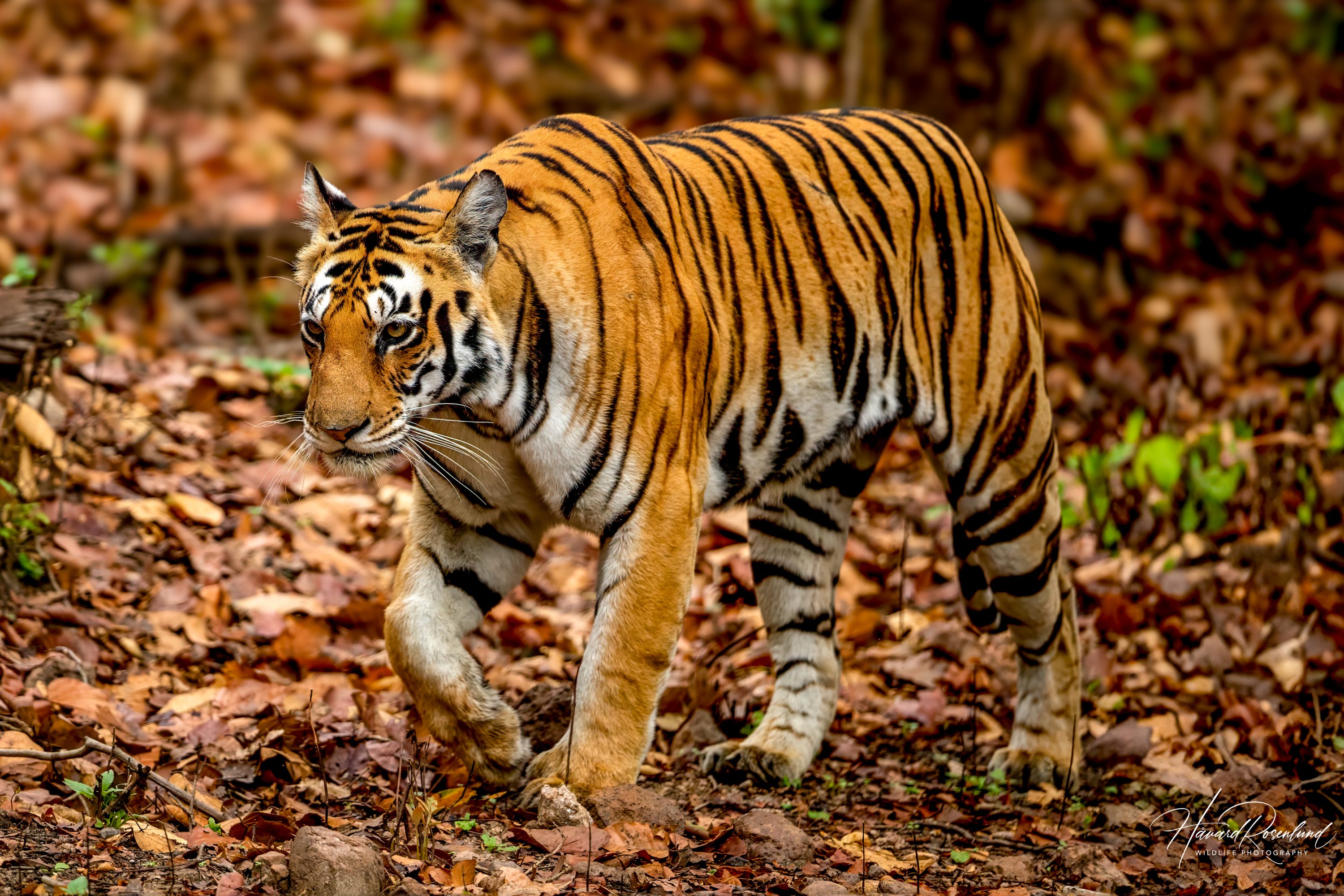
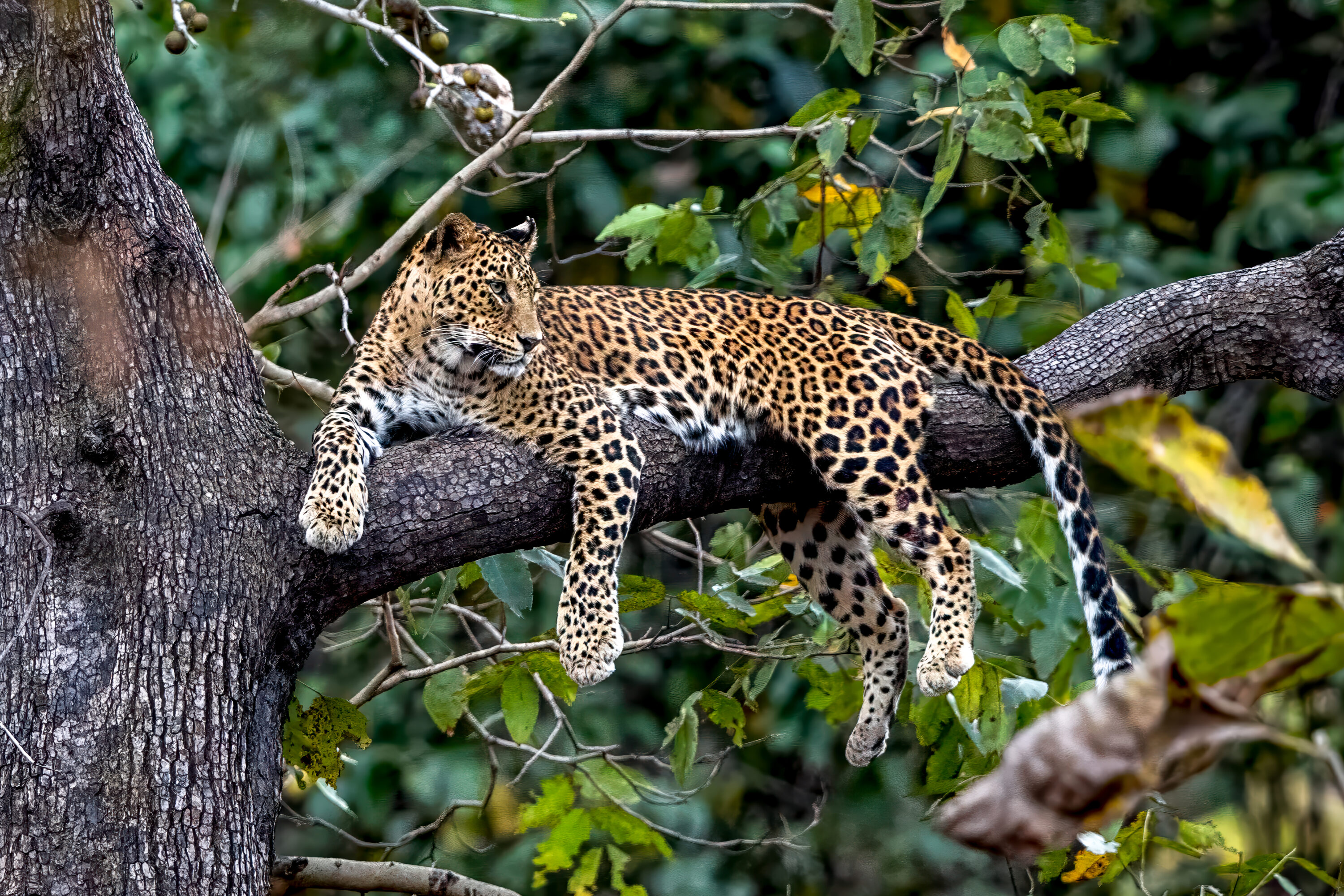
Roads, farms, settlements, livestock and snares can affect large cats in different ways: by changing where prey occur, by influencing where predators move, or through both pathways. Researchers compared these possible links for Amur tigers (Panthera tigris) and Amur leopards (Panthera pardus) in Northeast China Tiger and Leopard National Park.
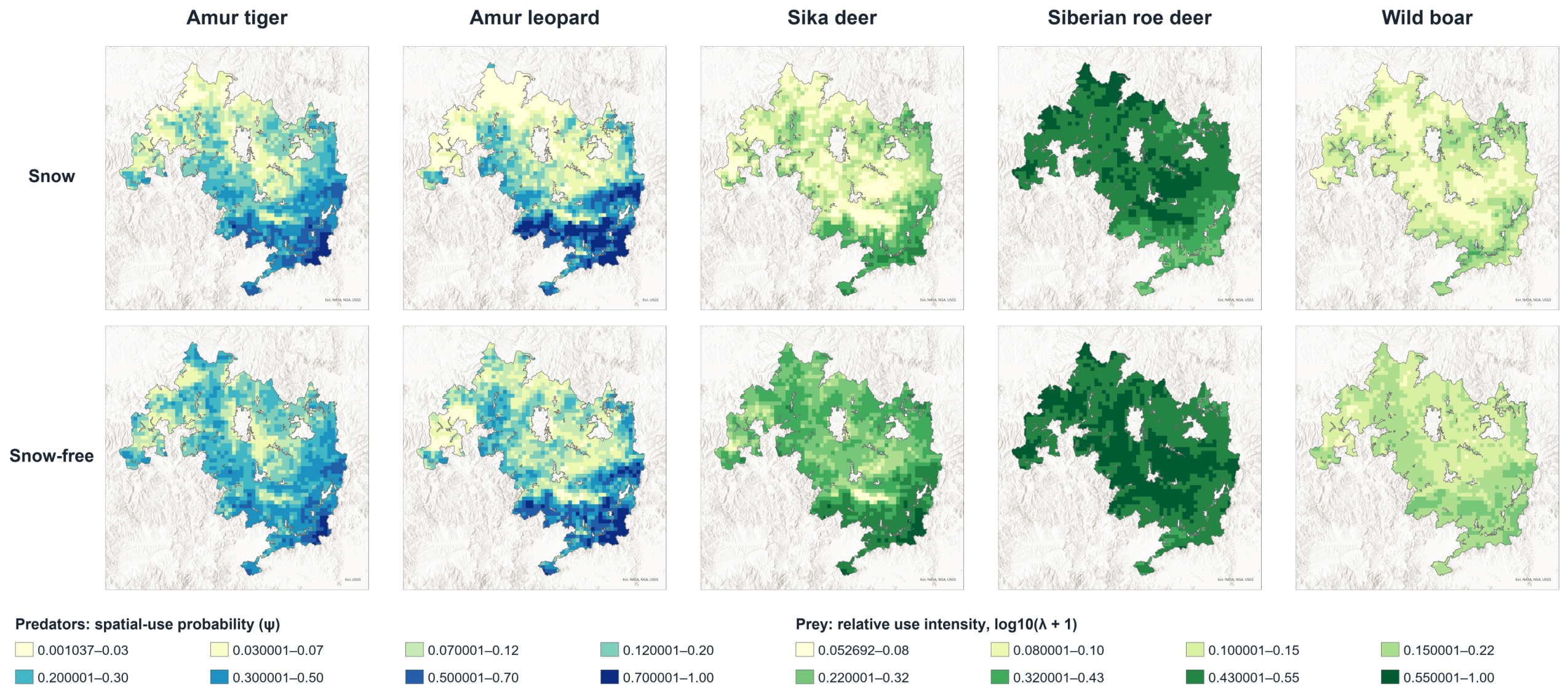
Researchers combined 2024 camera-trap records with patrol observations for tigers and cameras alone for leopards. They estimated how likely each predator was to use different 3-kilometre grid cells, and estimated relative use by three important prey species: sika deer, Siberian roe deer and wild boar. These estimates describe spatial use, not animal numbers. The models also accounted for the fact that cameras and patrols detect animals in different ways.
Prey links differed between predators and seasons
The researchers expected predators to use areas more when their prey did, and human pressure to reduce prey use. The results did not reveal a consistent pattern of that kind. Of the prey–predator links, only the association between sika deer and tigers in the snow season followed the expected positive direction. Roe deer use was negatively associated with tiger use in both seasons, while wild boar use was negatively associated with leopard use in the snow-free season.
Prey use also varied across the park. Siberian roe deer had the broadest modeled distribution, while sika deer use was concentrated more in the south and southeast and covered a larger high-use area in the snow-free season. Wild boar use was more patchy during the snow season. Tiger and leopard high-use areas were concentrated mainly in the south and southeast; they became more continuous in parts of the south and east in the snow-free season and contracted during the snow season.
Some human-pressure links appeared, but not a common pathway
In the snow-free season, three direct associations followed the expected negative direction: greater pressure from farmland and settlements was associated with lower tiger use, and greater livestock activity with lower leopard use. A fourth direct association ran the other way: livestock activity was positively associated with tiger use. No direct human-pressure link to either predator passed the study’s screening in the snow season.
The expected broad link between human pressure and reduced prey use was also absent: none of the tested pressure–prey comparisons supported that negative direction. In one snow-season example, farmland pressure was positively associated with roe deer use, while roe deer use was negatively associated with tiger use. That combination produced a negative indirect association with tiger use, but it did not follow the proposed chain in which pressure reduces prey and reduced prey then means less tiger use.
The direct and prey-linked estimates for farmland and leopard use pointed in opposite directions, but uncertainty around their combined association was large enough to include no overall link. More generally, the seasonal comparisons were exploratory, rather than formal tests that establish the relationships changed between seasons.
Spatial patterns changed across park contexts
The researchers also compared four snow-free contexts defined by modeled predator use, measured human pressure and the park’s zoning. These comparisons were exploratory: zoning identifies an institutional context, not how effectively it is enforced. The negative roe deer–tiger association recurred in all four contexts, as did a negative wild boar–leopard association. Other links depended more on context. For example, road pressure was positively associated with roe deer use in the two contexts with higher modeled predator use, but negatively associated in the two with lower modeled predator use.
Taken together, the results do not point to one simple route from human activity through prey to tiger or leopard space use. The relationships varied among predators, prey, pressures and parts of the year, giving conservation teams specific patterns to check against field observations rather than a single prescription for managing the park.
Ecology
Related news
A lion liver protein was a poor hepatitis B virus receptor—and a less efficient bile-acid transporter
Tests of NTCP proteins from cats, tigers and leopards supported hepatitis B virus binding, unlike lion NTCP, which…
Read story →
Wild tiger and leopard populations more than double in China’s Northeast Tiger and Leopard National Park
A five-year account from China’s Northeast Tiger and Leopard National Park reports rising numbers of both big cats,…
Read story →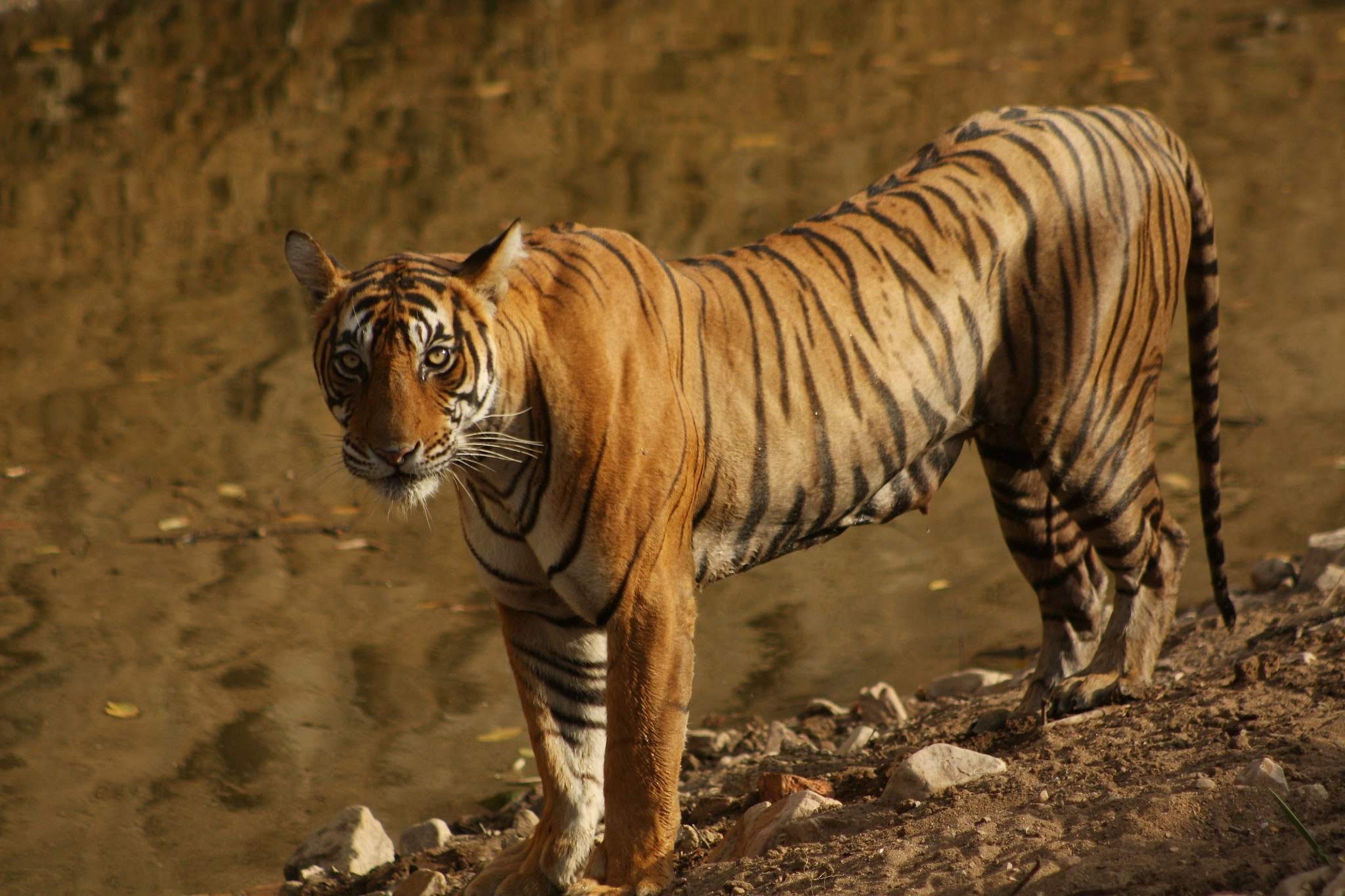
More Human Activity Linked to Tigers Becoming More Nocturnal and Leopards Shifting Their Core Areas
Camera traps at more than 300 sites in northeast China recorded tigers becoming more nocturnal at sites with…
Read story →SPECIES IN THIS STORY
Species in this story
Independent research and conservation news archive
Did you find this information useful?
Wildlife Vagabond is independently built and maintained. Voluntary support helps cover source verification, hosting and continued work on research and conservation news.
Support Wildlife VagabondThe news archive will remain freely available.