
Five Nights of Indirect Artificial Light Reduced Western Bluebird Nestling Growth
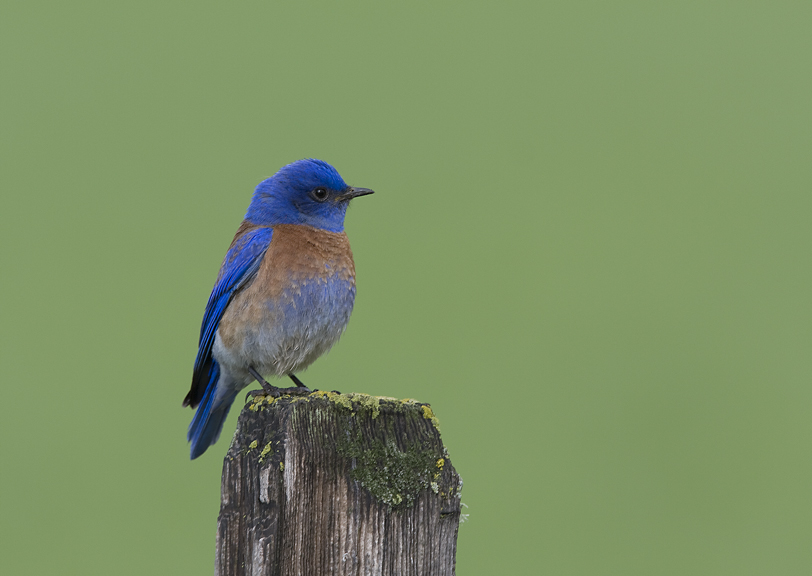
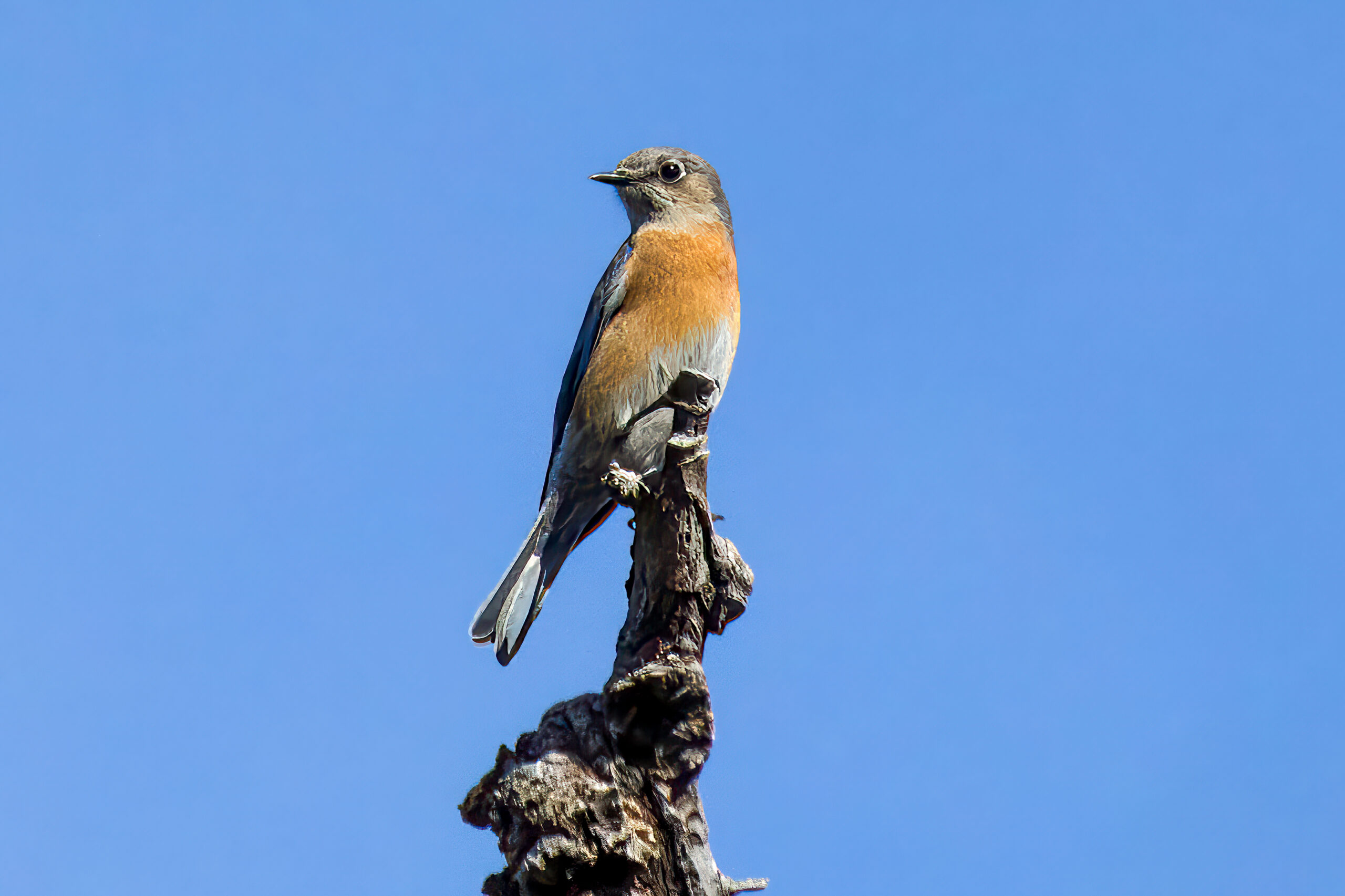
Five nights of dim artificial light outside western bluebird (Sialia mexicana) nest boxes reduced nestling growth in a field experiment in San Luis Obispo County, California, USA. Chicks exposed to light gained less mass and had shorter wings by the end of the treatment. The adults did not consistently start their day earlier or end it later, but the timing of morning and evening activity became less predictable from day to day.
The experiment was carried out during the 2022 breeding season. Twenty-six nests were assigned to either artificial light or unlit control conditions while the chicks were 7–12 days old. The lights illuminated the area around the nest box rather than the cavity itself, mimicking relatively dim light pollution such as intense skyglow or conditions away from streetlamps. Adults roosting outside could experience up to about 2 lux, while females brooding chicks and the nestlings inside the boxes received less than 0.5 lux.
Daily Activity Became Less Predictable
Artificial light did not clearly advance the first activity after sunrise or delay the last activity after sunset. Brood size explained more of the average timing: adults with larger broods tended to begin earlier and remain active later. The timing of both first and last daily activity was nevertheless less consistent at illuminated nests than at control nests.
This contrasts with several earlier studies in which artificial light shifted the timing or length of birds’ active day. The authors note that those studies often involved much longer exposure, sometimes across the whole breeding cycle, and suggest that five nights may have been too short to shift average timing. The lower repeatability may instead represent an early disruption of normal daily timing, although the study could not show what would happen under longer exposure.
Smaller Chicks Despite More Arthropods
The researchers compared growth in 80 nestlings. By day 12, chicks exposed to light had wing chords about 13% shorter overall and had gained less mass between days 7 and 12. Predicted mass gain was about 5.4 g under artificial light compared with 7.7 g in controls. The effect on wing length depended on brood size: in broods of three, light-exposed nestlings had shorter wings than controls, whereas no strong difference was evident between light and control nests in broods of five. Tarsus growth also did not show a clear response to the light treatment.
The lack of a tarsus effect differs from an earlier western bluebird experiment with light inside nest boxes. The researchers suggest that light placement and intensity, the shorter and later exposure, and the stage of tarsus development could explain the difference. They also cite earlier work showing that nestlings can beg more under artificial light, which could increase energy use, but begging behaviour was not measured here.
Artificial light also attracted substantially more potential prey. Sticky traps near illuminated boxes contained an estimated 22.22 arthropods on average, compared with 5.75 at control boxes. Even so, the light-exposed chicks remained smaller. The researchers could not determine whether parents actually delivered more food or whether prey size differed, so any possible feeding benefit from the higher prey density was not enough to produce better nestling growth during the experiment.
These effects appeared under relatively dim, indirect lighting outside the nest cavity, rather than the direct in-box lighting used in several earlier experiments. The study therefore shows that more ecologically realistic artificial light can affect both the regularity of adult activity and nestling development after only a short exposure. The authors note that smaller size before fledging could affect later survival, but survival after the experiment was not measured.
Reproduction & development
Related news
Therthangal Spoonbill Colony Returned to 12 Active Nests After Complete Breeding Failure
Six breeding seasons at Therthangal Bird Sanctuary in Tamil Nadu ranged from 12 active Eurasian Spoonbill nests in…
Read story →
Lapwing and Oystercatcher Nesting Shifted in Opposite Directions With Latitude
Fifty years of UK nest records showed that northern lapwings nested later towards the north while Eurasian oystercatchers…
Read story →
Juvenile Harris's Hawks Manipulated Pine Cones for About Five Minutes
Two juvenile Harris's hawks in Buenos Aires Province tore pine cones from trees, carried them to new perches…
Read story →SPECIES IN THIS STORY
Species in this story
Independent research and conservation news archive
Did you find this information useful?
Wildlife Vagabond is independently built and maintained. Voluntary support helps cover source verification, hosting and continued work on research and conservation news.
Support Wildlife VagabondThe news archive will remain freely available.