
Faecal Metastrongylus Egg Counts Declined With Elevation in Italian Wild Boar
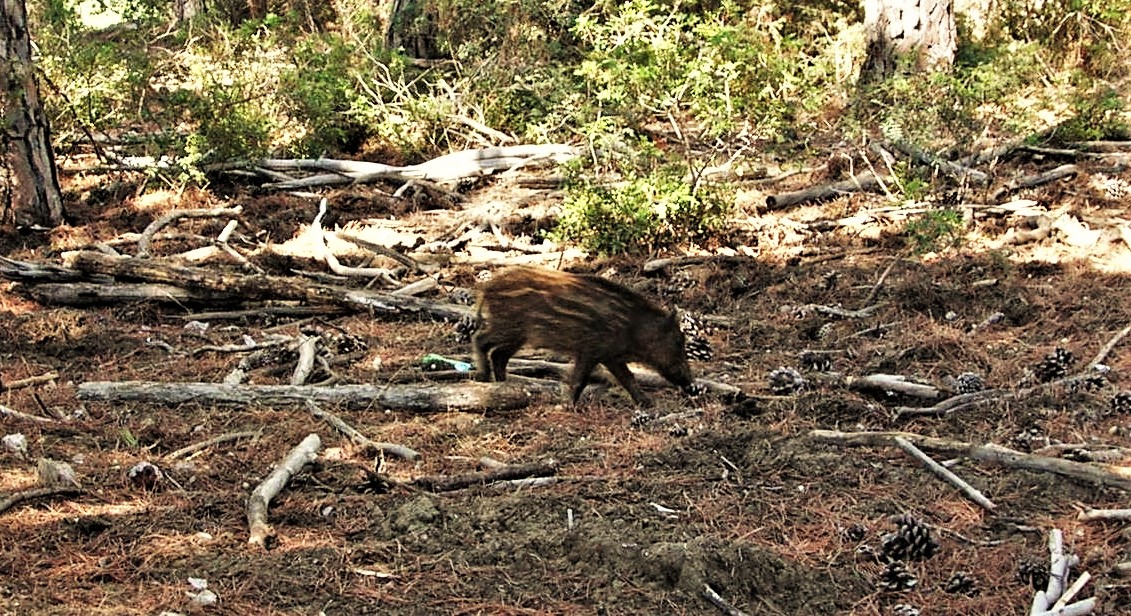
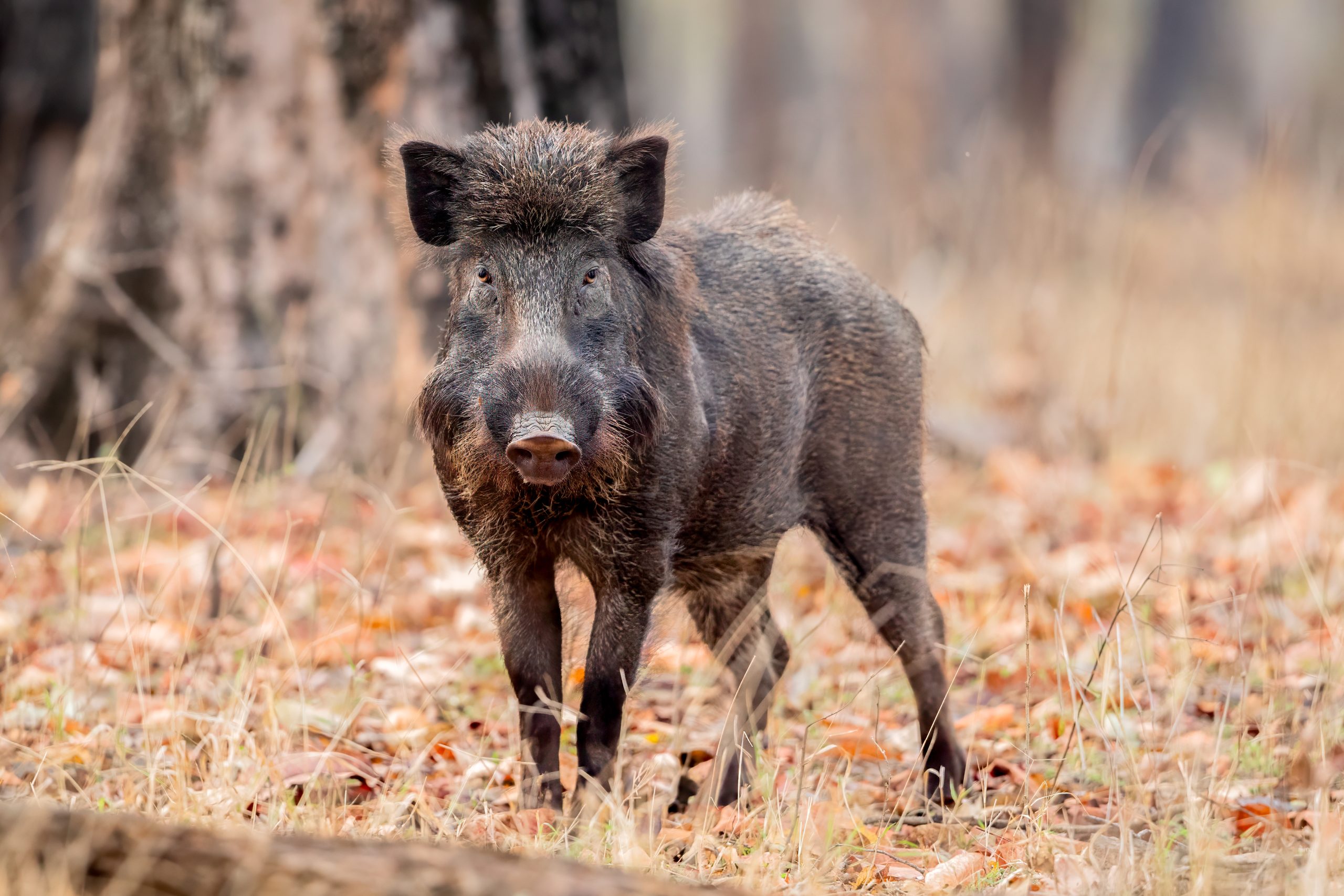
A study of wild boar (Sus scrofa) in two contrasting Italian protected areas detected the same nine parasite taxa in faecal samples from both populations, but the amount of parasite stages shed in faeces differed between the alpine and Mediterranean environments. Researchers analysed 94 faecal samples collected seasonally between November 2023 and July 2025: 39 from the Orco Valley in Gran Paradiso National Park and 55 from Maremma Regional Park.
The Mini-FLOTAC laboratory method separated parasite eggs, oocysts and cysts from faeces by flotation and counted them microscopically. Prevalence is the proportion of samples in which a parasite was detected; infection intensity is the average egg or (oo)cyst count among positive samples; and abundance averages those counts across all samples, including negatives. These faecal measures describe shedding of parasite stages and are not direct counts of adult parasites in the lungs or intestine, nor measures of clinical disease. Parasite stages were detected in 89 of the 94 samples.
The same parasite groups occurred in both parks
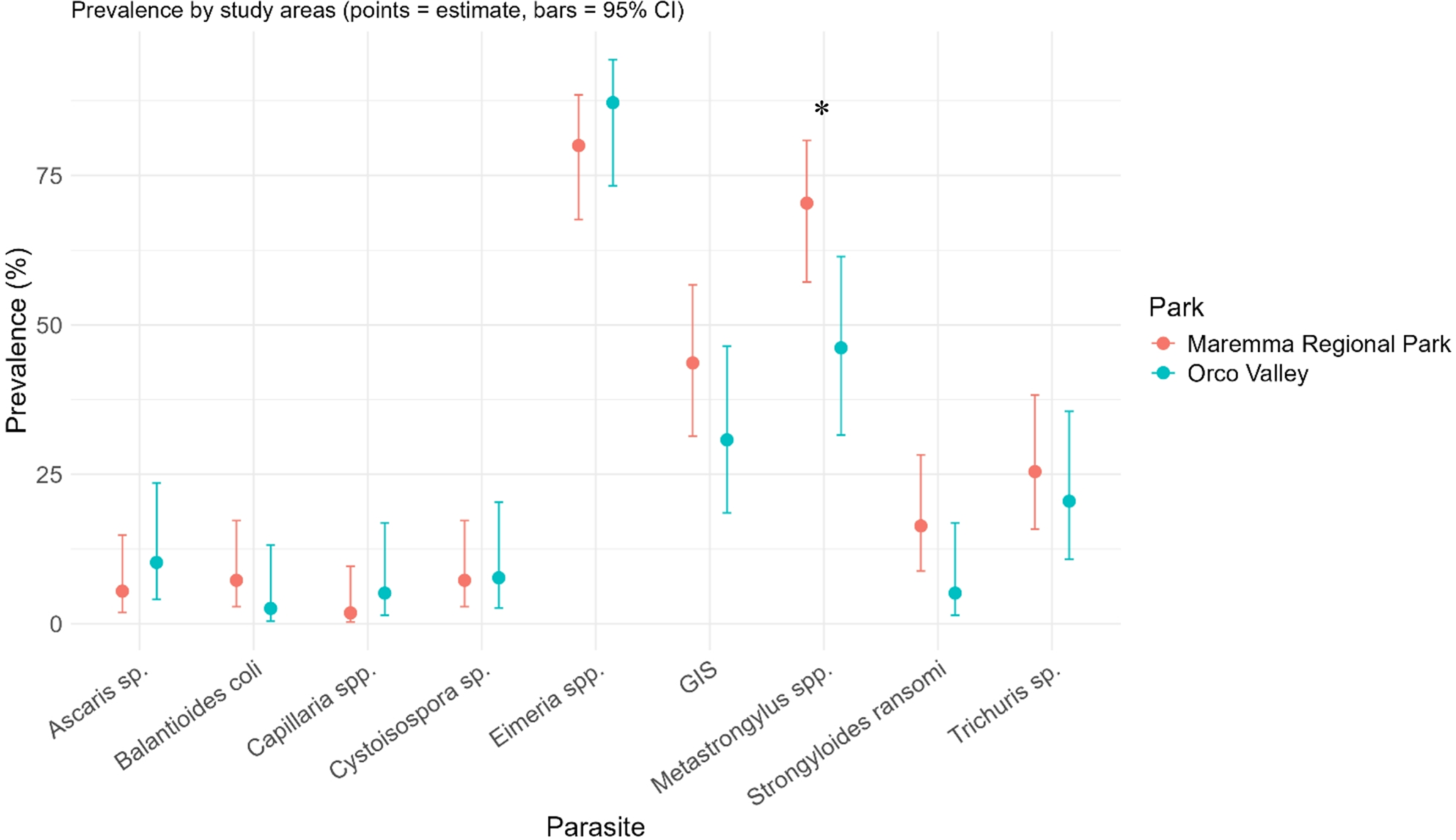
Eimeria spp. were the most prevalent parasites, detected in 87.2% of Orco Valley samples and 80.0% of Maremma samples. Eimeria are coccidian protozoan parasites that shed environmentally resistant oocysts in faeces. These stages can persist in soil and other substrates and accumulate at places repeatedly used by wild boar, including rooting sites. In adult wild boar, Eimeria infections are generally subclinical under natural conditions, while overt coccidiosis is more associated with young or immunocompromised animals.
Lungworms of the genus Metastrongylus were detected more often in Maremma, in 69.1% of samples, than in the Orco Valley, where 46.1% were positive, and their faecal egg abundance was also higher in Maremma. Metastrongylus has an indirect life cycle that depends on earthworms as intermediate hosts, so transmission depends not only on the boar but also on conditions suitable for earthworms.
The two sites therefore looked more similar when only presence was considered than when parasite quantities were compared. Eimeria prevalence was high in both parks, but mean abundance was about 304 oocysts per gram in Maremma versus about 82 in the Orco Valley. Gastrointestinal strongyles likewise had higher intensity and abundance in Maremma. The same parasite community can therefore show very different quantitative infection patterns.
Environmental patterns appeared in egg counts, not simple presence
When the researchers modelled whether the three dominant groups — Eimeria, Metastrongylus and gastrointestinal strongyles — were present or absent, none of the tested environmental variables showed a clear association. The pattern changed when the number of eggs or oocysts in faeces was analysed.
Metastrongylus egg counts decreased with increasing elevation. The authors link this pattern to the lungworm life cycle: earthworms are sensitive to temperature, soil moisture and seasonal conditions, and their abundance tends to decline at higher elevations. Fewer suitable intermediate hosts could therefore reduce opportunities for lungworm transmission.
Gastrointestinal strongyles — a broad group of nematode worms with free-living larval stages in the environment — showed lower egg abundance in open natural habitats than in the other habitat categories. The authors suggest that exposed habitats may be less favourable for these free-living stages because of greater drying, temperature fluctuations and ultraviolet radiation. No tested environmental variable showed a clear association with Eimeria oocyst abundance.
The study therefore found similar parasite communities in the two wild-boar populations, but differences in how strongly some parasites were represented and in how their faecal egg counts varied along environmental gradients. The results describe parasite shedding and environmental associations; they do not show that elevation or habitat alone caused the infections.
Disease, parasites & microbiology
Related news
Gut Microbiomes Across Nine Kruger Mammals Clustered More Strongly by Dietary Group Than Species
A study of 89 quality-filtered faecal samples from nine wild mammals in Kruger National Park found that carnivores,…
Read story →
Nearly Three-quarters of Migrating Redwings Carried Ticks During Two Mild Belgian Autumns
Ticks were found on 72.9% of 284 redwings sampled during late-autumn migration in Belgium; 12.9% of 698 screened…
Read story →
Hooded Crows Were Linked to 87 Reported West Nile Virus Bird Outbreaks in Europe
The September ECDC–EFSA report linked hooded crows to 87 reported West Nile virus bird outbreaks, Eurasian magpies to…
Read story →SPECIES IN THIS STORY
Species in this story
Independent research and conservation news archive
Did you find this information useful?
Wildlife Vagabond is independently built and maintained. Voluntary support helps cover source verification, hosting and continued work on research and conservation news.
Support Wildlife VagabondThe news archive will remain freely available.