
Lead and Mercury Declined in Finnish Osprey Eggs From 1972–2005
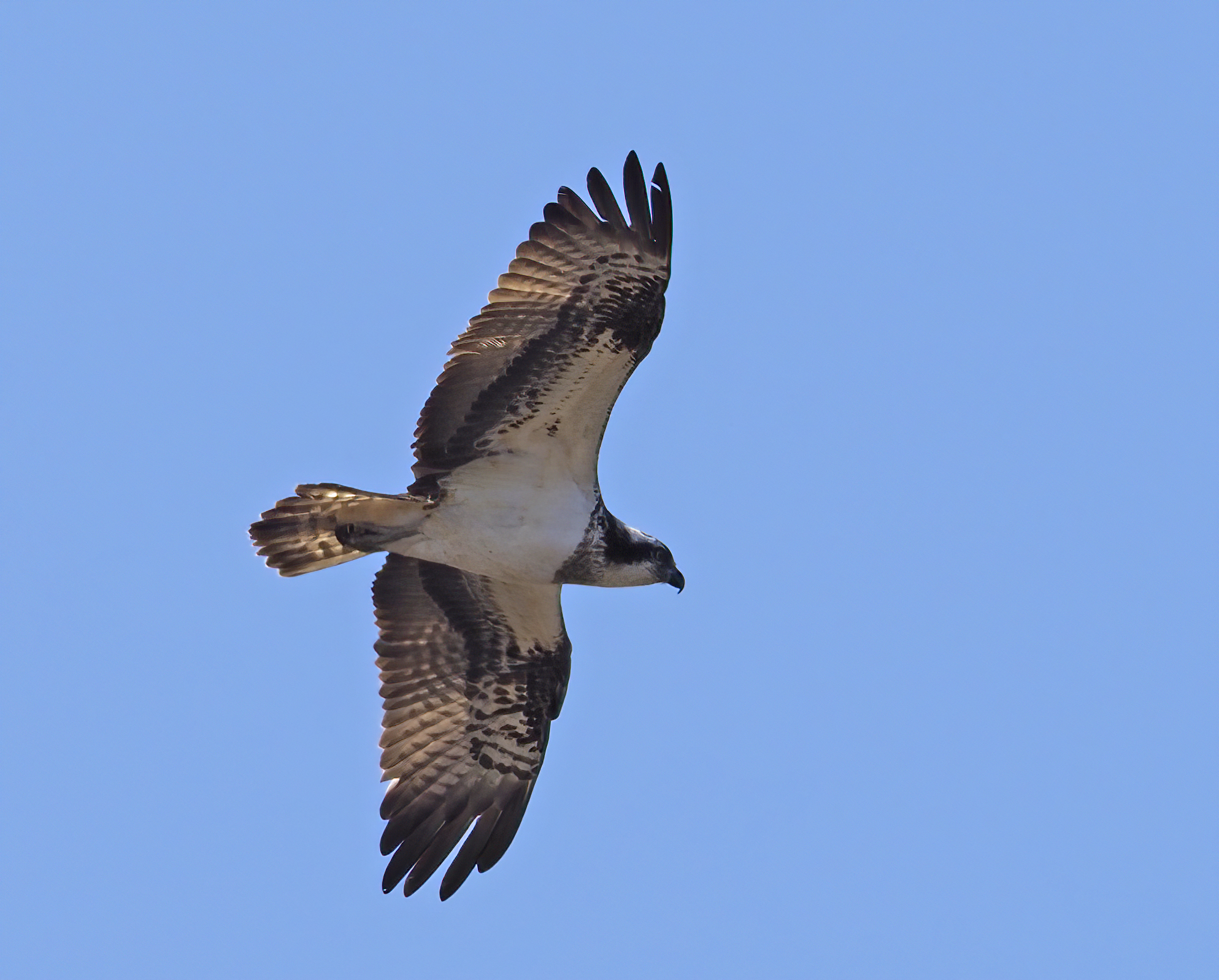
Lead and mercury concentrations declined over three decades in archived osprey eggs from Finland, according to a long-term contaminant study published on 23 May 2026. The strongest change was recorded for lead, which fell by an average of about 6.9 per cent per year between 1972 and 2005.
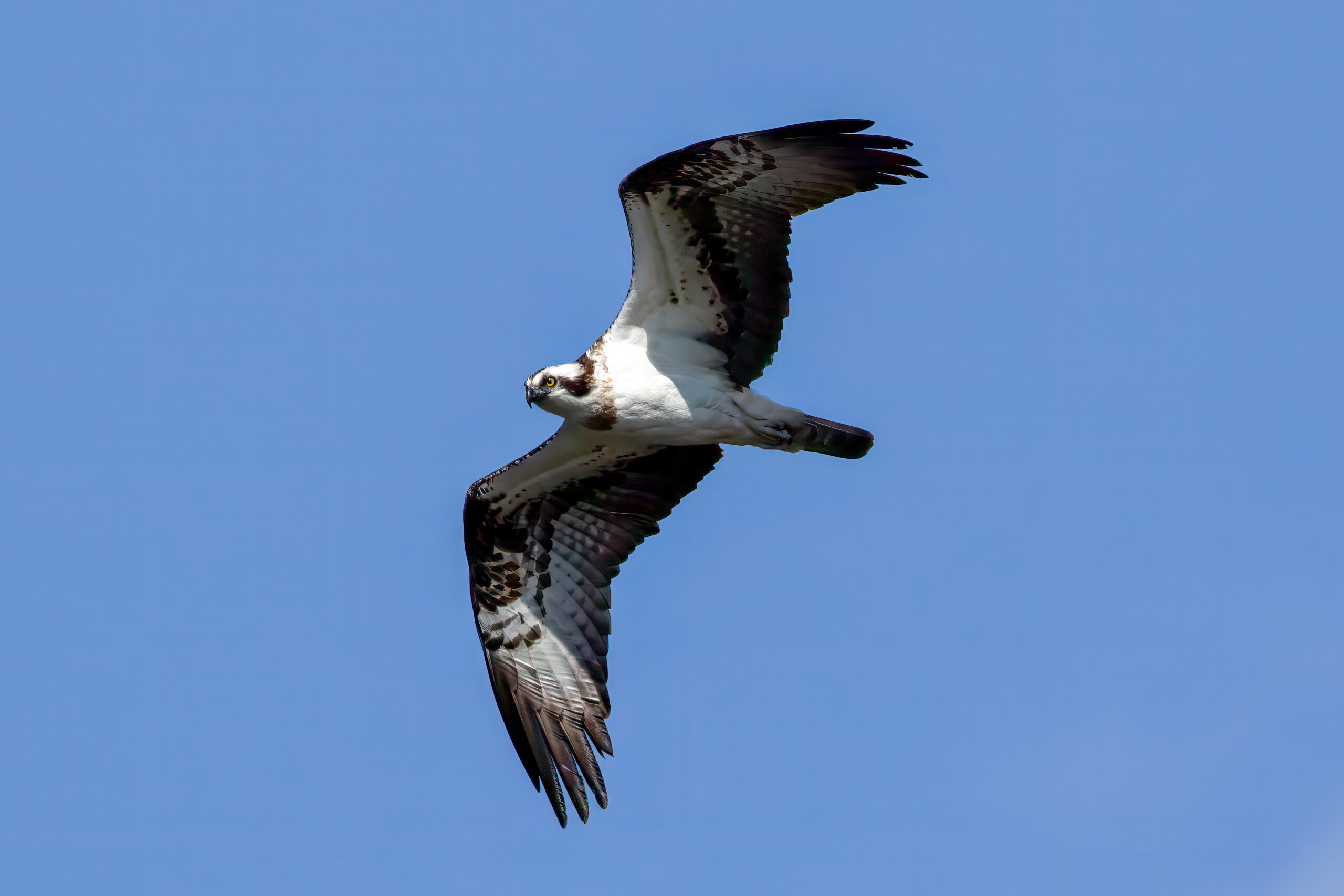
The study used 114 unhatched eggs collected by licensed bird ringers during Finland’s national osprey monitoring programme. Because the osprey (Pandion haliaetus) feeds almost entirely on fish and occupies a high position in aquatic food webs, chemicals accumulated in its eggs can reveal changes in lakes and coastal waters over time.
The main study areas were the Northern Quark archipelago in the Gulf of Bothnia and Lake Vanajanselkä in south-western Finland. Northern Quark receives metals carried from acid-sulphate soils, while Lake Vanajanselkä has a long history of industrial and other human-derived pollution. Some mercury data also came from a less affected lake district in the south-west.
Researchers measured total mercury, methylmercury, cadmium, chromium, copper, lead, selenium and zinc. Methylmercury is the organic form of mercury that is readily taken up by organisms and can biomagnify through aquatic food webs, making it especially relevant in a fish-eating predator. They also looked for palladium, platinum and rhodium, but all samples were below the quantification limits for these three platinum-group metals.
Lead fell fastest across the three-decade record
Four measured contaminants showed significant downward trends. Lead decreased by about 6.9 per cent annually across the dataset, chromium by 2.8 per cent, methylmercury by 1.9 per cent and total mercury by 1.3 per cent. The estimated declines tended to be slightly faster in Northern Quark than at Lake Vanajanselkä. Selenium, copper and zinc showed no significant time trend, while cadmium was detected too rarely for a reliable trend analysis.
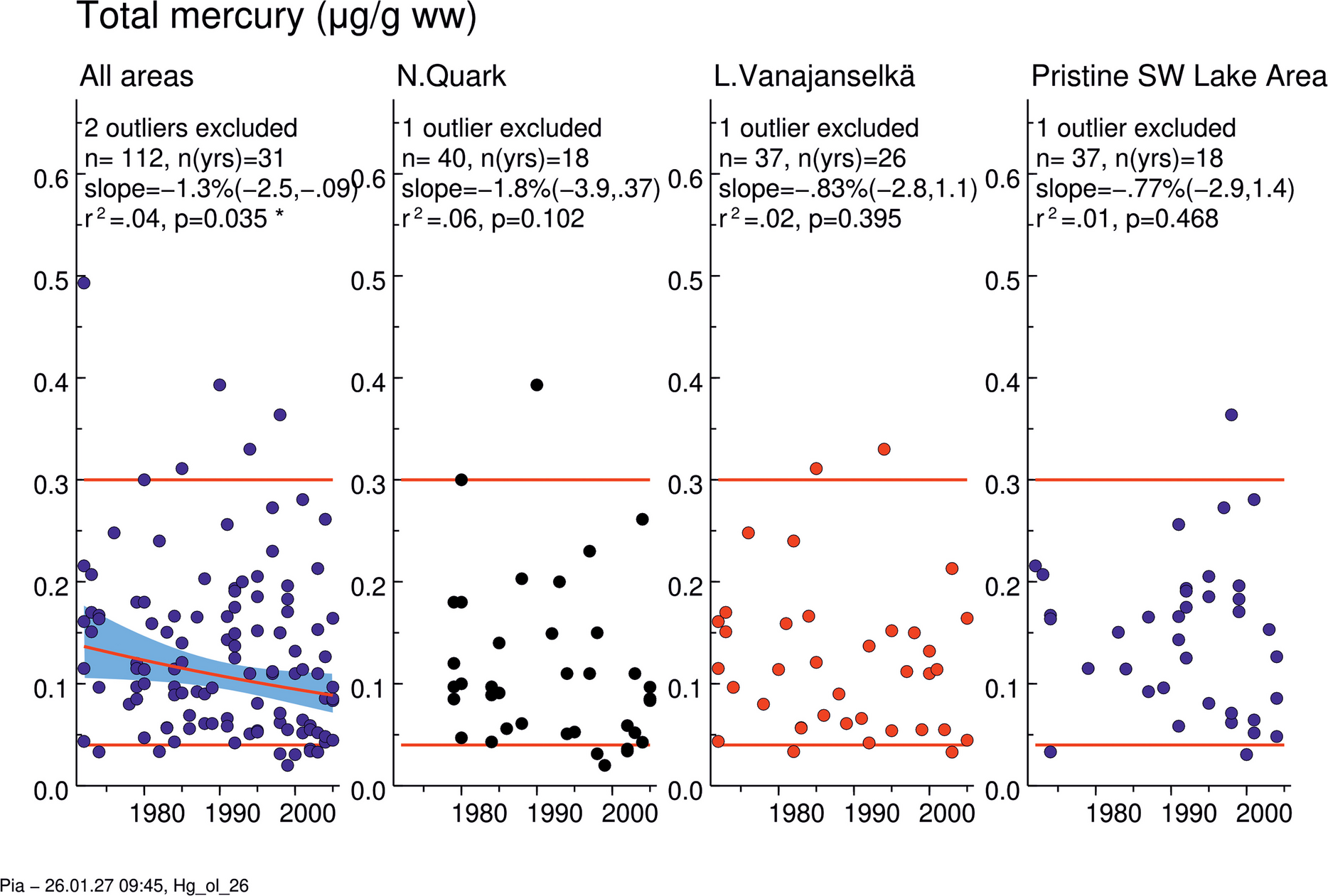
The steep decline in lead followed the phase-out of leaded petrol. Decreases in mercury and lead also broadly matched reductions recorded in atmospheric deposition in Finland and elsewhere in Europe. Although the two main environments had different pollution histories, concentrations of most metals did not differ significantly between them. Selenium was the exception, with higher levels in the marine Northern Quark area. Selenium-dependent enzymes can help protect cells against mercury-related oxidative damage, and the authors note that the relatively high selenium levels may therefore have reduced mercury toxicity.
That limited spatial contrast, together with similar results from prey fish, led the authors to identify long-range atmospheric deposition as the main influence on egg concentrations during the study period. Local pollution sources may still have contributed, but the available environmental data were not detailed enough to quantify their shares.
A few eggs crossed toxicological thresholds
Most eggs remained below the toxicological reference levels used in the assessment. These values indicate concentrations associated with increased risk of injury in birds rather than an exact boundary above which every egg must be harmed. Total mercury reached the reference range for moderate injury in 6.1 per cent of eggs, while a single egg reached the high-injury range. All samples collected after 1998 were at or below the low-injury mercury threshold. Lead exceeded a tentative toxicity threshold in 2.6 per cent of eggs. The authors conclude that the highest mercury and lead concentrations could have reduced reproductive success, either by themselves or together with dioxin-like pollutants.
The Finnish osprey population gradually recovered during the same period in which metals and persistent organic pollutants declined. The study treats these changes as parallel trends, not proof that lower metal exposure alone caused the recovery. Many ecological and conservation factors can affect reproduction and population growth.
The egg archive documents historical exposure
Several limitations are important when interpreting the results. Only unhatched eggs could be collected from the protected population, and these may contain higher contaminant concentrations than eggs that hatch successfully. Embryo development, laying order and drying can also add variation. The study covered only two principal locations, and the newest eggs were collected in 2005. It therefore documents historical change and cannot by itself describe exposure in Finland in 2026.
Archived specimens collected decades ago allow laboratories to measure contaminants that were not the original focus of monitoring and to compare chemical trends with changes in an aquatic predator. In this series, osprey eggs documented substantial declines in several metals while a small number reached levels of toxicological concern.
Threats
Related news
VKM: Exporting Up to 26 Osprey Young to Ireland Would Not Harm Conservation Status in Norway
VKM concluded that exporting up to 26 wild young ospreys from two Norwegian donor areas to Ireland would…
Read story →
24 Osprey Chicks Fledged From 12 Rutland Nests
Rutland Osprey Project reported 24 chicks fledged from 12 nests in 2026. The season produced 14 chicks assessed…
Read story →
Ospreys Raised Three Chicks in Switzerland’s First Breeding in 112 Years
A male released by the Swiss reintroduction project and an unringed female of unknown origin raised three chicks…
Read story →SPECIES IN THIS STORY
Species in this story
Independent research and conservation news archive
Did you find this information useful?
Wildlife Vagabond is independently built and maintained. Voluntary support helps cover source verification, hosting and continued work on research and conservation news.
Support Wildlife VagabondThe news archive will remain freely available.