
Machine Learning Maps the Overlapping Calls of Greylag Geese
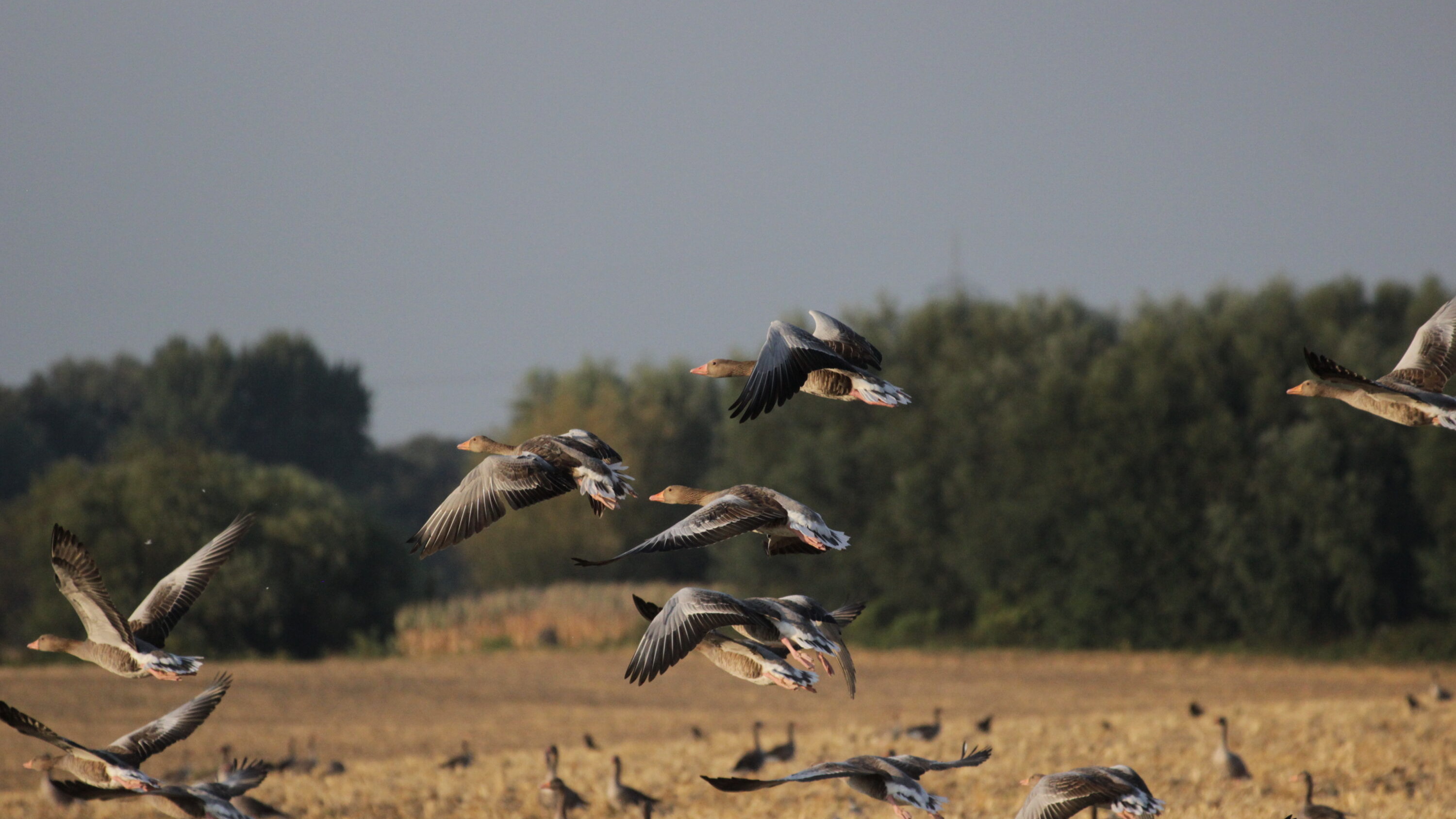
Machine-learning methods found both clear divisions and broad zones of overlap in the vocal repertoire of greylag geese (Anser anser). The peer-reviewed study, published in Scientific Reports on 3 June 2026, also showed that the apparent number of call types can change substantially with the analytical method used.
The researchers analysed recordings from a free-flying, individually marked flock at the Konrad Lorenz Research Center in Austria. The final dataset contained 6,651 single-syllable calls collected in the field and manually assigned to six behavioural categories: alarm, contact, departure, distance, recruitment and triumph calls.
Four ways to represent the same sounds
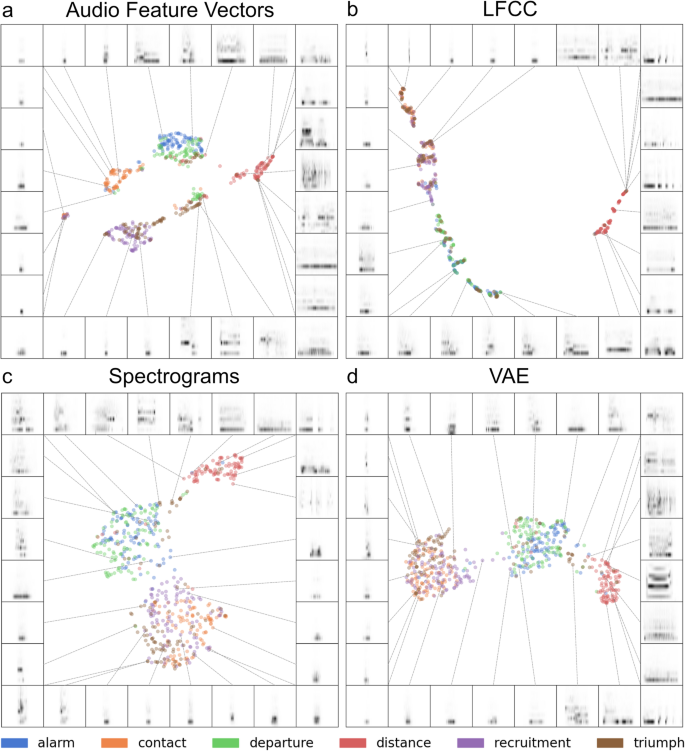
Before a computer can group sounds, each recording must be converted into a numerical representation. The team compared four ways of describing each sound: 23 directly measured acoustic features; linear-frequency cepstral coefficients (LFCCs), which summarise the overall shape of the sound spectrum; spectrograms; and features compressed from spectrograms by a neural network called a variational autoencoder. They then used three unsupervised clustering methods—k-means, HDBSCAN and Leiden community detection—to search for structure without giving the algorithms the human labels.
The comparison matters because an automated cluster is not automatically a biologically meaningful call type. An algorithm groups recordings according to the features and distance rules supplied to it. If the representation emphasises duration while another emphasises the distribution of sound energy, the same collection of calls can be divided differently.
That is what the study found. Depending on the representation, algorithm and sample size, the computer produced different numbers of clusters and different levels of agreement with the six human categories. Audio-feature vectors generally gave the closest match to the human labels. HDBSCAN applied to the entire audio-feature dataset produced the strongest reported overlap, while other combinations merged or subdivided parts of the repertoire.
Some call types form a continuum
Despite the methodological variation, several biological patterns appeared repeatedly. Distance calls were the clearest and most structurally distinct category. These loud calls are typically used when birds lack visual contact, so a distinctive acoustic structure may help a listener identify the caller and the situation without supporting visual information.
Other categories overlapped. Contact and recruitment calls occupied partly shared acoustic space, as did departure and alarm calls. Triumph calls extended into areas associated with contact, recruitment, departure and alarm sounds. The result supports a partly graded repertoire in which some signals change along continua rather than falling into perfectly separated boxes.
Behavioural context may supply information that a single syllable cannot. A recruitment call can differ from a contact call in loudness, rhythm or the accompanying head movement. Alarm and departure calls may sound structurally similar in isolation but occur in different situations. The analysis excluded rhythm and call sequences, and amplitude was normalised because recording distances varied.
Call types outside the dataset
The study was not designed to establish the total number of sounds used by greylag geese. Hisses were excluded because too few recordings were available, and greeting and locomotion calls were not included. More than 4,000 segments with overlapping birds, strong remaining noise or uncertain labels were also removed. The results describe the structure of the six analysed categories, not a complete dictionary of goose communication.
The authors recommend combining automated analysis with extensive behavioural observation. Greylag geese provided an unusually strong test because decades of work on individually known birds supplied detailed contextual knowledge against which the computer groupings could be compared.
Behaviour
Related news
Some Greylag Geese Migrate One Year and Stay the Next
GPS tracking at Lake Neusiedl showed that most of the geese migrated, with winter destinations ranging from Germany…
Read story →
North-west European Greylag Goose Winter Population Estimated at 802,320
The north-west European greylag goose population was estimated at 802,320 wintering birds in January 2025, well above the…
Read story →
Scotland Will Develop National Plan for Breeding Greylag Geese
Scotland’s new goose policy delivery plan commits to a national management plan for breeding greylag geese and continued…
Read story →SPECIES IN THIS STORY
Species in this story
Independent research and conservation news archive
Did you find this information useful?
Wildlife Vagabond is independently built and maintained. Voluntary support helps cover source verification, hosting and continued work on research and conservation news.
Support Wildlife VagabondThe news archive will remain freely available.