
20 of 21 GPS-Tracked Greylag Geese Migrated, but Four Switched Strategy Between Years
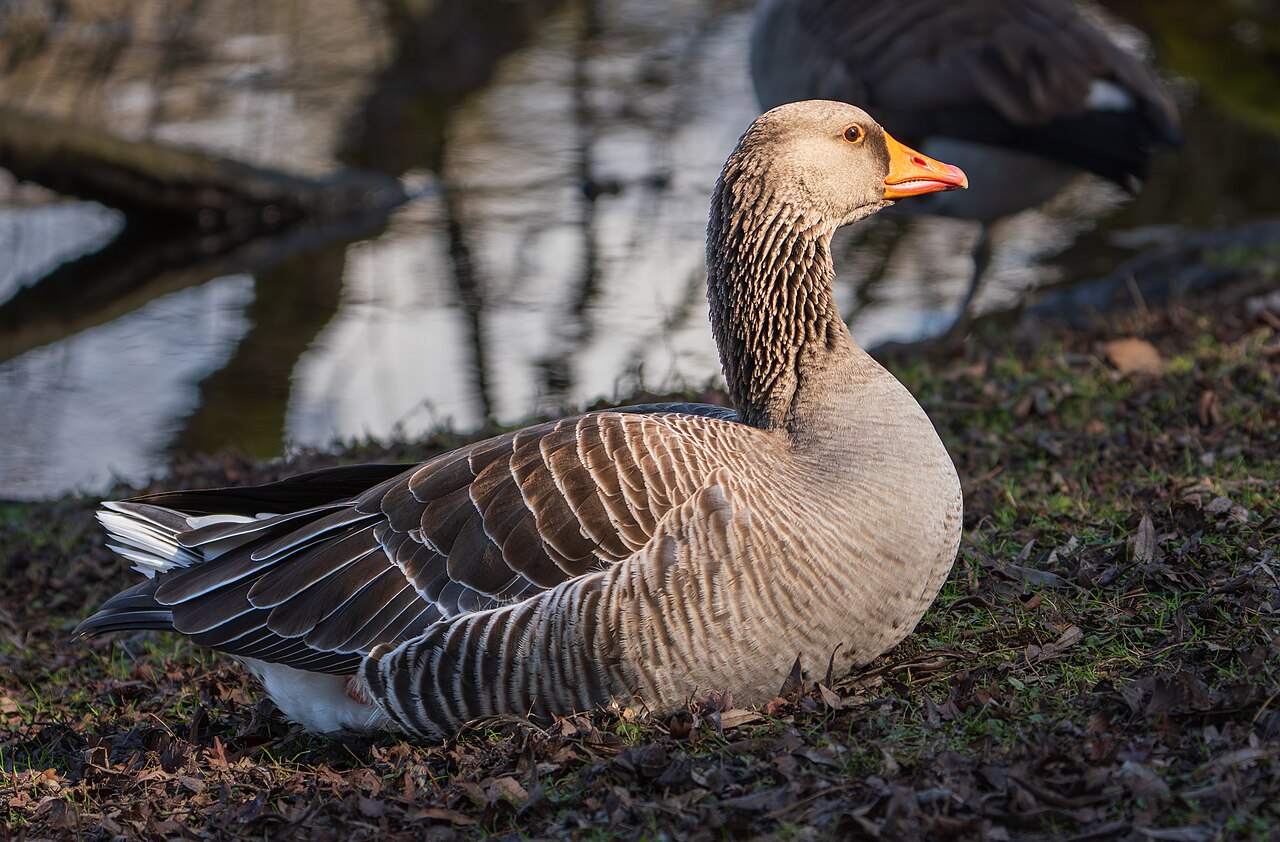
Twenty of 21 GPS-tracked Greylag Geese (Anser anser) around Lake Neusiedl migrated in at least one year, while only one individual remained resident throughout its entire tracking period. Even so, migration was not completely fixed: four geese switched between migratory and resident behaviour across years.
The study followed wild geese from 2018 to 2025 in and around Neusiedler See–Seewinkel National Park, which spans the Austrian–Hungarian border. Greylag Geese are considered partially migratory, meaning that migrants and year-round residents can occur within the same population. The researchers wanted to know whether individual birds consistently belonged to one of those behavioural types or changed strategy over time.
GPS tracks showed both consistency and flexibility
A total of 29 geese were fitted with GPS transmitters, and 21 provided enough data for the final analyses. Together they contributed 57 individual-year tracks. Positions were normally recorded every 15 to 30 minutes, giving the researchers detailed annual movement paths rather than only observations from a few stopover or wintering sites.
To distinguish migrants from residents, the team combined several measures. One was net squared displacement, which describes how far a bird is from its starting area through time. They also considered annual space use, directed movement segments, speed and distance. A new summary measure combined both how far and how long a goose remained displaced from its breeding area, making very different annual tracks easier to compare.
The result was a population dominated by migrants in this tracked sample: 20 of 21 individuals showed migratory behaviour, and just one remained resident in every year for which it was followed. Four individuals, however, changed classification between years. Partial migration was therefore expressed not only as differences among birds but also as behavioural plasticity within some individuals.
Winter destinations ranged from Germany to Sardinia
The migrants did not share one uniform route or wintering area. Their movements varied substantially in distance, timing and spatial pattern, and winter destinations extended along a broad north–south gradient from Germany to Sardinia.
This variation is important because “migrant” is not a single behaviour. Two geese can both leave the breeding region but differ markedly in how far they travel, how long they remain away and where they spend winter. The study’s combination of movement measures was designed to retain that variation rather than forcing every annual track into the same simple pattern.
Partial migration can be stable without being fixed
Most repeatedly tracked individuals were consistent in whether they migrated, supporting the idea that individual movement strategies can persist across years. The four switches nevertheless show that the behaviour is not irreversible.
The study did not identify one environmental or physiological factor that caused those switches. Instead, it establishes the movement pattern that future work can test against factors such as weather, social status, body condition or changing resource availability. At the population level, the result is a mixture of strong individual consistency, large differences among migrants and enough flexibility for some geese to change strategy from one year to another.
Behaviour
Related news
Older Female Blackbirds Used More Human-Made Items in Their Nests
An eight-year study of an urban Blackbird population in Szczecin, Poland, found that human-made nest material was common…
Read story →
Red Foxes and Stone Martens Shared Space but Separated Their Activity More When Both Were Abundant
Camera traps at 24 sites in central Spain showed high spatial co-occurrence between red foxes and stone martens.…
Read story →
Red Foxes Visited All 26 Wolf-Killed Red Deer Carcasses and Responded More to Food Availability Than Wolf Activity
Camera traps at 26 wolf-killed red deer carcasses in Stelvio National Park recorded red foxes at every site.…
Read story →SPECIES IN THIS STORY
Species in this story
Independent research and conservation news archive
Did you find this information useful?
Wildlife Vagabond is independently built and maintained. Voluntary support helps cover source verification, hosting and continued work on research and conservation news.
Support Wildlife VagabondThe news archive will remain freely available.