
Black-headed Gulls in Kunming Fled at Similar Distances From Women and Men
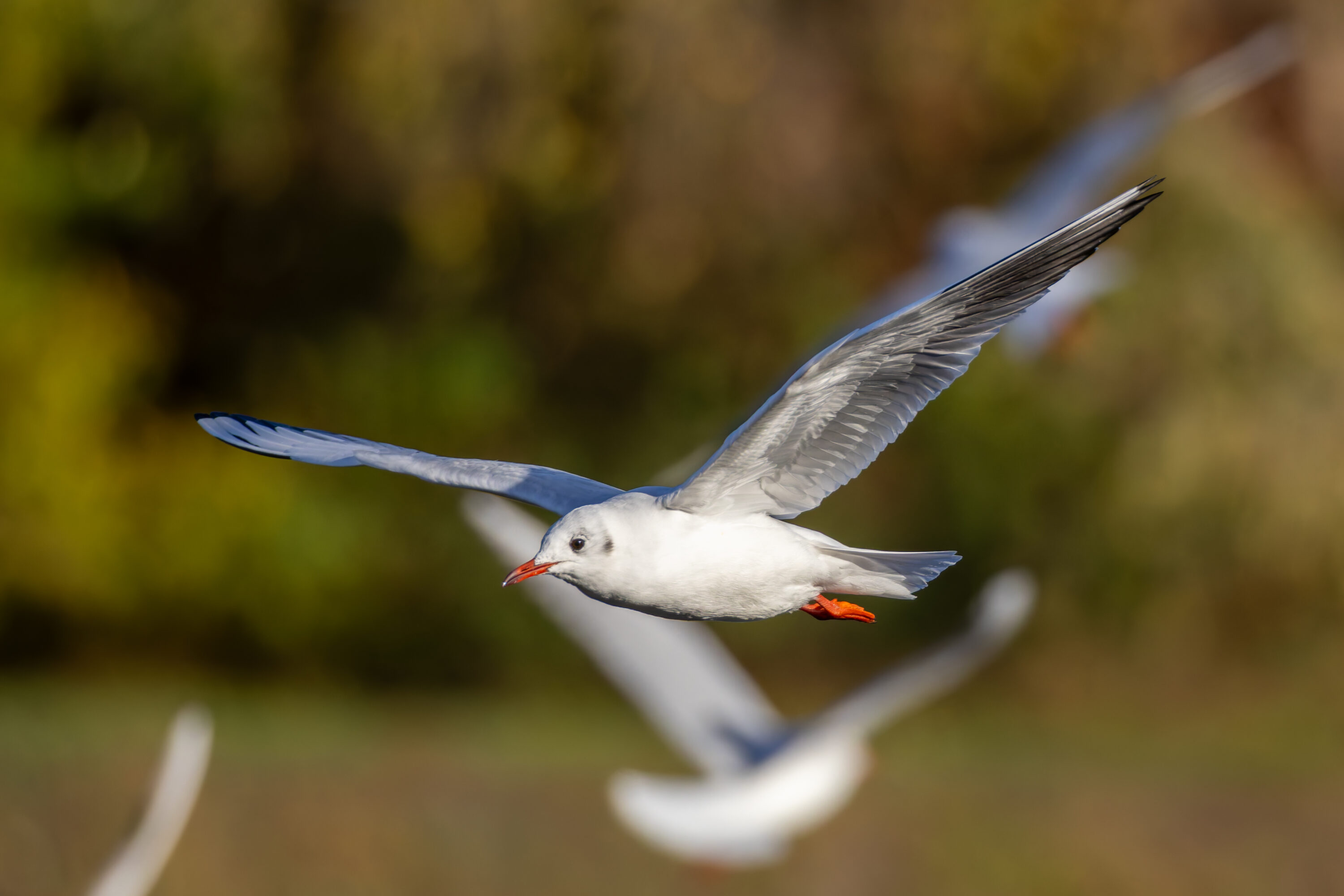
Wintering black-headed gulls (Chroicocephalus ridibundus) in tourist areas of Kunming, China, began to move away at similar distances whether the approaching observer was a woman or a man. The study, published on 12 August 2026, found no statistically significant overall effect of observer sex on the birds’ flight-initiation distance.
Flight-initiation distance is the distance between an approaching potential threat and an animal when the animal begins to escape. It is widely used to study how birds balance the risk of remaining in place against the costs of leaving. The fieldwork used 23 female and 22 male observers at four tourist sites in Kunming. They approached free-living, wintering black-headed gulls and compared flight-initiation distances between the two observer groups.
Individual observers differed substantially from one another
The study was motivated partly by earlier work in five European countries, where urban birds had fled sooner from approaching women than from men. The Kunming gulls did not show the same broad pattern. Escape distances varied widely within both observer groups, and the analysis detected significant differences among individual observers.
The individual variation shows that observer sex alone did not account for the differences among people approaching the gulls. The authors suggest that subtle differences in behaviour or appearance among individual people may have influenced the birds more strongly than observer sex. They also propose that long exposure to large numbers of tourists with diverse behaviour may have made sex-related cues less informative for these gulls.
Both explanations remain interpretations rather than mechanisms demonstrated by the experiment. The result shows that observer sex did not produce a consistent difference in flight-initiation distance under the Kunming study conditions; it does not show that black-headed gulls cannot distinguish women from men in other contexts.
Behaviour
Related news

GPS-Based Models Highlighted the Lower Sumida as a Key Black-headed Gull Corridor in Tokyo
GPS tracking showed that black-headed gulls followed different river features at different movement scales in Tokyo, while GPS-based…
Read story →
Black-headed Gull Sample Yielded the Longest Known Calicivirus Genome
A Hungarian black-headed gull faecal sample yielded an 8,845-nucleotide avian calicivirus genome with unusual RNA structures and enough…
Read story →
New Papillomavirus Genome Identified in Black-headed Gull Faeces in China
Researchers identified the 7,794-base-pair CrPV1 genome in faecal samples from black-headed gulls in Sichuan and found it genetically…
Read story →SPECIES IN THIS STORY
Species in this story

Independent research and conservation news archive
Did you find this information useful?
Wildlife Vagabond is independently built and maintained. Voluntary support helps cover source verification, hosting and continued work on research and conservation news.
Support Wildlife VagabondThe news archive will remain freely available.