
Organic Acids Fell as Amino Acids Rose in Giraffe Milk Late in Lactation
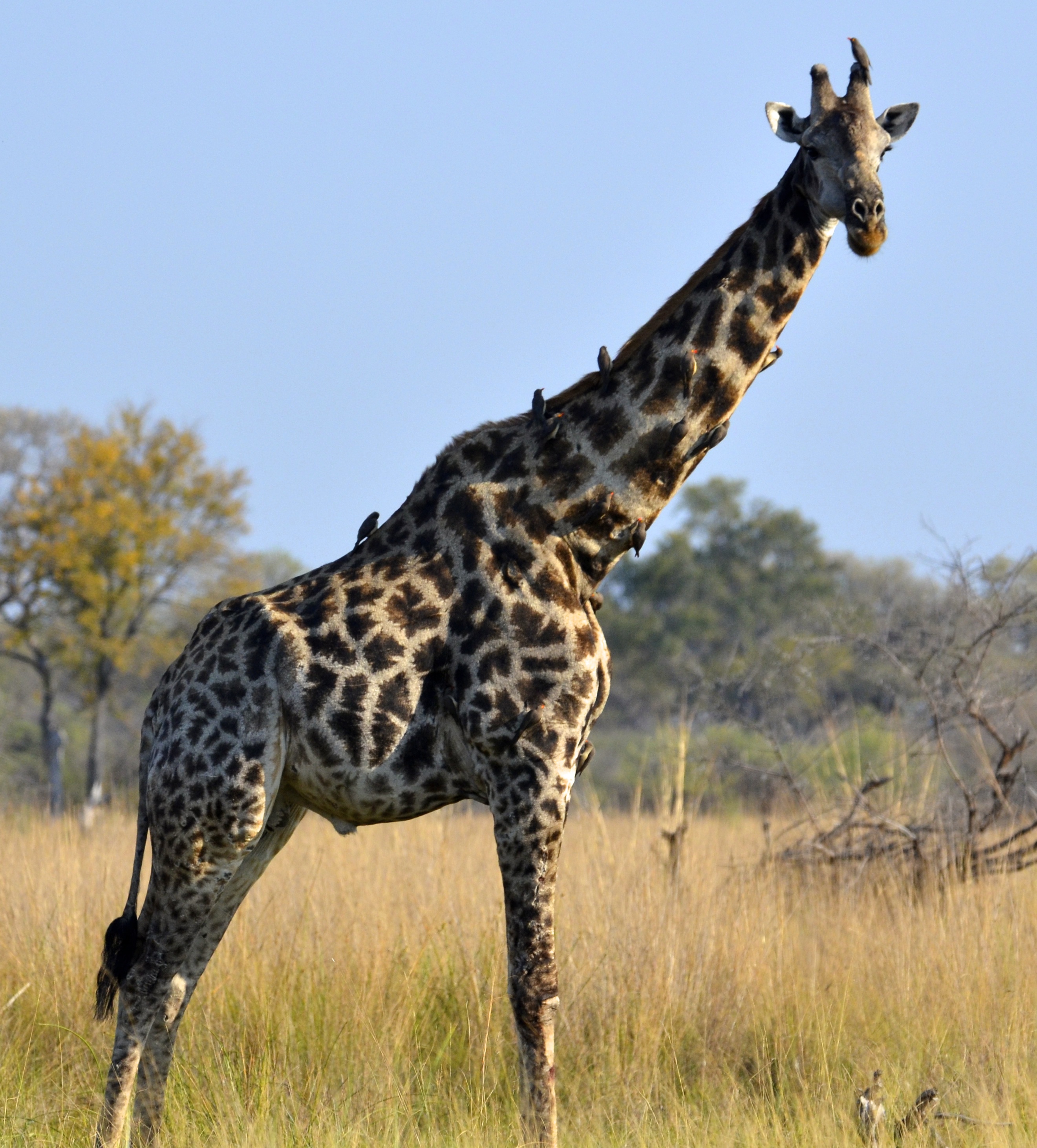
Organic acids and amino acids in giraffe milk changed markedly as lactation approached its end in five giraffes at Amanzi Game Reserve in Free State, South Africa. Targeted metabolomics showed a broad decline in intermediates of the Krebs cycle alongside an increase in most of the amino acids that changed, indicating that the mammary gland was shifting away from the high biosynthetic activity needed for sustained milk production.
The study followed milk collected at approximately 9.4, 12 and 15.1 months of lactation. At around 16 months, the researchers were no longer able to collect milk because the females had stopped lactating.
Krebs-cycle intermediates declined late in lactation
The researchers measured 37 organic acids and 45 amino acids or related compounds. Nineteen organic acids and 14 amino acids changed clearly across the transition from mid to late lactation. Between about 9.4 and 15.1 months, 12 of the organic acids increased and seven decreased, while 13 of the 14 changing amino acids increased; phosphoethanolamine was the exception.
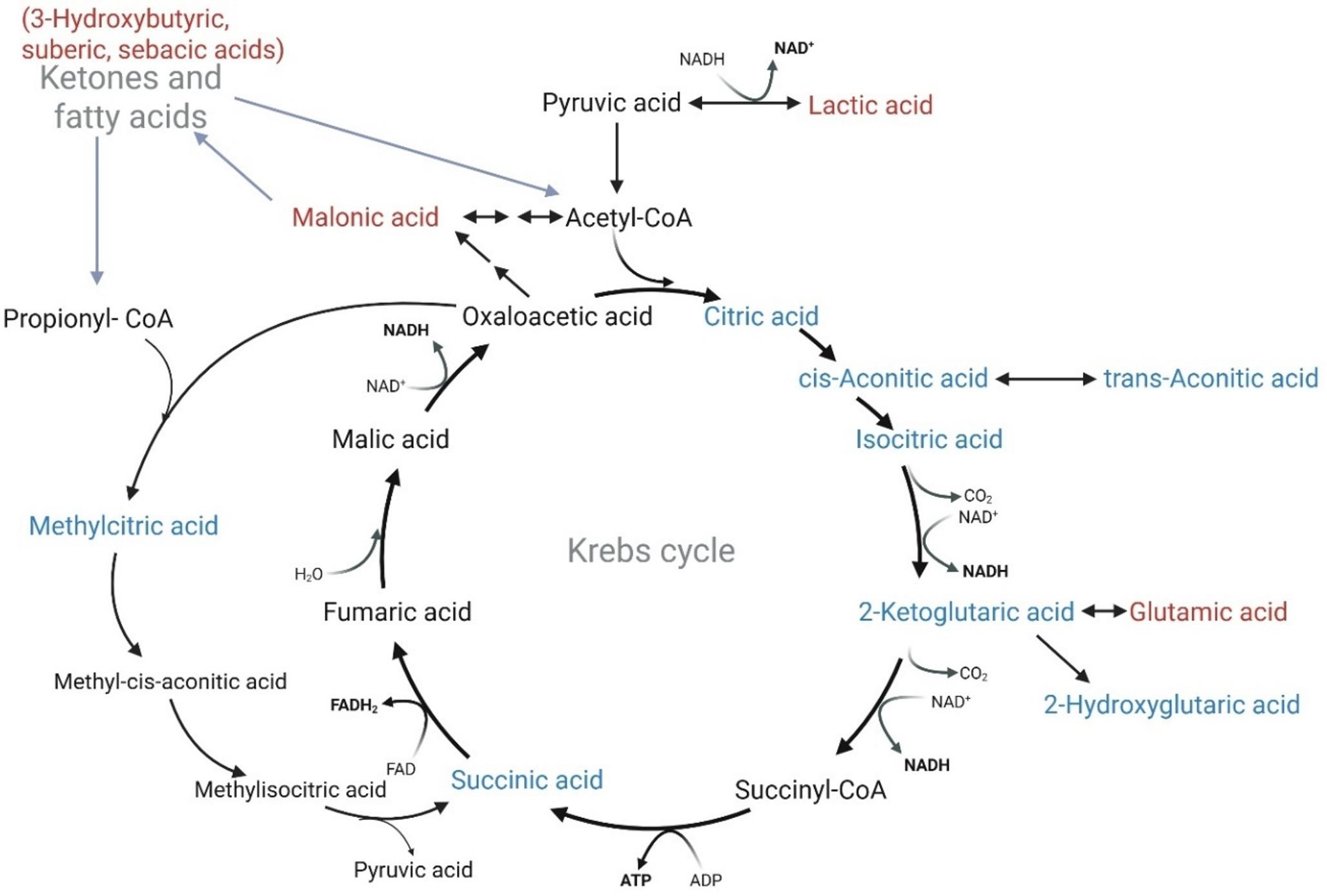
The clearest chemical pattern involved the Krebs cycle, a central series of reactions that links nutrient breakdown to energy production and supplies building blocks for biosynthesis. Citric, cis-aconitic, isocitric, 2-ketoglutaric and succinic acids all declined in the milk toward late lactation. The authors interpret the coordinated decrease as evidence that oxidative and biosynthetic activity in the mammary gland was being reduced as milk production wound down. Lower citrate also coincided with reduced lactose-related osmotic regulation, while lower uracil and orotic acid were consistent with declining pyrimidine and nucleotide synthesis.
Late-lactation milk showed a more catabolic chemical profile
Not all organic acids declined. Lactic and malonic acids increased, as did 3-hydroxybutyric acid and the fatty acids suberic and sebacic acid. The authors interpret this combination as part of a transition toward a more catabolic and lipid-supported metabolic state, in which stored or circulating substrates are increasingly broken down rather than channelled into new milk components.
Amino-acid metabolism shifted at the same time. Arginine, ornithine, citrulline and argininosuccinate — intermediates in the urea cycle — increased, consistent with greater nitrogen handling and protein turnover. Histidine and its methylated derivatives also increased, a pattern associated with protein breakdown, while several lysine breakdown products became more abundant. Although the authors discuss stronger roles for antioxidant and redox-buffering pathways late in lactation, total glutathione itself did not show a clear linear increase.
The transition did not occur at exactly the same time in every giraffe
The 12-month samples overlapped chemically with both the earlier and later groups. Three 12-month samples more closely resembled the 9.4-month profile, while one overlapped with the late-lactation group. This suggests that mammary involution — the gradual shutdown and remodelling of milk-producing tissue — did not proceed at an identical pace in every female.
The study involved only five giraffes, and not every animal was sampled at every stage. The authors also note that it is unknown whether the anaesthetic used during immobilisation could have affected milk metabolite composition. Even with those limits, the longitudinal pattern shows a coordinated chemical reorganisation of giraffe milk as lactation ends rather than a simple uniform rise or fall in all milk components.
Molecular biology & biochemistry
Related news
Giraffe and White Rhino Blood Samples Differed in 28 Metabolites
Blood samples from southern giraffes and white rhinoceroses differed in 28 metabolites across repeated statistical checks. Branched-chain amino…
Read story →
First Giraffe Calf Born in Iona Since Angolan Giraffes Were Reintroduced
A giraffe calf has been recorded in Angola’s Iona National Park for the first time since Angolan giraffes…
Read story →
Giraffes Responded More Strongly to Lion Calls Than Oxpecker Alarms
Playback experiments with 35 free-ranging southern giraffes in South Africa found that lion vocalisations triggered stronger vigilance than…
Read story →SPECIES IN THIS STORY
Species in this story
Independent research and conservation news archive
Did you find this information useful?
Wildlife Vagabond is independently built and maintained. Voluntary support helps cover source verification, hosting and continued work on research and conservation news.
Support Wildlife VagabondThe news archive will remain freely available.